
Design is often dominated by the whimsical dictates of fashion. Aircraft design is no less subject to that principle than are clothes, music, architecture or automobiles.
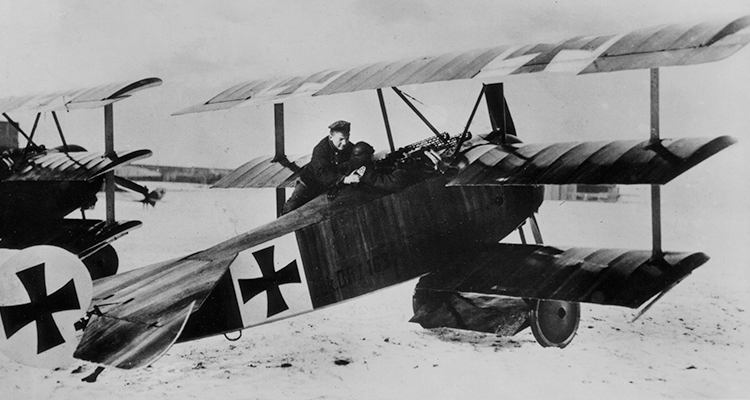
For the brief period of a year, roughly from mid-1917 to mid-1918, the triplane format suddenly came to dominate the world of fighter plane design, particularly in Germany. The triplane would have become a mere footnote in the history books were it not for the fact that one of them, the Fokker Dr.I, became one of the most famous airplanes of World War I.
It is a basic premise that an airplane with one wing is more aerodynamically efficient than an airplane with two. After all, who has ever seen a biplane bird? Nature, however, cannot always be translated into machinery in a straightforward manner. Although many of the earliest aircraft were monoplanes, they were found to possess some very dangerous characteristics. The problems were mainly structural rather than aerodynamic.
A series of fatal accidents involving wing failures in early monoplanes resulted in a ban on them by the British Royal Flying Corps (RFC) in the summer of 1912. One of the world’s first formal aviation-crash inquiries was convened in 1913 to investigate the accidents. Despite the fact that the ‘Monoplane Committee exonerated the configuration, a prejudice against monoplanes persisted for more than 20 years.
Another reason for the distrust of monoplanes as fighters in World War I had to do with pilot visibility from the cockpit. In combat, the fighter pilot who saw his adversary first was usually the victor. Before the advent of radio, pilots needed a clear view of their flight commanders, who communicated with each other visually by means of hand signals and wing-waggling. They also had to be able to see their squadron mates to avoid accidental midair collisions.
The earliest successful fighter planes, the French Morane-Saulnier N and the German Fokker E.I, were monoplanes configured with the cockpit directly over the wing. From that position, the pilot enjoyed unlimited visibility to every quarter except downward, in which direction he could see nothing at all.
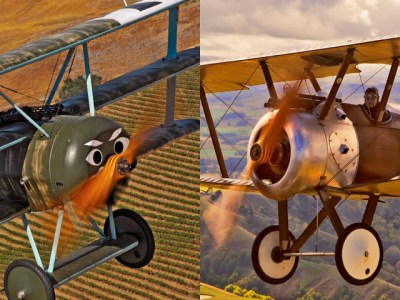
In many biplanes the pilot sat with one wing directly below him and another directly overhead, impairing his vision in both directions. A typical example was the British Sopwith Pup. Produced in 1916, the Pup was a beautifully proportioned little biplane that flew as great as it looked. British pilots, however, were less than satisfied with the visibility from its cockpit. Many photographs of Pups show portions of fabric cut away from the upper wing’s center section in an effort to improve the pilot’s view.
In retrospect, it may be said that the Sopwith Pup set a style that persisted for more than 20 years-that of the single-seat tractor biplane with synchronized machine guns firing through the propeller. At the time the Pup first appeared, however, the optimum configuration of a fighter was still in doubt. Today, the primary considerations for a fighter plane are speed, firepower and that newest of criteria, stealth. During World War 1, however, the emphasis was on rate of climb, maneuverability and pilot visibility.
In the spring of 1916, Herbert Smith, the chief designer at Sopwith, began work on a successor to the Pup. He set out to design a plane that could climb faster, fly higher, maneuver as well as if not better than its predecessor and, if possible, afford better visibility than the Pup. Surprisingly, the prototype that emerged from the Sopwith hangar on May 30, 1916, was not a biplane but a triplane.

The triplane configuration was not exactly a new concept that spring. Such pioneer aviators as Glenn Curtiss (founder of Curtiss Aircraft Co.) and AV Roe (founder of Avro, Ltd.) had already built successful triplanes in the United States and Britain, respectively. In Italy, Count Gianni Caproni di Taliedo, founder of Aeroplani Caproni, was producing a series of large, three-engine bombers, including several triplanes. In those earlier aircraft, however, the triplane format was simply a matter of expediency-an attempt to compensate for the low-powered engines of the period by building the greatest possible wing area, and consequently the maximum lift, into a reasonably compact airframe. Because speed was less of a consideration in bombers, the increased lift offered by the triplane format made sense. Herbert Smith, however, was adapting a refinement of the triplane concept to fighters. He sought to balance the advantages of extra lift and optimum maneuverability against the inherent disadvantage of increased drag.
The idea behind the Sopwith Triplane (curiously, it does not seem to have had any official name or designation) was that a wing with a narrow chord would provide a correspondingly small change in the center of pressure at various angles of attack. That meant that the fuselage and tail, which balanced the airplane, could be shorter than they needed to be on an airplane with wider chord wings. In theory, the shorter the fuselage was, the quicker the maneuverability would be in pitch and yaw. Dividing the wing area into three parts also allowed the wings to be constructed with a shorter span, which increased the rate of roll. Smith also designed it with ailerons on all three wings to increase maneuverability.
Another benefit of the triplane format was an improvement in climb rate and ceiling. Since the wing area was divided by three, the wings could be built with a narrower chord in relation to their span. Such high-aspect-ratio wings produce a very efficient ratio of lift to drag. Anyone who has ever seen an albatross or a sailplane in flight can testify to the aerodynamic efficiency of long, narrow wings. As a bonus, the narrow-chord wings above and below the pilot interfered less with his view than the wider wings of a biplane or monoplane. Moreover, the middle wing was mounted in line with the pilot’s eyes, so that he could easily see around it.
To further enhance the triplane’s maneuverability, Smith carefully grouped the heaviest weights-pilot, fuel, armament and engine-near the center of gravity. To a large extent, that was made possible by the use of a compact, aircooled rotary engine. Both rotary engines and the related radial aircraft engines were constructed with their cylinders arranged around a common axis. Unlike the radial engines, which were rigidly attached to the airframe and drove the propeller by means of a revolving crankshaft, on the earlier rotary engines the propeller was bolted directly to the crankcase, while the engine itself revolved around a crankshaft attached to the airframe. The entire engine acted, in effect, like a giant flywheel.
The Sopwith Triplane was designed and built in less than three months. Yet, when it was first flown on May 30, 1916, test pilot Harry Hawker was so pleased with the prototype that he looped it three minutes after the first takeoff. Two weeks later, the same prototype, N500, was dispatched to a front-line squadron for evaluation and flew its first combat mission 15 minutes after arrival.
The appearance of the Sopwith Triplane was nothing if not startling; one observer likened its appearance in flight to an intoxicated flight of stairs. The impression from inside the cockpit was summed up by pilot Herbert Thompson, who wrote in his log book: The best machine I have ever flown. Thoroughly in love with it. Much later, Sir Herbert Thompson added, After fifty years I still am.
About the only reservation service pilots had about the new Sopwith was that its endurance, about 1 3/4 hours, was slightly less than ideal. Powered by a 130-hp Clerget rotary engine, the Sopwith Triplane carried a single synchronized .303-caliber Vickers machine gun. Its top speed of 117 mph was reasonably good for its day, but its rate of climb, 5,000 feet in 4 1/2 minutes, was considered phenomenal. It also had a ceiling of more than 20,000 feet, higher than that of most German planes, which gave the British fighter a significant tactical benefit — the ability to attack with a height advantage. In the event that a Sopwith Triplane was attacked, the pilot could simply execute a climbing turn that no German fighter could follow.
The first fully equipped squadrons of Sopwith Triplanes began to make their appearance at the front early in 1917, a period when the fortunes of British airmen were at their lowest ebb. So heavy were RFC losses that April 1917 became known in that service as Bloody April. The triplanes were not operated by the Royal Flying Corps, however, but by the Royal Naval Air Service (RNAS). Although there were never more than six squadrons of Sopwith Triplanes on the Western Front, their impact greatly exceeded their numbers.

There were many successful proponents of the Sopwith Triplane, but no discussion of that fighter can neglect mentioning the famous all-Canadian Black Flight, led by Flight Cmdr. Raymond Collishaw. Officially designated as B Flight of No. 10 Naval Squadron, the flight’s five black-nosed triplanes were each given an individual name appropriate to their sinister livery: Collishaw’s Black Maria, W. Melville Alexander’s Black Prince, John E. Sharman’s Black Death, Ellis Vair Reid’s Black Roger and Gerald Ewart Nash’s Black Sheep. Between June 1 and July 28, 1917, Black Flight shot down 86 enemy aircraft for the loss of one man captured (Nash on June 26) and two killed (Sharman on July 22 and Reid on July 28, both by anti-aircraft fire).
That incredible record was achieved despite the fact that Black Flight was operating against the very best pilots the Germans had – Jagdstaffel (Jasta) 11, commanded by the Red Baron, Manfred Freiherr von Richthofen. On June 28, Collishaw shot down and killed Leutnant Karl Allmenroder, a 30-victory ace and one of Richthofen’s best pilots, two days after that same German airman had shot down and captured Nash. Collishaw finished the war with a total of 60 victories, 30 of them scored while flying the Sopwith Triplane, and eventually became an air vice marshal in the Royal Canadian Air Force. The popular and influential Richthofen and other German airmen were stunned by the performance of the new triplanes. Suddenly the British had a machine that could outfly anything the German air service had. As a result, the Inspectorate of Aviation (Inspektion der Flieger, or Idflieg) immediately issued a demand for triplanes (Dreidecker). Soon, virtually every aircraft company in Germany was enthusiastically testing at least one new triplane prototype.
A Triplane Triple
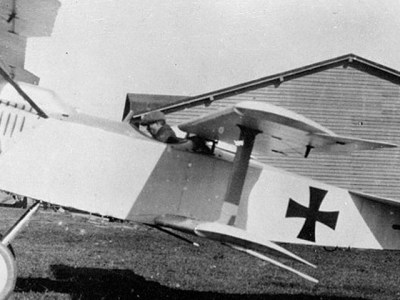
Albatros wasted no time in sticking a set of Sopwith triplane-style wings onto the standard German fighter of the period, the Albatros D.V. Pfalz did the same thing to its equally ubiquitous Pfalz D.III biplane fighter. Many companies, such as AEG, DFW, Shuumltte-Lanz and Euler, built otherwise identical pairs of prototypes with both biplane and triplane wings to hedge their bets. One Euler triplane had a set of wingsize ailerons installed above the upper wing, making it virtually a quadriplane.
The Siemens-Schuckert Werke (SSW) tried to create a high-performance fighter by building a triplane with two rotary engines, one tractor and one pusher, with the tail surfaces held on a latticelike structure. Nicknamed the Fliegende Ei (Flying Egg), the unusual looking SSW Dr.I crashed on its first flight.
LFG Roland built a graceful triplane featuring a wooden clinker-built fuselage, constructed much like the hull of a speed boat. Although its D.IV triplane was not adopted by the German air service, Roland’s unique fuselage construction was later used on a biplane fighter, the D.VI, which did go into production in 1918.
Designers in countries besides Germany also tried their hands at triplane fighters. In Austria-Hungary, triplane fighters were built by Oeffag, Lohner, Aviatik, Lloyd and WKF. The Aviatik 30.24 was essentially a triplane version of the standard Austrian fighter, the Aviatik (Berg) D.I. The Lohner 111.04, Oeffag 50.14 and WKF 80.05 prototypes were also adaptations of existing biplane designs. Oeffag’s large 50.14 was more original but gave a disappointing performance.
More novel still was the Hungarian Lloyd 40.15. Its top and middle wings were flush with the top and middle of the fuselage, while the bottom wing was mounted behind the landing gear axle. All three wings were of cantilever type, without external interplane bracing. In lieu of conventional ailerons, the Lloyd had pivoting wingtips fitted to the middle wing. Another peculiarity of the 165-hp Austro-Daimler-powered Lloyd was its fuselage that was built to conform to the shape of the wings’ airfoil, imparting a distinctly warped appearance. Details of the Lloyd 40.15 are scarce-including evidence as to whether it ever flew-but it seems likely that its bizarre configuration was yet another attempt to improve the pilot’s view.
Another unusual approach to improving visibility was utilized by the French in a little-known triplane version of the Nieuport 17. As a sesquiplane (1 1/2 wings), the little Nieuport was considered a delight to fly and had been favored by many Allied aces, as well as by the American volunteers of the Lafayette Escadrille. It had also impressed the Germans, who were emulating its sesquiplane wing arrangement before they began copying that of the Sopwith Triplane. In its triplane guise, however, the Nieuport was a very different kettle of fish. Its middle wing was staggered forward in the normal manner, but its top wing was staggered well back, above and behind the pilot. One would think that such an arrangement would have actually hindered the pilot’s view for landing, while also masking the approach of an enemy from above and behind.
In any event, the modification certainly did nothing to improve the Nieuport’s handling characteristics. Undeterred, Nieuport built another triplane, based on the earlier Nieuport 10 two-seater. This time the top wing was staggered forward and the middle wing was set back. Whether or not that triplane was any improvement over the previous version is not recorded, but the French authorities do not appear to have thought so, for they abandoned the experiment completely in December 1916. On January 26, 1917, however, one of their triplane Nieuport 17s, N1588, was delivered to the RFC and given the British serial number A6686. It was extraordinarily unstable and I didn’t like it at all, recalled Sir Vernon Brown, a British pilot fortunate enough to survive a test flight at Martlesham Heath.
Despite such unflattering comments, the British themselves fitted a similar wing arrangement on the fuselage of a French-built Nieuport 17bis, N1946, gave it the Royal Navy serial N521 and shipped it to No. 11 Squadron, RNAS at Dunkirk on March 29, 1917. Clearly inferior to the Sopwith Triplane, N521 saw little operational use before being retired for good in June.
Sopwith, meanwhile, built another triplane with a 150-hp Hispano-Suiza V-8 engine, but it displayed no significant improvement over the Clerget-powered production model. In any case, the RFC had found a better use for the Hispano-Suiza engine in the SE-5 biplane. By the same token, Austin Motors’ otherwise promising Osprey triplane of early 1918 was designed to utilize the 230-hp Bentley BR-2 rotary engine that had already been earmarked for another superior biplane, the Sopwith Snipe. The Sopwith Snark triplane of 1918 also performed well, but it was handicapped by the mechanical unreliability of its 320-hp ABC Dragonfly stationary radial engine.
Ironically, one of the few aircraft producers who was not enthusiastic about building triplanes was Anthony Fokker, a Dutch pilot and aviation entrepreneur who had set up shop in Germany. In 1916, Fokker had lost his initial lead in the German fighter business to Albatros through a combination of stagnant design and poor quality control. By the beginning of 1917, however, Fokker and his new chief engineer, Rheinhold Platz, had an entirely new fighter to offer the German air service. Called the V.1 (the V standing for Verspannungslos, or without external bracing), the new Fokker was a rotary-engine sesquiplane combining a streamlined fuselage with plywood cantilever wings. Two versions with in-line engines, the V.2 and V.3, were also built. All of them were so far ahead of their time that they would not have looked out of place among the Gee Bees, Lairds and Travel Airs at the Cleveland Air Races 15 years later.
Despite the excellent performance of the V.1, Idflieg remained lukewarm to its concept. Part of the problem was suspicion of the plane’s unusual flight controls, which included pivoting wingtips instead of ailerons. In view of the structural problems experienced with previous Fokker airplanes-and subsequently with the Dr. I triplane — Idflieg was probably justified in its concern. In any case, what the German air service really wanted from Fokker was a triplane. So on June 13, 1917, Fokker reluctantly shelved his promising sesquiplane program and began altering the VA, a prototype biplane intended for Austro-Hungarian evaluation, into triplane configuration.
Like the V.1, the V.4 triplane was a rotary-engine machine with unbraced cantilever wings of thick airfoil section, supported by plywood double-box spars. Unlike the V.1, however, the triplane had wings covered with fabric rather than plywood. With its short wingspan, short fuselage and a vertical tail surface that was all rudder, the Fokker proved to be very maneuverable, and its three wings endowed it with a superlative rate of climb. In its original form, the triplane was devoid of interplane bracing. After the wingspan was subsequently lengthened, the action of the ailerons tended to flex the upper wing, so simple, planktype interplane struts had to be added.

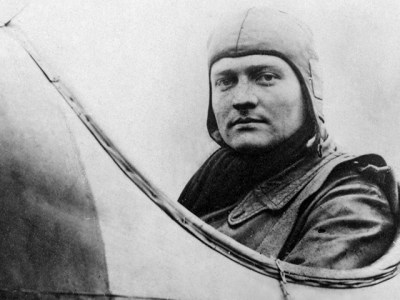
In late June 1917, Leutnant Werner Voss, then acting commander of Jasta 14, test-flew the Fokker triplane prototype at Schwerin and was extremely enthusiastic about it. He recommended it to Manfred von Richthofen, then commander of Jagdgeschwader (JG) I, Germany’s first permanent fighter wing. On July 18, Richthofen, who was recuperating from a head wound suffered on July 6, wrote his superiors from the hospital, demanding to know why the Fokker triplane was not in production.
Unknown to Richthofen, the Fokker had already proved itself by far the best of all prototypes the Germans had developed in response to the Sopwith Triplane scare, and Idflieg had placed an order on July 14 for 20 Fokker F.Is, as the type was initially designated. On July 26, Richthofen informed his pilots that they would soon be receiving new Fokker triplanes that are maneuverable as the devil and climb like monkeys. On August 11, a refined version of the F.I, redesignated the Dr.I, was approved for full-scale production.
The first two preproduction Fokker F.Is, bearing the serial numbers 102/17 and 103/17, were issued to Richthofen and Voss, respectively. Neither plane lasted very long. Richthofen scored his 60th and 61st victories with F.I 102/17, but on September 15, the Baron’s friend OberLeutnant Kurt Wolff, commander of Jasta 11 and a 33-victory ace, was killed while flying it, shot down by Flight Lt. Norman M. MacGregor of Naval 10. Ironically, by that time the British squadron had traded in its Tripehounds for a new, more potent biplane design by Herbert Smith-the Sopwith Camel.
Voss, then commanding Jasta 10 in Richthofen’s JG.I, flew F.1 103/17 for the first time on August 28. Delighted with his new mount, he went on a rampage, shooting down nine enemy aircraft by September 11. On September 23, Voss scored his 48th victory, but he was killed later in the day in an epic, single-handed dogfight against seven SE-5a’s of No. 56 Squadron, a crack RFC unit. In the course of his last fight, Voss executed seemingly impossible maneuvers and damaged all of his antagonists’ machines.
The spectacular performance of Voss’ new Fokker triplane was as jarring to the British as their Sopwith Triplane had previously been to the Germans. Unfortunately for the Germans, that advantage was to prove short-lived. On October 30, 1917, Leutnant Heinrich Gontermann, commander of Jasta 15 and a 39-victory ace, was killed when the top wing of his new Fokker Dr.I 115/17, disintegrated. The next day, Leutnant Gnther Pastor, a pilot from Jasta 11, was killed under similar circumstances in Dr.I 121/17.
All Fokker triplanes were promptly grounded. Upon investigation, it was found that the main wing spar was more than sufficiently strong, but the attachments of the ribs, wingtips and ailerons were weak. Worse yet, there was evidence of poor quality control in both the doping of the fabric and the varnishing of the wooden wing components, causing wood rot in the wingstructure after a short time.
The Fokker triplanes would remain grounded until redesigned and better constructed wings could be fitted. German pilots then continued to fly them with great success during the first half of 1918, but the rapid tempo of aircraft development had caught up with the Dr.I, and only 320 were built. Fast-climbing and maneuverable though they may have been, the triplanes were only effective when engaged on their own terms. With a top speed of only 102 mph, they were simply too slow, due to interference drag between the three wings. Occasional structural failures continued to occur as well, one instance of which put Richthofen’s brother Lothar in the hospital on March 13 1918.
Pilots were also experiencing chronic problems with the Dr.I’s 110-hp rotary engine, which had been designed to be lubricated with castor oil. A product of the tropical castor bean plant (Ricinus communus), genuine castor oil was unavailable to the Germans due to the Allied blockade. The Germans had to make due with a synthetic substitute that severely shortened engine life.

Rotary engines were in such short supply that many Fokkers, including those flown by Voss and Richthofen, were powered by engines salvaged from captured Allied aircraft. Fokker built experimental triplanes with other engines, but none of them amounted to much. The most bizarre variant was the V.8, a modification of Fokker’s Mercedes-powered V.6 triplane prototype. The V.8 actually had five wings-three forward and two more aft of the cockpit-with ailerons on both sets of upper wings. Reliable sources allege that Anthony Fokker personally flew the V.8 on at least two occasions. It is certainly difficult to imagine him persuading anybody else to fly it. By the spring of 1918, however, Fokker’s fighter designs were taking a more conventional form. When Manfred von Richthofen was killed on April 21, 1918, after achieving his 80th aerial victory, he was eagerly awaiting the replacement of his unit’s triplanes with a new biplane fighter, the Fokker D.VII.
Of the plethora of triplane fighters developed in Germany during 1917, the only one that came close to matching the success of the Fokker was the Pfalz Dr.I. Produced in October 1917, the Pfalz Dr.I was a three-winged version of the experimental D.VII biplane. Careful attention was paid to visibility by designing the Pfalz with wings of three different chords, the narrowest being in the center and the widest on top. The streamlined wooden monocoque fuselage blended with the cowling of the plane’s rotary engine. The Pfalz Dr.I could outclimb its Fokker counterpart by at least as great a margin as the Fokker could outclimb the earlier Albatros D.V.
Manfred von Richthofen, who flew the Pfalz Dr.I in December 1917, was very impressed with it. Although only 10 Pfalz triplanes were produced, nine of them were sent to the front. One reason why more of them were not built may have been that the Pfalz was a more complex and labor-intensive aircraft to produce than the Fokker. The Germans were also becoming disillusioned with the triplane formula by the time it appeared on the scene.
In addition, the Pfalz was powered by the 160-hp Siemens und Halske Sh-III, a unique rotary-radial engine in which the crankcase rotated in one direction while the crankshaft rotated in the opposite direction. By the time the new engine was perfected, Siemens had developed an airplane of its own for it, the SSW D.III biplane, which would eventually be developed into the D.IV, arguably the best German interceptor of the war.

With one notable exception, the triplane fighter craze was over by mid-1918. That exception was the Curtiss-Kirkham 18T, a two-seater built for the U.S. Navy in July 1918. Powered by a 400-hp engine designed by Charles B. Kirkham, only two 18Ts were built. With a speed of 160 mph, they were among the fastest aircraft in the world-and certainly the fastest triplanes ever flown. The plane’s Kirkham K-12 engine was later developed into the well-known Curtiss Conqueror, which was used in many aircraft during the 1920s and early 1930s.
By the early 1920s, the triplane fighter concept was dead, although the use of the triplane configuration to increase the lifting capabilities of bombers or commercial aircraft would be explored for several years more. The last military triplane to be produced in any quantity was the Mitsubishi Type 10, a single seat torpedo plane; 20 were built for the Imperial Japanese Navy in 1922. The Type 10 had been created by a new chief designer whom Mitsubishi had recently recruited from an economically depressed postwar Britain: Herbert Smith, creator of the Sopwith Triplane.
This article was written by Robert Guttman and was originally published in the March 2001 issue of Aviation History magazine.
For more great articles subscribe to Aviation History magazine today!