While United Nations forces struggled to hold onto the Pusan perimeter in the late summer of 1950, the U.S. 1st Provisional Marine Brigade was rushed into action to reinforce U.S. Army and Republic of Korea (ROK) troops defending that precarious pocket in the southeast corner of South Korea. The undermanned 5th U.S. Marine Regiment and its support units had barely arrived at Pusan when they were moved in borrowed Army trucks to stop a North Korean assault near Chindong-ni, on the perimeter’s western edge. Brigade commander Brigadier General Edward A. Craig knew little about the terrain his Marines would have to cross, so he climbed into a Sikorsky HO3S-1 helicopter and lifted off to scout the route, give directions to the lead battalion, pick a spot for his command post and meet with his Army superiors. Returning from the meeting with Lieutenant General Walton H. Walker, the Eighth Army commander, Craig stopped three more times to confer with his unit commanders. That crucial trip aboard a chopper from Marine Observation Squadron 6 (VMO-6) on August 3, 1950, was a harbinger of the increasingly vital role rotary-wing aircraft would play in three years of tough fighting in Korea.
“Fortunately, Marine helicopters attached to VMO-6 were always available for observation, communication and control,” Craig recalled. “These aircraft made my day. Without them I do not believe we would have had the success we did.” The VMO-6 choppers soon were pressed into service to deliver water and other critically needed supplies to grunts struggling over hilly terrain. And they often carried out wounded Marines on return flights.
While the Marines were inaugurating the use of the underpowered Sikorsky helicopters in command-and-control, light resupply and medical evacuation roles, the Navy was flying those same choppers from aircraft carriers and a few large warships operating in the Sea of Japan. The Navy helos were used at first to pluck downed fliers from the sea and undertake short logistical missions between ships. But they quickly took on added duties such as gunfire spotting for the warships. Later in the conflict they became key elements in the prolonged effort to clear coastal waters of mines.
U.S. Air Force Air Rescue Service units would soon be flying similar helicopters, designated as H-5s, from land bases to pick up downed pilots, often behind enemy lines. Within months, Air Force helicopters joined the Marine choppers in rushing badly wounded leathernecks from frontline aid stations to field hospitals and later to a Navy hospital ship offshore, sharply reducing delays in providing lifesaving medical care.
Early in 1951, Army helicopters also began to fly medevac missions, sparing seriously wounded soldiers punishing ambulance trips over Korea’s wretched roads. Between their rescues of downed airmen and isolated ground troops and flying ambulance missions, U.S. helicopters were credited with saving tens of thousands of lives during the war. “Few technical innovations were equal in importance to the growing use of the helicopter for medical evacuations,” one Army history declared. With the arrival of larger, more capable helicopters later in the conflict, the Marines and Army would demonstrate the usefulness of vertical lift aircraft in the tactical movement of troops and supplies — a role that would become the hallmark of another Asian war a decade later.
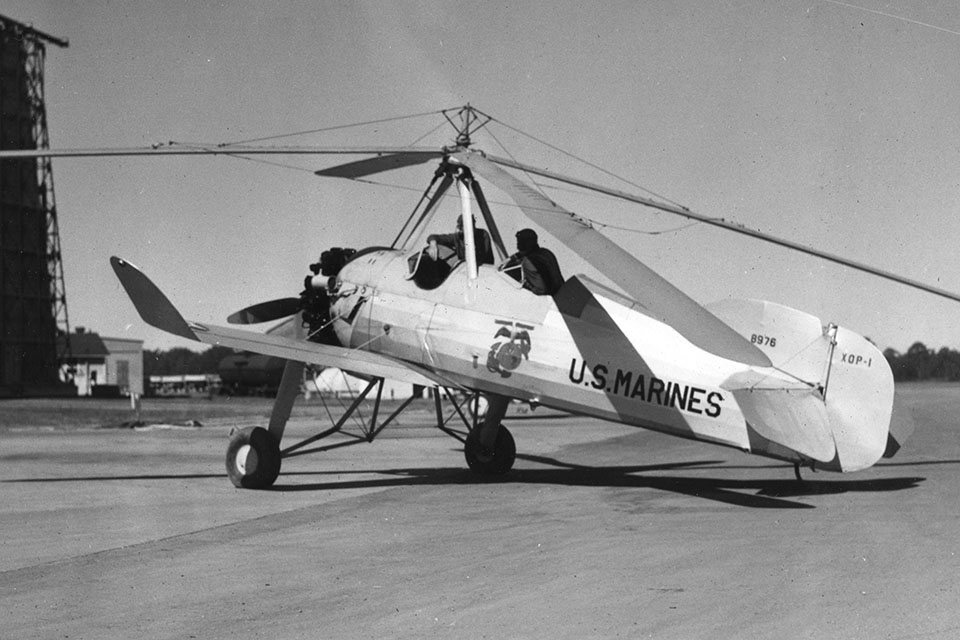
Korea was not actually the first time rotary wing aircraft had been used in combat. The Marines had tested — and rejected as unsuitable — the Pitcairn OP-1 autogyro, a hybrid aircraft with a four-blade rotor, for liaison and medevac missions in 1932, while fighting guerrillas in Nicaragua. The Army bought its first helicopter, a Vought-Sikorsky XR-4, on January 10, 1941, and operated a few improved models of that aircraft in Europe and Asia during the later stages of World War II. The first recorded use of a U.S. helicopter in combat came in May 1944, when an Army chopper rescued four downed airmen behind enemy lines in Burma.
The Navy bought four of the improved Sikorsky aircraft in 1942 for evaluation but soon handed the responsibility for helicopter development and pilot training to the Coast Guard. The Navy resumed its own helicopter programs after WWII ended, forming Experimental Squadron 3 (VX-3) on December 28, 1945. Pilots and support personnel from that unit staffed Helicopter Utility squadrons HU-1 and HU-2 as training and fleet support squadrons.
Postwar atomic bomb tests forced the Marines to reconsider their traditional form of amphibious landings. As a result, Marine Helicopter Developmental Squadron 1 (HMX-1) was created on December 1, 1947, to test the use of rotary-wing aircraft to move troops from ship to shore. When North Korean forces invaded South Korea on June 25, 1950, four HO3S-1 helicopters and 37 Marines were transferred from HMX-1 to VMO-6, which departed for Korea in July aboard the escort carrier Badoeng Strait.
The squadron’s four helicopters and eight Stinson OY-1 (the U.S. Navy designation for the L-5) fixed-wing spotter planes flew into the Pusan perimeter on August 2, as the Provisional Brigade’s ground troops were arriving. The helicopters quickly proved their worth, helping General Craig and his battalion commanders overcome their lack of familiarity with their operating area. “Helicopters were a lifesaver in this connection, as they provided the means for even commanders of small units to get into the air quickly from almost any point and identify roads, villages and key points prior to moving their troops,” Craig recalled.
The helicopters added pilot rescue to their duties on August 3 when an HO3S carrying Craig diverted to pick up a Marine Vought F4U-4 Corsair pilot who had been shot down during a close air support mission. Marine choppers would assume that role scores of times in the coming months. Major Robert J. Keller, a commander of VMF-214, the famous “Black Sheep” fighter squadron, said later, “The helicopters have done a wonderful service in rescuing downed pilots under the very guns of the enemy.”
As the choppers’ roles diversified, their crews implemented a variety of field modifications. When asked to carry casualties to the rear, the Marines found that a stretcher would not fit inside the HO3S’s small cabin. So they removed the rear window on one side and stuffed the wounded man’s litter in headfirst, leaving his feet exposed to the weather. On occasion, innovative helicopter crews also supported the infantry by laying field telephone wires between units, putting down lines over rugged terrain within minutes that would have taken men on foot days to cross.
Equipped with only the most basic instruments, the helicopters were not actually certified for night flying. But with so many lives at stake, Marines soon found themselves evacuating casualties after sundown. Pilots from the other services also defied the ban on night flying. In the end, chopper crews would conduct hundreds of dangerous nighttime medevac missions.
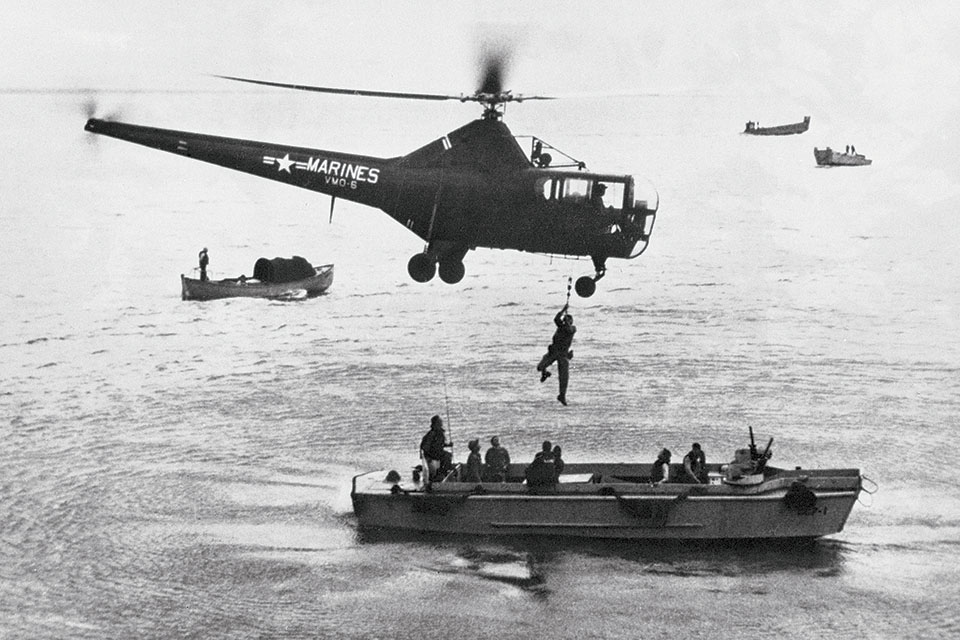
To meet the increasing demands for their services, additional Marine helicopters and pilots were sent from Japan in August. General Craig called for larger helicopters that could carry heavier loads, and Marine headquarters responded within a year. VMO-6 helicopters had no immediate role in the 1st Marine Division’s daring amphibious landing at Inchon on September 15, but choppers got into the action the next day when one of the squadron’s helos flying off an LST (landing ship, tank) rescued a Corsair pilot who had ditched in the harbor. Many of the rescue missions proved dangerous, and VMO-6’s helicopter units suffered their own losses. Two choppers were shot down, and one pilot was killed while trying to rescue other fliers during the advance from Inchon to Seoul.
The choppers played key roles during the Marines’ advance to the Chosin Reservoir and their fighting withdrawal from the massive Chinese offensive, maintaining contact among the widely separated units. And they also continued flying medical supplies and critical materiel in and carrying casualties out of small landing spots in the narrow valleys of North Korea. Two more choppers were shot up and another pilot killed during that precarious withdrawal.
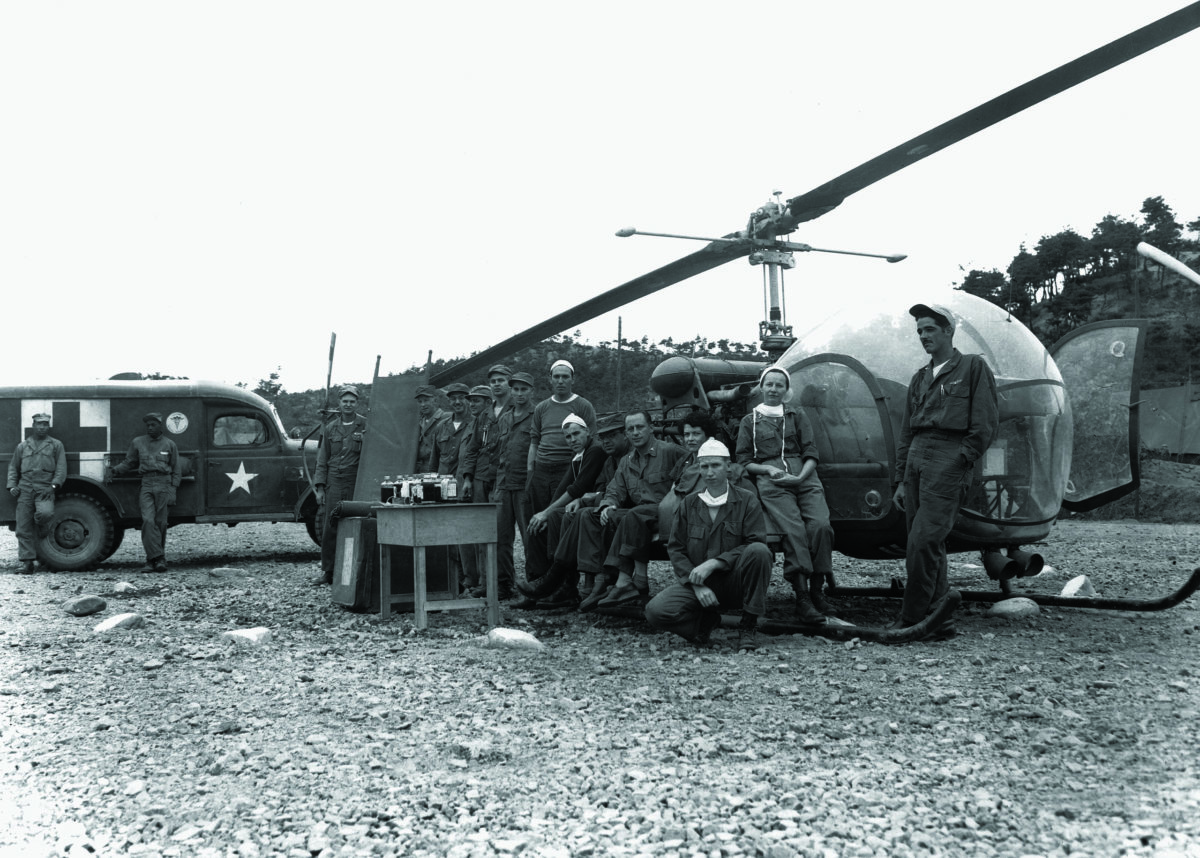
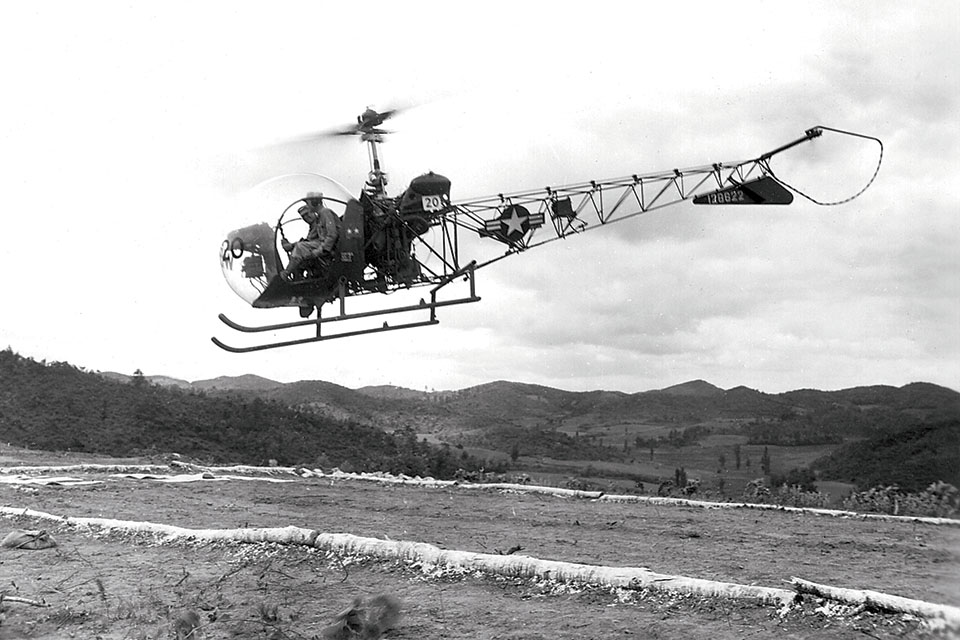
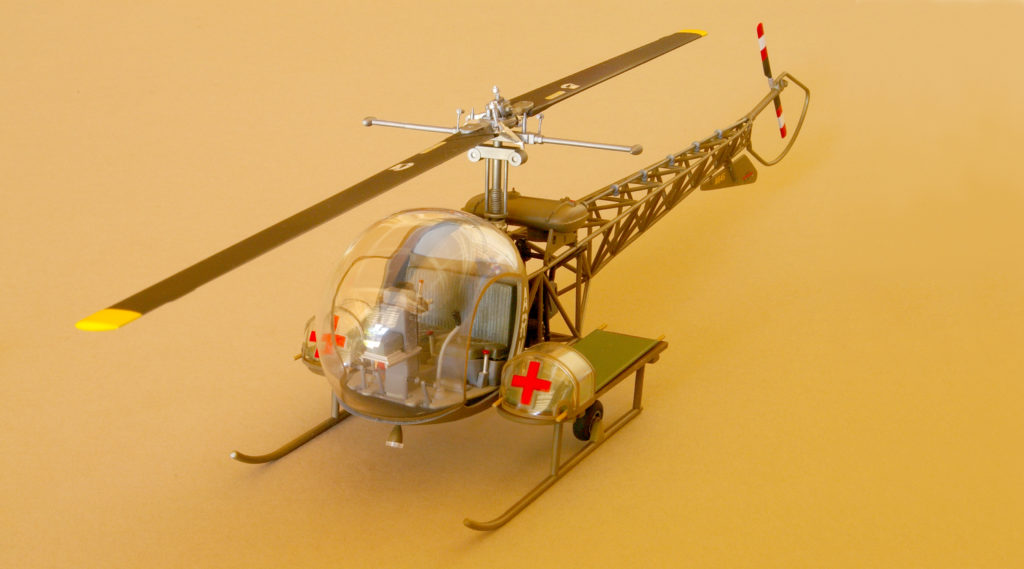
Late in 1950, as the numbers of HO3Ss were shrinking due to losses, VMO-6 started transitioning to Bell HTL-4s, the helicopters made famous by the M*A*S*H TV show’s opening scene. The Bells could carry two casualties in litters strapped on each side, twice the load that could be carried by HO3Ss.
Navy helicopters were in the war zone shortly before the Marines, when U.S. Seventh Fleet units, including the aircraft carriers Valley Forge and Philippine Sea, arrived offshore to support the retreating U.S. and ROK troops. Each carrier had a helicopter detachment from HU-1 serving as plane guard or “angel” to recover pilots from the water. Retired Navy Commander Harold R. Gardiner, then a lieutenant, led the HU-1 detachment on Valley Forge at the end of 1950, with Chief Aviation Pilot Dan Fridley as the other pilot.
Gardinier described the HO3S as “a pretty primitive” aircraft, but noted, “at that time, it was all we had.” The men who flew them said those early helicopters were unstable aircraft that required a pilot’s full-time use of both hands and both feet on the stick, the collective and the rudder pedals. “If you let go of the stick, it wanted to follow the [rotor] blades around in a circle and would bang your knees,” recalled retired Commander Charles C. Jones, a HU-1 veteran. The choppers’ center of gravity was so sensitive that pilots sometimes took along iron bars, heavy rocks or life rafts to adjust the balance when they did not have passengers in the back.
During rescues, pilots normally flew with an enlisted crewman who operated the rescue hoist and frequently had to jump into frigid water to assist pilots into the “horse collar” sling. Raymond Swanecamp, who flew with an HU-1 detachment on Valley Forge as a radioman 3rd class, explained that the crewmen were trained in water rescues at the Underwater Demolition Team (UDT) school at Coronado, Calif.
Helicopters also were assigned to some cruisers and battleships, and their pilots soon began experimenting with adjusting fire for the big guns. Retired Lt. Cmdr. Earl Bergsma, who flew off USS St. Paul, recalled a number of missions when he tried to direct the heavy cruiser’s 8-inch guns against trains and railroad tunnels along the North Korean coast while being shot at by enemy troops.
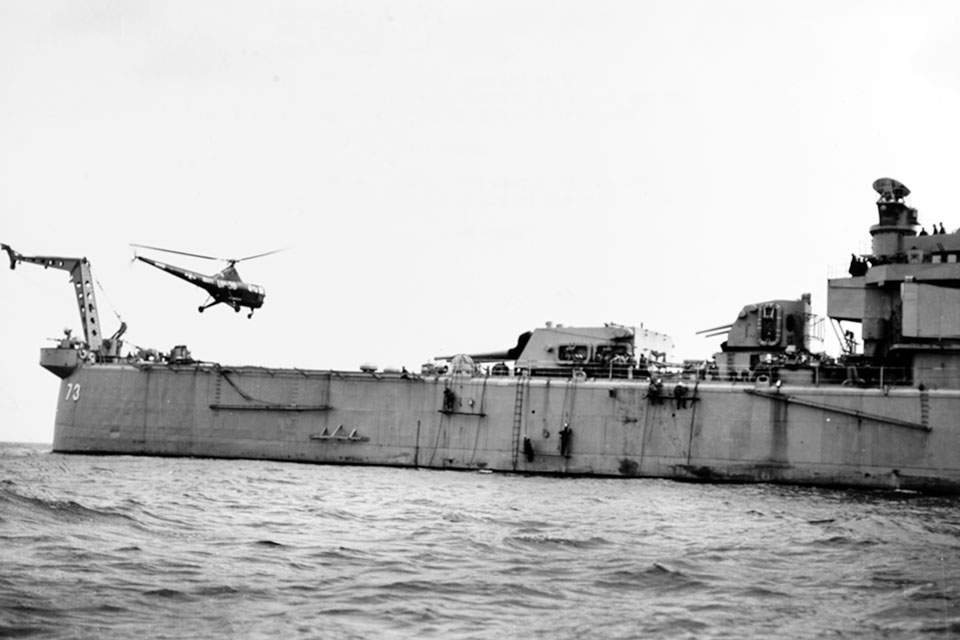
Jones, who flew from several cruisers in 1950-51, said chopper crews received a very short course in gun spotting at Coronado before deploying. But mainly, he recalled, “we learned as we went.” The results were often remarkable. A 1950 Navy report found that “a ship using its own helo and carrying its own spotting officer possessed one of the best assets to accurate marksmanship that a ship could have.”
Navy helicopters debuted as part of the mine-clearing forces during the attempted amphibious landing at Wonsan in September 1950. Their capability was demonstrated unintentionally when the cruiser Helena’s helo pilot, Lieutenant Harry W. Swineborne, photographed two moored mines while searching for survivors of a sunken minesweeper in Wonsan Harbor. Flying from the cruiser Worchester, Chief Aviation Pilot B.D. Pennington spotted more mines a few days later, and soon the helicopters were a key part of mine-clearing operations in Wonsan and other Korean ports. Some helicopter crewmen tried to destroy floating mines with rifle fire, but that was discouraged after exploding mines nearly knocked a helicopter out of the sky, Bergsma recalled.
Helicopters saved several mine-sweeping ships by spotting mines in their path or directing them out of a surrounding minefield. “The helicopters had many friends in the minesweeps,” said Lt. Cmdr. I.M. Laird, skipper of the minesweeper Dextrous, who was among those guided to safety. While mine-clearing operations at Wosan dragged on, Navy helicopters were based on LSTs that had been fitted with a landing platform. “As time went on, our copters got more and more into the role of rescue,” said Lieutenant T.E. Houston, a captain of LST-799. Air Force helicopters also began operating in Korea in July 1950, when the 3rd Air Rescue Squadron deployed a detachment of H-5s from Japan to conduct what an Air Force history referred to as an “ill-defined combat search and rescue mission.” One historian wrote, “By using a combination of sheer guts, good luck and learn-as-you-go mentality, the ARS logged hundreds of combat saves and was responsible for the evacuation of 9,898 personnel by the end of the war.”
Like VMO-6, the 3rd ARS was a mix of fixed- and rotary-wing aircraft. But in Korea’s rugged terrain, the helicopters quickly assumed a greater role in both the assigned mission of aircrew rescue and impromptu casualty evacuation. Within days of the Air Force choppers’ arrival in Korea, the Eighth Army’s surgeon general requested their help in evacuating critically wounded soldiers from the front. Thereafter, when the helicopters were not flying search-and-rescue missions, the detachment pitched in to get the wounded to hospitals. In the next month alone, the Air Rescue choppers evacuated 83 critically wounded soldiers, half of whom, the Eighth Army surgeon general said, would have died without the airlift.
On August 30, the 3rd ARS formally organized Detachment F, with six H-5s at K-1 airfield, near Pusan. Five days later, 1st Lt. Paul W. Van Boven flew out of the Pusan perimeter to retrieve Captain Robert E. Wayne, the first of many such saves.
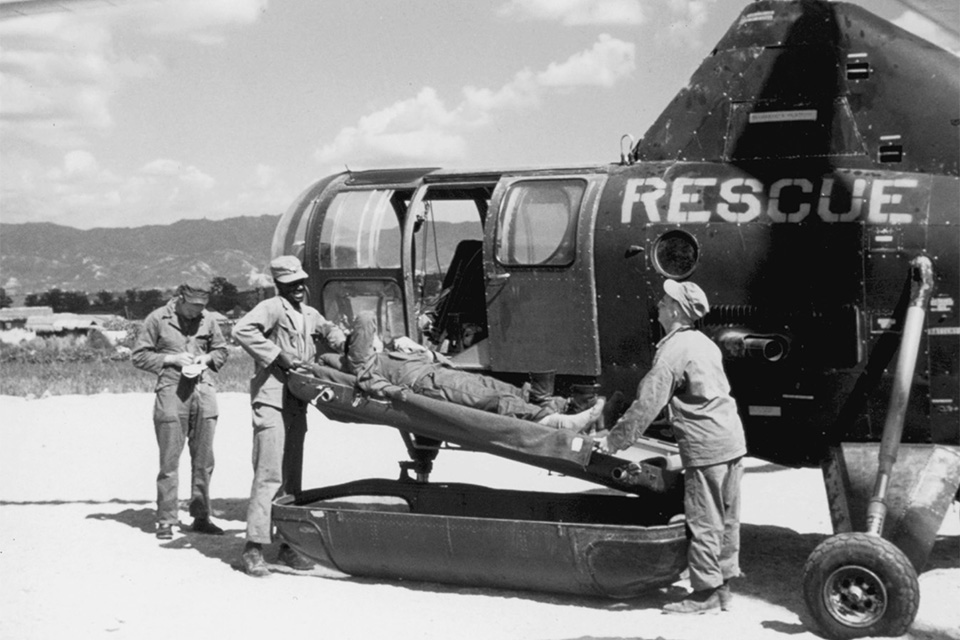
As UN forces advanced out of Pusan following the Inchon landing, Detachment F moved north to Seoul K-16, but had to fall back to K-37 south of Taegu when the Chinese attacks forced the allies to retreat. In February Detachment F helicopters made multiple flights to deliver blankets, blood plasma and medical supplies and to fly out casualties when part of the 2nd Division was surrounded at Chipyong-ni. At times defying 40-knot winds and blinding snow, the chopper crews saved 52 soldiers within two days.
In response to calls for more capable aircraft, an Air Proving Ground team brought two Sikorsky H-19s to Korea in March 1951. The day after they arrived, one was used to help the smaller H-5s evacuate paratroopers from the Mussan-ni drop zone.
While UN forces stalled the Chinese offensive in late spring of 1951, the detachment’s missions changed. With the fighting settling into trench warfare, the Eighth Army was suffering fewer casualties and Army helicopters were taking over a larger share of the medevac duties. But enemy flak was downing more allied aircraft over hostile territory, so the Air Force helicopters soon went back to rescue missions.
More rotary wing reading
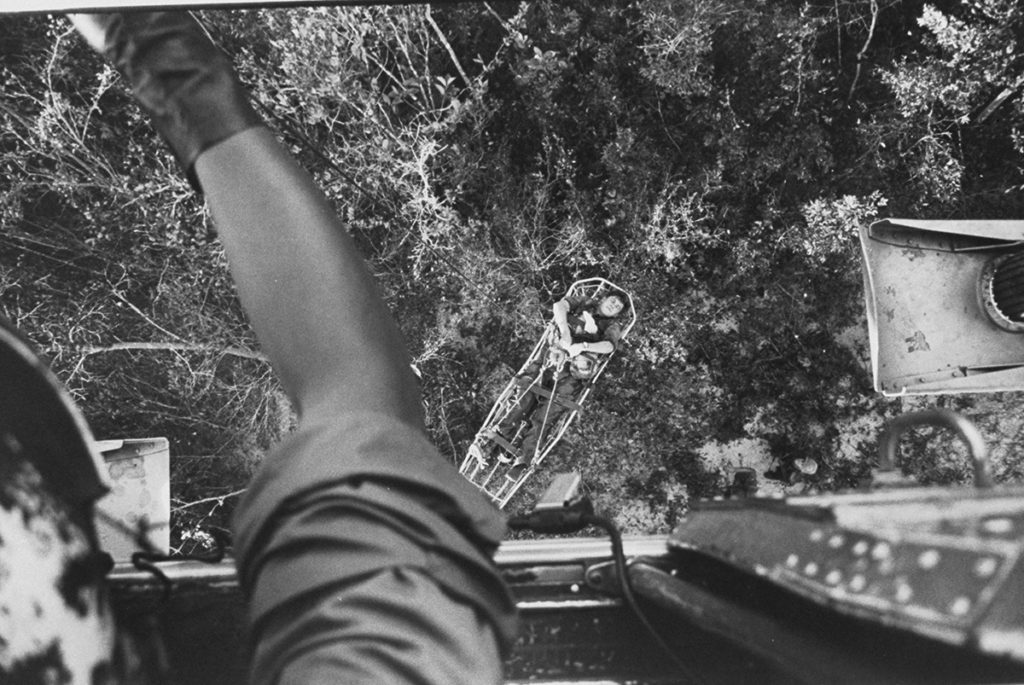
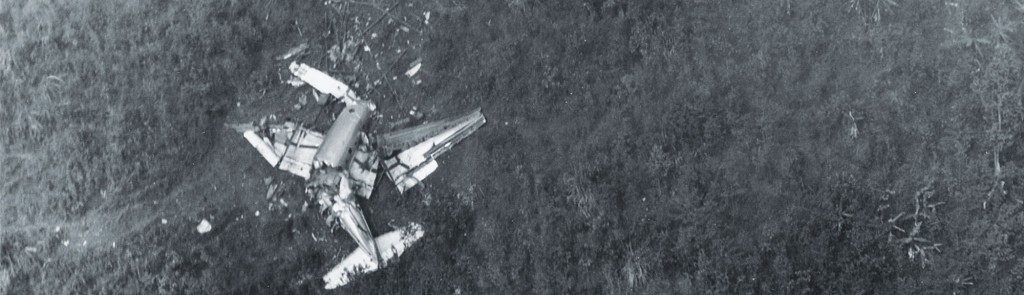
In June the Air Force renamed the unit Detachment 1, 3rd ARS, and opened a search-and-rescue coordination facility at the Fifth Air Force’s tactical air control center in Seoul. In February 1952, Detachment 1 began replacing its H-5s with H-19s. The larger helicopters had a flight radius of 120 miles, compared to 85 miles for the H-5s, and could carry nine litters instead of only one. As part of worldwide reorganizations in 1952-53, the 3rd Air Rescue Squadron became a group and Detachment 1 became the 2157th Air Rescue Squadron.
Despite its early work with helicopters, the Army was the last of the U.S. services to bring rotary-wing units into Korea. The first Army unit, the 2nd Helicopter Detachment, arrived there on November 22, 1950, with four Bell H-13Bs (the same aircraft as the Marine HTLs). After additional training, the unit became operational on January 1, 1951. It was joined later that month by the 3rd and 4th Helicopter detachments, with four of the Bells. Using procedures developed by the Air Force, the H-13s began to assume much of the medevac burden.
In May the detachments were redesignated as the 8191st, 8192nd and 8193rd Army units. Similar to the learning process the Marines and the Air Force had gone through, a postwar report said, the Army pilots and the ground troops they served had to learn by trial and error what their choppers could or could not do during medevac missions. For example, ground units calling for medevacs had to be taught the importance of providing accurate coordinates for pickup and how to mark landing spots with panels or colored smoke. Ground commanders were told to request helicopter evacuation only for troops with head, chest or abdominal wounds, multiple fractures and great loss of blood, or if no ambulance were available or ground transport would likely exacerbate patients’ serious injuries.
The ground troops did not realize the “extreme vulnerability of helicopters” to enemy groundfire because of their slow speed, low altitude and sensitivity to damage, the report said. As a result of those risks and the shortage of helicopters, the Eighth Army barred their use on missions involving the danger of enemy fire. The restrictions, however, “did not prevent pilots from evacuating patients from units surrounded by the enemy, nor did it prevent the evacuation of casualties sustained by patrols operating forward of friendly front lines.”
“Actual operations violated every one of the general rules, undoing standard operating procedures and revealing wide capabilities,” according to an Army history. For example, on August 18, 1951, Captain Arne H. Eliasson, commander of the 8192nd, braved enemy mortar fire on multiple trips to evacuate 14 wounded soldiers from a patrol in front of the lines.
By the end of 1951, historian Lynn Montross observed, “evacuations of casualties by helicopter was no longer a Marine Corps specialty. It had become the American way.” During their first 12 months of operation in 1951, Army helicopters carried 5,040 wounded. By mid-1953, despite the shortcomings of the early helicopters, Army choppers evacuated 1,273 casualties in a single month. “Costly, experimental and cranky, the helicopter could be justified only on the grounds that those it carried, almost to a man, would have died without it,” an Army historian concluded.
Army commanders quickly found, as the Marines had, that given the mountainous terrain and poor communications that plagued allied forces, helicopters were valuable command-and-control aids. An Army report said the helos “have been established as an extremely useful tactical tool of command in combat and their use has permitted commanders to have a more intimate knowledge of conditions with their command than ever before possible.”
As useful as the small Sikorskys and Bells were, all the services saw the need for larger helicopters. The transport helicopters that Craig had requested arrived in Korea on September 2, 1951, when Marine Helicopter Transport Squadron 161 flew into Pusan with 15 HRS-1s (the Marine Corps designation for the H-19). The HRS-1s “were a cut above the original helos,” said retired Colonel John F. Carey, who flew with HMR-161 in 1952-53. “They could carry 10 or more Koreans and about eight fully equipped Marines.”
The squadron conducted the first mass helicopter resupply mission on September 13 during Operation Windmill I. In the course of 28 flights it transported 18,848 pounds of gear and 74 Marines into a ridgeline position in the Punchbowl area. A week later, it conducted the first combat troop movement, Operation Summit, quickly shuttling 224 Marines of the division’s Recon Company and 17,772 pounds of supplies to a remote hilltop in the same area.
Less than a month after arriving in Korea, HMR-161 tried a nighttime supply mission, Operation Blackbird. The devices used to mark the landing zone proved unsatisfactory, and as a result that experiment was never repeated. But the squadron joined VMO-6 in evacuating casualties at night, even though the choppers had few instruments and no electronic navigation aids.
On November 11, the squadron flew a battalion of the 5th Marines to the mountainous front line and took out a battalion of the 1st Marines in Operation Switch. “They thought that was a helluva lot better than taking trucks,” Carey said of the airlifted leathernecks. Even bigger movements of troops and supplies would follow, including lifting 1.6 million pounds of cargo to resupply two regiments in Operation Haylift II, on February 23-27, 1953. Although they operated along the front lines, none of HMR-161’s troop lifts or supply missions were into hot landing zones, and they did not lose any helicopters to enemy fire.
Carey explained that he led the first mission using helicopters to quickly relocate a battery of rocket launchers to avoid enemy counterfire. “They kicked up an awful lot of dust when they fired,” he said. “We had to get them out of there, and we did.” They moved the battery twice in one day, carrying the four launchers and extra rockets slung beneath their choppers and the crews inside, Carey said. “They had introduced a new infantry technique of ‘hit and run’ tactics….The Marine Corps wartime use of the new aerial vehicle had proven clearly that helicopters had become a necessary and integral component of the modern day balanced military force,” a Marine history pointed out.
Although all of the early troop lift missions were carefully planned, the squadron was soon able to conduct them on short notice. After one such quick-reaction operation, the official report referred to HMR-161 as an “on-call tactical tool.”
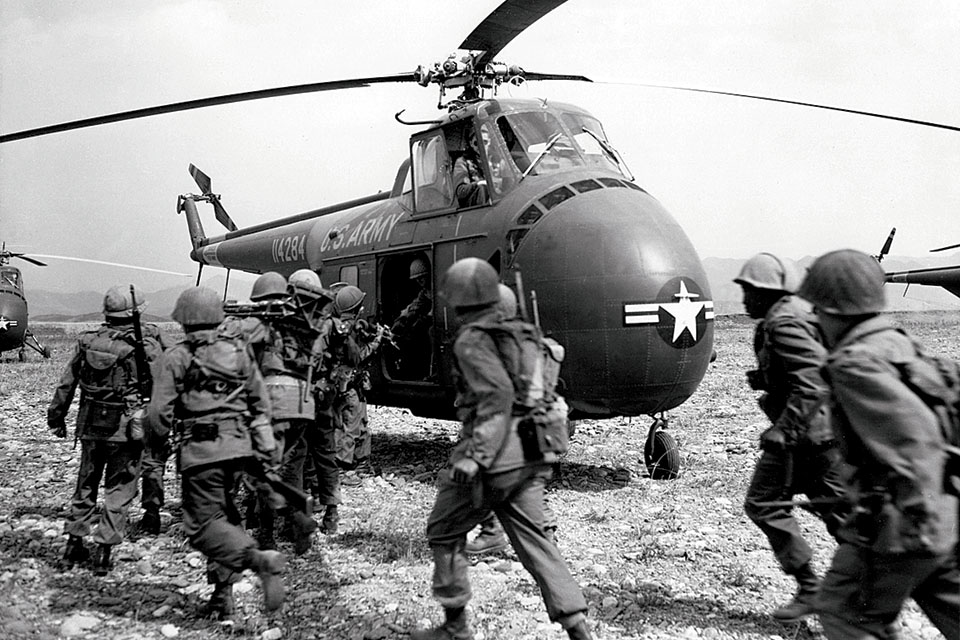
The Army sent its first H-19s to Korea early in 1953 with the 6th Transportation Company (Helicopter). The company got its first mission on March 20, to supply forward elements of the 3rd Division that were cut off by floods. Ten choppers made a total of 30 round trips to lift 33,925 pounds of food, ammunition and charcoal to landing spots 300 yards behind the main line of resistance.
On May 1, the 13th Transportation Company (Helicopter) arrived at Inchon, after which nine of its pilots were sent to the 6th for orientation and training. They teamed up with crews from the 6th to fly 16 of the H-19s to supply three frontline regiments of the 25th Infantry Division in Operation Skyhook on May 22-24.
To improve administrative control, on June 15 the two companies were united into the 1st Transportation Army Aviation Battalion. In June the Marine and Army cargo helicopter units teamed up in the largest chopper operation of the war, using a total of 45 aircraft to move 800 ROK troops. The two services also shared the duties of returning allied prisoners of war to freedom, starting with Operation Little Switch, on April 20-26, 1953, and accelerating with Operation Big Switch after the July 27 armistice. Thousands of U.S. and allied POWs were carried on helicopters to freedom from the exchange point at Panmunjom.
Although the first extensive use of helicopters in combat was handicapped by the limited capabilities of the early aircraft and the need to develop procedures under wartime pressure, they were widely hailed as tools that would be vital in future conflicts. On the basis of his experiences in Korea, Eighth Army commander Lt. Gen. Maxwell Taylor said: “The cargo helicopter, employed in mass, can extend the tactical mobility of the Army far beyond its normal capability. I hope that the United States Army will make ample provisions for the full exploitation of the helicopter in the future.”
By the time the United States went to war again in Vietnam, a decade later, helicopters had made the transition from useful novelty to a symbol of the American way of fighting.
This article was written by Retired U.S. Navy aviator and reporter Otto Kreisher and originally published in the January 2007 issue of Aviation History. For more great articles click here and subscribe today!
Ready to build a replica of the iconic Bell H-13 “M*A*S*H” helicopter? Click here!