
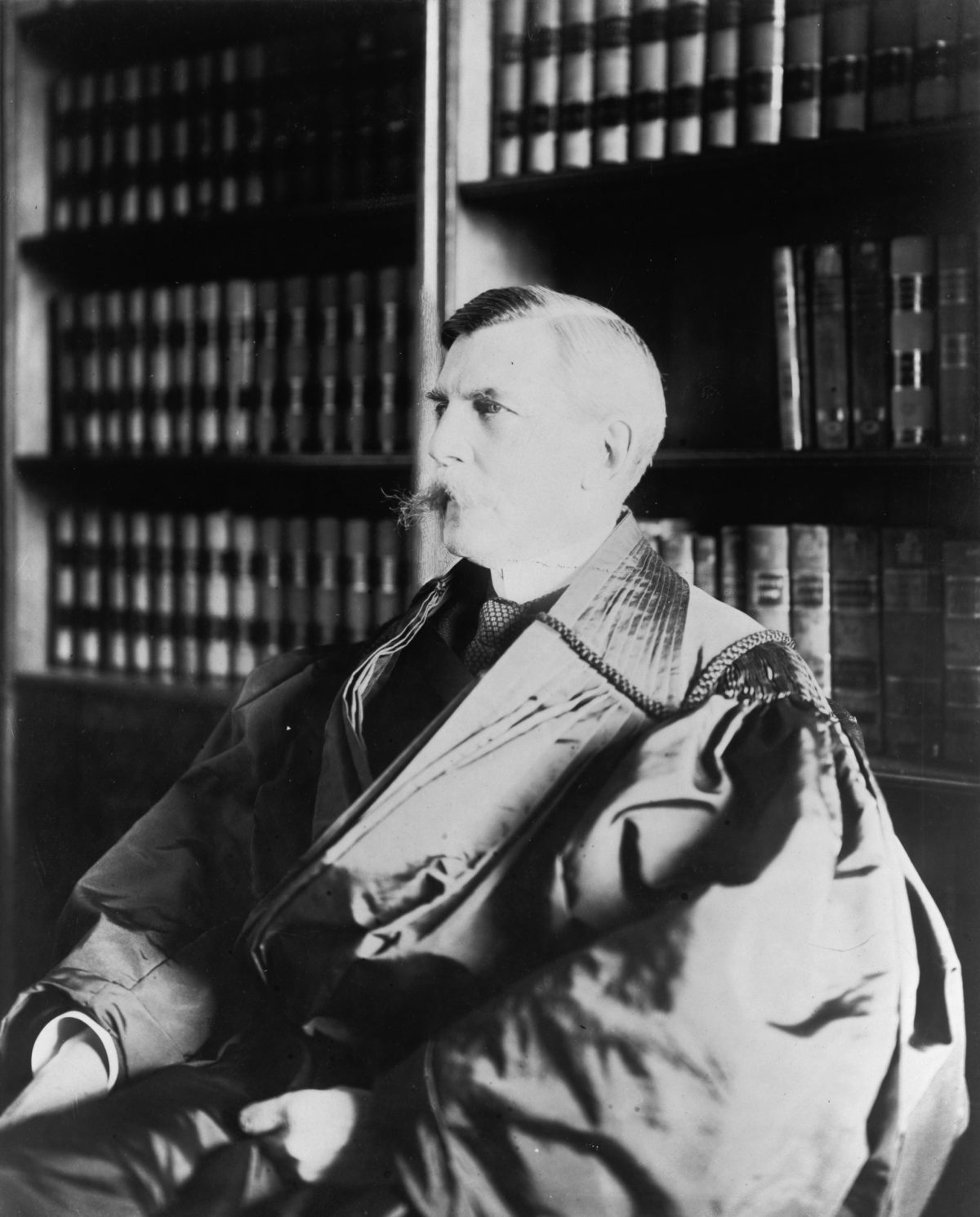
Supreme Court Justice Oliver Wendell Holmes was traveling by train to Washington, D.C., one morning nearly a century ago when a conductor asked for his ticket. Holmes searched high and low for it until the conductor reassured him, “Don’t worry about your ticket, Mr. Holmes. We all know who you are. When you get to your destination, you can find it and just mail it to us.”
“My dear man, the problem is not my ticket,” quipped Holmes, who was renowned for his quick wit. “The problem is … where am I going?”
We face a similar guessing game as a nation every time a new Supreme Court justice is chosen. The president and other officials involved in the selection process can only speculate what route a new appointee will follow during a lifetime tenure on the Court, much less what lasting impact he or she might have on interpretation of our laws. And predicting whether any justice will achieve a measure of greatness is a crapshoot.
Recommended for you
Sonia Sotomayor is no exception. When President Barack Obama put her up for Senate confirmation this summer, he touted her “empathy” and potential for blazing a new historical trail as the first Latina justice. She has been widely compared to Thurgood Marshall, the first African-American justice, and Sandra Day O’Connor, the first female justice, both of whom made history by breaking racial and gender barriers.
But neither Marshall nor O’Connor are generally viewed as intellectual leaders on the Court. Marshall brought a deep sense of social justice to the Court’s deliberations, but he was not equally known for his contribution to legal theory and doctrine — at least, no more than the vast majority of his predecessors or successors. O’Connor virtually functioned as a court of one — the consistent swing vote on a Court rigidly divided in many areas by a 4-4 split — but will not be remembered for the depth or consistency of her opinions. Even though she often dictated the outcome of cases, she did so with insular and sometimes conflicting rationales.
The most notable trend in recent decades has been for presidents to put forward nominees who have empty files: impressive academic and judicial résumés combined with a sparse history of controversial speeches or writings that might be turned against them during the confirmation process. Such formulaic selections reflect the vagaries of our political system, but also our discomfort with people who are creative thinkers and can’t be easily pigeonholed as either judicial activists or strict constructionists. Even though America has the deepest pool of lawyers in the world, if genius is found on the modern Court it is largely accidental.
THE GAME CHANGERS
There is no standard profile for the selection of great justices. However, close examination of the records of the 111 justices who have served on the Court reveals that a select few managed to see a legal horizon far beyond the view of their contemporaries, often espousing views that would not reflect majoritarian values for decades. The nine justices featured on the pages that follow all exhibited an ability to rise above conventional thinking and prejudices and epitomize what constitutes the right stuff on the Supreme Court.
One of the primary measures of greatness on the Supreme Court is the impact a justice’s decisions have on the society at large. John Marshall, Charles Evan Hughes and Earl Warren all sat on the bench during transformative periods in American history and the social and political consequences of their decisions reverberated for generations.
JOHN marShall, chief justice (1801-1835)
Marshall authored the most important American judicial opinion of all time: Marbury v. Madison (1803), which established the supremacy of the Court in legal judgments. He also issued a series of decisions involving the balance of power between the federal government and the states that laid the legal foundation for the young republic. “A hush falls upon us even now as we listen to his words,” Justice Benjamin Cardozo wrote more than two centuries later.
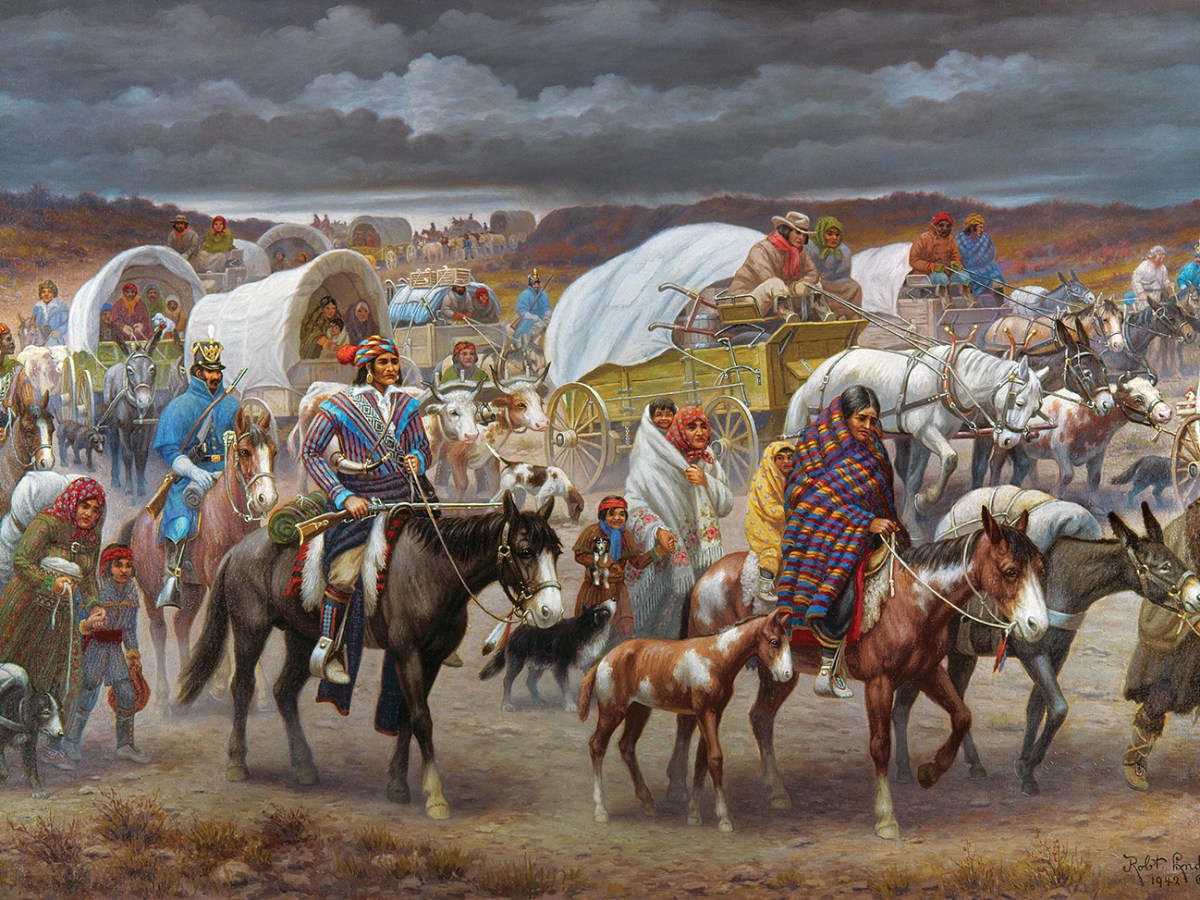
Despite such praise, Marshall has an obvious advantage. His decisions on judicial review, Indian tribes and other fundamental issues reflected the fact that these were the first defining cases. One has to recognize that anyone writing these early decisions would have had the same fundamental impact. Justice Oliver Wendell Holmes, a titan of the early-20th-century Court, alluded to the importance of timing when he wryly noted that much of Marshall’s “greatness consists of his being there.”
Marshall was not particularly profound or intellectual in his opinions, which often read more like commandments than interpretations on the law. He used Marbury to stake out valuable territory for the Court, a gamble that paid off despite initial protests that he was amending the Constitution through the ruling — the earliest allegation of judicial activism. Yet the decision achieved a vital balancing of the judicial, legislative and executive branches of government that assured the peaceful resolution of countless conflicts.
Marshall was interested more in the outcomes than the analytical underpinnings of his judicial opinions, but he is responsible for the institutional status and authority of the Court itself — giving him a Moses-like stature that is unrivaled by his successors.
CHarles evan hughes, associate justice (1910-1916), chief justice (1930-1941)
Like Marshall, Hughes was not renowned for his eloquence or intellect. But he used his political skills to maneuver the Court through swirling waters of social change. Hughes was the Republican governor of New York before beginning a six-year stint as an associate justice in 1910. Then, after resigning from the Court to mount an unsuccessful campaign for president and spending several years in private practice as a lawyer, he served as secretary of state under Warren Harding from 1921 to 1925. He returned to the Supreme Court five years later when Herbert Hoover appointed him chief justice
During the Great Depression, Hughes incurred the wrath of Franklin D. Roosevelt as the leader of a Court that declared several New Deal measures unconstitutional. Most notably, in Schechter Poultry Corp. v. United States (1935), Hughes ruled that agreements between Roosevelt’s National Recovery Administration and private industry regarding work hours, pay rates and price fixing were invalid because they delegated legislative power to the executive branch. After Roosevelt was re-elected by a landslide in 1936, he initiated judicial reorganization legislation that would have granted him the power to neutralize the Court’s opposition to his plans by adding more justices.
Roosevelt’s court-packing legislation ultimately failed in Congress. But in the interim Hughes helped avoid a cataclysmic showdown between the Court and the president through quiet diplomacy and by working closely with Louis Brandeis, Harlan Fiske Stone and Benjamin Cardozo in decisions supporting New Deal legislation he believed did not threaten the foundations of constitutional law.
Earl Warren, Chief justice (1953-1969)
Before joining the Supreme Court, Warren was a consummate politician: a longtime governor of California who proved so popular in his first term that he won the nominations of both the Republican and Democratic parties when he ran for re-election. In 1952 he stood as a favorite-son candidate of California for the Republican nomination for president, but withdrew in support of Dwight Eisenhower, who appointed him chief justice a year later. Eisenhower proclaimed that the Court needed a justice with conservative economic and social values much like his own. Instead, Warren took the Court boldly into the 20th century with transformative liberal rulings in areas ranging from desegregation to free speech to criminal procedure.
The Warren Court issued one landmark decision after another, and Warren wrote the majority opinion in some of the most famous cases: Brown v. Board of Education (1954) banned segregation in public schools; Miranda v. Arizona (1966) required that criminal defendants be informed of their rights to remain silent and to be represented by a lawyer; Loving v. Virginia (1967) struck down prohibitions on interracial marriage. Liberals generally hailed the Warren Court’s decisions, while conservatives cried foul.
Nevertheless, Warren was able to find grounds for unanimity among his colleagues in controversial cases like Brown and put the entire weight and credibility of the Court behind opinions that brought great social change.
The contrarians
A handful of justices had a profound impact on the evolution of legal theory by bravely bucking against prevailing trends. Louis Brandeis, Oliver Wendell Holmes Jr. and William Brennan were independent thinkers who stayed the course even when their opinions were scorned by the majority.

Louis Brandeis, Associate justice (1916-1939)
As the first Jew named to the Court and an unabashed advocate of social justice who had earned the nickname the “People’s Lawyer,” Brandeis faced a bitter confirmation fight. “He was dangerous not just because of his brilliance, his arithmetic, his courage,” his fellow justice William O. Douglas later wrote. “He was dangerous because he was incorruptible.”
Indeed, it was Brandeis’ willingness to think beyond the status quo that made him such a prescient figure on the Court. His dissenting opinions, particularly in cases involving freedom of speech and the right to privacy, would later become the majority positions of the Court. In Olmstead v. United States (1928), he bristled at the willingness of his colleagues to endorse the government’s use of wiretap technology to gather evidence and argued passionately for an individual’s “right to be let alone.”
His dissent is still one of the most quoted opinions in the Court’s history. “Men born to freedom are naturally alert to repel invasion of their liberty by evil-minded rulers,” he wrote. “The greatest dangers to liberty lurk in insidious encroachment by men of zeal, well-meaning but without understanding.”
William Brennan, associate justice (1956-1990)
Brennan turned out to be a Supreme surprise after President Dwight Eisenhower named him to the Court in 1956. Brennan’s record as a justice on the New Jersey Supreme Court and public comments he had made about criminal law suggested he would follow a conservative course, but he turned out to be one of the most liberal justices in the history of the Court.
He was revered by the left and reviled by the right because of his outspoken opposition to the death penalty and support for abortion rights.
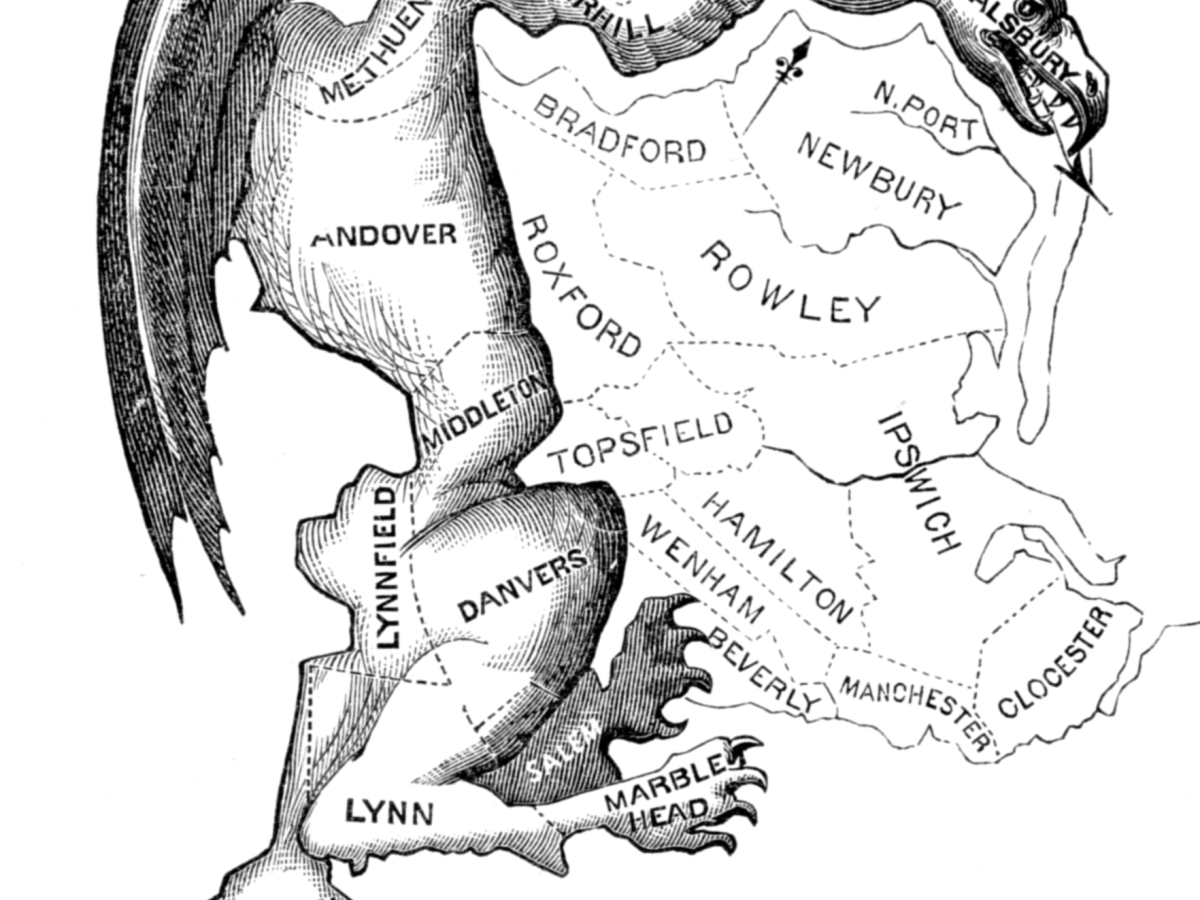
But his opinions on less socially contentious issues had an equal if not greater impact on the expansion of constitutional theory and doctrines. New York Times v. Sullivan (1964) established the constitutional standard for defamation of public officials. Baker v. Carr (1962) enabled federal courts to protect individual voting rights by intervening in the reapportionment of electoral districts. Malloy v. Hogan (1964) extended a defendant’s Fifth Amendment right against self-incrimination to state courts.
Chief Justice Earl Warren often assigned rulings to Brennan that required a comprehensive and profound treatment, leading Court watchers to dub him the “Deputy Chief.”
OLIVER WENDELL HOLMES, ASSOCIATE JUSTICE (1902-1932)
Holmes first exhibited his fearless instincts for diving headlong into the fray during the Civil War, suffering wounds as a first lieutenant with the Massachusetts Volunteer Infantry at the battles of Ball’s Bluff, Antietam and Fredericksburg. After the war, Holmes established himself as one of America’s preeminent legal theorists with his 1881 book, The Common Law, and was a Harvard Law School professor before serving for two decades as a justice of the Supreme Judicial Court of Massachusetts. When President Theodore Roosevelt put his name forward as a Supreme Court justice in 1902, it was one of the rare occasions that a brilliant legal scholar has been nominated with little regard for partisan politics.
Holmes proved to be an independent spirit during his 30 years on the Court, taking a contrarian position in so many decisions that he was dubbed the “Great Dissenter.” But the pithiness of both his minority and majority opinions on issues as diverse as copyright, due process and antitrust legislation resulted in him becoming one of the most widely cited Supreme Court justices ever. He is particularly well known for his articulation of the “clear and present danger” exception to the right of free speech in a unanimous ruling by the Court in Schenck v. United States (1919), in which he famously declared that First Amendment protections do not apply to an individual “falsely shouting fire in a crowded theater and causing a panic.” However, in his dissent in Abrams v. United State (1919), Holmes objected to the use of the clear-and-present-danger test to punish people solely on the content of their speech.
GET HISTORY’S GREATEST TALES—RIGHT IN YOUR INBOX
Subscribe to our HistoryNet Now! newsletter for the best of the past, delivered every Monday and Thursday.
THE VISIONARIES
All of the great Supreme Court justices were visionaries. But John Marshall Harlan, Hugo Black and Joseph Story possessed extraordinary insights that allowed them to transcend their times and articulate a far-reaching view of our laws.
JOHN MARSHALL HARLAN, ASSOCIATE JUSTICE (1877-1911)
Harlan was born into a slaveholding family in Kentucky, and as a Union Army colonel during the Civil War swore that he would resign if President Abraham Lincoln signed the Emancipation Proclamation. But he later broke with family tradition and became an outspoken critic of slavery, which he described as “the most perfect despotism that ever existed on this earth.” Harlan was the first justice to have earned a modern law degree and, after joining the Court in 1877, he supplemented his income by teaching evening classes at George Washington University Law School.
Harlan became an eloquent defender of equal rights, and was the sole dissenter in Plessy v. Ferguson (1896), the infamous case in which the Court affirmed the constitutionality of racially segregated public facilities that were “separate but equal.” In his dissent in Hurtado v. California (1884), Harlan was the first justice to argue that the 14th Amendment to the Constitution, which extended rights of citizenship to blacks after the Civil War, also prohibited states from constructing laws that infringe on protections accorded individuals under the Bill of Rights. Likewise, in the Insular Cases (1901), Harlan insisted that residents of new U.S. territories in the Philippines, Puerto Rico and Guam should be entitled to the same rights as all American citizens.
While serving one of the longest tenures of any justice, Harlan was frequently in the minority, but he articulated a new way of thinking about core issues of the Constitution that was decades ahead of his time.
HUGO BLACK, associate justice (1937-1971)
Black’s early career as a local prosecutor, police court judge and Democratic senator from Alabama was blemished by his membership in the Ku Klux Klan. “I would have joined any group if it helped get me votes,” he admitted years later. But over the course of his 34-year tenure on the Court, he articulated a highly principled view of the Constitution.
Black believed in restricting the interpretation of the Constitution to its “plain meaning.” When the majority invalidated a law that prohibited the use of contraceptives in Griswold v. Connecticut (1965) on the grounds that it violated an individual’s right to privacy, Black argued in his dissent that it was not “the duty of this Court to keep the Constitution in tune with the times.” That same insistence on strict textual analysis of the Constitution made him perhaps the Court’s most passionate defender of the rights of free speech and association. In his dissent in Dennis v. United States (1966), a case in which the majority upheld the conspiracy conviction of a Communist Party leader, he wrote, “Public opinion being what it now is, few will protest the conviction of these Communist petitioners.
There is hope, however, that, in calmer times, when present pressures, passions and fears subside, this or some later Court will restore the First Amendment liberties to the high preferred place where they belong in a free society.” He also wrote the landmark decision in Gideon v. Wainwright (1963), which established that states must provide an attorney to an indigent defendant.
Black defied easy categorization as either a conservative or a liberal, but he brought a profound clarity to his constitutional interpretation of cases that continue to have a dramatic impact on both law and American politics.
Joseph Story, associate justice (1812-1845)

Story was only 32 years old when he joined the Supreme Court and was overshadowed by John Marshall during most of his tenure on the bench, but he ultimately had a greater impact on the law, society and legal theory than any other justice in history. Even though Marshall assigned virtually all the major early Supreme Court opinions to himself, Story was the intellectual anchor who gave lasting meaning to the decisions. After declaring the outcome of one case Marshall turned to him and said, “Now, Story, that is the law; you find the precedents for it.”
When he was allowed to write, Story proved that he was the better of Marshall as a legal mind. In Martin v. Hunter’s Lessee (1816) he established the Court’s authority over state decisions touching on federal law. His decision in Bank of the United States v. Dandridge (1827) led to the creation of the modern corporation as a legal entity and other seminal opinions laid the foundations for admiralty law, equity law and patent law.
In United States v. Amistad (1841), which was the basis of a 1997 Steven Spielberg film starring retired Supreme Court Justice Harry Blackmun as Story, he bolstered the abolitionist movement by ruling that the transport of a group of Africans across the Atlantic was illegal and the slaves should be freed.
Story clearly saw the law as an evolving body of doctrines that connected at deep common roots, and the influence of his thinking spread when he became the first Dane Professor of Law at Harvard University and penned his three-volume Commentaries on the Constitution (1833) while still serving on the Court. He also was one of the earliest voices calling for society to end slavery and to educate women.
While the turgid style of the time makes Story’s opinions less powerful to read than some of his successors, he showed the same quiet passion of his father, Elisha, one of the organizers of the Boston Tea Party. Above all, Story adopted a more modern view of a jurist in avoiding political entanglements and public acclaim.
“Republics are created by the virtue, public spirit, and intelligence of the citizens,” he wrote. “They fall, when the wise are banished from the public councils, because they dare to be honest, and the profligate are rewarded, because they flatter the people, in order to betray them.”
Jonathan Turley is a George Washington University law professor who has written extensively on legal and policy issues for various national publications and appeared as a commentator on all the major networks.
historynet magazines
Our 9 best-selling history titles feature in-depth storytelling and iconic imagery to engage and inform on the people, the wars, and the events that shaped America and the world.