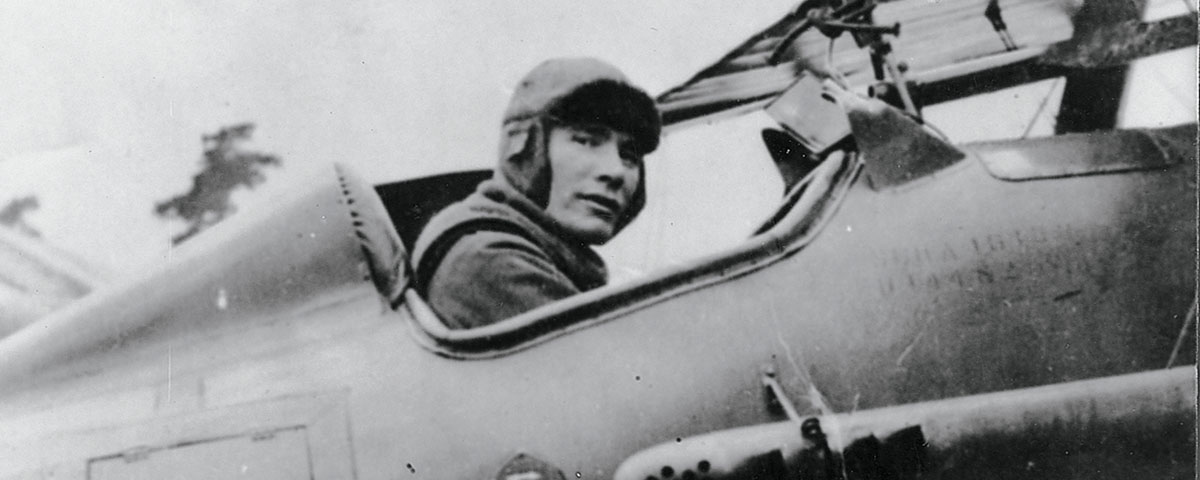
RAF flight leader Edward ‘Mick’ Mannock devoted his meteoric combat career to teaching squadron mates how to survive in the Western Front’s deadly skies
On a pleasant April afternoon high above northwestern France in 1918, S.E.5as of A Flight, No. 74 Squadron, Royal Air Force, were on their second patrol. It was the unit’s first day of combat, and all the pilots except their leader, Captain Edward “Mick” Mannock, were novices. As his men watched wide-eyed, Mannock suddenly wagged his wings, alerting them that the enemy was nearby, then dropped down like a hawk on a formation of German Albatros fighters. Mannock centered a black-and-yellow Albatros D.V in his Aldis sight, sucked in a breath and gently squeezed the firing button, loosing a lethal stream of silky white tracers. The Albatros broke up in the air. Back on the ground, pilots congratulated their captain on his second victory of the day, but what left them full of undying admiration for him was Mannock’s combat report, in which he wrote, “The whole flight should share in the credit for the EA [enemy aircraft], as they all contributed to its destruction.”
That disclaimer was indicative of the unselfish and intense devotion to his comrades that characterized the life of Edward Mannock, one of Britain’s all-time greatest combat pilots and leaders of men. By any measure, he was a man of extraordinary gifts, a man who surely would have made as great an impact on the postwar world as he did on those who knew and loved him during his brilliant career as a fighter pilot.
Mannock was born in Cork, Ireland, on May 24, 1887, son of a soldier in the Royal Scots Guards who fought in Britain’s imperial wars. A rough man, he beat Edward and his siblings and drank heavily. While his father was posted to India, Mannock contracted an amoebic infestation that weakened his left eye. That misfortune would be subsequently transformed into the oft-repeated myth of Mannock’s being the “ace with one eye.” Despite early hardships, young Edward possessed a sharp analytical mind. He hated inequality and later became a fervent socialist.
When Mannock was in his early teens, his father abandoned the family, and Edward had to work to support them. He left home and boarded with the Eyles family. Jim Eyles later wrote that Mannock was a person “with high ideals and with a great love for his fellow mortals. He hated cruelty and poverty….A kinder, more thoughtful man you could never meet.” It seems likely that Mannock could have risen in the Labour Party, for he was an excellent speaker. But the coming global conflagration would soon shatter his high ambitions.
When war was declared in August 1914, Mannock was working for a British company in Constantinople. Since the Ottoman empire sided with Germany, he and other British citizens were thrown into prison camps, where they endured appalling conditions. Mannock quickly developed a hatred for the Turks and the Germans. In April 1915, with the assistance of Jim Eyles, he was repatriated. Shortly afterward, Mannock joined the Royal Army Medical Corps and then the Royal Engineers, where he was commissioned a second lieutenant. But he immediately transferred to the Royal Flying Corps (RFC) in August 1916, so he could be more involved in the fighting.
Despite his weak left eye, Mannock passed the medical exam. He was apparently a natural pilot with an excellent feel for his machine. One of his instructors, just returned from combat flying in France, was ace Captain James McCudden. The two got along well, and McCudden made a great impact on his pupil. “Mannock,” McCudden wrote, “was a typical example of the impetuous young Irishman, and I always thought he was the type to do or die.” He would do both in France.
With his flight training completed, on April 6, 1917, Mannock was posted to C Flight in No. 40 Squadron, which was flying the highly maneuverable French-built Nieuport 17 fighter armed with one Lewis machine gun mounted above the upper wing. A new phase in Mannock’s life had commenced, and as always for him it was filled with challenges. He made an awful first impression at his new home and rubbed just about everybody the wrong way, failing to appreciate the clubby public school atmosphere of an RFC squadron. Lieutenant Lionel A. Blaxland, a squadron mate, recalled that Mannock “seemed too cocky for his experience, which was nil….New men usually took their time and listened to the more experienced hands; Mannock was the complete opposite. He offered ideas about everything: how the war was going, how it should be fought, the role of scout pilots.” He also broke several unwritten rules of pilot etiquette, asking comrades how many “Huns” they had shot down and—a terrible faux pas—sitting in the seat previously occupied by a pilot who had just been killed.
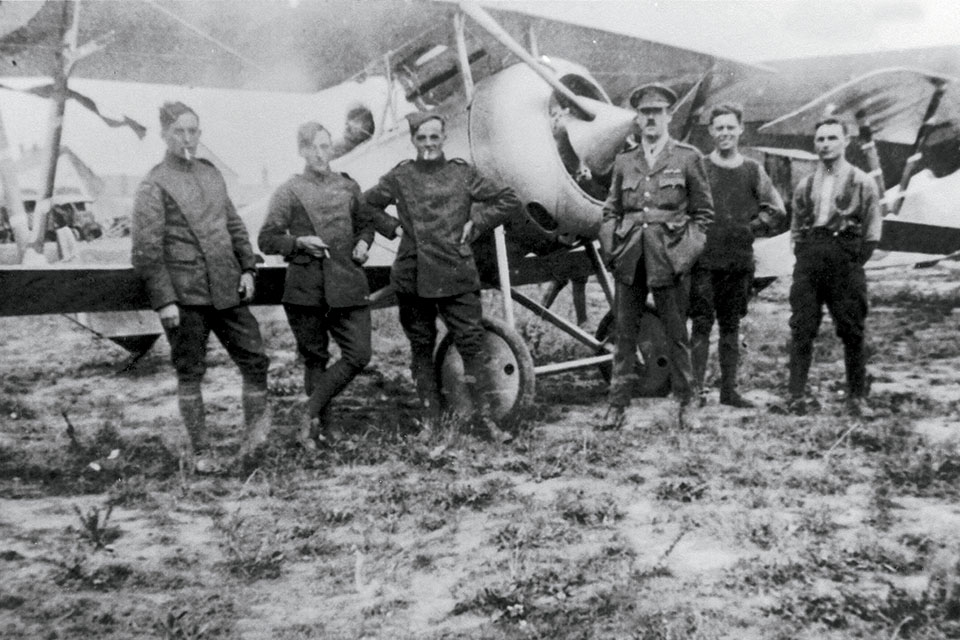
To make matters worse, Mannock spent hours at target practice but appeared hesitant when confronting enemy planes over the lines. He recorded his emotions on his first combat patrol in his diary on April 13, 1917: “I went over the lines for the first time, escorting FEs [Farman Experimental F.E.2b reconnaissance planes]. Heavily ‘Archied.’ My feelings very funny.” In fact, the novice pilot who had talked so big in the mess had been very afraid. On subsequent flights Mannock was seen as timid in the face of the enemy—“windy” or “having the wind up,” in pilot’s slang. Some of his squadron mates began to shun him and talk about him behind his back. The squadron was soon divided into his supporters and detractors.
His detractors could only be silenced by deeds. They got a taste of Mannock’s mettle on April 19 when, while practice diving at a ground target from 2,000 feet, the lower right wing of his Nieuport snapped off and the plane plunged downward. Mannock somehow managed to land the crippled craft safely. After that display of sang-froid and flying skill, the other pilots began to reconsider their opinions of him.
They were further impressed on May 7 when Mannock joined a flight of five others for a strike on German observation balloons. Mannock destroyed a balloon for his first victory that day. But he wrote in his diary: “My fuselage had bullet holes in it, one very near my head, and the wings were more or less riddled. I don’t want to go through such an experience again.”
Still, fired with new confidence, Mannock became more aggressive in the air and was now accepted in the squadron; men who had formerly given him the cold shoulder now bought him drinks in the mess. He sometimes led combat patrols, and on at least two occasions believed he had brought down a German aircraft but did not claim it, as there were no witnesses. His great desire at that point was to gain a “real” victory over an enemy airplane, but this eluded him.
His persistence eventually paid off. On June 7, flying Nieuport B1552 north of Lille, Mannock went after an Albatros D.III at 13,000 feet. He had been flying escort for a squadron of F.E.2b bombers. Coming in from behind, Mannock pumped 60 rounds into the German fighter at 10 yards, and it went down out of control, an action he jubilantly reported back at the base.
Shortly afterward, Mannock suffered an eye injury, and was sent home on a two-week leave. He used his time at home to think about combat tactics, and when he rejoined his unit, he was convinced of his fighting abilities. On July 12, Mannock shot down a DFW C.V two-seater that crashed inside British lines. Delighted with the opportunity to examine his “work” up close, Mannock drove out to the crash site. The observer had survived, but the pilot was dead. Upon returning to base, he spoke about this to his friend Lieutenant William Maclanachan. “It sickened me,” Mannock told him, “but I wanted to see where my shots had gone. Do you know, there were three neat little bullet holes right here”—Mannock indicated the side of his head. In his diary, Mannock added a further detail, a “little black-and-tan terrier—dead—in the observer’s seat. I felt exactly like a murderer.” Nevertheless, he sent another DFW down out of control the next day.
July 1917 would be important for Mannock in many ways. Not only did he score his first concrete kill, but a squadron mate, Captain George L. “Zulu” Lloyd, spoke privately with him, telling him that a few men still doubted his fighting spirit.
“Of course, I’ve been frightened against my will—nervous reaction,” Mannock forthrightly explained. “I’ve now conquered this physical defect and, having conquered myself, I will now conquer the Hun. Air fighting is a science. I have been studying it and have not been unduly worried at not getting Huns at the expense of being reckless.” Lloyd was more than satisfied with this answer. When some men still questioned Mannock’s abilities, it was put down to jealousy.
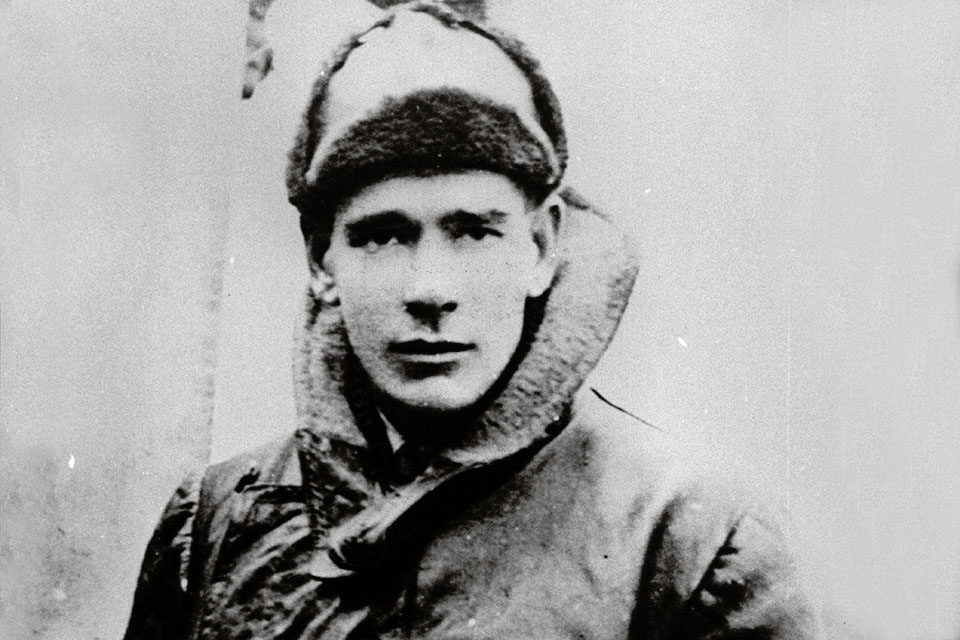
Another event that same month was to have a profound effect on Mannock. On the 21st he watched in horror as 2nd Lt. F.W. Rook, a well-liked squadron member, plummeted to earth in flames after being attacked by 1st Lt. Adolf Ritter von Tutschek of Jasta 12. Maclanachan remembered that Mannock later came into his hut, speaking about what was to become an obsession with him. “That’s the way they’re going to get me in the end—flames and finish,” Mannock said with tears in his eyes. Then he explained why he had started to carry his service revolver with him on flights: “to finish myself as soon as I see the first sign of flames.”
The next day Mannock was awarded the Military Cross for his “very fine offensive spirit and great fearlessness attacking the enemy at close range and low altitudes under heavy fire from the ground.” Major General Hugh M. Trenchard, commander of the RFC, even sent his personal congratulations. Soon after that Mannock was made leader of A Flight.
Although taking responsibility did not come easily to Mannock, his score now rose dramatically. He had sharp eyesight and was a magnificent shot. In August alone he was credited with four Albatros D.Vs and one DFW. By the end of 1917, he had 15 confirmed victories under his belt and had received a Bar to his MC. He was becoming an excellent flight leader, fighting with tactics rather than sheer audacity. He also had a sense of humor; he once used a pair of women’s silk stockings on his struts for leader’s streamers.
Mannock looked after the men who flew with him with fatherly compassion and patience, helping them develop into successful combat pilots. If a man was killed, Mannock took it very hard, often retiring to his hut, sobbing and “keening”—mourning by rocking back and forth, as was done in ancient Ireland. Although combat intensified his hatred for the Germans, he was revolted on September 4 when he flamed a DFW. “It was a horrible sight,” Mannock wrote in his diary, “and made me feel sick.”
But that same flight illustrated Mannock’s superb tactics. As noted in his diary, he had had trouble recognizing the two-seater’s national markings at first. “So I turned my tail towards him,” Mannock related, “and went in the same direction, thinking that if he were British he wouldn’t take notice of me, and if a Hun I felt sure he would put his nose down and have a shot (thinking I hadn’t seen him). The ruse worked beautifully. His nose went (pointing at me), and I immediately whipped round, dived and ‘zoomed’ up behind him before you could say ‘knife.’ He tried to turn but he was much too slow for the Nieuport. I got in about 50 rounds in short bursts whilst on the turn and he went down in flames.”
On October 17, 1917, the squadron was delighted to receive the RFC’s new British-made fighter, the Royal Aircraft Factory S.E.5a. This was a powerful aircraft, faster and tougher than the nimble Nieuport. The pilots loved them at first, especially their double armament—a synchronized Vickers machine gun and an over-wing Lewis—which at long last put them on a par with the Germans. They soon found out that this machine was having teething troubles, however, including gun jams and engine failures. The squadron suffered more than 20 such incidents in a two-week period.
By December, after 10 months of continuous air fighting, Mannock was worn out. Maclanachan described him as tense and noted that he often “brought up the subject of catching fire in the air.” On January 1, 1918, Mannock shot down another DFW and was informed that he was being sent back to England to serve as a flight trainer. That night at his farewell party, Lieutenant W. Douglas remembered, Mannock rose and “entertained us to one of his marvelous speeches,” full of giving the Hun hell and injecting “jokes about one or other of his comrades going down in flames or crashing in some other horrible way.” The commander of No. 40 Squadron, Major L.A. Tilney, wrote in the unit’s diary, “His leadership and general ability will never be forgotten by those who had the good fortune to serve under him.”
Back in England, Mannock was posted on February 2 to London Colney as a flight commander at No. 74 Squadron, which was in training. The unit was suffering from low morale, apparently due to unmotivated instructors. Mannock electrified the disheartened pilots. He was a natural teacher and a powerful speaker, and his lectures on aerial combat were always fully attended. “Gentlemen,” he told his men, “always above; seldom on the same level; never underneath.” His practical advice was priceless and would save lives at the front. “Don’t ever attempt to dog-fight a triplane on anything like equal terms as regards height,” he warned, “otherwise he will get on your tail and stay there until he shoots you down.” He also told his pilots never to follow a victim too close to the ground, because they might be hit by fire from the trenches.
To motivate his men, Mannock—much like a football coach—affected a “kill-all-the-bloody-Huns” persona that later gave birth to another hoary myth about his being a “Hun-hater,” which would have appalled him. In fact his diary reveals his respect for his opponents. Concerning a two-seater that escaped him in early September 1917, Mannock wrote, “He deserved to get away really, as he must have been a brave Hun.” In an earlier dogfight in which the British outnumbered the Germans 2-to-1 but could not bring one down, Mannock noted, “I shall always maintain an unsullied admiration for those Huns.” Major Keith L. “Grid” Caldwell, No. 74 Squadron’s New Zealand–born commanding officer, recalled that “Mick was a very human, sensitive sort of chap; he did not hate people or things at all….I believe that this hatred was calculated or assumed to boost his own morale and that of the squadron in general.”
In April 1918, Mannock and No. 74 Squadron landed their S.E.5as at their new aerodrome in France, Clairmarais North. Mannock was eager to fight. Leading A Flight on April 12, he scored a double kill over Albatros D.Vs, the unit’s first victories. In the next three months or so, he would increase his victory list by an amazing 33, not counting those he did not claim or gave away to fellow pilots to pump up their self-confidence—a habit with him. Under his leadership, No. 74 came to be known as the “Tiger Squadron,” and his men reverently called him the “Iron Man.”
Mannock took it as his responsibility to protect the members of his flight and often guided them over the lines. “It was wonderful to be in his Flight;” remembered one young pilot, “to him his Flight was everything and he lived for it. Every member had his special thought and care.” Mannock gave them vital advice on how best to deal with the enemy. “He placed gunnery before flying,” recalled Lieutenant Ira “Taffy” Jones, a close friend. “Good flying has never killed a Hun yet,” Mannock pointed out. Moreover, he would set up kills for inexperienced pilots. Lieutenant Henry E. Dolan related how Mannock had shot up a German two-seater and then “nodded at me to get it. I went down on the Hun’s tail and saw that Mick had killed the gunner, and I could attack safely.”
With his piercing blue eyes and his trademark affectations, a long-stemmed pipe and a cane, Mannock was famous along the front. He had, recalled Jones, “an intriguingly complex nature. It fluctuated so,” for Mannock could be ruthless as a fighter, boyish in the mess, harsh with his pilots’ mistakes, gentle and complimentary for good work, morbid when depressed. Once Mannock dived repeatedly on a crashed German two-seater, firing at the crew. Asked about this later, he growled, “The swines are better dead—no prisoners for me.”
On May 21, Mannock brought down four German planes—three Pfalz D.IIIs and a Hannover two-seater—and the next day was awarded the Distinguished Service Order. Before the month was out, he flamed eight new victims. After such victories, he would burst into the mess shouting, “Sizzle, sizzle, sizzle, wonk woof!” to boost morale. But privately he expressed darker thoughts. By the middle of June, Jones noticed that Mannock’s nerves were “noticeably fraying. He was now continually talking about being shot down in flames.” Writing to his sister, Mannock said, “I am supposed to be going on leave, (if I live long enough)….” He was fighting depression and plagued by dreams of burning aircraft.
On June 18, Mannock sailed home for leave in England. Upon his arrival he was informed that he had been promoted to major and given command of No. 85 Squadron, previously led by Canadian ace Major William A. “Billy” Bishop, and that he also had been awarded a Bar to his DSO. He reacted with indifference to the news.
After spending a brief but painful time with his mother, an alcoholic, Mannock went to stay with his friend Jim Eyles, who saw that he “had changed dramatically. Gone was the old sparkle we knew so well; gone was the incessant wit. I could see him wring his hands together to conceal the shaking and twitching.” One day, as the time approached for Mannock to return to the war, “he started to tremble violently. This grew into a convulsive straining. He cried uncontrollably….His face, when he lifted it, was a terrible sight. Saliva and tears were running down his face; he couldn’t stop it.” Given his condition, 31-year-old Mannock should never have been sent back to the front. But back he went.
Back in France again, Mannock took command of No. 85 Squadron on July 5, 1918, and his arrival was seen as a godsend. He immediately set to work teaching his new men about aerial tactics. Two days after his arrival he got two Fokker D.VIIs as his new squadron mates, infected by his enthusiasm, brought down an additional three. Within a matter of days, Mannock’s personality had completely transformed the unit. He threw himself into his work and even enjoyed a respite from the nightmares and depression. It would not last long.
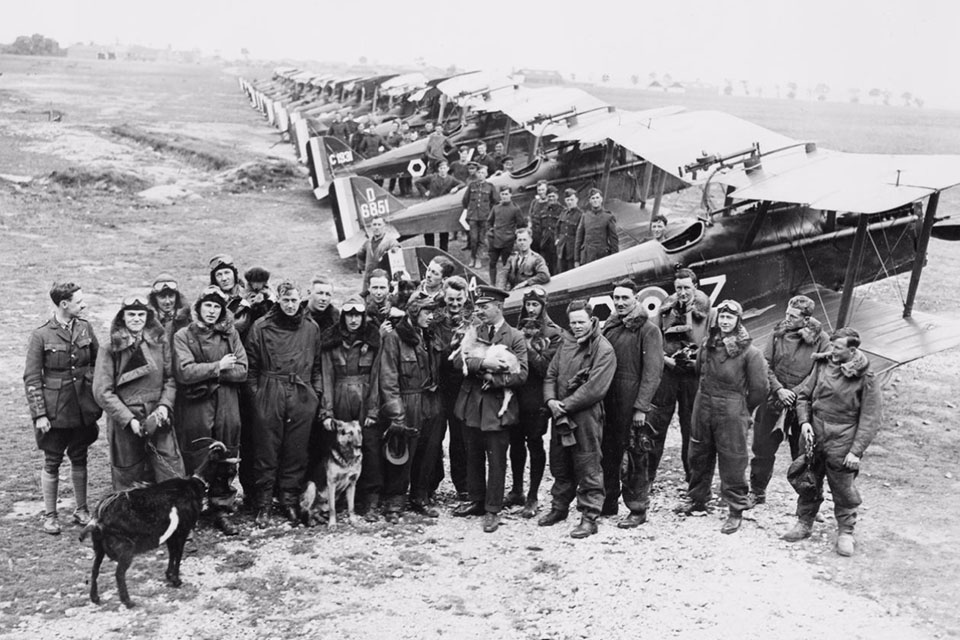
On July 10, Mannock heard that his friend James McCudden had been killed in a flying accident, news that hurled Mannock back into depression but also spurred him to a furious killing spree. He shot down six aircraft between July 14 and 26. But he was also taking risks and ignoring his own teachings. Often he followed a victim down to spray the wreckage with bullets. He led his flights with rage and flew solo patrols in his hunt for Germans. Premonitions of death haunted him. In his last letter to his sister he wrote, “I feel that life is not worth hanging on to.” And Ira Jones found him unstable, noting: “One minute, he’s full out. The next he gives the impression of being morbid and keeps bringing up his pet subject of being shot down in flames.”
Early in the morning of July 26, 1918, Lieutenant Donald Inglis walked into the mess where Mannock was smoking his pipe and playing “Londonderry Air” on the gramophone. The two were to fly a morning patrol together. Earlier, Mannock had asked the rookie pilot, “Have you got a Hun yet, Inglis?” and to his negative answer replied, “Well come on out and we will get one.” Mannock told Inglis that they would hunt for a two-seater. Once it was located, Mannock would attack first, with Inglis coming in behind to finish the enemy off and thus get his first kill.

this article first appeared in AVIATION HISTORY magazine
Facebook @AviationHistory | Twitter @AviationHistMag
More Tales of Aviation in World War I
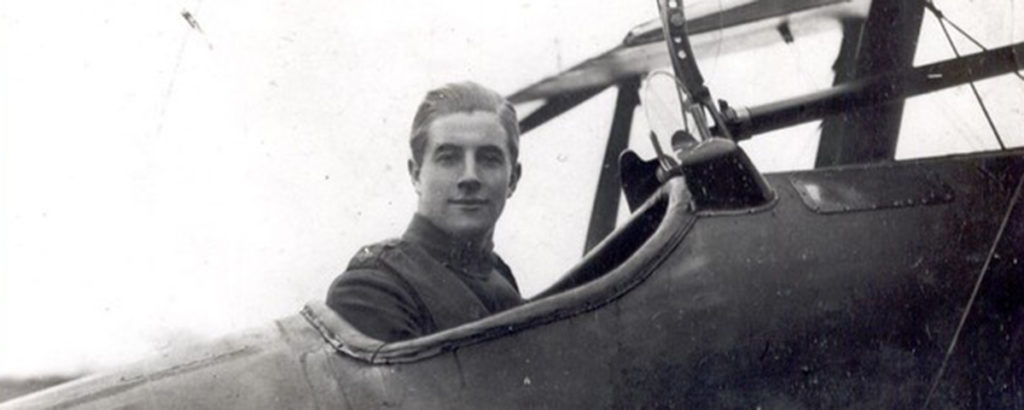
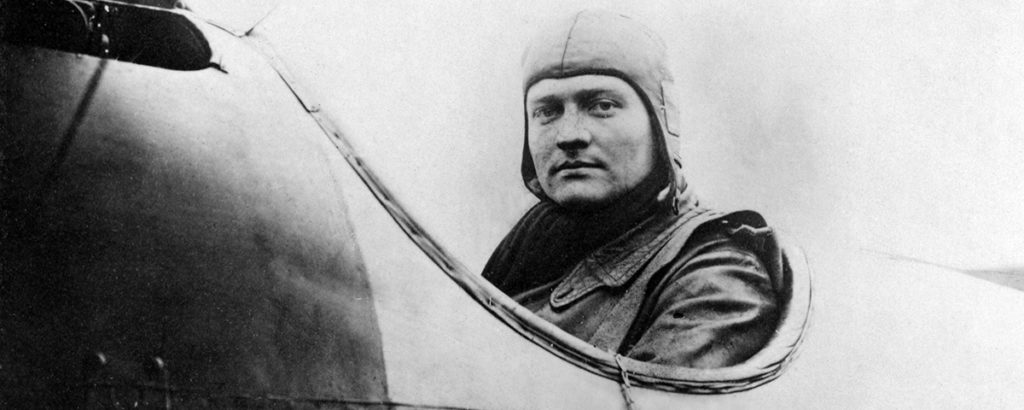
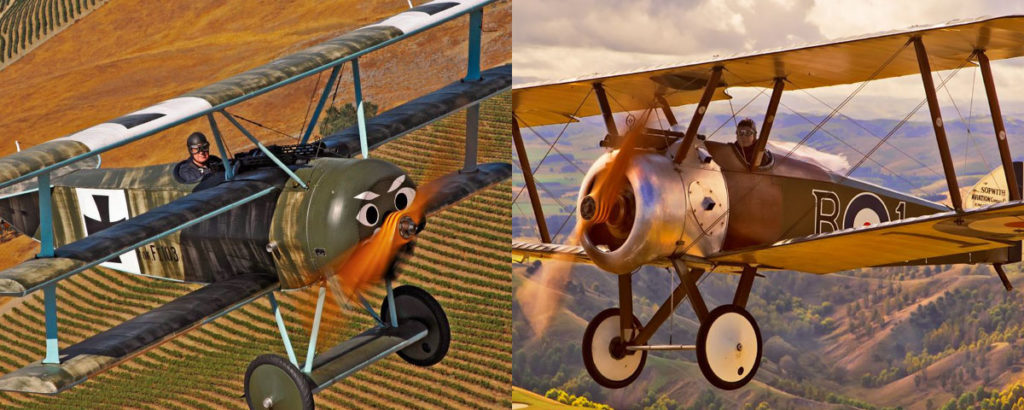
At 5:30 a.m. over Merville, Mannock dived on a two-seater at about 5,000 feet. He knocked out the observer and pulled away, letting Inglis come from underneath, firing into the gas tank. The German plane burst into flame, with the two S.E.5as very low over the ground. Violating his own teaching, Mannock circled the burning wreck twice. Then, as Inglis later wrote in his combat report, “I saw Mick start to kick his rudder and realized we were fairly low, then I saw a flame come out of the side of his machine; it grew bigger and bigger. Mick was no longer kicking his rudder; his nose dropped slightly, and he went into a slow right-hand turn round, about twice, and hit the ground in a burst of flame.” Mannock’s S.E.5a had been brought down by groundfire. Inglis’ plane was shot up, too, and he crash-landed in the British lines, sputtering: “The bastards killed my major. They killed Mick.”
It is impossible to know if Mannock shot himself as he had always threatened to do. Most likely, given the way his plane flew after he was hit, he was either wounded, unconscious or dead. In any event, some unknown German soldier buried the ace after first retrieving Mannock’s ID discs, pistol, notebook and other personal effects, which were returned to his family after the war. These items had all been on Mannock’s body, and they showed no signs of fire.
Back at the airfield, the awful news spread quickly. Jones scribbled in his diary: “26th July—Mick is dead. Everyone stunned. No one can believe it. I can write no more today. It is too terrible.”
In the years after the war, Eyles and others attempted to locate Mannock’s grave, which had been obliterated by shelling. Some researchers believe he lies in the grave of an unknown British aviator near La Pierre-au-Beure. In addition, his friends campaigned for him to be awarded Britain’s highest decoration, the Victoria Cross, which was conferred on July 18, 1919.
A final apocrypha is Mannock’s victory score, which most books give as 73—a number dreamed up by his admirers (above all Jones), many of whom disliked Billy Bishop, who finished the war with 72 kills. According to the most reliable estimates, Mannock brought down 61 enemy aircraft—not counting, of course, the many victories he gave away or did not claim—which makes him Britain’s second-highest scoring ace of the war.
Mannock’s deeply felt emotions, the immense fears and obstacles he faced and the manner in which he overcame them, his achievements, his unconventionality and his great promise all make him vividly human and bring home the tragedy of the lives lost in World War I. The way Mannock touched people was extraordinary. “I was awed by his personality,” wrote Maclanachan after first meeting Mannock. “He was idolized by all who came into intimate contact with him,” recalled another pilot. “He was a man among men,” added a third, while long after the war another remembered Mannock as “a warm, lovable individual of many moods and characteristics. I shall always salute his memory.”
O’Brien Browne writes from Heidelberg, Germany. Further reading: Mick: The Story of Major Edward Mannock, by James M. Dudgeon; or Victoria Cross: WWI Airmen and Their Aircraft, by Alex Revell.
This article by O’Brien Browne was originally published in the July 2007 issue of Aviation History. For more great articles, subscribe to Aviation History magazine today!
Want to build a replica of Mannock’s S.E.5a fighter? Click here!