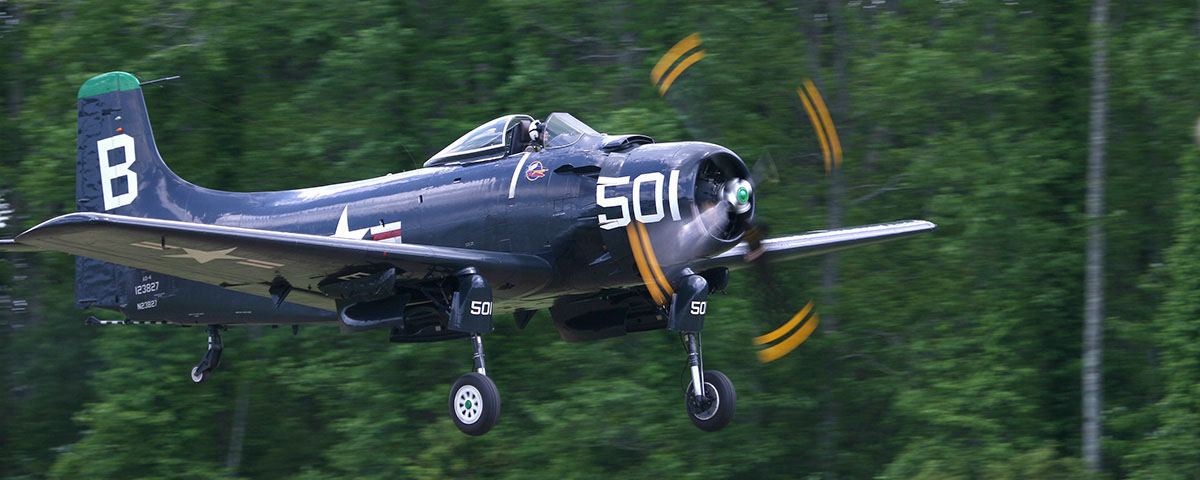
The AD Skyraider may have appeared underpowered, but it proved to be a top-notch attack bomber.
“The first time I saw a Skyraider, I wasn’t very impressed,” said former U.S. Marine Corps Captain William C. Smith. “After flying Corsairs, I thought it looked like a great big airplane with a little bitty engine.”
At that particular moment—July 1, 1952—Smith was a reservist, recalled for the duration of the Korean War, who had just arrived at P’Yong Taek airfield (K-6) in Korea for combat duty with Marine Attack Squadron 121. VMA-121 was equipped with Douglas AD-2 and -3 Skyraiders, a type of aircraft the 29-year-old aviator until that day had never seen, let alone flown. But Smith’s introduction to the AD was swift: According to his logbook, he received 4.3 hours’ checkout and familiarization time, after which he immediately began flying combat sorties in interdiction of enemy supply lines and close air support of UN troops. “My original opinion of the plane did a complete 180,” Smith recalled. “When you fly combat, you need to have confidence in your airplane, and after that first week there was no question in my mind that our ADs were the best planes in the world for the job expected of us, whether we were told to take out targets like rail yards or bridges or to provide close air support right down on the deck in front of the battle lines.” Smith added, “Even after all these years of progress, I believe the AD is still the best airplane ever made for close-in attack option…better, in fact, than anything flying today.”
The origins of the legendary Douglas Skyraider can be traced to two closely related events. The first was an announced change of the U.S. Navy’s air combat doctrine during World War II: The carrier battles of 1942 had taught naval strategists that a higher ratio of fighter aircraft was needed in its carrier air groups to protect the aircraft of the carrier’s strike force and maintain air superiority around the carrier itself. As a consequence, a decision was reached in early 1943 to downsize the complement of strike aircraft (i.e., Douglas SBDs or SB2Cs and Grumman/GM TBFs/TBMs) and replace them over time with one type of single-seat, multirole airplane under the new designation “bomber-torpedo” (BT). With extra fighter protection, strike aircraft would no longer need to carry gunners, and the weight normally associated with aircrew, guns and ammunition could be exchanged for ordnance load and greater range. Equipped with the newest radial engines—the 2,500-hp Wright R-3350 or the 3,000-hp Pratt & Whitney R-4360—the new generation of BT types could be expected to lift twice the payload of existing SB2Cs and TBFs/TBMs. To optimize mission flexibility, BuAer (the Naval Bureau of Aeronautics) specified that most or all of the aircraft’s weapons load (bombs, torpedoes, rockets and/or mines) be carried underneath on external racks.
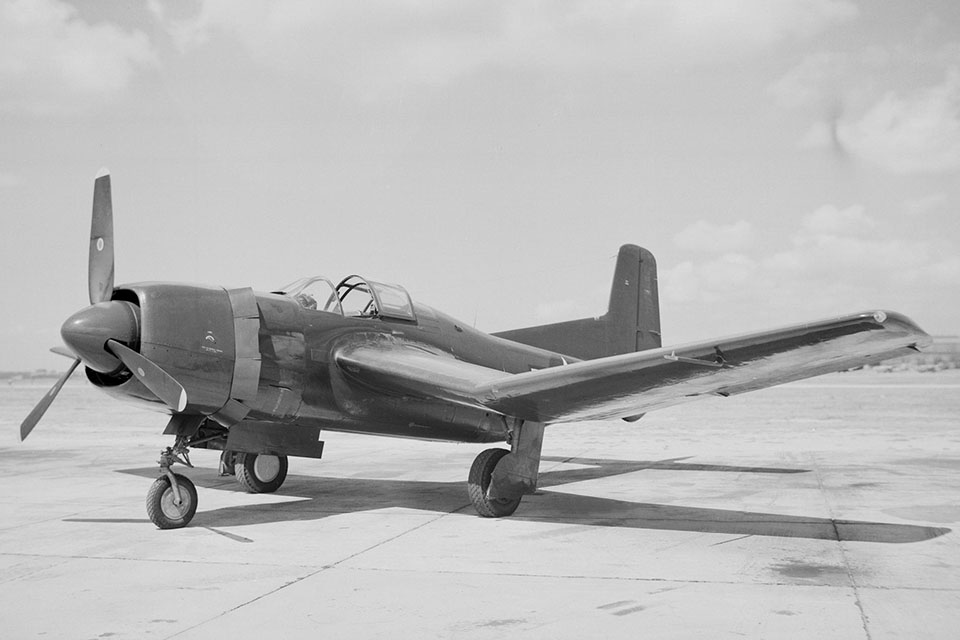
The second event occurred in June 1944, during an all-night work session in a Washington, D.C., hotel room. Just a few hours before dawn, Edward Heinemann, chief engineer of Douglas Aircraft Company’s El Segundo Division, and two members of his staff put the final touches on a set of aircraft drawings they intended to present to BuAer officials a few hours later. Most of the previous day, Heinemann had met with the same officials debating the pros and cons of his company entering in the Navy’s BT competition with its XBTD-1. The XBTD-1 was essentially a single-seat adaptation of Douglas’ short-lived XSB2D-1 Destroyer, which had flown a year before. Though the gunner’s position and related equipment had been removed, the design still retained the inverted gull wings, tricycle landing gear and internal bomb bay of its predecessor. In the fall of 1943, the Navy had gone so far as to give Douglas an order for 358 of the new type. Still, Heinemann was dubious about the BTD-1’s future, thinking it would probably be an interim stopgap until something better came along. Chief among his concerns was that, in the interval, three more bomber-torpedo designs had joined the competition: the Curtiss XBTC-1, the Kaiser-Fleetwings XBTK-1 and the Martin XBTM-1, all of which were being designed more closely to the new specification than the BTD. At the close of the previous day’s meeting, Heinemann had surprised BuAer officials by proposing that the BTD project be canceled altogether and the funds allocated instead to an entirely new BT design, the BT2D, which he would present to them in 30 days’ time. The Navy men liked everything about the idea except the extra 30 days: They informed Heinemann they wanted to see a presentation of his new design proposal at 9 the next morning!
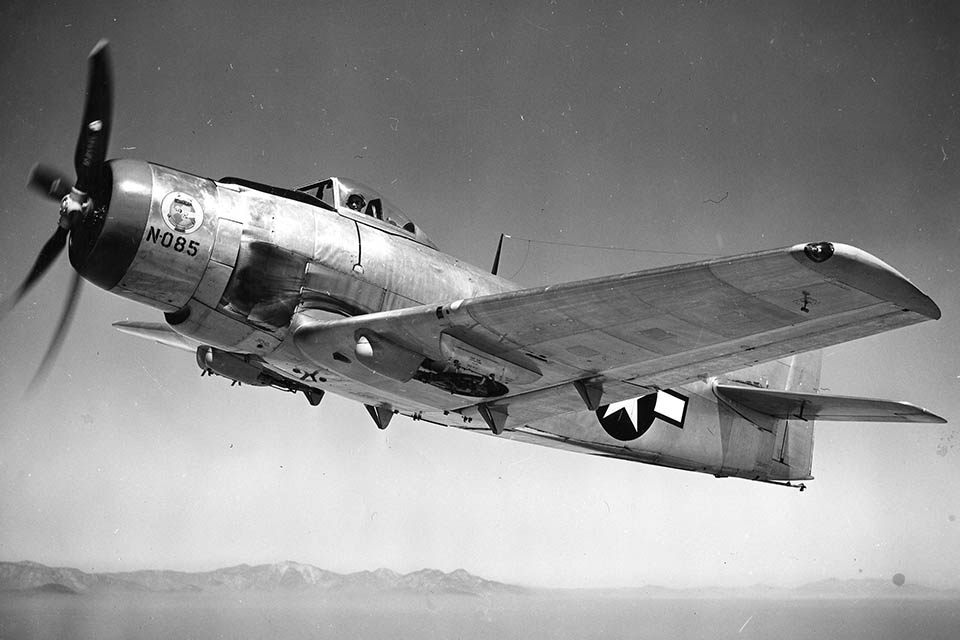
In truth, Heinemann wasn’t wholly unprepared. He and his top staff members, Leo Devlin and Gene Root, had for several weeks been sketching out ideas for a totally new design. Their latest conception had virtually nothing in common with the earlier BTD. Though using the same Wright R-3350 powerplant, it was a far simpler design, featuring a conventional tailwheel layout and straight-tapered, low-mounted wings beneath which all ordnance would be carried on external racks. For dive-bombing, rather than the common split-flap arrangement, the design called for three board-type speed brakes, which extended from the fuselage sides and belly. Gun armament consisted of two wing-mounted 20mm cannons.
After only a few hours’ sleep, Heinemann, Devlin and Root left the hotel early, giving themselves extra time to have blueprints made from the drawings. The presentation was over by late morning, and the three men were told to keep their seats and wait. By noon they got an answer: Douglas was authorized to cancel the BTD program and fund construction of 25 preproduction examples of the proposed model, the XBT2D-1. BuAer gave them exactly nine months to get the plane in the air. When Heinemann returned to the El Segundo plant, his instructions to his staff and employees were terse: “Nothing must interfere with the completion of this aircraft on schedule.”
Despite the successful conclusion of the BuAer meeting, Heinemann was conscious of the fact that he had committed his company to a risky game of catch-up. The Curtiss and Kaiser-Fleetwings prototypes were falling behind schedule, but Martin, with B-26 production winding down, was moving fast, and, indeed, got its R-4360-powered XBTM-1 flying by late August 1944. Martin’s plane, named the Mauler, had thus far achieved impressive performance—a maximum speed of 367 mph combined with the ability to lift a phenomenal payload of 8,500 pounds—but also exhibited unacceptable handling characteristics that would oblige the company to return it to the factory for time-consuming modifications. Even with its flaws, BuAer gave Martin a wartime order for 750 BTM-1s in hopes the major problems could be resolved before the plane was actually tooled for production.
The Mauler’s delays gave Douglas exactly what it needed most—a little more time. On March 19, 1945—almost nine months to the day from Heinemann’s meeting in Washington—the first XBT2D-1 lifted off the runway at El Segundo. Such was the rush that the plane had flown with landing gear struts and wheels borrowed from a Vought Corsair and an older version of the R-3350 engine that didn’t produce the specified power. Even so, the XBT2D-1’s basic design proved to be excellent in every way: Empty weight was 10,093 pounds (4,200 pounds less than Martin’s XBTM-1), maximum payload was 7,400 pounds (73 percent of empty weight compared to the XBTM-1’s 59 percent) and flight trials indicated above-average handling qualities. Its 374 mph top speed was similar, but more notably, the XBT2D-1 was less complex overall, and thus cheaper to build and easier to maintain. Two months after the plane flew, BuAer was sufficiently impressed with Douglas’ efforts to award a wartime order for 548 BT2D-1s. The Curtiss XBTC-1 and the Kaiser-Fleetwings XBTK-1 both flew in the spring of 1945, but no orders were forthcoming. Heinemann’s gambit had so far paid off.
The huge government cutbacks that followed the end of World War II resulted in the Douglas contract being reduced to 277 BT2Ds and Martin’s to 149 BTMs. Further dampening their prospects was the latest notion that both designs were fast becoming obsolete. Influenced by recent technological advances, BuAer officials believed that the next generation of naval attack aircraft would be jet-propelled; therefore, BT2Ds and BTMs would be limited to their initial production batches and serve only until replaced by jets.
Recommended for you
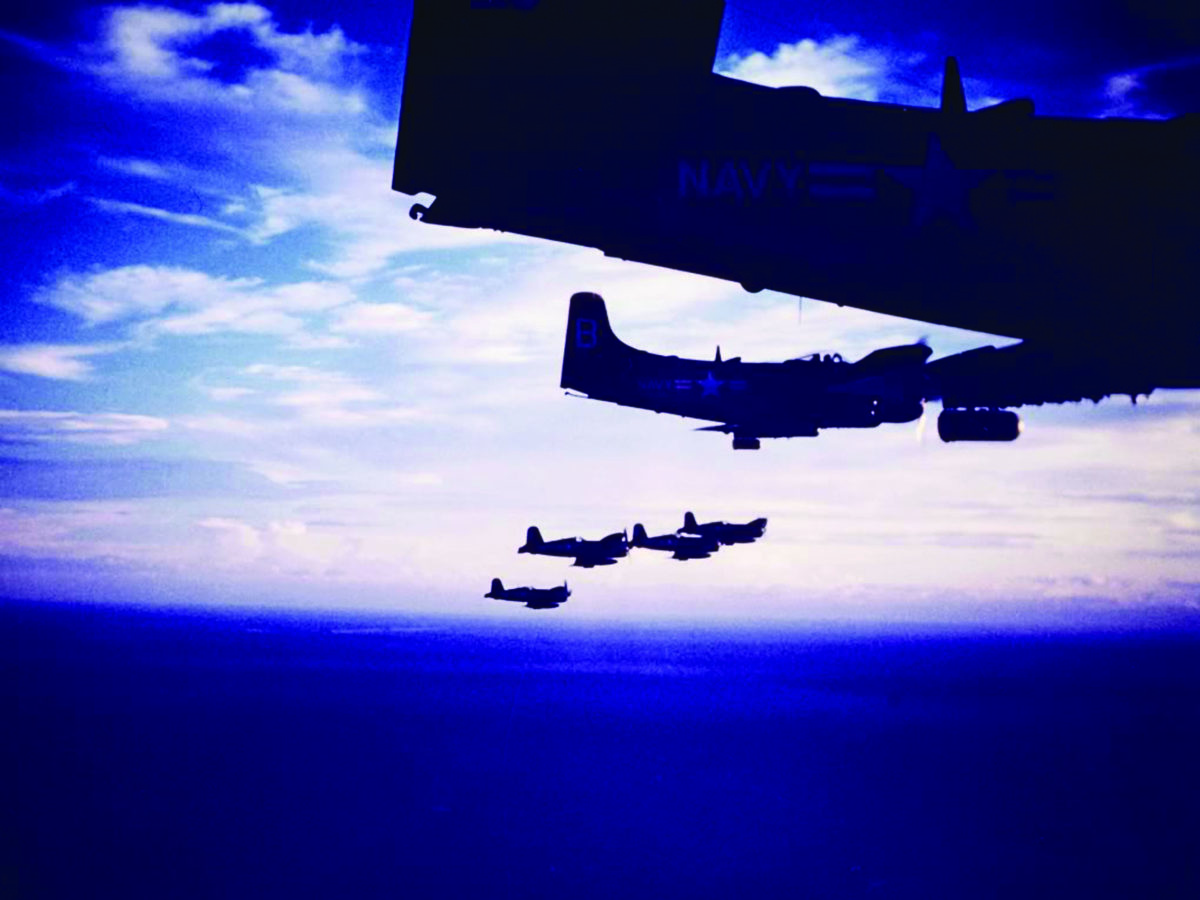
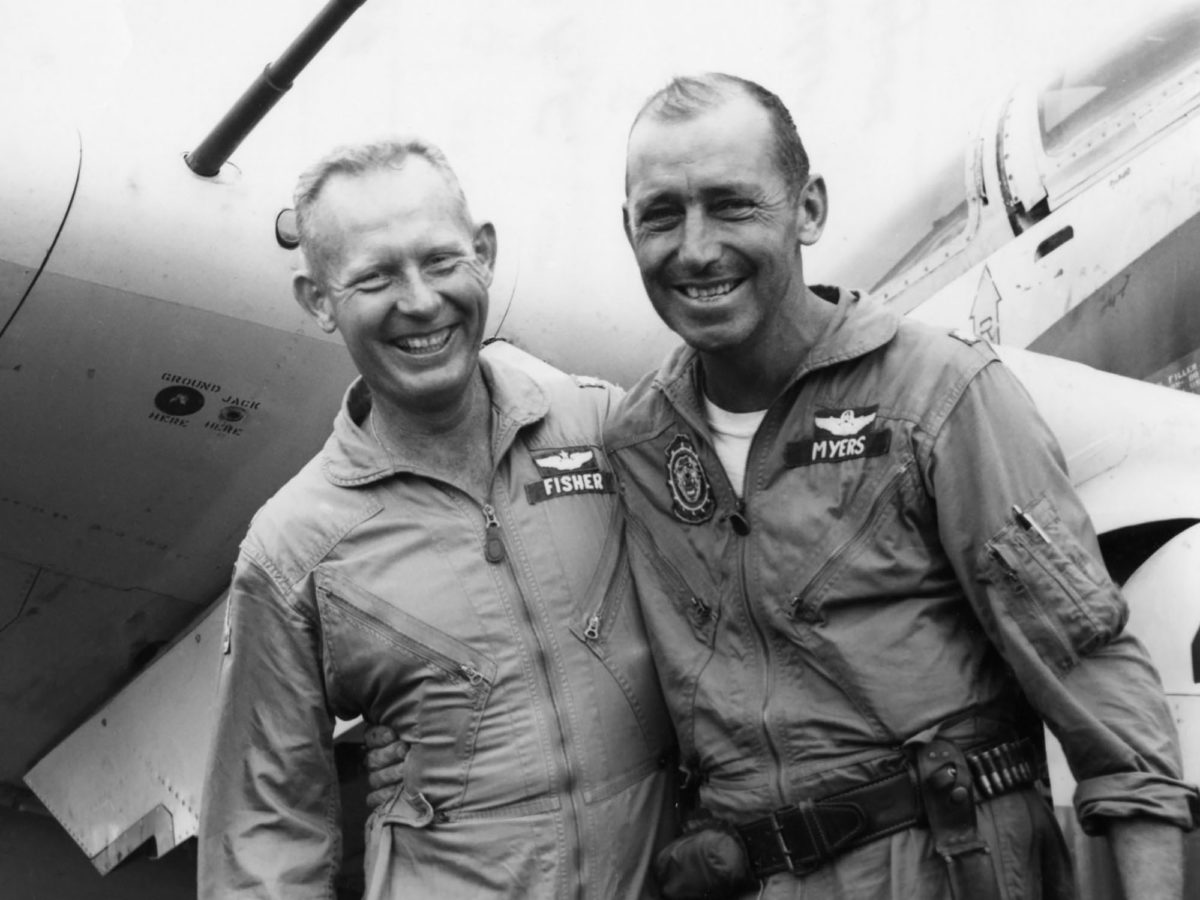
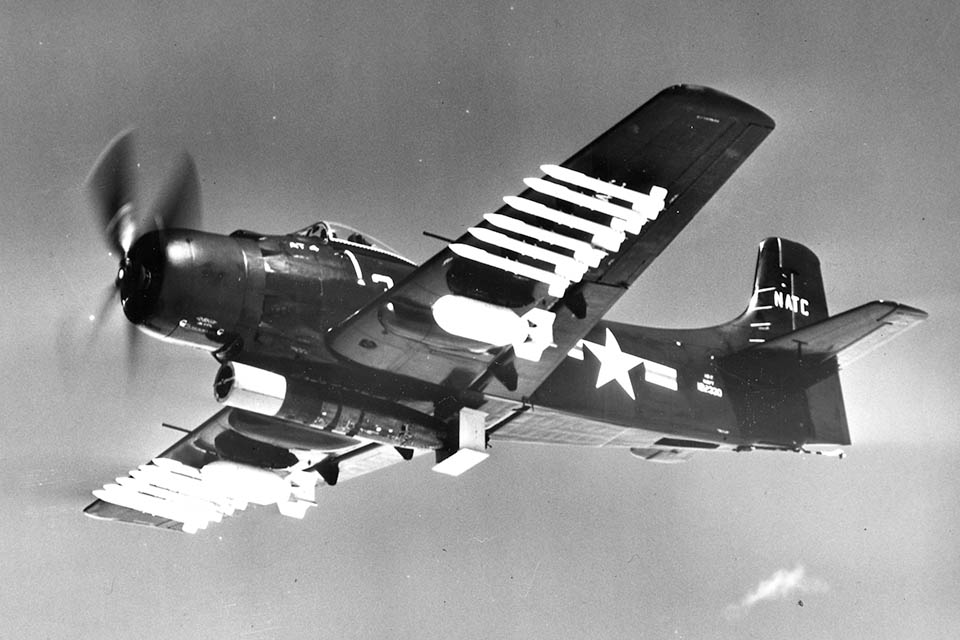
Development of both types continued as planned, and in the spring of 1946 BT2D and BTM preproduction models were delivered to the Naval Air Test Center (NATC) for evaluation. Around the same time, the BT designation was dropped in favor of “A,” for attack, so that the BT2D-1 became the AD-1 and the BTM-1 the AM-1. Earlier, Heinemann and his staff had provisionally named their new plane the Dauntless II (after the SBD), but in line with the newer Douglas policy of giving planes names preceded by “sky,” the AD-1 was officially christened Skyraider.
Initial evaluations of AD-1s by NATC were generally good. Overall performance and handling characteristics were rated as “exceeding expectations.” The most serious deficiencies identified were weak landing gear and noticeable structural fatigue in the wing center sections and rear fuselage. In response, Heinemann and his El Segundo staff moved at a breakneck pace to address each fault identified by NATC. Resulting modifications added 515 pounds to empty weight but were more than offset by the installation of a more powerful R-3350-24W (2,500-hp with water injection) engine.
NATC’s testing of Martin’s AM-1, in vivid contrast, revealed a host of new problems that would require a major rework of the airframe. Moreover, BuAer’s hoped-for transition to jets, if recent experience with fighter types (e.g., the McDonnell FD-1, North American FJ-1 and Vought F6U-1) was any indication, would be a longer process than initially believed.
When NATC resumed evaluations of newly modified AD-1s in the fall of 1946, test pilot reports were highly enthusiastic. General flying characteristics were once again rated very high, and on top of that the plane was graded as the best dive-bombing platform NATC had ever tested. Equally important, NATC regarded the AD-1 as above average in terms of maintainability and logistical support required. Service evaluation and actual carrier trials were carried out in late 1946 by NAS Alameda–based VA-19A, where the type demonstrated fully satisfactory characteristics in the takeoff, approach, wave-off and arrestment phases of carrier operations. By the end of the year—a little over 19 months after its first flight—BuAer declared the AD-1 ready to join the fleet. Heinemann had not only caught up with Martin, he was miles ahead.
Besides basic attack versions, BuAer wanted Skyraiders configured for specialized roles, and as a result the final 35 aircraft of the original AD-1 order were completed as AD-1Q two-seat countermeasures platforms. An electronic countermeasures operator was stationed in a compartment behind and below the cockpit that he entered through a small door on the left side of the fuselage. AD-1Qs carried a radar pod beneath the right wing and a chaff dispenser beneath the left, and were also equipped with a radar search receiver and pulse analyzer. Their mission was to screen for the attacking force and jam signals emitted by enemy search and fire-control radars.
Production AD-1s began replacing SB2Cs and TBMs in the fleet in April 1947, and by early 1948 had reached a strength of six squadrons. Within a similar timeframe, AD-1Qs started joining fleet composite units. At this point, the AD was subjected to the real test of any naval aircraft: Could it be routinely and safely operated from carriers by “nugget” aviators (i.e., inexperienced ensign and junior grade pilots on their first cruise)? The new ADs passed this test with flying colors, as every squadron, each with its fair share of nuggets, completed carrier qualifications without serious incident.
GET HISTORY’S GREATEST TALES—RIGHT IN YOUR INBOX
Subscribe to our HistoryNet Now! newsletter for the best of the past, delivered every Monday and Thursday.
The airplane quickly became popular with pilots and maintenance crews, and they soon took to calling it the “Able Dog.” The repeated stresses of carrier landings, however, did reveal some new structural problems: The landing gear and inner wing sections still needed strengthening and the cockpit arrangement was not completely satisfactory, but none of this was sufficiently serious to impair the plane’s general operational effectiveness. By comparison, the introduction of Martin AM-1s to squadron service in 1948 was marked by frequent accidents and excessive maintenance, and by late 1949 the remaining examples of the 151 Maulers built were replaced by new ADs.
BuAer had even before that time placed an order for 152 new AD-2s, which not only incorporated structural improvements dictated by AD-1 service use, but also boasted a new canopy, full wheel fairings and an extra 300 hp from the R-3350-26W. The Navy contracted for an additional 21 two-seat AD-2Qs and one AD-2QU, fitted out as a target tug. Delivery of AD-2 variants began in mid-1948 and continued through the year. When AD-2s started reaching operational squadrons, some AD-1s were withdrawn and passed on to training duties in reserve units.
Another series of upgrades—longer stroke main gear, further structural strengthening and a new tail wheel configuration—yielded the AD-3, 194 of which were delivered in 1948-49. This batch included three subvariants: 15 three-seat night attack AD-3Ns, which added a radar operator/navigator; 31 three-seat early-warning AD-3Ws, which featured a cockpit turtle-deck and a large belly radome; and 21 two-seat ECM AD-3Qs.
The AD-4, introduced in 1949, featured increased takeoff weight, a stronger tailhook and a P-1 autopilot to relieve pilot fatigue on long missions. It likewise appeared in night attack, early-warning and ECM subvariants. At that time, due to budgetary restrictions placed on procurement of all new naval aircraft, BuAer assumed Skyraider production would cease once the initial AD-4 order was completed in 1950. A projected level of about 550 AD-2s, -3s and -4s, including subvariants, would enable the fleet to maintain 16 Navy and two Marine AD-equipped attack squadrons along with smaller detachments with the specialized versions. Conventional wisdom held that future attack aircraft, whenever money became available to develop them, would be jets. Then on June 25, 1950, everything changed: The 180,000-man-strong North Korean army, equipped with modern Soviet-made small arms, artillery, tanks and aircraft, marched across the 38th parallel and invaded South Korea.
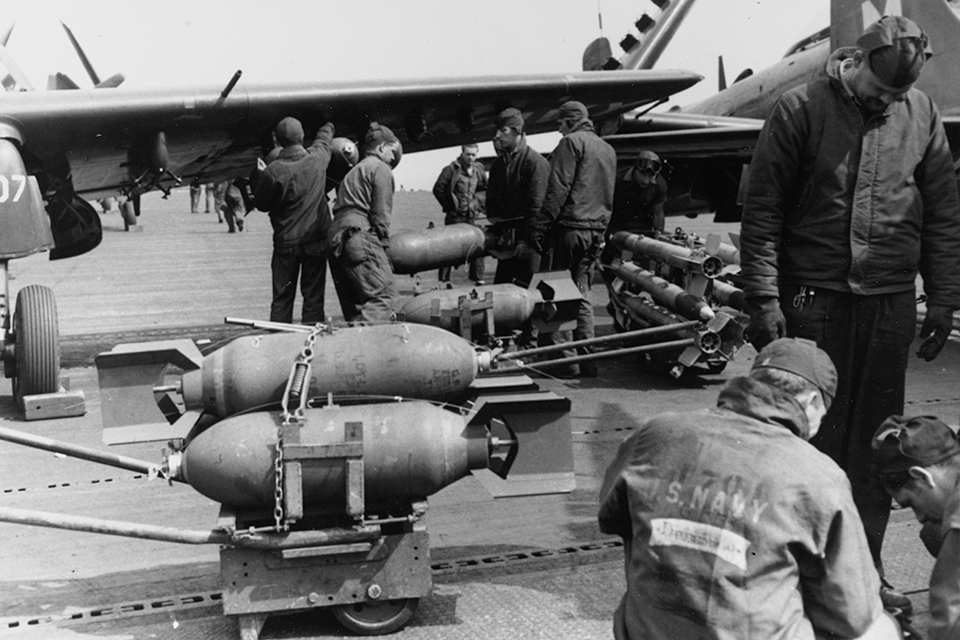
On July 3, 1950, AD-4s of VA-55 serving aboard USS Valley Forge became the first Skyraiders committed to combat, flying a strike against an airfield near the North Korean capital of Pyongyang. As more AD units arrived on station to bolster the carrier task force, the type quickly began to earn a reputation as the best all-around attack aircraft in the combat zone. In daytime operations, ADs typically carried an 8,000-pound mixed load of ordnance, which was four times greater than that carried by either the F4U-4 or the U.S. Air Force’s P/F-51D. ADs were the only planes capable of delivering 2,000-pound bombs with dive-bomber precision against hard targets like mountain bridges and hydroelectric dams. Two AD-equipped Marine squadrons, VMA-121 and VMA-251, joined the battle from land bases in Korea in 1951. Night attack sorties were flown by AD-3N and -4N aircraft carrying bombs and flares, while ECM and radar-equipped ADs carried out radar-jamming and early-warning missions from carriers and land bases.
The only problem with ADs was that, due to combat losses and operational attrition, there were never enough of them. Production continued nonstop, with 1,051 AD-4s (all variants) completed by the end of 1952, including 165 AD-4Bs armed with four 20mm cannons and specially configured to carry a tactical nuclear weapon (the first single-seat naval aircraft to do so).
By the time Korean hostilities ended in July 1953, the AD had categorically established itself as naval aviation’s most versatile attack platform. Far from being discontinued, even newer Skyraider variants were being developed and placed in production. The wide-body AD-5, which flew in August 1951, was originally conceived to accommodate the additional crew, electronic equipment and weapons needed for anti-submarine warfare (ASW). The fuselage was lengthened two feet and widened to permit side-by-side seating for a pilot and up to three crew members under a longer canopy. To offset the increase in fuselage area, vertical fin area was increased, and the dive brakes on the fuselage sides were deleted. The AD-5 was ultimately ordered into production as a day attack aircraft, not ASW, and was too late to see action in Korea. The 212 standard attack versions produced came with conversion kits, which, in addition to its basic attack function, allowed the type to be used either as a transport (12 seats), cargo carrier, air ambulance or target tug. These were followed by a further 218 AD-5W early-warning versions and 239 AD-5N night/all-weather versions, 54 of which were later modified as AD-5Q ECM aircraft.
The refinements of the AD-4B—plus LABS (low-altitude bombing system), new bomb racks, a jettisonable canopy and a hydraulic tailhook—were standardized in the single-seat AD-6, which flew in 1953 and began replacing AD-4s. After delivery of 713 AD-6s, the final Able Dog model was the single-seat AD-7, which had a more powerful R-3350-26WB engine, stronger landing gear and stronger outer wing panels. Skyraider production finally ended on February 18, 1957, when the last of 72 AD-7s rolled off the El Segundo assembly line, by which time a total of 3,180 of all versions had been built.
ADs had actually reached their peak as the fleet’s premier attack aircraft in the mid-1950s, when they equipped 29 Navy and 13 Marine squadrons. Although some carrier-based attack squadrons began exchanging their ADs for jets such as the Douglas A4D-1 Skyhawk—another Heinemann product—as early as 1956 BuAer planned to retain its prop-driven workhorse in Navy squadrons until the early to mid-1960s. The Marine Corps, however, began a gradual phase-out of its Skyraiders in 1956 and retired the last examples by the end of 1960.
this article first appeared in AVIATION HISTORY magazine


When the tri-service designation system was adopted in September 1962, Skyraiders remaining in Navy service became A-1s in the following variants: the AD-5 became the A-1E, AD-5W the EA-1E, AD-5Q the EA-1F, AD-5N the A-1G, AD-6 the A-1H and AD-7 the A-1J.
In the early 1960s, increasing numbers of Skyraiders were phased out of active service and placed in storage as more A-4 Skyhawks and even newer Grumman A-6 Intruders took their place in the fleet. But another war, this time over the triple-canopy jungles of Southeast Asia, intervened to give the Navy’s trusty old prop-job yet another lease on life.
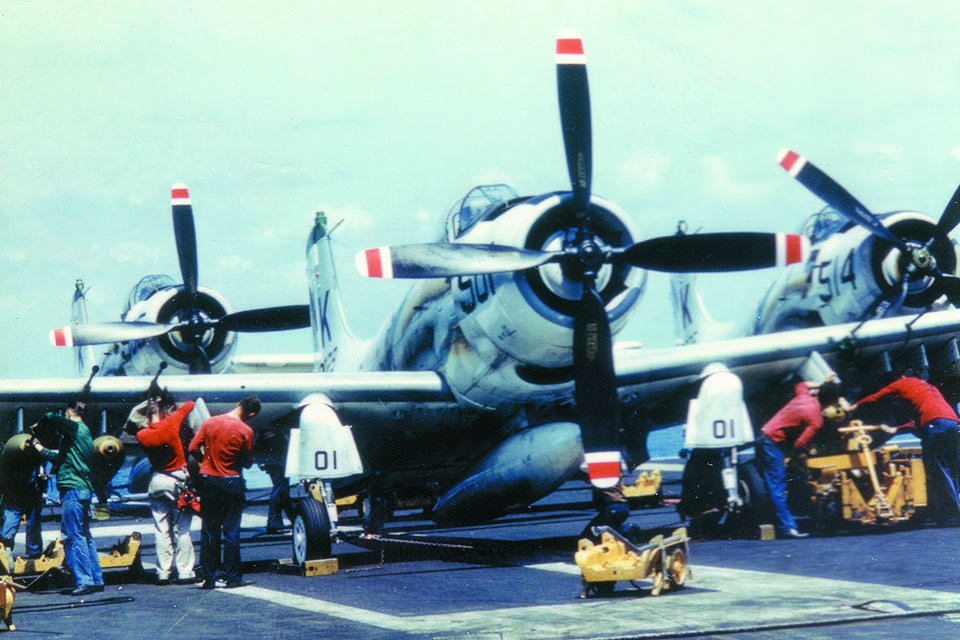
In August 1964, from carriers stationed near Vietnam, A-1Hs attached to VA-52 and VA-145 participated in the first naval airstrikes against North Vietnamese patrol boats in the Tonkin Gulf. In the new conflict, at a time when many regarded prop-driven aircraft as throwbacks to a bygone era, the A-1s became affectionately known as “Spads” and their pilots “Spad-drivers.” Over the next four years, Navy A-1s flew hundreds of combat sorties over Vietnam in close air support of American troops, rescue combat air patrol (RESCAP), bombing of Viet Cong and North Vietnamese army targets, and ECM as part of the ongoing naval task force stationed off the coast. Owing to their slower speed and excellent loiter time, A-1s were judged the best planes in Southeast Asia for escorting troop-laden helicopters or for groundfire suppression in RESCAP operations.
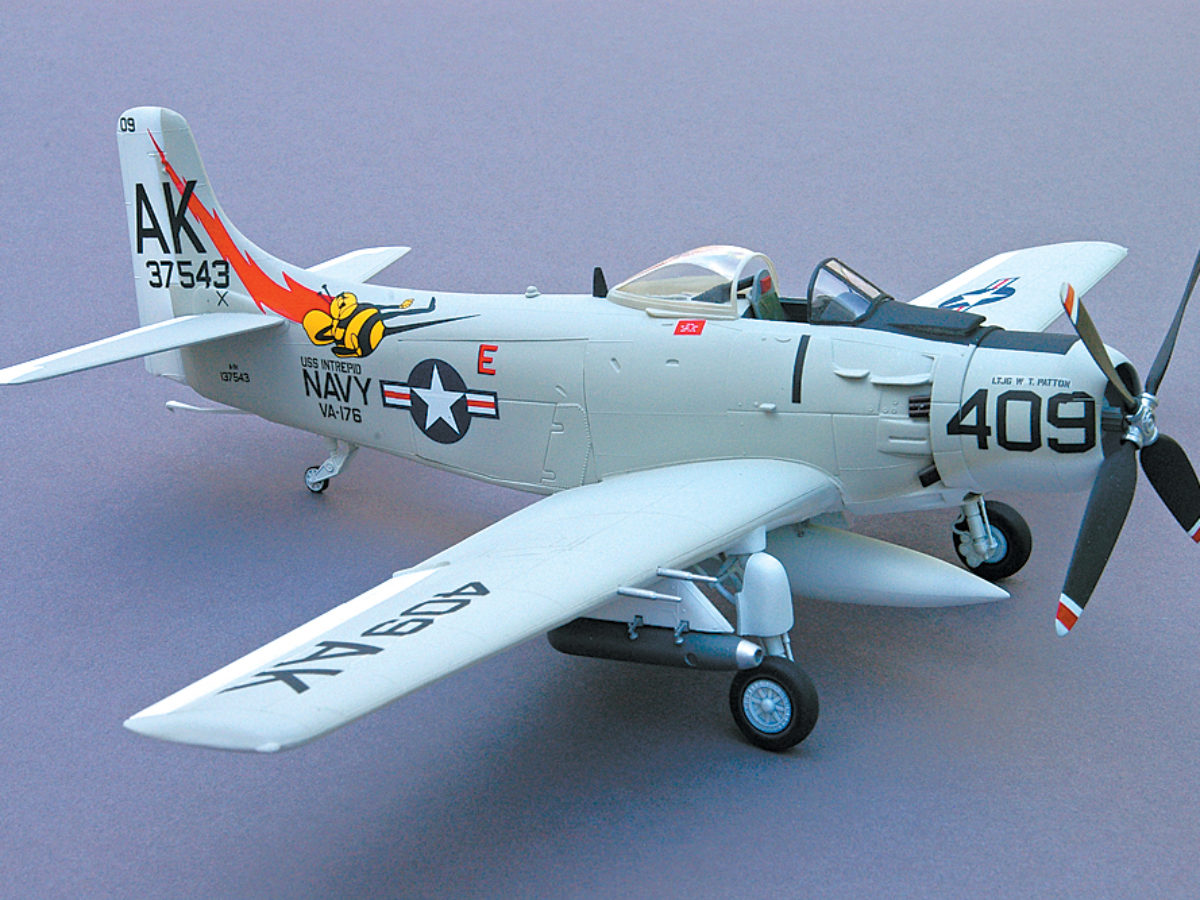
Though never intended for air-to-air confrontations, two A-1Hs flown by Navy Lieutenants Charles Hartman and Clinton Johnson of VA-25 off USS Midway did in fact share in the shoot-down of a North Vietnamese MiG-17 on June 20, 1965. Then on October 9, 1966, Lt. j.g. W. Thomas Patton of VA-176, flying an A-1H from USS Intrepid, sent another MiG-17 down in flames near Hanoi. The last Navy single-seat Skyraider combat sortie was flown by VA-25 in February 20, 1968, from USS Coral Sea. Multiseat ECM missions were continued until late December 1968 by EA-1Fs attached to VAQ-33. The last Navy Skyraiders flying were reportedly stricken from the inventory sometime in 1972.
Back in October 1965, members of Navy Attack Squadron VA-25, based on USS Midway, found an ingenious means of marking the 6 millionth pound of ordnance dropped on North Vietnamese targets. At the time, carriers were reportedly so short of ordnance that some missions were launched with half a load, just to keep the sortie rate at prescribed levels—a strategy that was understandably unpopular with aircrews. VA-25’s response was to develop and drop its own extremely unconventional weapon: a toilet bomb. It all started when one of the plane captains rescued a damaged toilet that was just about to be heaved overboard. After the ordnance crew improvised a rack, tailfins and nose fuze for the john, it was “armed up” along with more conventional bombs on A-1H Skyraider NE/572, Paper Tiger II, flown by the squadron’s executive officer, Commander Clarence J. Stoddard. As Stoddard taxied onto the catapult, the flight deck checkers maneuvered to block the view of his specialized ordnance by the captain and air boss. But just as the Skyraider left the deck an irate transmission came from the bridge: “What the hell was on 572’s right wing?” By that time Paper Tiger II was on its way to a target somewhere on the Mekong Delta. Stoddard’s wingman, Lt. Cmdr. Robin Bacon, was flying 577, which was equipped with a wing-mounted movie camera. When they arrived on target and Stoddard read the ordnance list to the forward air controller, he ended by saying, “…and one code-name Sani-Flush.” The FAC couldn’t resist getting close enough for a good look. Stoddard dropped the toilet during a dive, with Bacon flying in a tight wing position to film the drop. As it turned out, the toilet nearly struck Bacon’s Skyraider as it tumbled in the air—then whistled all the way down. All hands agreed it made for a great ready room movie. 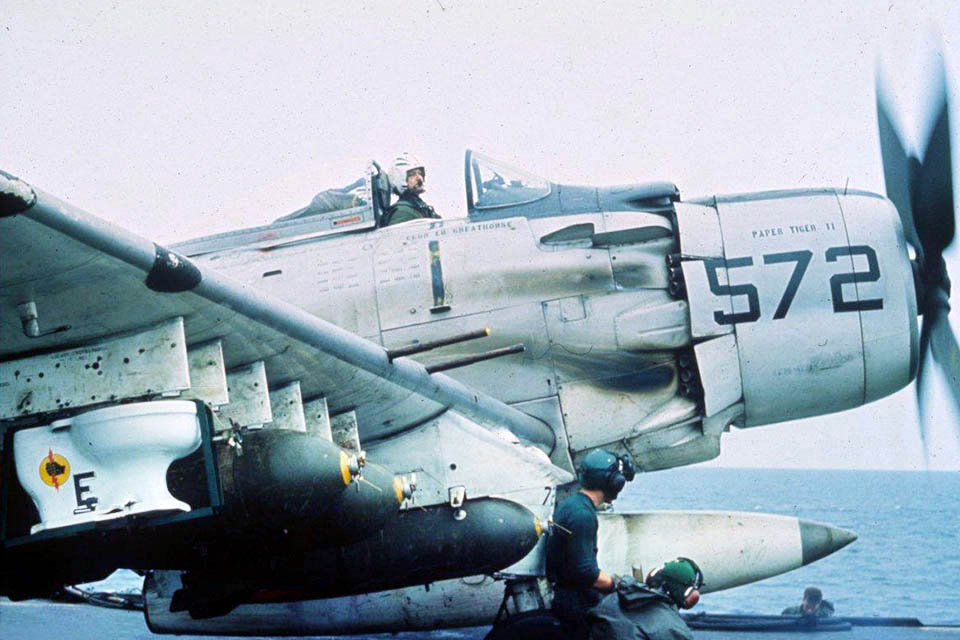
For further reading, U.S. Navy veteran and frequent contributor E.R. Johnson suggests: Skyraider: The Douglas A-1 “Flying Dump Truck,” by Rosario Rausa; and The A-1 Skyraider in Vietnam: The Spad’s Last War, by Wayne Mutza.
Build your own replica of the legendary “Able Dog.” Click here!
This feature originally appeared in the September 2008 issue of Aviation History. Subscribe here!