Schweinfurt translates as ‘pig ford’ or ‘pig crossing.’ But it is unlikely that many of the 3,000 airmen who clambered into their Boeing B-17 Flying Fortresses during the cold, damp morning hours of October 14, 1943, gave much thought to the meaning of the word. For them, Schweinfurt meant only one thing: a killer town that was one of the most savagely defended targets along the aerial high road, above Hitler’s Third Reich.
Its reputation was well-founded. Before the day was over, more than 600 of those airmen would be killed or captured, the future of the American daylight bomber offensive would be in doubt and Mission 115 to Schweinfurt would be known as ‘Black Thursday’ in U.S. Army Air Forces (USAAF) folklore. In mid-1943, using air power to cripple the military and industrial capability of a nation was not the accepted fact that it became later in the war. Thus, USAAF’s Eighth Air Force was fighting not just to survive in the lethal skies over Europe, but to prove a concept—that daylight precision bombing could play a decisive, if not the most decisive, role in modern war.
British and American planners had concluded during the 1930s that aerial bombardment would play a key role in future wars, and Great Britain and the United States were the only nations to develop and make extensive use of four-engine bombers in World War 11. But the British, because of their early war experiences and those of the Germans before them, insisted that area night bombing was the only way to fly bombers unescorted into hostile territory without sustaining crippling losses. American airmen stood alone in their faith that B-17 and Consolidated B-24 Liberator bombers with their heavy defensive armament could survive in daylight, with or without fighter escort. As a result, there had been argument and sometimes bitter debate before and after the Eighth mounted its first 12-plane B-17 raid on August 17, 1942, against Rouen, France.
The British aimed what seemed to be a constant barrage of criticism at the Americans’ pride and joy, the Fortress. Following an inspection of one of the first B-17s to arrive in England, RAF officers said its defensive fire was ‘too weak’ to afford reasonable protection, the tail gun position was ‘too cramped,’ and the belly turret was ‘so awkward as to be useless.’ Critic Peter Masefield, writing in the London Times, contended that ‘American heavy bombers—the latest Fortresses and Liberators—are fine flying machines, but not suited for bombing in Europe. Their bomb loads are small, their armour and armament are not up to the standards now found necessary and their speeds are low.’ And although the British had given the Eighth excellent cooperation during its buildup in 1942 and 1943, there were other philosophical differences between the two allies. Britain’s Bomber Command, headed by Arthur ‘Bomber’ Harris, believed a saturation bombing of major German cities was the best way to cripple the Reich. American planners, including Generals Ira Eaker and Carl ‘Tooey’ Spaatz, countered that precision attacks against selected industrial targets like oil production facilities, aircraft and ball bearing plants were the best use of bomber strength. ‘It is better to cause a high degree of destruction in a few essential industries…than to cause a small degree in many,’ the USAAF Committee of Operations Analysts agreed in March 1943. Harris, however, expressed contempt for this concentration on a limited number of targets, calling them ‘panacea targets.’
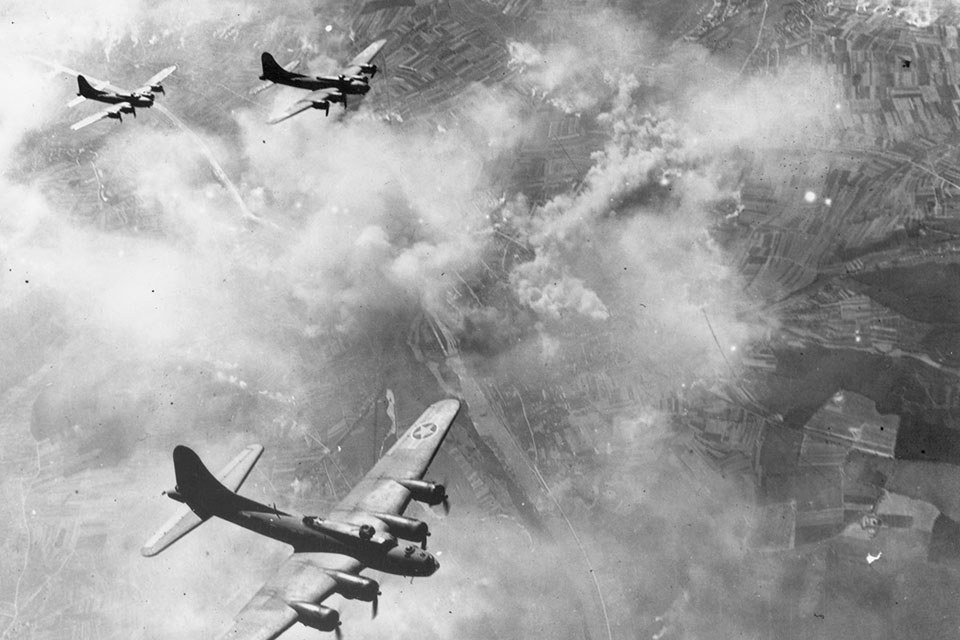
The Bavarian city of Schweinfurt, with its heavy concentration of ball bearing factories, was a classic example of one of these so-called panacea targets. It was obvious that anti-friction bearings played a vital role in any industrial economy, but 1940s-era German machinery was believed to be more dependent on ball bearings than most. It was estimated, for example, that the German aviation industry consumed an average of 2.4 million bearings per month. The fact that bearing construction was concentrated in just a few plants, with Schweinfurt accounting for more than 40 percent of production, made the ball bearing industry in general—and Schweinfurt in particular—an obvious target. Making Schweinfurt even more attractive was its small size, which would make it easy for bombardiers to locate and hit the bearing plants—a factor that also made it a poor target for Harris’ night bombers. German planners had belatedly realized the vulnerability of the bearing plants and began making plans to disperse them, but to do so would take time as well as disrupt production of the precious bearings.
Before any deep penetration raids into Germany could be mounted, the Eighth had to build up a reservoir of strength and experience. The first sorties were against targets in France and the Low Countries, and the low losses incurred seemed to suggest that the American strategy was vindicated. In fact it was not so, at least not yet. These shortrange strikes were usually within the operating range of escort fighters, and the Germans did not consider the raids to be a serious enough threat to justify commitment of large numbers of its day fighters to Reichsverteidigung (defense of the Reich) duties. Meanwhile, the British were becoming impatient. As 1943 arrived, Winston Churchill noted pointedly that the USAAF had ‘yet to drop a single bomb’ on Germany. There were calls for the USAAF to retrain for night bombing, but Eaker, using a number of arguments, bought additional time to prove the value of precision bombing.
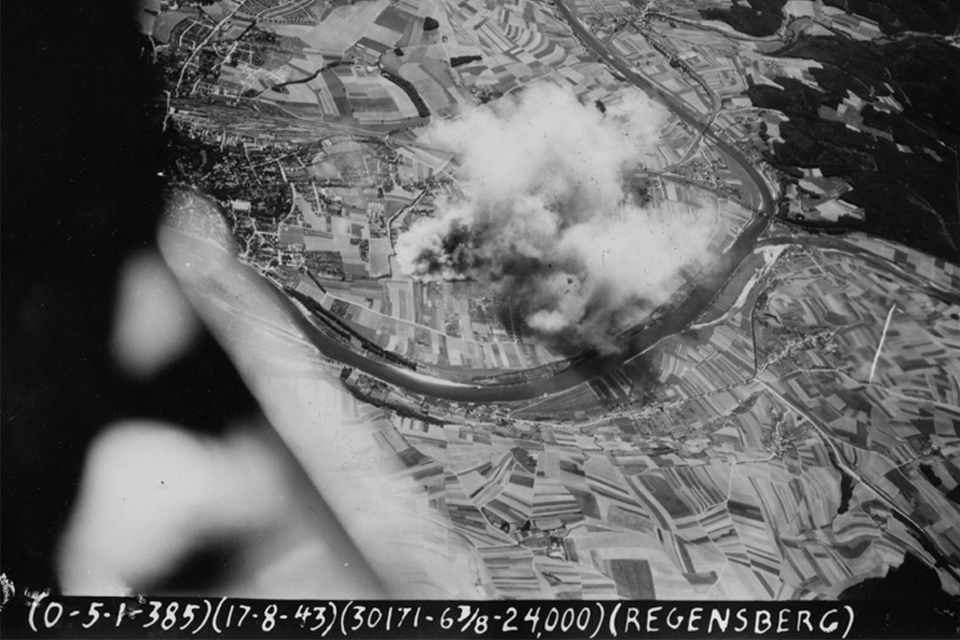
By 1943, the Eighth felt confident enough to strike at cities on the German frontier, but these missions proved as useful to the Luftwaffe as to the Americans. Among other things, they enabled the Germans to perfect their daylight, defense operations by gaining experience in plotting bomber-formation speed, strength and probable destination. Thus, the Germans could place every available aircraft in interception position on the bomber route. The effectiveness of this experience became apparent when the Eighth first targeted Schweinfurt as part of a ‘double strike’ mission on August 17, 1943, a year to the day after the first B-17 mission to Rouen. The anniversary was not a happy one—24 Fortresses were lost from the Schweinfurt force and another 36 from the formation assaulting a Messerschmitt complex at Regensburg. American losses totaled 19 percent, but the strategists felt the results gained over Schweinfurt were good enough (bearing production at one major plant was believed to be cut by two-thirds) to justify another mission.
‘Production…dropped by 38 percent,’ Nazi armaments minister Albert Speer said after the war. Had the USAAF not made a ‘crucial mistake’ by dividing up its 376 B-17s between two objectives, he added, damage would have been much worse.
Meanwhile, the losses to the bomb groups continued unabated. During the week prior to Black Thursday, the Eighth Air Force lost nearly 90 bombers on three missions. It was obvious to everyone, including the Germans, that not even America’s vast resources could sustain such losses indefinitely.
As expected, bomber crew morale began to falter as the losses piled up. The situation was aggravated somewhat by the Luftwaffe tactic of targeting one particular bomb group for heavy losses or, if possible, extinction, The 100th Bomb Group (BG) earned the nickname ‘Bloody 100th’ after it lost 12 out of 13 aircraft following an October 10 Munster mission, while the 492nd BG, a B-24 outfit, was nearly wiped out after becoming a ‘marked group’ the following year.
Joseph W. Baggs, 384th BG lead bombardier, recalled that as early as August only eight of the group’s original crews were left. Four days before Mission 115, the 381st BG’s medical officer wrote that ‘morale is the lowest that has yet been observed.’
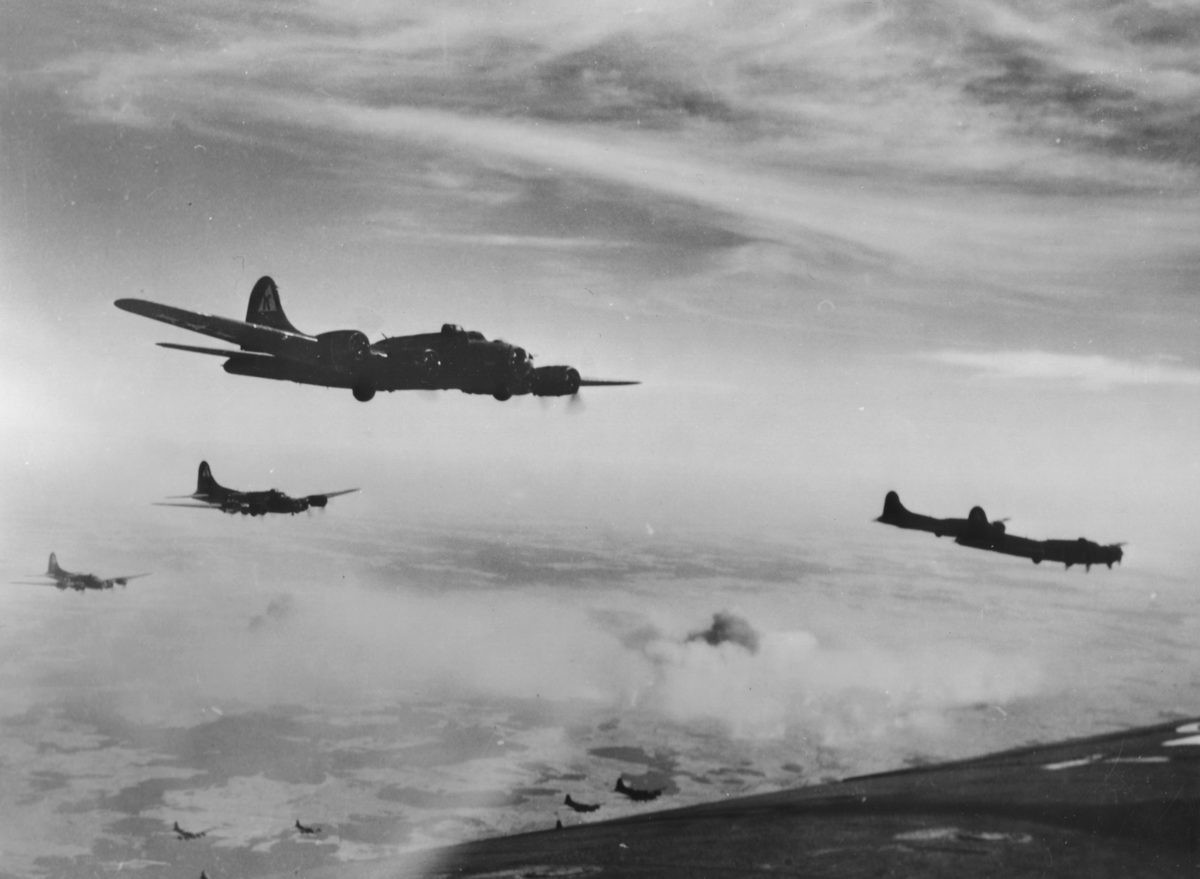
This was the prevailing mood at Eighth Air Force bomber stations throughout the East Anglian countryside when crewmen were awakened during the pre-dawn darkness of October 14, 1943. Stumbling into briefing rooms, they were soon jolted wide awake when the red target string on the map was stretched to Schweinfurt. There was some grumbling about the need to hit the town again after the August 17 mission, but pilots and officers could not afford the luxury of griping very long; There was too much planning to be done to ensure that Mission 115 went smoothly. Fear had to be put aside temporarily, while information on weather, fuel consumption, the target, squadron readiness, formations and myriad other details were absorbed and memorized. As the minutes ticked away and tension mounted, men from 16 B-17 bomb groups donned flight suits and performed other preflight duties. They included members of the 91st Bomb Group, based at Bassingbourne; the 92nd, at Alconbury; the 303rd, at Molesworth; the 305th, at Chelveston; the 306th, at Thurleigh; the 351st, at Polebrook; the 379th, at Kimbolton; the 381st, at Ridgewell; and the 384th, at Grafton-Underwood. These groups represented the 1st Bomb Division, and their Fortresses were marked by a white triangle on the vertical fin.
Recommended for you
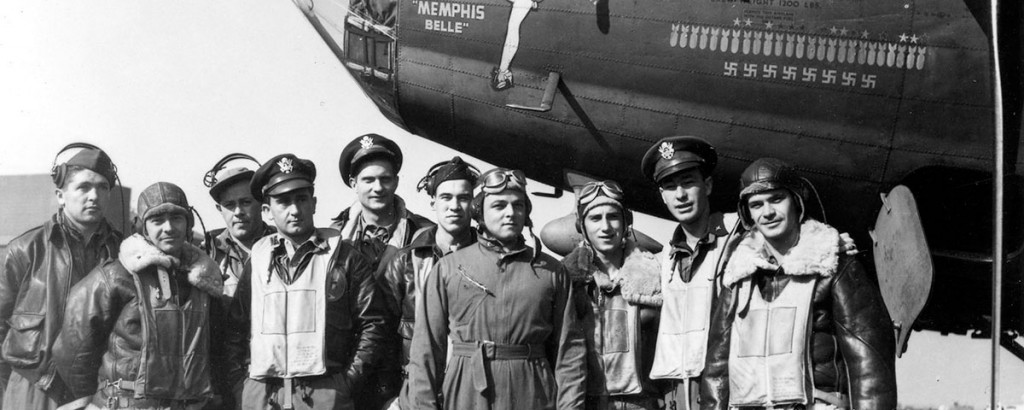
From the 3rd Bomb Division (whose aircraft were identified by a white square) were the 94th Bomb Group, at Bury-St. Edmonds; the 95th, at Horsham St. Faith; the 96th, at Grafton-Underwood; the 100th, at Thorpe Abbotts; the 385th, at Great Ashfield; the 388th, at Knettisham; and the 390th, at Framlingham. Two B-24 groups, the 93rd and the 392nd, were to fly a route to the south of the B-17 formations and rendezvous with them near the target.
On fog-shrouded hardstands the bombers waited, their tires almost flattened under full combat loads. A variety of U.S. markings were employed, ranging from the early white-star-on-blue circle to the later design with white bars added. Some had red or yellow surrounds to the insignia, and many crews had ‘grayed out’ the white areas of their markings to reduce visibility. The olive-drab upper surfaces of many of the older B-17s had faded to a greenish tan shade that bore little resemblance to the original colors.
Shortly before 10 a.m., the silence of the aerodromes was abruptly shattered. Wright Cyclone radial engines coughed, shuddered, spat smoke and burst into life. The three-bladed props seemed to windmill for a second, then faded into a blur as the engines settled into a smooth roar. Soon, almost 1,400 engines were flattening the grass behind the bombers, and the din rolled across the English countryside.
Colonel ‘Budd’ J. Peaslee, Mission 115 commander, would fly to Schweinfurt as copilot in Captain James K. McLaughlin’s 92nd BG B-17, and about 10:15 he saw the signal flare that indicated the mission was on. Because of the dense fog and the overcast, which limited visibility to a quarter-mile, Mission 115’s status had gone down to the wire. But word finally came that weather over the continent was clear, and this was enough to put the mission into operation.
Takeoff proceeded without incident, but conditions began to unravel shortly after the bombers climbed above the overcast. Because the 305th Bomber Group could not locate the 40th Combat Wing to take its assigned position, the 305th was forced to link with the 1st Wing. The 40th Combat Wing, now composed only of the 92nd and 306th bomber groups, tagged along with the 41st Wing.
Because of the thick fog, only 29 of the 60 Liberators scheduled to fly the mission could take off; eight of these could not form up and returned to base. The remaining 21 Liberators made a diversionary sweep toward Emden.
As the B-17s flew toward Schweinfurt, 26 aborted for various reasons. Thus, of the 351 bombers that set out to hit Schweinfurt, 86 were not on hand when the force reached the German frontier.
The overcast also disrupted a scheduled escort by four P-47 Thunderbolt groups. The 353rd and 56th fighter groups rendezvoused successfully with the bombers and eventually shot down 13 fighters, but the 4th Fighter Group could not locate its B-17s and returned to base. The 352nd Fighter Group wound up escorting the B-24s on their diversionary sweep. The 55th Fighter Group, flying P-38 Lightnings, did not become operational in time to participate.
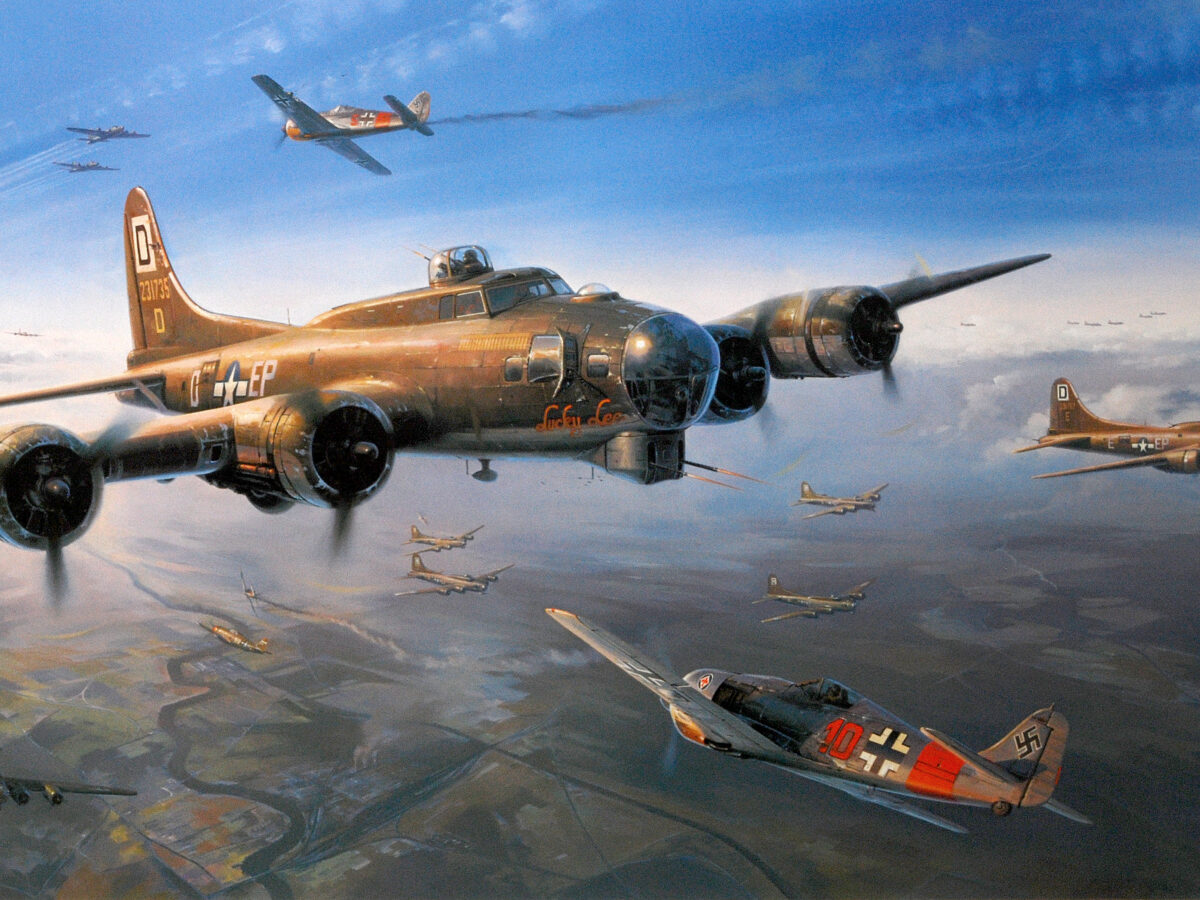
The Luftwaffe was apparently aware of the range limitations of the P-47s, and most German fighters delayed their attacks until the escort turned back. What at first could be mistaken for mere specks on B-17 Perspex windshields became fighters—swarms of them, getting larger as they queued up to attack. B-17 interphones immediately came alive as gunners called out ‘bogies,’ first at 12 o’clock (straight ahead on the clock-based locator system), then at every position on the clock. Gunners were warned to keep chatter to a minimum and to not waste ammunition.
‘The opening play is a line plunge through center,’ mission commander Peaslee later told Martin Caidin, author of the 1960 book Black Thursday. ‘The fighters whip through our formation, for our closing speed exceeds 500 mph. Another group of flashes replaces the first, and this is repeated five times, as six formations of Me-109s charges us….I can see fighters on my side…their paths marked in the bright sunlight by fine lines of light-colored smoke as they fire short bursts. It is a coordinated attack…their timing is perfect, their technique masterly.’
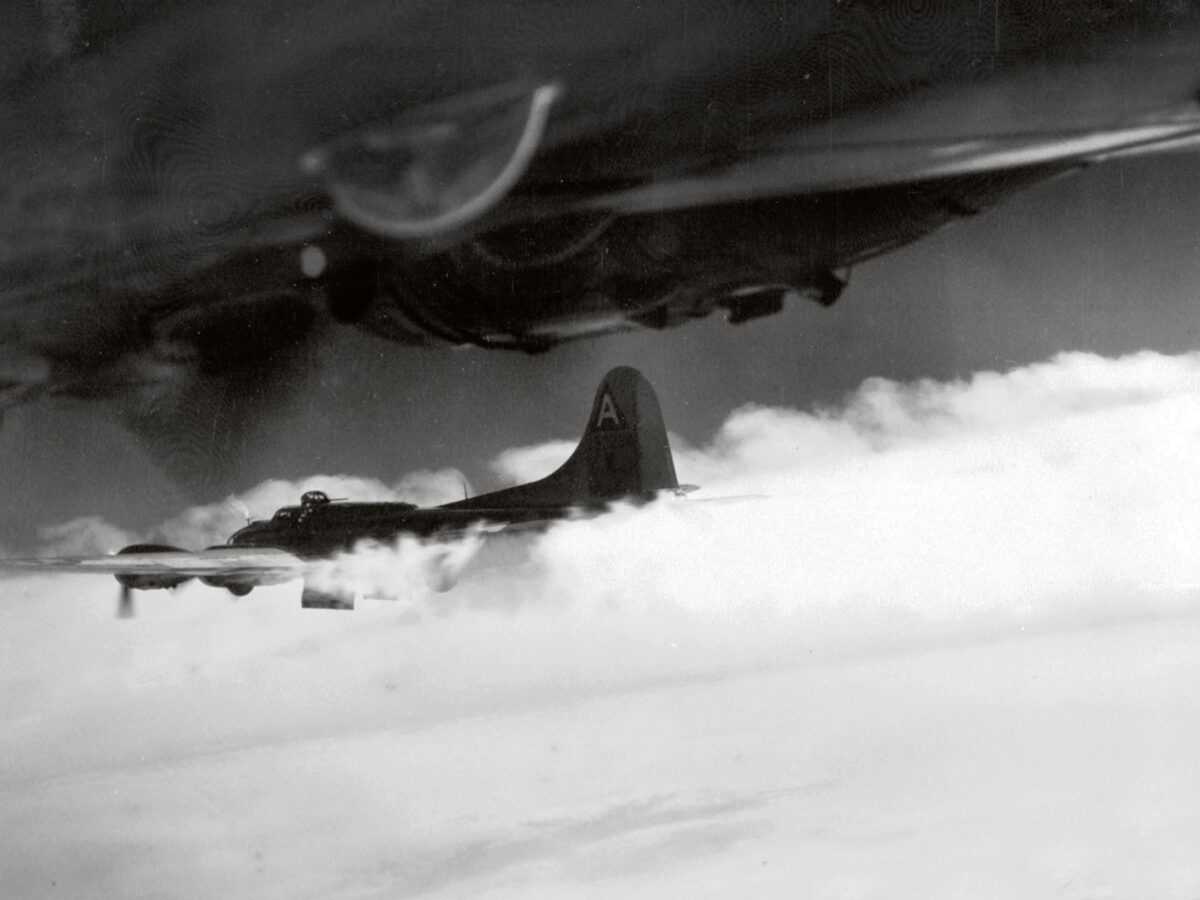
Although they were still far from the target, smoking Fortresses started to fall out of formation-37 in all. That left 228 to actually bomb the target, about two-thirds of the original strength.
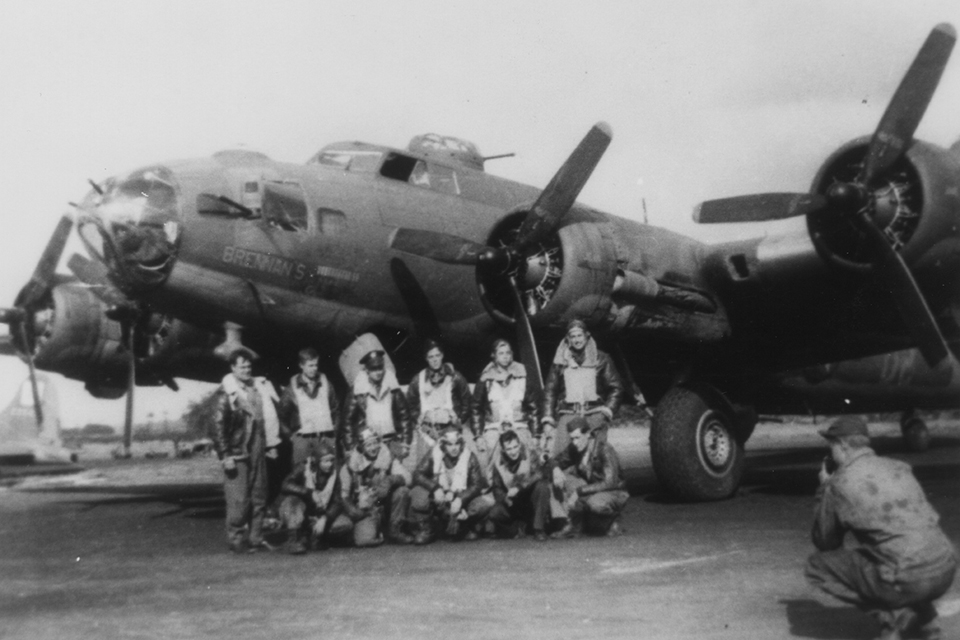
The saga of the 94th Bomber Group’s B-17F Brennan’s Circus was typical of the heroics that became routine on Mission 115. Ten minutes from the target, Circus lost an engine and began to fall behind when the bombs could not be jettisoned. To escape the circling fighters, pilot Joseph Brennan put the B-17 into a dive. The crew eventually got rid of the bombs, but another engine ‘ran away’ into high rpm and had to be feathered. Over Holland and Belgium, a burst of flak took out a third engine. Circus struggled out over the North Sea, kept barely aloft by the one remaining engine, to within a few miles of the English coast before settling into the water. The crew was credited with four German fighter kills and one damaged for the mission.
Meanwhile, back over the target, fighter attacks stopped abruptly as German pilots turned their attention to groups of bombers still en route to the target. It was to be the only respite for the beleaguered crews in more than three hours of ceaseless combat.
On the return trip, the fury of air combat was entered anew, as many of the German fighters that had left the fight to refuel and rearm returned. But the attacks were not as precise as they had been earlier because many of the fighters had lost their original units and had formed up with any friendly aircraft in the area.
It was estimated that more than 300 German fighters participated in the day’s combat at some point. Most were the familiar single-engine Messerschmitt Bf-109G and Focke-Wulf Fw-190, but the Luftwaffe also made extensive use of night-fighter Junkers Ju-88 and Messerschmitt Bf-110 twin-engine craft. The use of these aircraft was controversial because their pilots, used to night attack techniques, often left themselves wide open to American gunners.
Other aircraft reportedly in the fray included the ungainly, fixed-landing gear Ju-87 Stuka dive bomber, the Fw-189 tactical reconnaissance aircraft and the experimental He- 100 fighter of 1940 vintage. Although it seems unlikely the Luftwaffe would risk such unsuitable, specialized aircraft for bomber interception, the mystery of their alleged appearance contributed to the jumbled patchwork of the running fight.
‘The fighters were unrelenting; it was simply murder,’ recalls Carl Abele, who was serving as navigator on a 544th Squadron, 384th BG, B-17F unofficially called Blackjack on the mission. Schweinfurt was the crew’s fourth mission, and there had been no time to paint the name on.
‘As it turned out, the name was destined never to be painted on,’ Abele remembers. ‘We lost an engine to flak and another to fighters, but the prop on one of the engines couldn’t be feathered. The drag of the dead engine was tremendous, and helped doom the plane. Our pilot held her steady while we all bailed out, then he came out last. I never saw my chute open. The next thing I knew I was lying down in the back of a Totenkopf [Death’s Head SS Army Division] truck on the way to POW camp.’
The punishment being meted out was not always one-sided, however. Fortress gunners claimed 186 aircraft shot down, although German documents reviewed after the war placed their losses at approximately 40. Some overclaiming by gunners was inevitable, since several gunners within a combat ‘box’ of bombers would fire on the same plane.
The fighter attacks continued without letup throughout the return flight, since poor weather had grounded the Spitfires and Thunderbolts that were to have provided cover for the bombers’ withdrawal. A few German fighters continued their attacks almost to the British coast.
Soon after the drone of the returning bombers was heard, it was apparent that a disaster had occurred; bomber after bomber failed to return to its hardstand. Then the results were tabulated: 60 bombers down over Europe, five more lost near or over England, and 17 aircraft damaged beyond repair. Although other targets produced equal or greater total losses, the 26 percent loss figure recorded during Schweinfurt II gave it the dubious honor of being the most costly mission of the war for the Eighth Air Force.
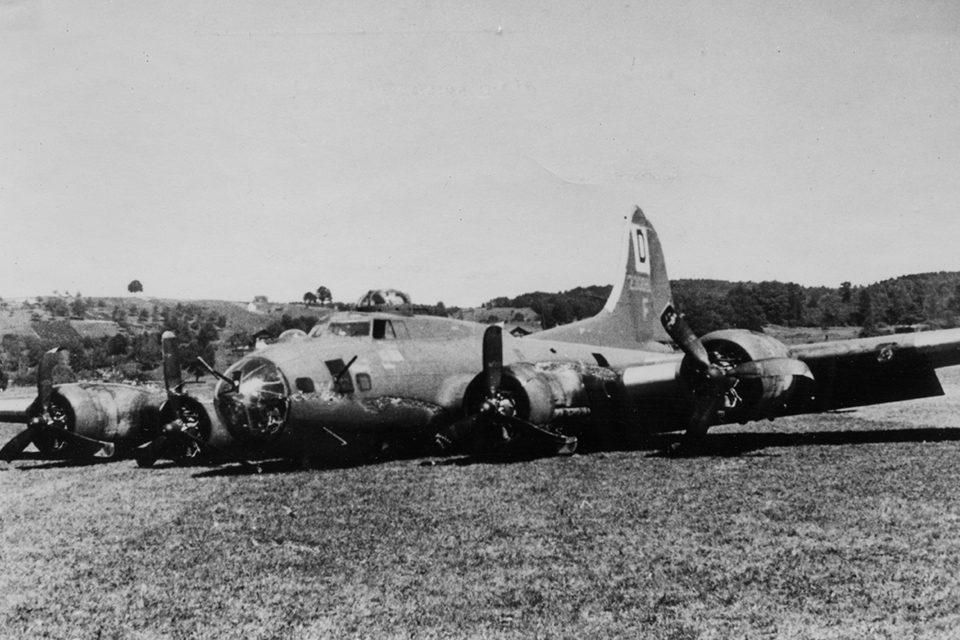
The element of chance involved in death, injury or capture was never more evident than on Black Thursday. Some bomb groups were almost annihilated, while others were untouched. The 305th lost 13 out of 15 Fortresses dispatched and the 306th lost 12, while three other 1st Bomb Division groups—the 92nd, 379th and 384th—lost six each. The 3rd Bomb Division fared much better, with its seven groups losing only 15 aircraft overall and three, including the Bloody 100th, losing none. From the vantage point of the Germans, had the raids been repeated at two-month intervals for a six-month period, the bearings industry ‘could not possibly have survived.’
But it would have mattered little if Speer had telephoned that information directly to Allied Bomber Command, because the Eighth Air Force did not have the resources to follow up. Without fighter escort to minimize losses, several more missions would have wiped out the Eighth’s Bomber Command, and no projected results would justify that. The answer was at hand, though, and that was the North American P-51 Mustang long-range fighter, which began to arrive in England in December.
In the aftermath of Schweinfurt 11, it would appear that the British doctrine of night bombing was vindicated and the American daylight precision concept discredited. But that was not the case, for several different reasons.
It was true that B-24s and B-17s could not withstand determined fighter opposition without sustaining prohibitive losses. But the key word was ‘determined.’ American heavies were far more able to withstand fighter assault than other bombers, which was why the Germans were forced to add cannon and rockets to their aircraft to provide the necessary firepower to bring bombers down without being shot down themselves by the heavy defensive screen. The extra weight and drag resulting from the added weaponry made them much more vulnerable to Allied fighters—which meant that the Germans needed large numbers of fighters to penetrate the bombers’ defensive screen, and that they usually stayed outside the screen or waited for stragglers or cripples if they could only attack singly or in pairs.
Had the bombers been completely naked to fighter attack, it would have been well into 1944 before the USAAF had enough escort fighters to cover the hundreds of bombers that took part in raids. As it was, the toughness and defensive firepower of the B-17 and the B-24 made the job of fighter escorts easier. ‘Without their own fighter escort they [bombers] were no match for enemy fighters,’ Cajus Bekker wrote in the book Luftwaffe War Diaries. But the effect of their guns, multiplied by the overlapping firepower coverage of the combat box, resulted in a ‘veritable barrage. The whole aircraft bristled with guns, leaving no blind spots.’
GET HISTORY’S GREATEST TALES—RIGHT IN YOUR INBOX
Subscribe to our Historynet Now! newsletter for the best of the past, delivered every Wednesday.
In addition, the Luftwaffe was forced to bleed other fronts of precious day fighters to counter the effectiveness of day bombing, allowing these aircraft to be hunted down and destroyed by Allied fighters.
Night area bombing, while destructive, had little measurable effect on the Nazi armaments industry, as Speer and others have emphasized repeatedly. It did not destroy civilian morale when used against either England or Germany, and American fire-bombing raids against the Japanese had little appreciable effect until the awesome power of the atom bomb ended that conflict. ‘It was not…area bombing by night that struck the vital blow at German survival,’ Bekker wrote. ‘This mission was accomplished to a far greater extent by the selective and precision bombing of the Eighth Air Force in daylight. By careful choice of target…this finally brought the whole German war machine to a standstill.’
Moreover, night bombers were not immune to fighter interception. On the night of February 19-20, 1944, over Leipzig, the British Royal Air Force lost 78 bombers. Another 72 were lost March 24-25 en route to Berlin, and another 94 over Nuremberg March 30-3 1. These catastrophic losses forced the temporary suspension of the night bombing offensive.
But the march of history during the past 50 years has relegated competing arguments over strategic bombing to academic theories only. Schweinfurt is quiet now, having returned to the anonymity it enjoyed before 1943. There is not much there to commemorate the carnage that took place overhead so many years ago, and that is too bad, because Schweinfurt should rank with Pickett’s Charge, Bataan, Chosin and other battlefields as an epic of American heroism. As it is, we can only look at grainy wartime pictures of the bombers going down in flames, and try to imagine what it was like for the men trapped inside.
This article was written by Bruce Crawford and originally published in the September 1993 issue of Aviation History magazine. For more great articles subscribe to Aviation History magazine today!