WHETHER SHE WAS addressed as Madame or Ma’am, Señorita or Squaw, a woman needed guts to live out West. The ‘weaker sex’ encountered savage, brutal and obnoxious obstacles (and these were just the men!), not to mention mean ol’ Mother Nature and a plague or two. Or three. In spite of these barriers, or maybe because of them, the American frontier attracted legions of nonconforming women–mavericks, loners, eccentrics and adventurers. And through it all they kept their sense of humor: ‘I’ve got 350 head of cattle and one son,’ said a widowed ranchwoman. ‘Don’t know which was harder to raise.’
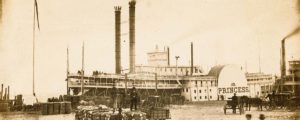
In the case of the ‘boat people’ (immigrants from Europe) who ventured out West, the women were typically cut off from family, friends, their native culture and the ‘protective strictures’ of Eastern society. Some were crushed by the experience, others survived and more than a few thrived. Of course, many of the so-called wild women were already in the Wild West and lived on the plazas and in the wigwams, hogans and teepees up and down the canyons and across the Great Plains. Among both the natives and newcomers were plenty of feisty women who weren’t afraid to mix it up with anyone, man or beast. As a modern leader put it, ‘No country, no culture, no people will ever rise above the standards of its women.’
Never Underestimate an Apache’s Love of Family
From Sonora to Sonoma, from the Badlands of the Dakotas to the California Baja, the courage and determination of American Indian women was astounding. Day in and day out they faced death and deprivation from an unforgiving environment and a multitude of predatory enemies. Take the experience of an Apache tribeswoman named Dilchthe. Among her Warm Springs clan, she was not a storied woman warrior. In fact, she was a middle-aged grandmother when she was captured by Sonoran mercenaries at Esqueda, Mexico (south of present-day Douglas, Ariz.), in the mid-1860s. The Apache men in her party were quickly executed. Dilchthe and several other women were driven southwest to the Gulf of California. There, the captives were sold into slavery and shipped across the gulf to a penal colony on the Baja Peninsula.
Many of the Apache captives died in the camp, but Dilchthe hung on tenaciously. Not long after their arrival, she and several others were sold again and began working on a nearby hacienda. In spite of her age, Dilchthe was a good worker and soon earned the trust of her owners. They treated her fairly and gave her additional responsibilities, but she had other plans. She hid food and planned a break for freedom. Dilchthe was determined to somehow, some way, make it back to her family.
The night Dilchthe sprang her plan she freed several other women with her. Led by Dilchthe and traveling only at night, the escapees made their way on foot to the gulf and began to follow the coastline north. Dilchthe successfully evaded the mounted search parties sent out to track them down. (Imagine the ribbing these vaqueros must have taken when they returned empty-handed and admitted they could not track down a pack of fleeing women, led by a grandmother! But this was not just any ol’ fleeing grandmother, this was a fleet-footed Apache grandmother!)
Although the women conserved their supplies as best they could, eventually their provisions ran out. Sleeping by day and traveling by night, they pressed on. Eating insects and a variety of desert plants, they kept trudging north for nearly 300 miles. Nearing the mouth of the gulf, they approached their biggest obstacle–the mighty Colorado River. How could they safely cross it when none of them could swim? Dilchthe stubbornly insisted they would find a way. She sought out and befriended a kindly old Mexican who told them where they could safely ford the wide river. Once again the women pushed northward along the west bank of the Colorado until they reached the confluence of the Gila River and the Colorado (later the site of the Yuma Territorial Prison). Finding the exact spot the old Mexican had described to her, Dilchthe carefully waded into the cold current. Just when it looked as if she was about to be swept away, Dilchthe stepped up onto a sandbar and quickly crossed to the other side. Her charges then followed her across. They all safely made their way through the thick underbrush, eastward along the banks of the Gila and into Arizona Territory. They were about halfway home.
Outside the Yuma Valley, the women confronted barren terrain and soon were suffering from the heat. A few of them wanted to leave the lowlands and climb into the cooler mountains to the north, but Dilchthe knew those mountains were home to their enemies, and she urged them to stay on the Gila because it would eventually lead them home.
On the third night after crossing the Colorado, they were attacked by Yuma (or Mojave) raiders. One woman was captured, and all but two of the others were killed in the ambush–Dilchthe and another woman fled into the brush. Once again they were hunted, but Dilchthe was too wily for the pursuers.
The two Apache women walked four more days over the dreary, hot, mostly dry riverbottom, past the Gila Bend, past Maricopa Wells (near present-day Phoenix), and around the Pima and Papago camps and villages (virtually all the tribes in this area were enemies of the Apache). Dilchthe and her companion made it another 100 miles before collapsing northeast of present-day Safford, Ariz. Almost crazed from grief and hunger and too weak to walk another mile, Dilchthe made a signal fire.
Incredibly, her own son-in-law came into view. After what she had been through, she must have thought it was an apparition, but it was not. Dilchthe and her friend had been saved. Normally, it is strictly taboo for an Apache woman to look her son-in-law in the face, but this time the tradition was overlooked as he hugged her and welcomed his brave mother-in-law back from the dead. Dilchthe was reunited with her family and welcomed back into her tribe as a hero. She had walked more than 1,000 miles and outwitted and outmaneuvered all her pursuers. Through it all, she had carried no map, no weapons and almost no provisions. Her undying determination to reach her Warm Springs clan demonstrates a rare kind of courage. She was the Apache grandmother with the iron will–truly a wild woman of the Wild West.
A Stitch in Time…
More than any other virtue, women brought a hearty pragmatism to the West. ‘When I saw something that needed doing, I did it,’ was a common remembrance of the wild women of the Wild West.
A good practitioner of that brand of pragmatism was Barbara Jones, who, along with her husband and 10 children, settled on the Pecos River in New Mexico Territory in the 1870s. They opened a store near Seven Rivers, and while her husband freighted in supplies, Ma’am Jones, as she was called by her friends and family, managed the store and her brood. The nearest doctor was 150 miles away, so it was probably inevitable that disaster would strike. Sure enough, one of her older boys (she had 10 sons!) came running in one day and said, ‘Mommy come quick, Sammy’s been hurt!’ Ma’am Jones ran outside and found her youngest lying face down. As she picked him up and wiped the dirt and blood from his face, she realized he had been pushed down into some broken glass. Upon closer inspection she discovered that one of his eyelids had been almost severed by the glass and was hanging by a thread. She carried her hysterical son into the house, laid him on the kitchen table and had one of her other sons fetch her sewing kit. While little Sammy howled and squirmed, Ma’am Jones sewed his eyelid back on.
Sammy Jones lived to be a happy old man. One eyelid was a bit crooked, but he still retained the use of that eye–thanks to the courage and quick thinking of his mother. Ma’am Jones owned a brand of bravery that often goes unnoticed when Hollywood looks at the Wild West.
Invasion of the Women of Easy Virtue
Like their male counterparts on the frontier, the early female arrivals were rugged individualists who angled west to gain the cherished privilege of being left alone to do what they pleased. And often as not, ‘doing what they pleased’ was a nice way of saying they were women of easy virtue. A Forty-Niner’s poem sums up the early arrivals to California:
The miners came in ’49,
The whores in ’51,
And when they got together
They produced the native son.
Many women who came West were trying to escape their past. Others saw too many restrictions in Eastern society and wanted to create a future in this new land of opportunity. All were hoping against hope, and many had nothing to lose.
Mattie Silks claimed she had never been a prostitute yet bragged that she was the youngest madame in the West. At the tender age of 19, she probably was the youngest successful madame that Denver had yet known. But Mattie was not alone in her profession. A Denver man described the scene on Holladay Street, where most of the Cyprians roosted: ‘Men took their liquor neat and women took what they could get their hands on.’ One of Denver’s most successful madames in the 1880s was Jennie Rogers. When she caught her lover, Jack Wood, in the arms of another woman, Jennie shot him. She said she shot him because she loved him, and sure enough, when Jack recovered, she married him.
When off the ranges of the Southwest, the lonely cowboys lined up whenever they had the chance. Working hours were usually noon until dawn. Each girl had one day off a week, and a popular girl in a popular house earned as much as $200 a week. It was the custom in most of the cheaper establishments that while a man dallied, he was not permitted to remove any of his clothing except his hat.
Most Western males, with or without their hats on, were not inclined to look down their noses at the girls on the line. A Dodge City ‘old-timer’ describing a favored ‘tid bit’ recalled that ‘the only thing anyone could hold against her was her after-dark profession, and by Godfrey, I allow she elevated that considerably.’ A miner described Rosa May of Bodie, Calif., by declaring, ‘She was a gal who had a smile you’d go to hell for, and never regret it.’
Although prostitution was condoned and even sanctioned in the early West, it simply could not interfere with business. In 1860, Madame Mary Miller spent three months in jail for ‘depressing real estate values.’ And, though the miners and cowboys ‘loved their gals,’ when it came time to bury them, the girls of the line were often laid to rest in outcast cemeteries far from the respectable plots.
Death on the Line
Mattie Blaylock was a farm girl from Iowa with large bones and a fine face. Not long after going West, she was working in Dodge City as a dance hall girl. She did okay, but like most girls on the line she wanted to find the right guy and leave that way of life. She met a local police officer and moved in with him. She was happy to be off the streets. He soon tired of the low pay of police work and became a bartender, gambling on the side. He bought Mattie a mine with his winnings and named it ‘The Mattie Blaylock.’
They traveled together as man and wife, following the gambling circuit. It was good for quite a while, but then things went south in their relationship, and he left her for another woman. He never even said goodbye; he just left town. Mattie tried to make it on her own, but there was little she knew how to do. She went back on the line, and things went downhill from there. Mattie was older now and lacked the appeal of the younger girls. She woke up one morning in a small shack in a one-horse town with a stranger in her bed. Mattie ordered a bottle of laudanum, drank it all down and went to her final sleep.
At the inquest, the coroner in Pinal, Arizona Territory, asked a laborer named T.J. Flannery if he knew the deceased. He replied he did. She had told him her name was ‘Mattie Earp.’
‘Did you hear the deceased threaten her own life?’ the coroner asked.
‘I have,’ the witness answered. ‘[Wyatt] Earp, she said, had wrecked her life by deserting her and she didn’t want to live.’
Annie and Calamity
When it comes to famous women of the Wild West, probably no two names shine brighter than Annie Oakley and Calamity Jane. Born Phoebe Ann Moses (often spelled Mozee) in Darke County, Ohio, in 1860, Annie Oakley was not really a Westerner. But she became a universal star when she joined the Buffalo Bill Wild West show in 1885. ‘Little Miss Sure Shot’ toured Europe and became the darling of royalty everywhere. She was badly injured in a 1901 train wreck, but recovered and continued her career. She really could shoot well but was no hard-riding frontier character. When not on the road, Mrs. Butler (Annie married a fellow performer, Frank Butler, who later became her manager) led a quiet, religious life in her native Ohio. Annie Oakley died in 1926.
Old-timers always claimed Calamity Jane Cannary (sometimes spelled Canary) had a big heart when she was not drinking, but unfortunately that was not very often. Most Westerners also agreed she was generally liked but little respected, and she was hard to be around for long periods of time. She was a bullwhacker, a harlot, a scout, an occasional actress and an accomplished liar. Jane traveled (mostly bumming her way) throughout the West. There are numerous versions as to how she got her name. One story says that any cowboy who bought her services was in for a calamity, meaning they were going to be spending quality time with a doctor in the near future.
Calamity Jane’s movements and blundering escapades were frequently reported in the local papers. The February 28, 1887, edition of the Laramie, Wyoming Territory, Boomerang noted that Calamity was visiting: ‘To say that the old girl has reformed is something of a chestnut. She was gloriously drunk this morning and if she didn’t make Rome howl she did Laramie. Her resting place is now the soft side of an iron cell. Judge Pease will deliver the lecture and collect the fine in the morning.’
By the late 1890s, Jane had abused herself so thoroughly that a contemporary described her as resembling ‘a busted bale of hay.’ The rough old gal’s time ran out in Deadwood on August 1, 1903. She evidently expired from an old job-related injury–‘inflammation of the bowels.’ Before she died, she requested to be buried beside her ‘true love,’ Wild Bill Hickok (the request was granted, but there is little evidence that Jane knew Hickok more than casually). At the undertaker’s, souvenir seekers clipped off locks of Calamity’s hair, forcing an old friend to put a wire screen over her head. Many who viewed her noted Calamity Jane looked better in death than she had in life. Of course, the same could be said of her legend.
The history of the wild women of the Wild West does not end in the 1890s. The dance hall girls, gritty pioneers and savvy señoritas gave way to a new breed of Western women, even wilder and, in many cases, stronger than their mothers. Many of the daughters and granddaughters of those feisty women continue to live in the West and to look back at the often unsung frontier heroines with pride.
This article was written by Bob Boze Bell and originally appeared in the April 1997 issue of Wild West magazine. For more great articles be sure to subscribe to Wild West magazine today!