At dawn on Monday, September 7, 1857, Major John D. Lee of the Nauvoo Legion, Utah’s territorial militia, led a ragtag band of 60 or 70 Latter-day Saints, better known as Mormons, and a few Indian freebooters in an assault on a wagon train from Arkansas.
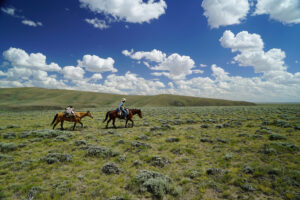
The emigrants, now known to history as the Fancher Party, were camped at Mountain Meadows, an alpine oasis on the wagon road between Salt Lake City and Los Angeles. The party, led by veteran plainsmen familiar with the California Trail and its variants, consisted of a dozen large, prosperous families and their hired hands. The wagon train comprised 18 to 30 wagons pulled by ox and mule teams, plus several hundred cattle and a number of blooded horses the men were driving to California’s Central Valley. The company included about 140 men, women and children—the women and children outnumbered the able-bodied men 2-to-1.
As daylight broke in the remote Utah Territory valley, a volley of gunfire and a shower of arrows ripped into the wagon camp from nearby ravines and hilltops, immediately killing or wounding about a quarter of the adult males. The surviving men of the Fancher Party leveled their lethal long rifles at their hidden, painted attackers and stopped the brief frontal assault in its tracks. The Arkansans pulled their scattered wagons into a circle l and quickly improved their wagon fort, digging a pit to protect the women and children from stray projectiles. Cut off from any source of water and under continual gunfire, the emigrants fended off their assailants for five long, hellish days.
On Friday, September 11, hope appeared in the form of a white flag. The emigrants let the emissary, a Mormon from a nearby settlement, into their fort, and then John D. Lee, the local Indian agent, followed. Lee told the Arkansans he and his men had come to rescue them from the Indians. If the emigrants would lay down their arms, the local militia would escort them to safety. The travelers had few options: they surrendered and agreed to Lee’s strange terms.
The Mormons separated the survivors into three groups: the wounded and youngest children led the way in two wagons; the women and older children walked behind; and the men, each escorted by an armed guard, brought up the rear. Lee led this forlorn parade more than a mile to the California Trail and the rim of the Great Basin. There, the senior Mormon officer escorting the men gave an order: perhaps “Halt!” but by most accounts, “Do your duty!” A single shot rang out, and each escort turned and shot his man. Painted savages—a few of whom may have been actual Indians—jumped out of the oak brush lining the trail and cut down the women and children, while Lee directed the murder of the wounded. Within five minutes, the atrocity was over. Everyone was dead except for 17 orphans, all under the age of 7, whom the killers deemed too young to be credible witnesses and who qualified as “innocent blood” under Mormon doctrine.
For the men who committed this horrific atrocity, the legacy of Mountain Meadows became a haunting memory they could never escape. Those most guilty of the crime explained it with denials, lies and alibis that twisted and turned as the evidence inevitably came out. Some of the killers went mad, some apparently killed themselves and several fled to Mexico, but only one man faced the music and was executed for the crime: John D. Lee, regarded as a scapegoat by his descendants and historians alike. For the children who survived and the families of the victims, the massacre became a deep and enduring wound. The murderers appropriated the Fancher train’s considerable property and cash. Much of it apparently made its way into Mormon leader Brigham Young’s pockets, and not a penny of compensation was ever offered to the survivors. For many living descendants and relatives of the victims, who have long been slandered as frontier hard cases who got what they deserved, the massacre remains a bitter injustice.
For today’s Latter-day Saints, Mountain Meadows is the most troubling event in their religion’s complicated history. There is nothing like it in the faith’s history of suffering, sacrifice and devotion. For 150 years, leaders and official historians of the LDS Church have worked hard to justify or explain away the crime, and a large part of the legacy of the murders is a tangled web of lies and deception.
On Tuesday, September 11, 2007, another wagon train from Arkansas will arrive at Mountain Meadows to commemorate the sesquicentennial of one of the grimmest anniversaries in American history. After a long forgetfulness, the last five years have seen a flurry of histories, biographies, novels, plays, films and articles about the massacre. Academic presses are primed to release at least three serious nonfiction studies of the event over the next year, including one by the forensic anthropologist who analyzed the bones of 28 men, women and children the U.S. Army buried in 1859. Despite the passage of 150 years, it appears that Latter-day Saints, survivors of the Southern Paiute Nation, descendants of the victims and their murderers, and a scattering of historians and the curious will gather at the meadows. They will wrestle with the complicated legacy of what all agree was an atrocity and some view as America’s first act of religious terrorism.
I’ll be there, too, as I have been for about every other September 11 over the last 20 years. During that time, I’ve witnessed the dedication of two monuments—one near the highway on Dan’s Hill overlooking the killing ground, where a 1990 granite monument financed by descendants and the state of Utah honors the victims; and a second that the Church of Jesus Christ of Latter-day Saints raised in 1999 over the grave of the victims, whose remains were inadvertently unearthed by a backhoe during the monument’s hurried construction. Ironically, the cairn standing at the center of the second memorial is modeled after the “rude monument, conical in form and 50 feet in circumference at the base and 12 feet in height,” that Brevet Major James Henry Carlton’s 1st Dragoons raised in 1859 and Brigham Young directed his minions to destroy two years later. I’ve met grandsons and great-great-great-great grandsons of the men who committed the crime—members of the Lee, Klingensmith, Johnson, Knight, Adair, Pearce, Haight, Higbee, Wilden and Bateman families—all of whom still live under the shadow cast by their ancestors’ act 150 years ago. I’ve encountered even more descendants of the Baker, Cameron, Dunlap, Fancher, Jones, Miller, Mitchell, Prewit and Tackitt families who lost loved ones at the meadows. I admire and respect almost every one, and I have come to love more than a few of them.
I’m also the author of Blood of the Prophets: Brigham Young and the Massacre at Mountain Meadows, which took five years to write; and editor (with David L. Bigler) of Innocent Blood: Essential Narratives of the Mountain Meadows Massacre, which took another five years to assemble and should appear next year from the Arthur H. Clark Company. I have a dog in this fight and make no pretensions to being a disinterested party: I happily admit I’ll be fascinated to witness whatever drama plays out at Mountain Meadows late this summer. I am also intrigued by the massacre’s strange legacy and a little astonished to find myself as enmeshed in the awful tale and its ongoing story as was its greatest chronicler, southern Utah historian Juanita Brooks. Like Brooks, I am amazed to find myself slandered, libeled, reviled, hated and even feared for simply following the evidence to its obvious conclusions.
An Incident That Should Be Forgotten: Books
At first glance, it seems incredible that the largest massacre of American citizens in the history of the Oregon and California trails is practically forgotten. Again and again, I’ve had people ask, “Why haven’t I ever heard about this?” Upon consideration, the atrocity’s obscurity is easier to understand: After all, such a tale of blood and sorrow had little to recommend it to those who created the legend of the West. It involved white people killing white people in an act of treachery that does nothing to support our pride in what makes us Westerners. Since the story involved a persecuted religion, historians liked to navigate around it. Latter-day Saints, the people with the biggest stake in the story, long tried to blame it on someone else, anyone else—the victims, the Indians, a single evil fanatic and now, it appears, a whole bunch of fanatics. The bloody tale gave them no comfort whatsoever, and they were happy to see it disappear into the mists of time.
Josiah Gibbs, author of the 1909 book Lights and Shadows of Mormonism, recalled that “a prominent Salt Lake editor” said, “The Mountain Meadows massacre is an incident that should be forgotten,” for the sake of peace in Utah. Yet events surrounding the upcoming sesquicentennial appear primed to bring more attention to the massacre than it has had since the death of Brigham Young.
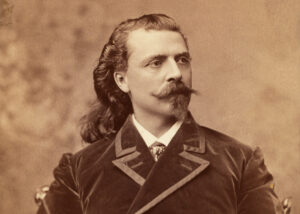
A surprising number of books, both fiction and nonfiction, have dealt with the massacre during the last five years. They form part of a long tradition: Writers as renowned as Mark Twain and Jack London told the story, and Buffalo Bill Cody rescued his sister May from the massacre in a play that helped launch his career. Amanda Bean’s The Fancher Train won the Western Writers of America’s Spur Award for best novel of the West in 1958, and Danièle Desgranges published Autopsie D’un Massacre: Mountain Meadows in Paris in 1990.
My personal favorite among all the recent books on the massacre is Judith Freeman’s Red Water, which brilliantly reconstructs the lives of three of the wives of John D. Lee. Freeman’s novel transports the reader to a very different time and place: the ragged edge of the Mormon frontier in southern Utah. Unlike historical novelists who simply dress up contemporary characters in funny clothes and put them in quaint places where they encounter famous dead people, Freeman re-creates the alien world of Deseret, where men like Major/Judge/President John Lee held simultaneous power as military officers and legal and religious authorities. Historians operate by strict and often restricting rules, but Freeman’s use of imagination to re-create the past offers perceptions that I often found jarring—and enlightening.
Mountain Meadows fiction keeps appearing, and though most of it is awful, Elizabeth Crook’s The Night Journal, in which the main character’s father is an orphan of the massacre, won the Western Writers of America Spur Award this year for best long novel. Mainstream publishers released two nonfiction works in 2003 that dealt with the atrocity. Alfred A. Knopf published Sally Denton’s study of the killings in American Massacre: The Tragedy at Mountain Meadows, September 1857. Denton is a talented writer, but Mormon historians found her book an easy target. Jon Krakauer’s Under the Banner of Heaven: A Story of Violent Faith was more successful. His study of modern polygamy and violence provoked such a strong denunciation from Richard Turley, the managing director of the LDS Church’s Family and Church History Department, that Mormon outrage helped propel the book onto bestseller lists for months. (Insiders speculate that Doubleday’s publicity department tore up their promotion plans when the attack appeared on the church’s Web site two weeks before its release: Their work was done.)
Burying the Past: Movies
A surprising hero of the Mountain Meadows wars of the last two decades is Gordon B. Hinckley, who became president, prophet, seer and revelator of the LDS Church in 1995 after effectively running the organization since the early 1980s. When descendants began to lobby to build a monument to the victims of the massacre in the late 1980s, their efforts went nowhere until they enlisted President Hinckley’s support. Once he was on board, powerful southern Utah politicians co-opted the project and eventually claimed credit for the whole idea. The descendants, however, knew the truth and were grateful for Hinckley’s help. At a meeting in 1989, they asked how they could reward his good efforts. Hinckley asked only one favor: “No movies.”
It was a typically astute request from a man who had spent his life working on public relations for the LDS Church. The institution had successfully kept the story off screens both big and little for decades. After The Mountain Meadows Massacre hit the silent silver screen in 1912, almost a century passed before another major film appeared. The church itself shot down several attempts to make a movie about the massacre. Warner Brothers (and later, rumor has it, Paramount) optioned the rights to turn Juanita Brooks’ The Mountain Meadows Massacre into a movie—despite historian Dale L. Morgan qualifying it as “the least likely candidate for a movie among the books published in 1950.” Powerful Mormon political and financial figures put an end to the project. Following the success of Roots, the 1977 ABC television miniseries, David Susskind hoped to create a similar phenomenon with a series on the massacre. The epic had scheduled production when CBS cancelled it.
As Hinckley surely knew, his hope that no one would ever make a film about Mountain Meadows was wishful thinking. The Arts & Entertainment Channel had already shown an episode on the murders as part of Kenny Rogers’ Real West series. Noted Mormon historian Leonard Arrington served as the main talking head, and the episode relied heavily on legends about “Missouri Wildcats” and other evil emigrant fantasies, with similar blame assigned to the terrifying Southern Paiutes, who in Mormon legend forced the righteous settlers to kill the emigrants.
Along the same lines, Dixie State College cinema professor Eric Young, a descendant of Brigham Young’s brother, made another film in southern Utah in 2000. Based on Juanita Brooks’ study, the documentary is a classic LDS retelling of the story with lots of blame for the victims and the Indians, but it won two “Telly” local television awards. Young became interested in the subject when he tried to date a descendant of John D. Lee. Her mother told him bluntly that because of what Brigham Young did to her ancestor, she wouldn’t let him date her daughter. Ironically, Professor Young “said he made the film with the aim of clearing Brigham Young of responsibility for the massacre, but was unable to find the evidence to do so.”
Bill Kurtis’ Investigating History produced an episode for the History Channel in 2004 about the murders from University of New Mexico professor Paul Hutton’s script. It incorporated Hutton’s updated research and focused largely on the 1859 federal investigation of the atrocity. The channel’s Standards and Practices Committee, which had never objected to any of Kurtis’ productions, took an intense interest in the Mountain Meadows episode. The final script (which won a Spur Award) bore only a passing resemblance to Hutton’s original.
Another film professor, Brian Patrick of the University of Utah, released a more compelling documentary in 2004, Burying the Past: Legacy of the Mountain Meadows Massacre. (I’m one of several historians Patrick interviewed.) Patrick became interested in the story after reading a news article about the reestablishment of the Mountain Meadows Association. It had regrouped in 1998 to prod the state of Utah into restoring the monument at Dan Sill Hill after the granite slab listing the victims toppled over due to poor construction, weather conditions or an earthquake, take your pick. A newspaper story about the association’s attempts at reconciliation among those who share the massacre’s legacy caught his attention. During the five years Patrick spent making the film, the story evolved as the LDS Church dedicated the second monument, and different factions and personalities came into conflict. (The accidental discovery of their ancestors’ grave, and secretly shipping the bones to Brigham Young University for analysis, offended many of the victims’ descendants.) Ultimately, the film dealt not only with reconciliation but—as its title reveals—the difficulty of dealing with the darker side of Mormon history.
Patrick’s film did very well on the independent film festival circuit and garnered 11 awards, but he was unable to persuade PBS to broadcast it and his documentary found no national distributor. It did attract media attention when Spudfest, the fledgling film festival founded by actress Dawn Wells (Mary Ann of Gilligan’s Island), pulled the documentary from its lineup, claiming the film was too violent for a family-oriented event. Patrick heard a different story: local Mormon authorities were up in arms, he told a reporter, claiming “the film is hateful and mean-spirited, and they don’t want their people to see it and, if [Spudfest] is going to show it, there’s going to be big trouble.”
Bigger trouble was brewing. Every LDS public relations flak’s nightmare arrived this June with the release of September Dawn, director Christopher Cain’s romantic telling of the awful tale and the first feature-length film ever made about the massacre (see review in June 2007 Wild West). Cain, best known to Western buffs as the director of Young Guns, financed the project himself and shot it in British Columbia. He added a melodramatic love story to a born-again script by Carole Whang Schutter. Cain assembled a stellar cast, including Terence Stamp, Jon Voight and Lolita Davidovich. Cain’s son Dean (best known as Superman in Lois and Clark) put in a brief appearance as Mormon prophet Joseph Smith. Trent Ford and Tamara Hope gave solid performances as the conflicted Mormon hero and his doomed love. But Terence Stamp created a terrifying vision of Brigham Young, while sticking to dialogue drawn from the religious leader’s fire-and-brimstone sermons and legal statements. Jon Voight, as Bishop Jacob Samuelson, has generated fear and loathing in Mormon country. Latter-day Saints who saw advance screenings objected to the film’s “stereotypical, one-dimensional portrait of blindly obedient church members that bordered on cartoonish at times.” A brief scene showing a frontier version of the sacred Mormon temple ceremony was especially sensitive.
As I write this, how the public will react to September Dawn is an open question. In early May 2007 I attended a preview showing the day after the broadcast of Helen Whitney’s PBS documentary The Mormons, which included a long and powerful segment on Mountain Meadows. (I presented the case that Brigham Young did it, while LDS historian Glen Leonard argued he didn’t.) September Dawn’s producers invited to the viewing more than 100 descendants and relatives of those killed in the massacre, and seeing the film with them was an honor. If nothing else, the movie will introduce millions of people to this forgotten stain on America’s history—and most importantly, it should doom forever attempts to blame the disaster on its victims.
Whodunit? A Case of Vengeance and Retribution
A single question lurks behind almost everything ever written about the Mountain Meadows Massacre: Did Brigham Young order it, and if so why? Predicting how someone will come down on the issue is not hard: “It’s a story I’ve lived with my entire life, being a so-called gentile in Salt Lake City,” rare book dealer Ken Sanders said. “No faithful, believing Mormon will ever accept that Brigham Young had anything to do with the Mountain Meadows Massacre.” At the same time, Sanders is certain no non-Mormon “will ever believe otherwise.”
Attempts to vindicate the Mormon prophet have been underway since news of the murders reached California in early October 1857. It was filtered through Mormon representatives at San Bernardino before the story appeared in the Los Angeles Star. These spin doctors fooled no one. The statements the paper gathered from emigrants with the wagon trains following the Fancher Party “distinctly charge, that this persecution and murder of the emigrants is promoted by the Mormon leaders, [and] that opposition to the Federal Government is the cause of it.” A mass meeting of concerned citizens in Los Angeles on October 12, 1857, denounced the “long, undisturbed, systemized [sic] course of thefts, robberies, and murders, promoted and sanctioned by their leader, and head prophet, Brigham Young, together with the Elders and followers of the Mormon Church, upon American citizens, who necessity has compelled to pass through their Territory.”
I believe Mountain Meadows was a calculated act of vengeance directed and carried out by Brigham Young and his top associates. The Mormon prophet himself viewed the murders that way. Nine days after the massacre, his interpreter, Dimick Huntington, told Ute leader Arapeen in Young’s presence, “Josephs Blood had got to be Avenged.” Why was this particular train the target of prophetic wrath? The answer was no mystery to the editor who first published the news in California. “A general belief pervades the public mind here that the Indians were instigated to this crime by the ‘Destroying Angels’ of the church,” the Los Angeles Star concluded on October 10, less than a month after the slaughter, “and that the blow fell on these emigrants from Arkansas, in retribution of the death of Parley Pratt, which took place in that State.” Brigham Young’s resolute suppression of the truth about the atrocity for almost 20 years and the fact that he sheltered and protected all the perpetrators (except John D. Lee) who could have “put the saddle on the right horse,” supports this conclusion.
The LDS Church presented its first systematic alibi for the massacre in 1884. It claimed Brigham Young issued orders intended to prevent the massacre and remained blissfully ignorant about what happened due to the lies of southern Utah leaders. Such an interpretation is based on an impossibility—that devout frontier Mormon authorities believed they could deceive Brigham Young. “I am watching you,” he said in an 1855 sermon printed in the territory’s only newspaper. “Do you know that I have my threads strung all through the Territory, that I may know what individuals do?” John D. Lee was the newspaper’s agent for Iron County that year, but as a key element in the prophet’s internal intelligence network, Young’s boast would hardly have surprised Lee.
Brigham Young, while serving as both Utah’s governor and Indian superintendent in 1857, never raised a finger to find out what happened or recover the wagon train’s property from the murderers. Four months after the massacre, in his official report of the largest slaughter of American emigrants in the history of the Oregon, California and Mormon trails, Young charged the Arkansans in the wagon train had murdered four Indians with poison. “This conduct so enraged the Indians that they immediately took measures for revenge.” The evildoers fell victim to “the natural consequences of that fatal policy which treats Indians like wolves or other ferocious beasts.” For 13 years, Young insisted Mormons had nothing to do with the massacre: Indians killed the emigrants, who simply got what they deserved.
Powerful men can obstruct justice or try to suppress the truth for a variety of reasons, but personal guilt drives most coverups. Several Mormon historians have made recent attempts to refute Juanita Brooks’ conclusion that “Brigham Young was accessory after the fact, in that he knew what happened, and how and why it happened.” Their efforts seem unwise, especially since Brooks observed, “Evidence of this [Young’s involvement] is abundant and unmistakable, and from the most impeccable Mormon sources.” But Mormon historians as distinguished as Thomas Alexander now insist that Brigham Young investigated the massacre repeatedly over 15 years yet somehow never figured out whodunit. This newly imagined creation, Brigham as Mr. Magoo, might sell in Utah Valley, but elsewhere it will probably not fare well. Young knew the names of the Mormons who participated in the wholesale atrocities, Robert Glass Cleland and Juanita Brooks concluded 51 years ago. “Brigham Young was not a credulous simpleton: he was not duped or hoodwinked: he was not misinformed.”
When historians confront a complex historical event, they try to develop an interpretation that provides the simplest explanation of the evidence—a task complicated when evidence is destroyed, manufactured and relies on testimony of young children or men with blood on their hands. After writing Blood of the Prophets and Innocent Blood, I believe the atrocity is best explained as a calculated act of vengeance. It was not retribution, which is the just application of punishment for a bad act, but revenge, which simply involves getting even and is not particular about who gets the ax.
In May 1861, after destroying the monument the U.S. Army raised over the graves of the victims in 1859, Young told Lee that those “used up at the Mountain Meadowes were the Fathers, Mothe[rs], Bros., Sisters & connections of those that Muerders the Prophets; they Merittd their fate, & the only thing that ever troubled him was the lives of the Women & children, but that under the circumstances [this] could not be avoided.” Lee’s story is difficult to challenge, since a Mormon apostle confirmed the quote that he ascribed to the prophet: “When he came to the Monument that contained their Bones, he made this remark, Vengence is Mine Saith the Lord, & I have taken a litle of it.”
Coverups Never Ending
Yet another battle in the ongoing war over how the story of Mountain Meadows will be told may begin soon. Mormon historians Richard Turley, Ronald Walker and Glen Leonard claim Oxford University Press will release their opus, Tragedy at Mountain Meadows, next year. They have been making the same claim every year for the last five years, but give them credit: They’ve got their story and they’re sticking to it. This is not, lead author Turley insists, an “official” history, despite the fact that the LDS Church has seemingly spent millions of dollars subsidizing the project.
Since the book has not appeared, it would be unfair to judge a pig in a poke, but a “press release” handed out at the book’s 2002 announcement—“Forthcoming in 2003 from Oxford University Press!”—has me waiting on the edge of my seat. “Tragedy at Mountain Meadows takes a fresh look at one of Mormon history’s most controversial topics,” it promises. The work will be drawn “from documents previously not available to researchers.” Like me, I suppose, although sources at the church’s historical department have told friends “Bagley got everything of significance” at LDS Archives. Ah well, “this spell-binding narrative offers fascinating conclusions on why Mormon settlers in isolated southern Utah deceived the emigrant party with a promise of safety and killed the adults and all but a few of the youngest children.”
I would not want to be among those “Mormon settlers in isolated southern Utah” right about now. I’m always eager to read a spellbinding narrative, especially when written by a committee, but the announcement’s last sentence leaves me cold: “Tragedy at Mountain Meadows offers the definitive account of a dark chapter in American history.” Generally it’s best to wait till you’ve written a book before proclaiming it definitive, and even better to leave it to someone else to make that proclamation. “The word ‘definitive’ is often overused,” historian Brigham D. Madsen wrote in his review of Blood of the Prophets in The Western Historical Quarterly. “This account of the killings merits that distinction.”
What will happen this September 11 when another Arkansan wagon train rolls into Mountain Meadows? As of June, the rumor mill is already working overtime with hints of possible breakthroughs on a number of contentious fronts. For years, relatives of the victims and friends of the site have watched in disbelief as the St. George megalopolis has begun to fill up the once-open rangeland at the Meadows with vacation homes and McMansions. For most of a decade, friends of the place have lobbied against long odds to secure federal protection and administration of this contested ground as a National Historic Park Site (or Monument). Those odds would change dramatically if the Church of Jesus Christ of Latter-day Saints agreed that what its prophet has called “sacred ground” deserves the protection of the American people.
Readers can learn about plans for the 150th anniversary at the Mountain Meadows Monument Foundation Web site at http://1857massacre.com/MMM/mmmf.htm. For a Mormon perspective on the September 1857 event, see www.mormonwiki.com/mormonism/Mountain_Meadows_massacre.
This article was written by Will Bagley and originally published in the October 2007 issue of Wild West Magazine. For more great articles, subscribe to Wild West magazine today!