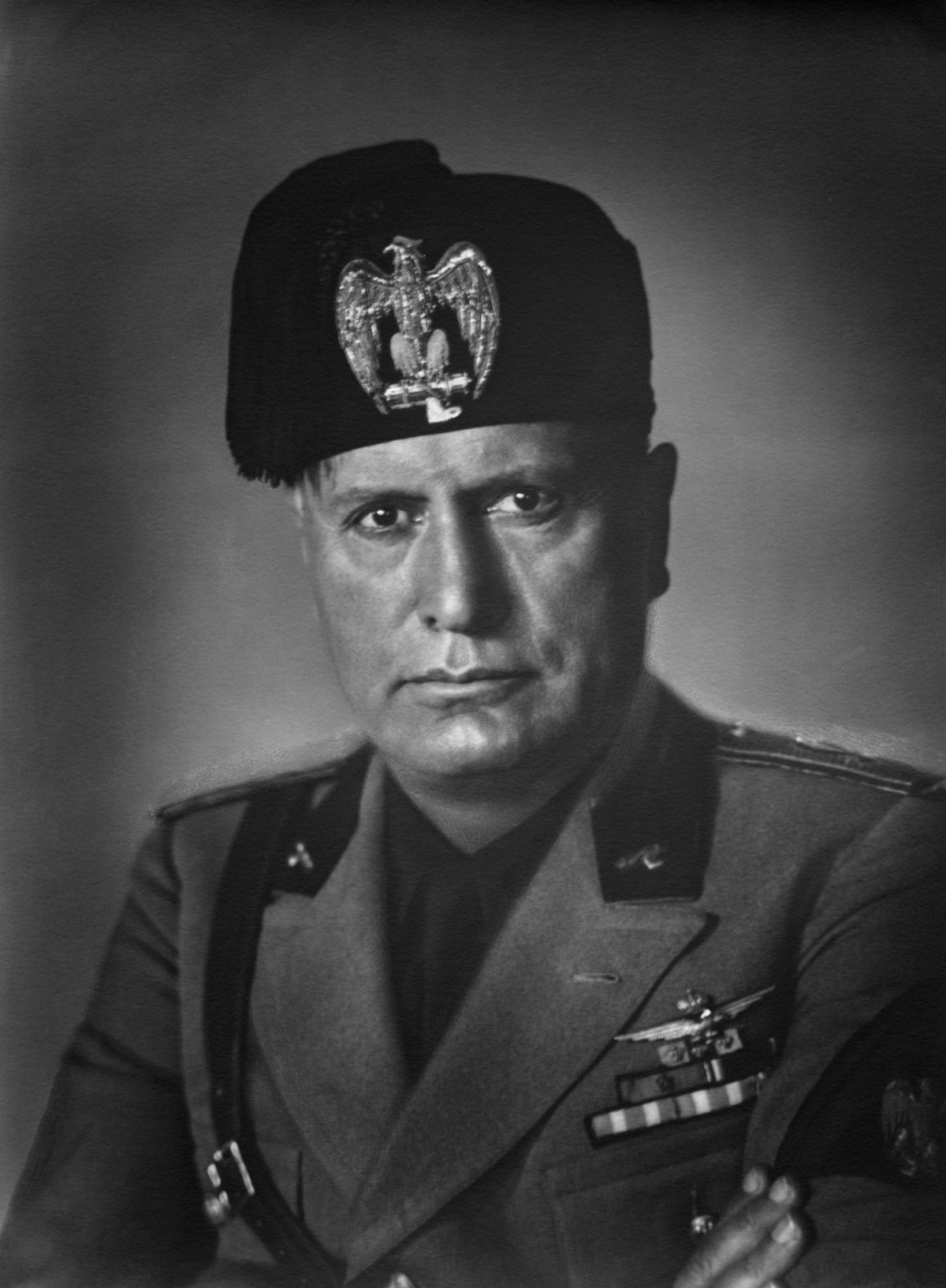
Sure, for many, he remains the comic relief of a very unfunny war. He had spouted off about war for almost two decades when the real thing broke out in 1939–and then he suddenly got cold feet and stayed out of it. When “neutrality” seemed to be an insufficiently fascist term, he invented a new one: “non-belligerency.” Only when France was well and truly beaten, and he began to get nervous about being left out of the peace talks in a Hitler-dominated Europe, did he bring Italy into the war. The parade of disasters that followed still boggles the mind: Savoy, Sidi Barrani, Taranto, Greece, Beda Fomm. For many folks who study World War II, ineptitude will always be spelled “D-U-C-E.”
Mussolini was, as my late father put it, a buffone. And yet, the more I think about it, the more I see that the Duce played a central role in the war. Here is a partial list of things that would not have happened if Mussolini had not brought Italy into the war. The Balkan campaign, and thus the German airdrop on Crete. The entire seesaw war in North Africa, from Agheila in 1941 to Alamein in 1942, and thus the fame of Field Marshal Erwin Rommel. Put the “Desert Fox” in the Soviet Union and chances are he’s just another general. The entire Mediterranean campaign, from Torch to Husky to Avalanche to the Po. No Anzio. No Cassino. In other words, it’s a VERY different war without Italy. Indeed, a Germany completely isolated and without allies in 1939 might not have even started the war in the first place.
Historians usually call him a drain on German resources. My first response: Aw, gee… you’re breaking my heart. No one forced Hitler to sign the Pact of Steel. My second one: Mussolini may have unwittingly been an aid to the Germans. By opening up those new fronts in 1940, disasters and all, he gave the Wehrmacht maneuver space to do what it did best: win operational-level victories over the British. Indeed, it almost had strategic consequences in the summer of 1942, when Rommel’s armored spearheads were knocking on the door of Suez.
He deserves more attention than he usually gets.