
In 1922, Lida Dutton Hutchinson’s daughter ran across her mother’s old diary. That in itself was not necessarily a “Eureka!” moment; lots of 19th-century women kept diaries. But packed away with this one was a collection of curious old papers—issues of a Civil War–era broadsheet called The Waterford News.
The little newspaper, written in Hutchinson’s hometown of Waterford, Va., detailed life in a border village in the last grueling year of the Civil War. Intrigued, Emma Conrow subsequently wrote an article for The Baltimore American based on her mother’s diary and what she found in The Waterford News.
But eventually the diary—and the papers—disappeared. And the story behind them disappeared, too. Until 1955, that is, when two issues of The Waterford News surfaced, of all places, among the Abraham Lincoln papers at the Library of Congress.
Which begs the question of why a little newssheet from an insignificant hamlet in a rebellious state would attract the attention of the chief executive of the United States.
For a publication largely forgotten after the war, The Waterford News once attracted a lot of attention. Maybe it was because it was an underground pro-Union publication emanating from Confederate territory. Maybe it was because its editors were all under 27.
Or maybe it was because these three gutsy young scribes were women.
Tucked away in the rolling landscape of northern Loudoun County, postcard-pretty Waterford today is something of an anomaly.While much of Northern Virginia has morphed into an interminable web of freeways wrapped around rampant development, Waterford retains original narrow streets lined with 18th- and 19th-century homes and shop buildings, their preservation fostered for decades by the National Historic Landmark status that encompasses the entire village. Residents stroll to the post office to pick up their mail, and back in the ’90s, they actually fought efforts to bring cable television to town.
If Waterford is a bit incongruous now, it was an even greater oddity in the 19th century. Founded in the 1730s by pacifist Pennsyl-vania Quakers who had migrated to Virginia, Water-ford bucked the local political trend in 1861 when residents voted 221 to 31 against secession. Loudoun County as a whole voted for secession by a margin of 2 to 1.
The Quakers in Waterford “took the formal position of neutrality early in the war,” says local historian John Souders, “but in the final years many were actively aiding the Union.” Most of the village’s young men had fled to avoid being conscripted into the Confederate Army. By June 1861, Souders says, “when the local militia was to be sworn into the Virginia regimental forces, 80 percent had gone across the [Potomac] river” to Maryland.
Waterford’s obstinacy—and its precarious location on the very edge of the North-South demarcation—made the village a particular target for harassment. Rebel troops quickly occupied Waterford, helping themselves to food and livestock and taking up residence in the Quaker meetinghouse. And when those troops moved on, Waterford frequently found itself in the path of notorious Confederate guerrilla John Singleton Mosby.
The village fared little better with the Union, which in January 1864 enforced a blockade along the Potomac to prevent smuggling into the Confederacy. The unfortunate byproduct was that it also prevented necessities from reaching Waterford.
Adding to the misery was the constant flux of occupation. “It just went on and on here—there was never a lull,” Souders says. “There were severe economic privations, and there were constantly troops from one side or the other. We don’t know exactly how many times Waterford changed hands—it was sometimes more than once a day.”
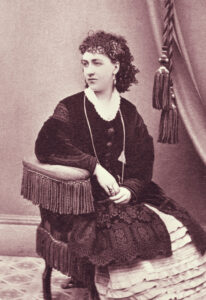
By the spring of 1864, 19-year-old Lida Dutton, her sister Lizzie, 24, and their friend Sarah Steer, 26, had had enough. It was time to fight back. Actual combat was out, of course—while accounts survive of women on both sides donning uniforms, that wouldn’t really do for good pacifist Quaker girls.But if they couldn’t take up a sword, they would reach for the next best thing. Pens in hand, and with cast-iron nerve, they conspired to produce The Waterford News.
Publishing in the 19th century was an arduous task under the best circumstances. But after these three young women had gathered their news and editorials, they had to smuggle them out of Waterford and past Confederates like Mosby, and across the river to Maryland, where they relied on the good offices of the Unionist editor of The Baltimore American for publication.
Despite those obstacles, the first issue of The Waterford News appeared in May 1864. And right at the top of the front page, the fledgling journal brazenly endorsed Abraham Lincoln for president—it was, after all, an election year, and what self-respecting newspaper wouldn’t make a political endorsement?“We present to our readers this week the first edition of our little paper, with many hopes and fears,” the editors wrote. “We hope that it may meet the approbation of our friends; that they may uphold us in our hazardous undertaking, and we fear nothing so much as their disapproval. We wish and expect it to meet the condemnation of our enemies, for they are averse to the truth, and that this sheet will contain.”
It wasn’t as if there were nothing besides the disapproval of their friends to fear. They were smuggling their incendiary articles to Baltimore through their fathers, John Dutton and Samuel Steer, who had fled Waterford and were sitting out the war in Point of Rocks, Md., a Potomac River community about 10 miles away, to avoid capture by Confederate partisans. “If they were intercepted, there would have been trouble,” Souders says. “The Union was nominally in control of Loudoun County, but Mosby and other guerrillas were active in the area.”
John Dutton, a friend of The Baltimore American editor, operated a dry goods store while he was in Point of Rocks, and Steer served as the Union’s customs agent. Although their families were relatively close, return visits were fraught with risk. Dutton, who had not immediately left Waterford when hostilities broke out, spent a chunk of August 1861 as a prisoner of the Rebels; just why he was arrested isn’t clear. Before 1864 was out, Steer would get his own taste of Southern hospitality.
“Sam did get snatched returning once,” Souders says. “He was sent to prison in Richmond.”
But the ever-resourceful residents of Waterford found ways to get around the insurgents. “There were back ways to the river,” Souders notes, “and they had a good network of informants on Rebel movements.”
The more likely hazard, Souders says, is that Rebel troops could have retaliated against the women. “But they were relatively civilized” in the Loudoun vicinity, he adds. “There were not atrocities toward women.”
Having managed to get one issue circulated undisturbed, the Dutton sisters and Sarah Steer published a second edition in June—with the happy local news that despite the blockade, loyalists were now permitted to cross the Potomac and spend up to $10 for necessities at Point of Rocks (where many patronized John Dutton’s store). “It affords us considerable satisfaction to state that some of the Secesh citizens who hastened to take advantage of the partial raising of the blockade at Point of Rocks, were sent home without their ten dollars worth of goods,” the editors opined, “and with a polite invitation from the Provost Marshal to stay on the Dixie side of the Potomac.”
Along with a recap of local military activity since the last issue, the women engaged in a brief discussion of states’ rights. “Within the past week the ‘chivalry’ [Confederates] have visited several of their beloved ‘sisters in the faith,’ and kindly taken from them their ‘carriage horses’ to use in their guerrilla pilgrimages. We were surprised to hear the enthusiastic southern ladies grumbling at getting their ‘rights’ from the hands of the brave defenders of their homes and firesides. The Union people don’t appear to grieve a bit.”
By July, word had reached Waterford of Abraham Lincoln’s new choice for running mate. Accordingly, the now standard front-page endorsement was enlarged to include both Lincoln and “Andy Johnson.”
The young editors also offered a bold prayer for Union hero Ulysses S. Grant:
“Grant him, we pray thee,
Both wisdom and might,
To crush this rebellion
And put Treason to flight,
Grant each day may add laurels
To his bright wreath of fame,
And Grant, in the future,
Be a world-renowned name.”
And they hinted at ever-present alarms: “Many threats have been made about burning our houses over our devoted heads; but Waterford is still standing.”
Although The Waterford News primarily paints a picture of village life against the backdrop of the wider war, copies of the little paper surfaced far afield. News of the News reportedly spread all the way to New York, winning the admiration of Tribune editor Horace Greeley. A Federal regiment from Maryland sent the first two issues to the president.
“The papers were evidently popular with Union troops,” says Waterford historian Bronwen Souders. “We don’t know where they all went. Almost all of them have vanished.”
Selling The Waterford News for the princely sum of 10 cents a copy, the editors sent the proceeds to the United States Sanitary Commission for use in aiding wounded Union soldiers. By the end of June, some sources reported the editors had raised more than $1,000.
“We must return our most sincere thanks for the many complimentary notices of our little sheet, which our more experienced Brother Editors have given us,” Sarah, Lizzie and Lida wrote in August 1864. Notably, they had received rave reviews from The Virginia State Journal, a Republican paper in the Washington suburb of Alexandria, and The Bucks County Intelligencer.
The August edition reported an Independence Day raid on Point of Rocks by Mosby himself, the spoils of which included $14 that had been mailed from a Union regiment to Point of Rocks for subscriptions to The Waterford News.
Undaunted, the Waterford women got bolder, weighing in on a hot summer debate: Republicans wanted to let soldiers vote by absentee ballot in the upcoming election; Democrats, who feared—correctly—the military vote would tip the election in Lincoln’s favor, did not.
Guess which side The Waterford News chose?
“Who is it don’t want the Soldiers to vote?” the editors demanded. “What stay-at-home man, with any feelings of honor, can raise one finger against the rights of Soldiers?….They know what a Government is worth, for they know how much it costs to rebuild the one torn down by the hands of traitors; and therefore they would be the ones to help choose a good man—one who will not undo all that has been done.” Even now, it’s difficult to argue with that logic.“
People in Waterford were surprisingly literate and well-educated,” John Souders says. “Sarah had been educated in Philadelphia and Lizzie taught school. There was a very active literary society in town that might have been founded by the Duttons’ mother. They had an interest in politics and women’s rights.”
And even though the editors of The Waterford News could not have voted even if Virginia were still part of the Union, “the ‘coming election’ is the general subject of thought and conversation,” they observed in October. “Although we, owing to our inexperience, are not able to speak upon the subject as we would like…still we have some ideas of our own, and we watch the progress of affairs with as anxious hearts as possible.”
They sized up the presidential race rather concisely: “Once we loved McClellan; we always had the faculty of loving every one in command until he was tried and found wanting…yet when he turned against the administration, accepted the ticket for Presidency, although he repudiated the Peace Platform, to please the soldiers and obtain their votes; when he opposed the good that has been done and would give the South all the rights she claims, the true people and soldiers turned from their former love…we hope that our friends and readers will take care and at the coming election cast their votes for the one whom we are sure is with the right party and stands upon the right Platform.”
With Maj. Gen. Philip H. Sheridan’s successes in the Shenandoah Valley, Waterford’s fortunes seemed to be turning. “We feel inspired with new life and courage, after the long dreary days of the summer,” the editors reported. “Already we feel that the dawn of a brighter day is upon us.”
There was even more to celebrate in November. “Many hearts were gladdened by the tidings of the election; the long days of suspense are ended; and we have been the grateful recipients of the good news, that our noble President has been re-elected, and the world shown that our people are true and united in their love for and maintainance [sic] of the laws of a republican Government,” The Waterford News declared.
By January 1865, most Rebel forces left in Loudoun County had retreated to the county’s southern region. But Sheridan’s efforts the previous fall to smoke out Mosby’s lingering partisans, dubbed the “The Burning,” had left much of northern Loudoun scorched. Nonetheless, with Union troops attached to Sheridan headquartered in nearby Lovettsville, Waterford now enjoyed something of a respite. Residents found time for socializing—“There has been quite an announcement of enjoyment this season amongst the younger members of the community, in having social gatherings, with Original Tableaux and Charades,” the News reported.
The editors also felt compelled, in the aftermath of the raid, to draw attention to a social ill. “Since the breaking out of this wicked rebellion, much additional trouble has been caused by the intemperate use of ardent spirits,” they reported. “We have long been of the opinion that the manufacture of liquor should have been stopped in our County. But since the burning of so much grain and the probable want of bread, we think the subject demands the prompt attention of our military authorities.”
Publication lapsed until April, and in the meantime Union forces had left Lovettsville. Mosby pounced on this opportunity. “Since the departure of General Devin…we have been constantly annoyed by Mosby’s band of guerrillas, who are conscripting, impressing corn, bacon, &c., &c., and all the teams in the neighborhood,” the News reported. Anything remaining after The Burning became the prey of Mosby’s men—including teenage boys, who were seized and conscripted into the Confederate forces.
But spring had brought good news: “Just as we go to press, the joyful news arrives that Richmond is ours; That the Old Flag again waves over the ‘F.F.V’s.’ [First Families of Virginia].”
Six days after publication of the April edition of The Waterford News, General Robert E. Lee surrendered. The storm was over. Waterford residents and the rest of the tattered nation set out to clean up the mess and move on.
Lida Dutton prepared to marry a young officer from New York who had passed through Waterford a time or two while chasing Rebels. Sarah Steer became the first teacher at Waterford’s new school for black children. Lizzie Dutton remained in Waterford several years, but eventually married a Union veteran from Indiana. And The Waterford News disappeared, until Lida’s daughter found her mother’s collection. But after that splash in the 1920s, it was forgotten again—until the issues from the Lincoln papers appeared.
Five more editions of The Waterford News finally surfaced in the papers of Anne Osler Herring, a descendant of the Steer family, but the last issue remained a mystery until 1998, when a copy was found scattered in two locations.
The Souderses and another local historian, Taylor M. Chamberlin, quickly gathered the copies and produced an annotated collection for the Waterford Foundation so that The Waterford News wouldn’t be lost again. Today, sales of the booklet help fund historic preservation projects in the village.
Lizzie, Lida and Sarah would no doubt approve.
Tamela Baker is editor of America’s Civil War. Copies of The Waterford News are available from the Waterford Foundation. Visit the Web site at waterfordfoundation.org