The SR-71 was so fast, on a record run from London to Los Angeles the super-plane arrived almost four hours before it left
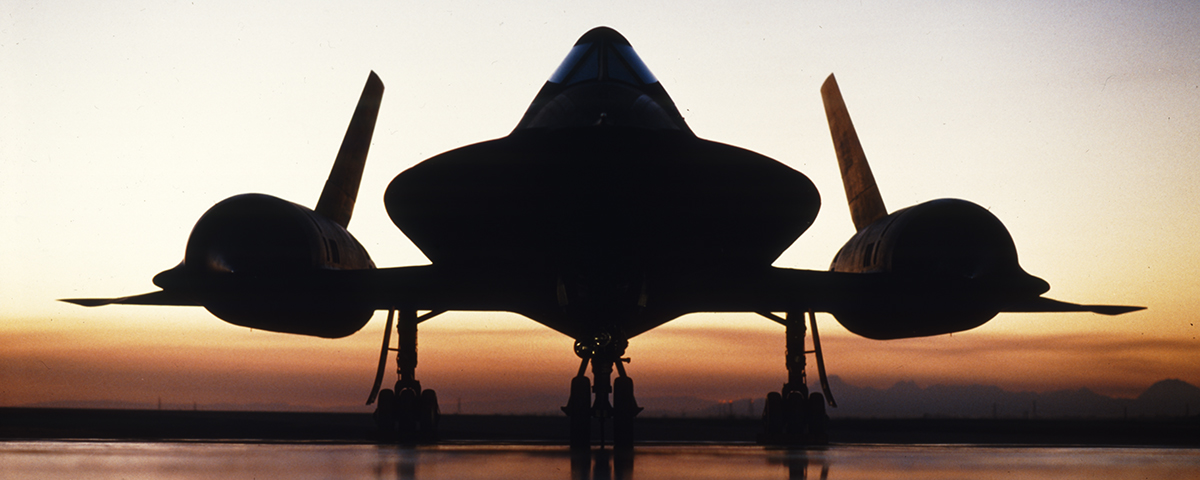
At the height of the Cold War, Lockheed’s Skunk Works designed an airplane that would prove to be the greatest photoreconnaissance aircraft ever built. The SR-71 Blackbird could fly through any airspace in the world with near impunity. It flew so high and fast that even surface-to-air missiles were largely ineffective against it. This Mach 3-plus jet was designed and built by Lockheed’s genius Kelly Johnson and his staff.
On December 22, 1964, Lockheed test pilot Robert J. Gilliland took the Blackbird up for its first flight. During the 56-minute test, he clocked speeds of Mach 1.5 at 46,000 feet, which at the time was unheard of for any new aircraft’s initial flight. This was an indicator of the potential the Blackbird would realize with the U.S. Air Force.
It took close to a year to iron out all the kinks, but in January 1966 the first SR-71 entered USAF service. The first mission-capable Blackbird was delivered to Beale Air Force Base in northern California in early April of that year. These high-flying supersonic aircraft would carry out their worldwide mission for the next 25 years before being forced into retirement by budget cuts.
As the Vietnam War heated up, so did the SR-71’s workload. In 1968 it began operations over North Vietnam and Laos, averaging about one sortie per week until 1970, when the schedule was bumped up to two sorties per week, then maxed out at a sortie every day in 1972. The intel gathered during these flights was invaluable, and no Blackbirds were lost to enemy action. Speed, altitude and stealth were major factors in keeping the SR-71 safe because Hanoi was ringed with the latest SAMs provided by the Soviets.
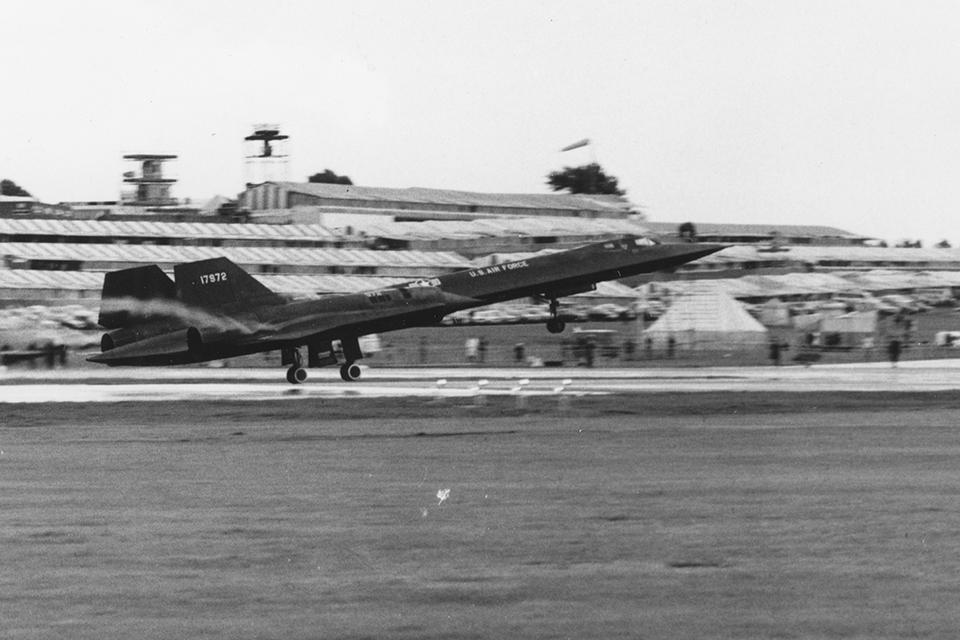
The 1970s proved to be the most noteworthy period for the high-Mach Blackbird. On September 1, 1974, Major James Sullivan and his backseater, Major Noel F. Widdifield, set a speed record in SR-71A serial no. 64-17972, flying from New York to London in 1 hour 54 minutes and 56 seconds, for an average speed of 1,806.96 mph. Less than two weeks later, the same airplane made a long-distance sprint from London to Los Angeles in record time. The pilot on that flight, 31-year-old Captain Harold B. “Buck” Adams, had at age 28 become the youngest airman to fly the SR-71. His reconnaissance systems officer was Major William C. Machorek. Their historic September 13 flight would stretch across seven time zones and take almost twice as long as the New York–to–London dash.
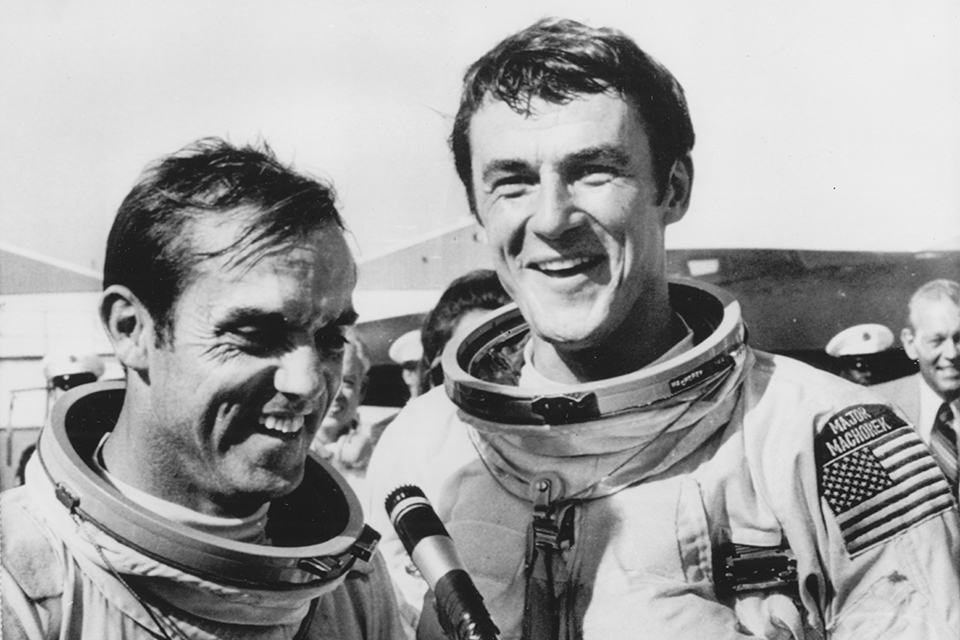
Captain Adams flew in the SR-71 program for four years and accumulated about 350 to 400 hours in the Blackbird. He also piloted B-52 bombers during the Vietnam War, logging 137 combat missions over Southeast Asia between the two aircraft. After he was deployed to Seymour Johnson Air Force Base in North Carolina following the October 1973 Yom Kippur War, he flew one of his most memorable SR-71 missions—a 10-hour 20-minute round trip to the Middle East requiring five aerial refuelings—for which he and his backseater were awarded the Distinguished Flying Cross.
The story of the record-breaking London–Los Angeles flight began after the September 1 New York–London run, when no. 972 was put on display at the Farnborough International Airshow. This is one of the biggest annual airshows in the world, with all the major air forces participating in some way, usually with their newest and most sophisticated aircraft.
Adams, who retired from the Air Force as a brigadier general in 1992, recalled the events that led up to the record flight: “Senator Barry Goldwater, a two-star general in the reserves, had previously flown in an SR-71, and he convinced President [Gerald R.] Ford to send the aircraft to England to put it on display to demonstrate American technology. That’s when we got the go-ahead for the mission. Our wing commander picked two flight crews, and I was lucky enough to be the pilot on the return flight.
“Mission preparation for the record flight was pretty straightforward. We just sat down in the briefing and went over suit time, start time, taxi time, launch time, etc. We also covered details of the flight route itself and all the events that we could expect along that route. So we had the frequencies of the tankers that we would have to talk to, ground control, flight path so that if we lost an engine and had to abort the mission we would know where to go. This was all standard procedure on any mission you flew in the Blackbird.”
After the Farnborough show came to a close, 972 was transferred to RAF Mildenhall, where the ground crews made final preparations for its flight back to the States. On the morning of September 13, the weather over Britain was perfect, and takeoff was right on time. As was routine for any Blackbird mission, the crew took off with a light load of fuel and then met up with the first tanker off the northeast tip of the country.
“Once we left Mildenhall we flew southeast, turned and came across London going northeast at the timing gate [the beginning of the official time recorded for the speed record],” recalled Adams. “The first 53 minutes of the mission were all subsonic because we flew up off the coast and refueled with three tankers, and then accelerated to altitude. We could not go supersonic over England.
“If we had taken off from Mildenhall, picked up a tanker and then moved up to altitude and hit our max speed immediately and gone across the timing gate at Mach 3-plus over London, we could have cut our flight time by 48 minutes,” Adams said. “We crossed the Atlantic Ocean at Mach 3.2, which equates to about 2,200 mph. We did the Great Circle route from the UK, crossed the North American coast over Newfoundland and descended from 80,000 feet to 25,000 feet to meet up with three more tankers, one of which was a spare. We filled our tank and then began accelerating back up to our optimum altitude. We began to encounter some very strong headwinds—100 knots—in the refueling track, which chewed up some valuable time, so I started the acceleration sooner than planned to reduce the effect of the headwind.”
The streaking Blackbird entered the United States just south of the Great Lakes. Adams said he and Machorek had agreed to radio General Russell Dougherty, commander of the Strategic Air Command, as they passed over the Midwest. When they were near SAC’s command post in Omaha, Neb., they gave him a call and updated him on their expected arrival time in Los Angeles.
“At that time, we had every intention of setting a world speed record,” Adams explained. “As we approached California, we started to decelerate so we would be subsonic by the time we got to the mountain range on the east side of Los Angeles. We then went all the way to the coast, which was several minutes of flight to LAX because they had a radar timing gate there. We flew through it, and then we knew we had completed the mission successfully and they had confirmed the time.”
The total time for the record flight was 3 hours, 47 minutes and 39 seconds. Adams and Machorek had covered nearly 5,447 miles at an average speed of 1,435.59 mph.
“We turned around and headed back over the mountains out to the desert,” continued Adams, “and met up with the tanker, where we picked up 30,000 pounds of fuel. Then we flew up to Beale AFB, where we did a couple of flyovers and landed. Needless to say, the press was there, along with a sizable crowd.”
Although the London–L.A. flight came off without a hitch, and Adams said any one of many pilots could have flown the mission, he also noted: “I could never say that flying the SR-71 was uneventful, especially when you’re in an aircraft that can travel one mile in 1.8 seconds! Both crew members have to be constantly alert to make sure everything is performing the way it should. While we did set a speed record, I feel that all the support people who participated in making this happen should be recognized for the outstanding job they did.
“The real heroes of the SR-71 story are the Lockheed Skunk Works designers and engineers who built a phenomenal aircraft that could exceed Mach 3 and withstand 1,200 degrees F, and the maintenance crews that kept that magnificent bird in the air,” concluded Adams.
For further reading, frequent contributor Warren Thompson recommends: Lockheed Blackbird: Beyond the Secret Missions, by Paul F. Crickmore, and Lockheed SR-71/YF-12 Blackbirds, by Dennis R. Jenkins.
Click here to view an Aviation History animation and watch the SR-71 Blackbird come to life.