
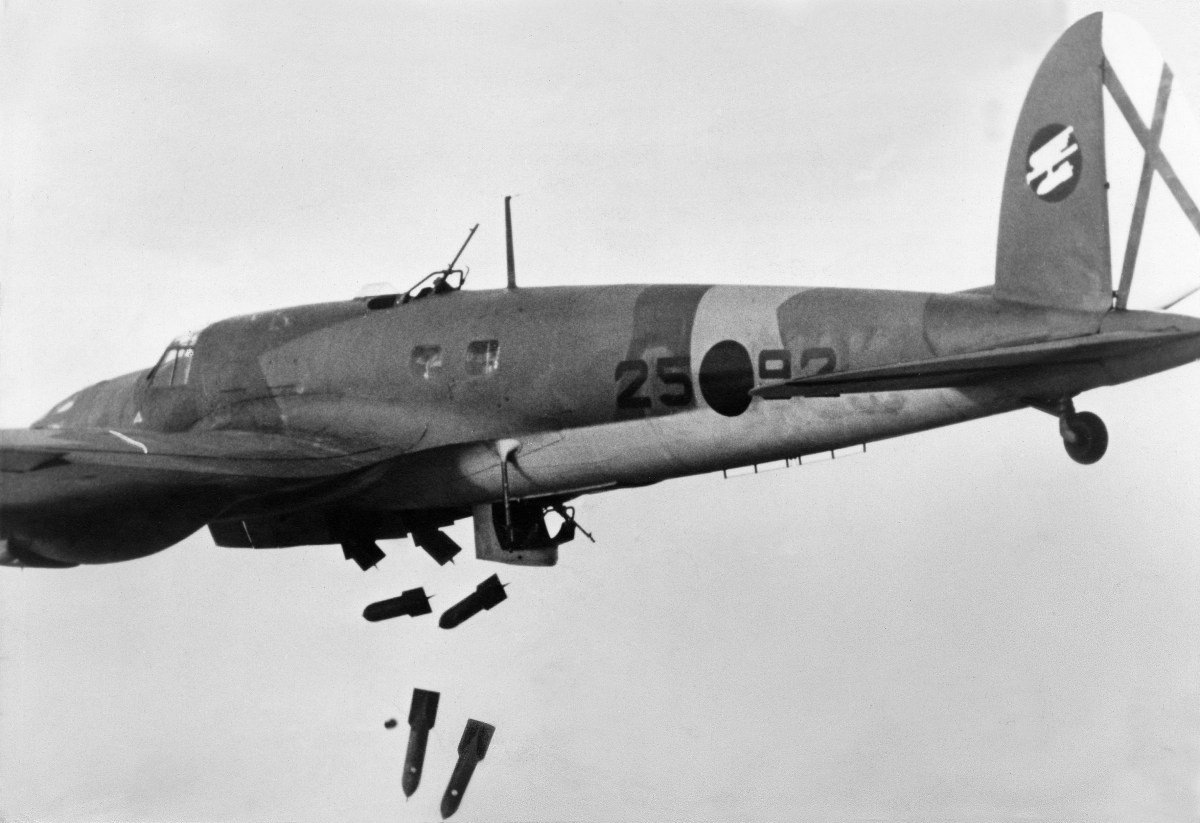
During the Spanish Civil War, a group of German pilots that became known as the Condor Legion honed their hunting skills in Spain’s skies.
During the first week of July 1937, the German Condor Legion launched a spectacular coordinated attack on Spanish Republican forces at the Battle of Brunete, about 15 miles west of Madrid. Messerschmitt Bf-109B fighters flew top cover to maintain air superiority while Heinkel He-111 bombers attacked both strategic and tactical targets. At the same time, Heinkel He-51 biplanes barreled in below 500 feet, strafing and bombing troops and anti-aircraft batteries. The biplanes came in waves of nine-across formations, wingtip to wingtip, each carrying six 22-pound fragmentation bombs and dropping them simultaneously. The resulting carnage demolished the morale of the surviving troops. So effective was the onslaught that by the time the Heinkels completed their runs, the attacking Spanish Nationalist troops were within hand grenade range of the Republican defenders. That beautifully coordinated attack was just one example of the striking aerial combat techniques developed during the 1936-1939 Spanish Civil War by the Condor Legion.
During World War I, the capitalists of neutral Spain had profited by selling coal, zinc, copper, pyrites and textiles to the belligerents. But the inflation generated by that conflict resulted in suffering for the Spanish working classes, setting the stage for nationwide political unrest. The antagonism between Conservatives and Liberals increased steadily. Between 1931 and 1936 there were two general elections and 28 different governments.
The Communist Party of Spain joined with other left-wing groups using the name Popular Front and won the election of February 1936. The Spanish Fascists, called Falangists, challenged the Popular Front, which resulted in open violence. The Falangists planned a coup d’etat that involved two Spanish generals; however, the government discovered the plot and quickly reacted by discharging or prematurely retiring any officer whose loyalty was suspect. Other officers were assigned to posts outside the Spanish mainland. The latter included General Francisco Franco Bahamonde, who was exiled to command the Canary Islands, off the west coast of Africa.
On July 18, 1936, garrisons rebelled all over Spain, and many Spanish generals joined the rebels, with the result that some of northern Spain fell to the insurgents. At the onset of hostilities, the small Spanish air force (SAF) was a composite of foreign-built and Spanish-built foreign designs, mostly obsolete. The insurgents had only those aircraft that they could capture from government bases, or foreign aircraft they hijacked while they were in transit to Spain. Spanish air force aircraft included the Breguet XIX, Vickers Vildebeest, Hawker Fury, Bristol Bulldog, Czech Aero 101, Polish P.W.S. 10, Dutch Koolhoven FK.51 and Fokker F. VII, and de Havilland Dragon Rapide — none of which would have been very useful in a contemporary conflict.
Consequently, Madrid’s Popular Front government asked France and the Soviet Union for help. (The Popular Front Spanish government was variously called Loyalists, Communists and Republicans, while the rebels were referred to as the insurgents, Fascists and Nationalists. The most common appellation given to the combatants was Nationalists and Loyalists.) On July 20, 1936, French Popular Front Prime Minister Léon Blum promised assistance and sold Dewoitine D.372 fighters and Bloch MB.210 and Potez 54 bombers to Spain. Four days later Italy promised the insurgents assistance with personnel and weapons.
Meanwhile, General Franco flew to Tetuan, in Spanish Morocco, on July 19, where he took command of the Foreign Legion and Moorish troops. But Franco had no way of transporting his 25,000-man army across the Straits of Gibraltar to Spain, so he asked Germany to supply transport aircraft.
Adolf Hitler decided to help General Franco in their common cause against communism — and also test his own armed forces in live action. The Nazi leader’s motives also included the need to trade for Spain’s raw materials as well as to improve Germany’s foreign exchange situation.
Although Franco had asked for 10 transport planes, Germany offered twice that number of Junkers Ju-52/3m Lufthansa passenger aircraft. Nine were flown from Dessau, Germany, to Tetuan, while the remaining 11 were placed in crates and sent to the Hamburg docks. Six Heinkel He-51 biplane fighters were also disassembled and crated, since the slow and unarmed Junkers would require fighter escorts. The 17 planes were loaded in the 22,000-ton Woerman Line freighter Usaramo along with spare parts, ammunition and anti-aircraft guns.
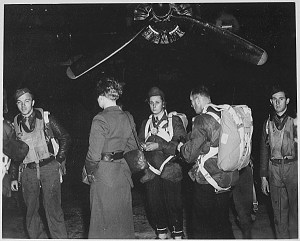
Eighty-six German military personnel also embarked on Usaramo, including Ju-52 aircrews, radio technicians, medical staff, air and ground maintenance staff and six fighter pilots. Since secrecy was deemed of the utmost importance, the entire group traveled as alleged vacationing engineers, salesmen, artists and photographers on a leisure cruise arranged by the ‘Union Travel Agency,’ sponsored by the Nazi Strength Through Joy organization. The German volunteers were permitted to receive letters from their families addressed to them in care of the fictitious ‘Max Winkler, Berlin S.W. 68.’ The exercise was code-named ‘Magic Fire,’ a reference to the Wagnerian Ring operas.
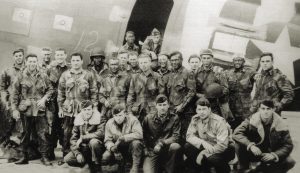
The clandestine volunteer fighter pilots included Oberleutnant Herwig Knüppel, Leutnant Ottheinrich Freiherr von Houwald, Leutnant Ekkehard Hefter, Oberleutnant Johannes Trautloft, Leutnant Alfons Klein and Oberleutnant Krafft Eberhardt. Eberhardt was in command of the flight, while von Houwald was in charge of training Nationalist air force pilots when the Germans were not using their Heinkels.
Usaramo set sail from Hamburg on August 1, 1936, arriving in the Spanish port of Cadiz five days later. The six fighter pilots had their Heinkel biplanes assembled at Seville’s Tablada airfield by German mechanics with the assistance of Spanish mechanics and the Junkers assembly foreman ‘Nurmi’ Winckler, who had offered his help. The Germans proudly flew their Heinkels over Seville on August 12.
Eberhardt was ordered to transfer the six Heinkel biplanes to Spanish pilots because, in view of their clandestine mission, the German fighter pilots were forbidden to fly operational sorties, except to escort transport aircraft. The undertrained Spanish pilots soon crashed three of the six Heinkel fighters, however, compelling German leaders in Spain to petition Franco and Berlin to change their ruling. The authorities relented and gave permission for the German pilots to fly operational sorties.
With six eager fighter pilots and only three planes to fly, a system of rotation had to be developed. However, most of the missions were flown by the three senior officers, Eberhardt, Knüppel and Trautloft. Before long, the trio was called ‘the Hunters of Guardaramma,’ after the Sierra de Guardaramma, a mountain range dividing Madrid and Segovia, because the pilots generally fought in the mountain passes at that time.
Meanwhile the nine Lufthansa Junkers transports had landed at Tetuan, where up to 40 Moroccan Legionnaires were squeezed into planes designed to carry 17 passengers. The Junkers Ju-52 transports averaged five flights a day to Seville at that point, bringing Franco the nucleus of his army.
By the time the Germans were ready for combat, two international squadrons had been organized to fight for the Spanish Loyalist government. Captain Martn Antonio Luna’s International Squadron included three Russians, four Englishmen and one Italian, while the air squadron of the International Brigade included 15 Frenchmen plus Belgians, Czechs, Italians, Englishmen and Americans.

The German three-plane fighter air force first engaged the enemy on August 25, 1936, when ‘Hannes’ Trautloft began the scoring by shooting down a French-designed and Spanish-built Breguet XIX two-seater bomber/tactical reconnaissance biplane. Eberhardt downed a second Breguet during the same encounter. The following day saw Knüppel and Eberhardt dispatch one Breguet each, and on August 27 Knüppel shot down a Nieuport fighter. Two days later Eberhardt destroyed a French-built Potez bomber.
August 30, 1936, brought both good and bad news for the German pilots. Knüppel, Eberhardt and Trautloft each destroyed a Potez 54. As Trautloft fired at his victim and scored, machine gun bullets peppered the right wing of his Heinkel, sending the biplane into a spiral dive. His controls shot away, the Heinkel pilot dived out of the cockpit and opened his parachute at about 8,000 feet. The Republican fighter that had shot out his controls returned to finish the job and began firing at the dangling German, but Eberhardt and Knüppel chased the enemy away. Having been the first German fighter pilot to shoot down an enemy plane over Spain, Hannes Trautloft gained the more dubious distinction of being the first to be shot down. He downed a Nieuport fighter on September 1 to even the score.
On September 10, Soviet agents and technicians secretly established themselves on the Los Alcazares and Carmoli Loyalist airfields to receive Soviet fighters and bombers. By September 28, 1936, the Heinkel pilots’ scores were: Knüppel six victories, Eberhardt five, Trautloft three, von Houwald three, Hefter one, and Klein one.
On the 28th, Hefter was a member of a low-flying Heinkel team, traveling over the Basque town of Vitoria, when his Heinkel lost altitude because of engine trouble. One of his wings struck Vitoria’s town hall tower, sending the plane crashing to the street, and Hefter became the first fatality of the Heinkel squadron. Now the five remaining pilots had only two Heinkel fighters. On September 30, Eberhardt and Trautloft scored one Potez bomber each, for their sixth and fourth victories, respectively.
The Soviet Union quickly dispatched aid to counter the small German fighter force. The Soviet freighter Bolshevik brought 18 Polikarpov I-15 (TsKB-3) biplane fighters to the Loyalists on October 13, 1936. The I-15’s Spanish sobriquet was Chato (stub-nosed boy). That first shipment was followed by 12 more that were transferred at sea from a Soviet ship to a Spanish freighter. Eighteen more I-15 fighters, along with 50 Soviet tanks and 150 Soviet air force personnel, arrived at Cartagena three days later.
General Franco had captured Badajoz and was appointed chief of state by October. The siege of Madrid began. Meanwhile, six new Heinkel He-51 fighters and 10 pilots with mechanics had arrived in Spain. This small force was hardly enough to counter the Soviet armada, and the control of Spanish skies by the Germans and Italians was soon to end.
The new German arrivals scored on October 19, when Leutnant Oskar Henrici shot down a Nieuport 46, a Breguet XIX and a Fokker transport. Hennig Strumpell and von Houwald also scored one Nieuport 46 each on that day.
When it became obvious that Franco did not have enough trained men and weapons, German intelligence chief Admiral Wilhelm Canaris went to Spain on October 30 to discuss further assistance, with the proviso that German units must be led by German commanders. In addition, he made it clear that all German pilots, anti-aircraft and air communications units must be integrated into a German air force corps in Spain. Franco was to protect the airfields. Ground and air operations must be closely coordinated, and crack German ground troops with armor would be supplied where necessary. All operations were to be under the aegis of the Luftwaffe. Franco agreed to those terms, and on November 7, 1936, the Condor Legion was assembled and organized under the code name ‘Winter Exercise Hansa.’ On that same date, the Loyalist government moved from Madrid to Valencia because of apprehension over German participation and Franco’s growing strength.
Generalleutnant Hugo Sperrle was appointed as the legion’s commander, with Oberst Wolfram Freiherr von Richthofen serving as his chief of staff. Wolfram was a cousin of Manfred von Richthofen, the famous ‘Red Baron’ of World War I. Upon his arrival in Spain on November 15, 1936, Sperrle led three squadrons (36 planes) of Ju-52 bomber conversions in a massive strike against Loyalist ships and docks in Cartagena. He advocated bombing cities to destruction before allowing his troops to enter, a tactic disliked by Franco.
In effect, the Condor Legion was a fully equipped and coordinated task force. Legion personnel were recruited from the army, navy and Luftwaffe. The officers of ground and air elements were issued Spanish-style olive-green uniforms, while officers of the naval units retained dark blue German naval uniforms. Legion Condor 88 (LC/88) ground formations were basic panzers with various support units, while German naval forces included bomb- and torpedo-armed Heinkel He-59 twin-float, twin-engine biplanes to search for and destroy any Soviet freighters heading for Spanish Mediterranean ports.

German pilots were no longer volunteers. The new Luftwaffe policy was to send only its most promising officers and crews to Spain, where they remained from three to seven months so that as many men as possible could gain valuable combat experience. When they returned home, veterans invariably became combat leaders and instructors at training establishments. When about 6,000 German troops disembarked at Cadiz during November 6 and 7, the world finally became aware of Germany’s involvement in the Spanish Civil War. Ju-52s were bombing Madrid in mid-November when stubby little monoplane fighters swooped in and shot down one of the Junkers before the bombers could turn and run. This was the first appearance of the Soviet Polikarpov (TsKB-12 bis) I-16, the world’s first low-wing monoplane fighter with retractable landing gear, called Mosca (‘Fly’) by its Spanish pilots and Rata (‘Rat’) by its Nationalist opponents. At about that same time, the Soviet Tupolev ANT-40 (SB-2) Katiuska twin-engine bomber also made its appearance.
Heinkel and Soviet fighters clashed on November 13, 1936, when Eberhardt led nine planes to escort five Ju-52s and three Heinkel He-46 reconnaissance planes. Sixteen Chatos and eight Moscas dived on the Germans. As the Soviet planes dived past, Unteroffizier Ernst Mratzek shot down an I-16 monoplane while Henrici destroyed another. Knüppel, Strumpell, Leutnant Dietrich von Bothmer and Unteroffizier Erwin Sawallisch each downed an I-15 biplane. Eberhardt destroyed another I-15 but then flew into the disintegrating enemy plane. The Soviet pilot took to his parachute, but Eberhardt — who had scored seven victories — was killed in the crash. Henrici, who caught a bullet in his lung but somehow managed to land in friendly territory, crawled out of his He-51 before he collapsed and died. He had shot down four enemy aircraft.
Mistakenly assuming that the 4-year-old Heinkel design was able to vanquish any Soviet aircraft, the Luftwaffe decided to send more He-51s to Spain. Another shipment of 60 crated biplane fighters arrived in Seville for assembly at Tablada on November 18, 1936. Apparently, Berlin ignored the fact that the recent victories had been possible because of the German pilots’ skill and not the quality of the obsolete planes they were using.
German Staffeln (squadrons) of that period consisted of 12 aircraft divided into four flights (Kette) of three planes each. The German Staffel was small compared to the U.S. Army Air Corps squadron of 24 planes and the U.S. Navy squadron of 18 aircraft in 1936. Three Staffeln were formed into a Gruppe with the new Heinkels. A fourth Staffel was formed with the ‘elite’ fighter pilots who had been flying in Spain before the Condor Legion was created. Hauptmann Knüppel became the Staffelkapitän of Staffel 4 (4.J/88).
Reconnaissance observer/gunner Oberleutnant Wilhelm Balthasar brought back important information on November 23, 1936, that enabled the Germans to make a very successful two-day bombing attack on the seaport city of Cartagena. Two months later, the audacious Balthasar downed a Chato fighter from his Heinkel He-70 Rayo (‘lightning bolt’) reconnaissance-bomber on January 20, 1937. On March 16, he had to make an emergency landing in his crippled plane at Almorox airfield. As the He-70 landed, 3.J/88 fighters were assembling to attack a Loyalist armored train. When Balthasar spotted an experimental Heinkel He-112 fighter on the field, he deceived the field commanding officer into believing he was an experienced fighter pilot and received permission to fly the monoplane (he had actually been rejected for flight training because of poor eyesight and had taken private flying lessons). Balthasar took off with the fighters and, with the Heinkel’s 20mm cannon, blew up the train’s ammunition car. On his way back to the airfield, he also destroyed a Loyalist tank.
Upon landing, Balthasar was reprimanded by the commanding officer. When the top brass learned of his escapade, however, he was given command of a detachment of three Heinkel He-45 Pavo biplanes and the He-112 fighter to conduct tactical reconnaissance, low level attacks and artillery spotting.
The He-51 pilots were forced to fly against a numerically and technically superior air force. So superior was this force in the Madrid area, in fact, that Condor Legion daylight bomber escort operations were restricted to dawn and dusk sorties. Despite those obstacles, on December 8, 1936, Trautloft and von Bothmer had each shot down a Rata with their Heinkel biplanes.
Test Staffel VJ/88 at Tablada received samples of Messerchmitt Bf-109V and He-112 fighters as well as Junkers Ju-87 and Henschel Hs-123 dive bombers for evaluation on December 9, 1936. Trautloft, who was assigned to a preproduction Messerschmitt Bf-109V, tested the aircraft under battle conditions and studied its performance and design, preparing reams of reports, including recommendations on how to improve the design.
When their tour of duty expired, Trautloft, von Houwald, Sawallisch and Klein became the first German legionnaires to return to Germany on March 2, 1937. Four months later, Trautloft was a member of the winning three-plane team in the formation speed dash around the Alps at the Zurich International Flying Meet, piloting a Bf-109.

When Luftwaffe officials finally realized the quantity and apparent quality of Soviet aircraft, they decided to supply the Condor Legion with the new Bf-109 even if it meant depriving the Jagdwaffe (Luftwaffe fighter units) of the plane. Of the 30 Bf-109B-1 fighters that had been produced, 12 were delivered to No. 2 Staffel of J/88 on March 19, 1937. The new Staffelkapitäns became: No. 1, Harro Harder; No. 2, Günther Lützow; and No. 3, Douglas Pitcairn. Numbers 1 and 3 Staffeln retained their Heinkel biplanes pending more Messerschmitt deliveries. Number 4 Staffel was disbanded in April 1937.
The ground support task of the Heinkel pilots was not only extremely dangerous but seemingly unrewarding, since a job well done was not celebrated in the same way as a victory by a fighter pilot. Low-flying formation attacks disallowed any evasive maneuvers in the face of the hundreds of infantry guns firing at the attacking planes and pilots. The Nationalist troops called the Heinkels Calendas, or chains, to describe their method of attack, and they dubbed the pilots Trabajadores, or workers, because they were always on the job, helping the ground troops. An example of the dangerous conditions in which Trabajadores flew came on April 1, 1937, when Leutnant Wilhelm Blankennagel was shot in the head by an infantry rifle bullet while flying. His Heinkel crashed into a ridge with the dead pilot still strapped in his seat.
On April 26, the northern Basque front was on the point of collapse, and the Condor Legion was ordered to destroy a bridge and railway station in Guernica to prevent the arrival of Loyalist reinforcements. He-111 and Dornier Do-17 bombers attacked the train station. Following that attack, Ju-52 bombers encountered dense smoke and dust, which forced them to drop their bombs blind. This was followed by other blind bombings that got out of hand, leaving from 300 to 1,600 civilians dead and inspiring Pablo Picasso’s famous painting of the tragic incident.
April 30, 1937, was a black day for J/88, with seven fighter pilots killed at once. Hans Giesecke, Kurt von Gilsa, Manfred Fuhrke, Gustav Gaus, Herbert Demant, Ernst Mratzek, and Ernst Assenkopp were traveling to Rome in a Ju-52 transport when it was shot down by Loyalist fighters.
Shortly after the bombing of Guernica, Franco demanded Sperrle’s recall and replaced him with Generalmajor Hellmuth Volkmann. Oberleutnant Adolf Galland arrived in Spain on May 7, 1937, and, as was the procedure for new Condor Legion officers, he was promoted to the next higher grade of Hauptmann. In view of his experience with glider construction while he was a member of German gliding clubs, Galland was assigned to command the maintenance and repair division for J/88. His tasks included the supervision of the assembly and testing of newly arrived aircraft, repair and testing of damaged planes, major overhauls and vehicle maintenance. He also flew an He-51 for a short time before returning to administrative duties.
Number 1 Staffel was supplied with Bf-109B-2 fighters in late August 1937, resulting in a reorganization of J/88. Major Gotthard Handrick became the group commander, and when Galland’s request for flying duty was granted he became Kapitän of No. 3 Staffel. Pitcairn was reassigned as Kapitän of the reconstituted No. 4 Staffel. Numbers 1 and 2 Staffeln were flying Messerschmitts, while Nos. 3 and 4 Staffeln were ground attack units flying Heinkel biplanes.
Galland felt that the small 22-pound bombs carried by the He-51s lacked the destructive power to destroy anti-aircraft and machine gun installations. Upon consultation with his mechanics, they developed the ‘Devil’s Egg’ — filling the planes’ long-range 45-gallon drop tanks with a 25-gallon mixture of gasoline and used engine oil. A 22-pound bomb was tied to each side of the tank. When the new weapon struck the ground, the tank burst open and the bombs detonated, igniting the mixture into a sticky, flaming mass — the precursor of napalm.
Another innovation credited to Galland was a specially modified train to transport his entire squadron to sectors where it was needed. By that time, Condor Legion units had been summoned to rescue faltering operations so often that they called themselves ‘Franco’s Firemen.’ Packing, transporting squadron personnel and unpacking was a time-consuming operation, so at Galland’s request Franco had the Nationalist army provide 12 railroad passenger coaches that were converted to accommodate sleeping quarters, dining rooms, kitchen, workshop, briefing room, office, toilets and a bathroom in a few days. The Staffel never traveled without its train thereafter. This system of Luftwaffe trains would also be used during World War II. As had been done by Trautloft, Galland prepared dozens of reports on the development and theory of tactical air power that were eagerly read by Luftwaffe officials in Berlin.
On April 1, 1938, Volkmann was replaced by Richthofen because Volkmann had been promoted to General der Flieger and commandant of the German Air War Academy. After completing 280 operational sorties, Galland was ordered to return to Germany when his replacement, Oberleutnant Werner Mölders, arrived in Spain in early spring 1938.
The conventional combat-patrol formation of all air forces was a three-plane flight, flying in a tight Vee — at least, until Mölders arrived. The Germans called this Vee a Kette. After flying a few sorties, Mölders observed that the average pilot paid more attention to avoiding collisions with his fellow pilots than he did to actual combat. Mölders suggested replacing the Kette with a Rotte, which consisted of only two aircraft, flying about 600 feet apart. This distance gave the pilots room to maneuver and also enabled them to cover a larger expanse of sky. In each Rotte, the abler and more experienced pilot and marksman was the leader and assumed the primary attack role. His wingman covered his leader’s tail and joined in the attack as required. Two Rotten combined to form a Schwarm, of which one of the pilots was the leader.

Each plane of the Schwarm flew at a different altitude, and when viewed from above each plane flew in the location of the four fingertips of a horizontally extended hand, palm down, with fingers straight and slightly spread. With this loose and flexible formation, large expanses of sky were no longer cut off from view by friendly aircraft as they were in tightly packed formations. Now that modern fighter planes were equipped with radio, it was no longer necessary to fly close to the leader to observe his hand signals. The Finnish air force may in fact have adopted this system back in 1935, but Mölders was the first to develop and test it in combat. Every air force has since adopted this system. In the Royal Air Force it is known as the ‘finger-four formation,’ while the U.S. Air Force calls it the ‘double-attack system.’
Converting from the tight Vee Kette to the open Rotte often proved difficult, even for many seasoned pilots — especially when all members of the Schwarm made a sharp turn simultaneously. The long distance between the extreme right and extreme left aircraft would force the plane closest to the center of the arc to reduce speed, while the plane farthest from the center of the arc had to increase speed. In order to avoid this problem, the wingman, who flew slightly higher than the leader, was to sideslip over the leader to make both members of the Rotte scribe the same arc.
An example of the sideslip crossover maneuver danger occurred on April 4, 1938, when Nos. 1 and 2 Staffeln were making a reassignment flight from Zaragoza to Huesca. Leutnant Fritz Awe was leading a No. 1 Staffel Schwarm when he ordered a 90-degree left turn. As his wingman, Unteroffizier Adolf Borchers, overlapped Awe’s Messerschmitt, Borchers’ propeller sliced into Awe’s cockpit, breaking the fuselage in half. The tail spun to earth while the cockpit, forward fuselage, engine and wing fluttered down like a falling leaf. When rescuers arrived at Awe’s wreckage, they found the dead pilot sitting in the cockpit, decapitated. Borchers’ Messerschmitt overturned upon landing, but his injuries were slight.
Franco captured Teruel and Vinaroz and started his 1938 offensive against Barcelona in Catalonia. Mölders assumed command of 3.J/88 on May 24, 1938, just before the first of five new four-gun and radio equipped Bf-109C-1 fighters arrived for J/88 during the summer. Numbers 1, 2 and 3 Staffeln now flew Messerschmitts, while all the He-51s were flown by No. 4 Staffel, led by Hauptmann Eberhardt d’ Elsa. As soon as each squadron received its Messerschmitts, its number of victories increased dramatically.
Mölders opened his scoring in a new four-gun Bf-109C-1 on July 15, 1938, when he shot down a Chato — a move he repeated two days later. At the time that Mölders began scoring, there were already at least seven Condor Legion fighter pilots who had five or more victories to their credit, which would have classified them as aces in most of the world’s air forces except for Germany’s. The Luftwaffe did not recognize the term ace but bestowed the title Experte on any pilots who consistently scored victories. Those pilots who had scored five or more victories before Mölders began scoring were: Hauptmann Harder, 11 victories; Oberleutnant Balthasar, six, including the destruction of four Soviet SB-2 twin engine bombers in six minutes on February 7, 1938 (he had joined 1.J/88 in January 1938 and moved to 2.J/88 by the following month); Leutnant Reinhard Seiler, nine; Unteroffizier Kurt Rochel, six; Leutnant Hans-Karl Mayer, five; Oberleutnant Wolfgang Schellmann, five; and Feldwebel Herbert Ihlefeld, nine. Mölders soon caught up and surpassed them all.
Galland returned to Germany in 1938 without having ever flown a Messerschmitt in combat, though he would go on to score 103 victories in them during World War II. Mölders scored his 14th and final victory on November 3, 1938, when his tour of duty expired. He returned to Germany as the leading Experte of the Condor Legion. The scores and ranks of other successful German fighter pilots by the end of the war in Spain included: Hauptmann Wolfgang Schellmann, 12 victories; Leutnant Peter Boddem, 10; Oberleutnant Walter Oesau, nine; Hauptmann Knüppel, eight; Oberleutnant Balthasar, seven; Oberleutnant Rolf Pingel, six; and Hauptmann Lützow, five.
On March 27, 1939, white flags were seen flying over Madrid, and the city surrendered the following day. General Franco declared the Spanish Civil War had ended on April 1, 1939.
German fighter pilots in Spain shot down a total of 409 enemy aircraft. German fighter Staffeln in Spain lost 19 pilots killed in action, including those shot down by anti-aircraft fire. Five were killed in flying accidents, three were killed in midair collisions and five died from illnesses not connected with military activities.

War between brothers can be ruthless and unforgiving. The Loyalist combatants and population of Catalonia fled in panic before the Nationalist army advance. France opened its frontier and admitted about a half-million Spaniards, creating camps to hold the refugees. The Condor Legion was met by cheering crowds upon its return to Germany, while many equally brave Loyalist pilots hobbled or sneaked across the French border.
The Italians in Spain and the Condor Legion transferred their equipment, including tanks and aircraft, to the Spanish government. This enabled the creation of the Ejercito del Aire (Spain’s independent air force) by November 9, 1939.
It is generally assumed by military historians that Germany learned much during the Spanish Civil War that helped the Nazis during World War II. But it should be pointed out that the German air force’s successes in the tactical application of aircraft in support of ground troops influenced the leaders of the Luftwaffe to such an extent that, during WWII, they thought only in terms of tactical air power and neglected the development of a balanced air force, casting aside the idea of four-engine strategic bombers.
The Luftwaffe‘s bomber blunder was an omission that would eventually prove its undoing.
Walter A. Musciano, who writes from Lodi, N.J., is a longtime contributor to Aviation History. For additional reading, try The Legion Condor: A History of the Luftwaffe in the Spanish Civil War, 1936-1939, by Karl Ries and Hans Ring.
This article was originally published in the September 2004 issue of Aviation History. For more great articles be sure to pick up your copy or Subscribe today!