

Paid Advertisement
Historynet/feed historynet feedback facebook link Weider History Group RSS feed Weider Subscriptions Historynet Home page

Porter Alexander

Facts, information and articles about Porter Alexander, a Civil War General during the American Civil War

Porter Alexander Facts
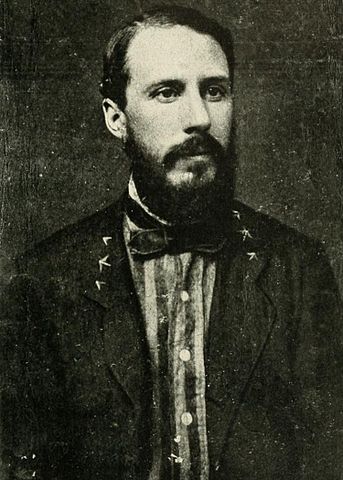
Born

May 26, 1835 Washington, Georgia

Died

April 28, 1910 Savannah, Georgia

Years Of Service

1857–61 (USA)
1861–65 (CSA)

Rank

Second Lieutenant (USA)
Brigadier General (CSA)

Battles

American Civil War
Peninsula Campaign
Seven Days Battles
Battle of Fredericksburg
Battle of Chancellorsville
Battle of Gettysburg
Knoxville Campaign
Overland Campaign
Siege of Petersburg

Porter Alexander Articles

Explore articles from the History Net archives about Porter Alexander

» See all Porter Alexander Articles

Porter Alexander summary: Edward Porter Alexander was born in Washington, Georgia, the sixth of eight children. He attended United States Military Academy where he also taught fencing and engineering. He took part in weapon experiments as an assistant to Major Albert J. Myer, the inventor of the “wig-wag” signal flags.

Porter Alexander In The Civil War

After hearing of his home state of Georgia seceding, Alexander resigned from the US army to join the Confederate army as a captain of engineers. He was to report to Brigadier General P.G.T. Beauregard in Virginia and became Chief Engineer and Signal Officer of the Army of Potomac. Alexander made history when he was the first to use signal flags, sending messages to Colonel Nathan “Shanks” Evans’ brigade. He signaled ‘they were in danger of being attacked to their left’ at the First Battle of Bull Run. He observed Union Troops movement from where he was stationed on ‘Signal Hill’ in Manassas.

He was later transferred to the Army of Northern Virginia, to whom he served with for the remainder of the Civil War. He served under Johnstons command as chief of ordnance, Alexander also continued with his signal work, gathering intelligence and dealt broadly with spies around Washington, D.C.

After the Peninsula Campaign and the Seven Days Battles, he gained a reputation for his skill and bravery, and his sharp eye for intelligence. In June 1862 at the Battle of Gaines’ Mill, he went up in a hot air balloon providing General Lee with valuable information of the Union position.

In Novenber 1862, Alexander was promoted to colonel, and the following month serving under General James Longstreet he commanded his own artillery battalion. In 1864 he was promoted to Brigadier General. He served with distinction in numerous battles. He returned to Virginia for the remainder of the war.


Articles Featuring Porter Alexander From History Net Magazines

Ten Civil War ClassicsThe country’s bloodiest war has been captured in novels, memoirs, and battle narratives. Here are 10 classics
'The Roar and Rattle': McClellan's Missed Opportunities at AntietamThe Battle of Antietam resulted in more pivotal changes, across a broader spectrum of events—military, political, diplomatic, societal—than any other battle of the war. Yet if evaluated in purely military terms, it was not decisive at all.
Irvin McDowell: The Most Unpopular Man in AmericaTwo words came to define McDowell’s military prowess for the general’s most critical superiors: ‘Bull’ and ‘Run’
Masters of their Medium: October/November 2009The Civil War era has attracted more than its share of gifted writers. Unexcelled political drama, compelling individuals in and out of uniform and storied battles provide rich material for anyone seeking to tell a gripping story.
'A Stupid Old Useless Fool'William Nelson Pendleton was far more effective behind a pulpit than he was as Robert E. Lee's chief of artillery in the Army of Northern Virginia.
Ulysses S. Grant: The 'Unconditional Surrender Continues

For most general officers, a headline-making victory accompanied by the abject surrender of an entire enemy army, such as Ulysses "Unconditional Surrender" Grant accomplished at Fort Donelson in February 1862, would have been quite enough for one career. But Grant …

Battle of Gettysburg FinaleGrievously wounded in body and spirit, the Army of Northern Virginia limped painfully away from Gettysburg while Union commander George Gordon Meade followed slowly -- too slowly, thought Abraham Lincoln.
Account Of The Battle of the WildernessIn the dark, forbidding woods of Virginia's Wilderness, Generals Ulysses S. Grant and Robert E. Lee stumbled blindly toward their first wartime encounter. Neither had a clear idea of his opponent's intentions, but each planned to do what he did best--attack.
Second Battle of Manassas: Union Major General John Pope Was No Match for Robert E. LeeBrash, bombastic John Pope tempted fate by returning to the old battleground at Manassas. He thought he had caught Robert E. Lee napping. He was wrong.
1st Louisiana Special Battalion at the First Battle of ManassasRecruited from New Orleans' teeming waterfront by soldier of fortune Roberdeau Wheat, the 1st Louisiana Special Battalion more than lived up to its pugnacious nickname--Wheat's Tigers--at the First Battle of Manassas.
Battle of ShepherdstownThe savage little Battle of Shepherdstown made for a bloody coda to the 1862 Maryland campaign.
America's Civil War: Robert E. Lee and James Longstreet at Odds at GettysburgAt Gettysburg, Longstreet told Lee that a direct assault would end in disaster -- but Pickett's Charge went forward anyway.
WHEAT'S TIGERS Confederate Zouaves at First Manassas - May '99 America's Civil War Feature


WHEAT'S TIGERS Confederate Zouaves at First Manassas

By Gary Schreckengost

Recruited from New Orleans' teeming waterfront by soldier of fortune Roberdeau Wheat, the 1st Louisiana Special Battalion more than lived up to its pugnacious nickname–Wheat's Tigers–at the First Battle of …

Return To The Killing Ground - November '97 America's Civil War Feature


Return To The Killing Ground

By Jeffry D. Wert

Brash, bombastic John Pope tempted fate by returning to the old battleground at Manassas. He thought he had caught Robert E. Lee napping. He was wrong.

A heavy, soaking rain fell …

Paid Advertisement
Paid Advertisement
History Net Daily Activities
History net Spacer
History net Spacer
Historynet Spacer
HISTORYNET READERS' POLL

Which of these pre-gunpowder weapons was the most revolutionary?

View Results | See previous polls

Loading ... Loading ...
History net Spacer
STAY CONNECTED WITH US
RSS Feed Daily Email Update
History net Spacer History net Spacer
Paid Advertisement

Paid Advertisement
What is HistoryNet?

The HistoryNet.com is brought to you by the Weider History Group, the world's largest publisher of history magazines. HistoryNet.com contains daily features, photo galleries and over 5,000 articles originally published in our various magazines.

If you are interested in a specific history subject, try searching our archives, you are bound to find something to pique your interest.

From Our Magazines
Weider History Group

Weider History Network:  HistoryNet | Armchair General | Achtung Panzer!
Today in History | Ask Mr. History | Picture of the Day | Daily History Quiz | Contact Us

Copyright © 2012 Weider History Group. All rights reserved. Reproduction in whole or in part without permission is prohibited.
Advertise With Us | Subscription Help | Privacy Policy