

Kirby Smith
Facts, information and articles about Kirby Smith, a Civil War General during the American Civil War
Kirby Smith Facts
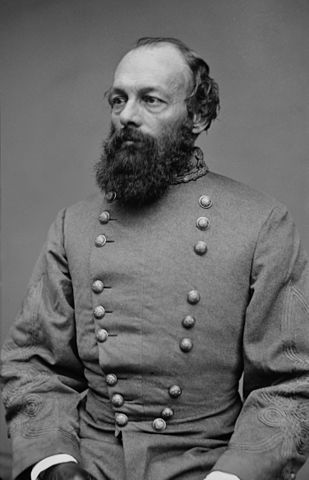
Born
May 16, 1824 St. Augustine, Florida
Died
March 28, 1893 Sewanee, Tennessee
Nickname
Ted, Seminole
Rank
Major (USA)
General (CSA)
Years Of Service
1845–61 (USA)
1861–65 (CSA)
Battles Fought
Mexican-American War
American Civil War
Trans-Mississippi Theater
Battle Of Vicksburg
Kirby Smith Articles
Explore articles from the History Net archives about Kirby Smith
» See all Kirby Smith Articles
Kirby Smith summary: Edmund Kirby Smith was born in St. Augustine, Florida on April 24th 1824. He got his nickname Seminole because of his native state. He went to a military boarding school, and then the United States Military Academy. Smith married Cassie Seldon and bore five sons and six daughters. In 1847, his elder brother Ephraim died from wounds obtained in the Battle of Molino Del Rey in which Smith also fought.
Kirby Smith Enters The Civil War
Smith joined as a Major in the regular artillery with the Confederate forces. He was quickly promoted through the ranks to brigadier general in 1861. His neck and shoulder were badly wounded while leading his troops in the battle of Bull Run, but despite this, returned to duty a few months later. The following February, he was to command the Army of East Tennessee and won a victorious combat at the Battle of Richmond. On February 17th 1864 for his victory, Smith received the Confederate “Thanks of Congress”.
The Trans-Mississippi Theater
In 1863 he was sent to command the Trans-Mississippi Theater and he remained on the west side of the Mississippi for the remainder of the war. He found himself isolated from Richmond after the Union forces captured Vicksburg and Port Hudson. Smith established himself in command of an almost independent area, which became known as Kirby Smithdom. He continued to try to win back Vicksburg against the Union from the west side of the Mississippi but was never successful. In 1865, by which he was now a general, he had negotiated surrender on May 26th. Following the signed agreement, he fled to Mexico, and then to Cuba, fearing prosecution for treason. Smith returned to Virginia November 14th 1865 to take an oath of Amnesty. He died of pneumonia in 1893.
Articles Featuring Kirby Smith From History Net Magazines
General Lee heads north, producing a bloodbath in Maryland. And Abraham Lincoln presses emancipation
September
2 – In the aftermath of the Union's second loss at Bull Run, George McClellan is restored to full command of the Army of the …
The orderly advance of Union troops at the start of the battle would become a distant memory in the hellish retreat that followed the fighting. Picture credit: Frank Leslie'sThe 'unexpected' Rebels he met at Bull Run weren't unexpected at all…
Getting away with murder
The battlefield claimed many a brave officer, but there were a few others who met not-quite-so-honorable ends
The death toll among general officers during the Civil War was staggering. Because military necessity often placed a general …
By Frank van der Linden
By Pierre Comtois
Reviewed Ted Alexander
By Timothy J. Reese
Baltimore, Butternut and Blue Press, 2004 By Mark Dunkelman
By fall 1862, Confederate morale was the highest it had been since the start of the war and Confederate armies were on the move …
Banners to the Breeze: The Kentucky Campaign, Corinth and Stones River, by Earl J. Hess, Lincoln: University of Nebraska Press, 2000, $32.
The year 1862 proved critical for Confederate fortunes in the Western theater. It began with a series of …
Attack Written Deep and Crimson
By Robert Collins Suhr
The strategic railroad town of Corinth was a key target for Confederate armieshoping to march north in support of General Braxton Bragg's invasion ofKentucky.
In late summer 1862, Confederate armies were …
THE SAVIOR OF CINCINNATI
Long before he published Ben-Hur, Lew Wallace rose from a career as an obscure small-town Indiana lawyer to take a prominent role in the Civil War.
BY ROBERT E. MORSBERGER
During the first months of the …
Smith-Taylor Disagreement
The Trans-Mississippi West was hardly a picture of soldierly bliss and harmony, either. There were too many idle generals full of fire and ambition, and not enough combat duties to go around. As a result, they spent their …
Why the South Lost the Civil War
Ten Civil War historians provide some contrasting–and probably controversial–views on how and why the Confederate cause ultimately ended in defeat.
Interviews by Carl Zebrowski
"The art of war is simple enough. Find out …
thePROVINGground
The Mexican War gave future civil war generals their first taste of combatJOHN C. WAUGH
Chatham Roberdeau Wheat would one day lead a famous Louisiana battalion called "Wheat's Tigers" into battle for the Confederacy. He would fight and die …
It had been almost one month since Confederate General Braxton Bragg had pulled off an organizational masterpiece–four weeks since the first troop trains had rumbled into Chattanooga, Tennessee, completing an improbable 800-mile odyssey. Bragg had engineered one of the most …
Suave, gentlemanly Lt. Col. Arthur Fremantle of Her Majesty's Coldstream Guards picked an unusual vacation spot: the Civil War-torn United States.
By Robert R. Hodges, Jr.
After graduating from Sandhurst, Great Britain's West Point, Arthur James Lyon Fremantle entered the …


