It’s perfectly feasible to imagine that if the South had successfully left the Union, the West would also have split away
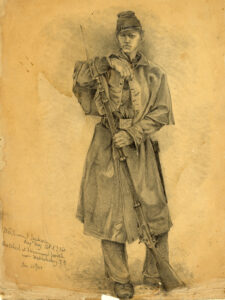
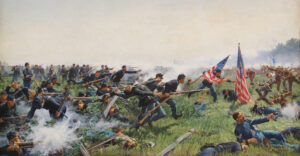
Did Confederate soldiers lose the will to fight as the outlook began to appear bleak for the South late in the war? Many scholars have argued that case, but Jason Phillips of Mississippi State University, author of Diehard Rebels: The Confederate Culture of Invincibility, and Aaron Sheehan-Dean of the University of North Florida, author of Why Confederates Fought: Family and Nation in Civil War Virginia, argue that many Southern soldiers stayed defiant to the end. Their research has focused on those soldiers who fought on for cause and country.
PC: Until recently historians have agreed that Confederate soldiers lacked the will to fight. Why?
JP: I would say the new social history of the ‘60s and ‘70s, by taking a bottom-up approach, was probably one of the first reasons why this loss of will thesis gained momentum. You start looking at desertion as an act of will among soldiers and the disintegration of the home front and the yeoman class criticism worked like [?] after secession, sort of seminal in this regard. And I think that’s probably where it gained momentum and lasted for at least twenty years, really.
ASD: When you start talking about social relationships, any kind of social history is going to discover—it’s not a big surprise—but you’re going to discover that there is a lot of conflict on the Confederate home front just as there was on the Northern home front. But I think the other part of this is a general chronology which says that Gettysburg is the watershed, and so if you marry that standard narrative, which says that there’s a kind of inevitable decline after Gettysburg, to plenty of evidence that there’s social conflict, then you say, sure, class conflict, gender disagreements, that’s what drove or withered away the Confederacy.
PC: Can you both be more precise about what you mean by social conflict and dissent that Confederate soldiers engaged in?
JP: I guess the prevailing phrase would be “rich man’s war, poor man’s fight,” the notion among non-slave-owning Southern soldiers that this was a war for slavery, that the secessionists were planters, and yet the people who were sacrificing most in terms of life and property were of this vast yeoman class. And when the conscription act with the substitute clause and the tax in kind started to hit the yeoman class hard, it seemed the planter class wasn’t sacrificing as much as it should since it seemed to have the most to gain from Confederate independence. I think that’s where we see—that phrase, “rich man’s war, poor man’s fight,” seems to be the rallying cry. And then people tie that to bread riots in Richmond and rising desertion rates within the army.
ASD: Yeah. I always think of the big three Confederate policies that spur opposition within the Confederacy as being the draft act, impressments, and the tax in kind, in chronological order. Conscription was by far the most important of those, but I don’t think—and that one there is legitimate—we actually can see desertion patterns that spike because of that. But I think—
PC: Can you explain what impressment and tax in kind is?
ASD: Impressment is the ability of the government to seize goods and services and may give as compensation Confederate script, the problem being that Confederate paper money lost its value extremely rapidly, so it was essentially as though the government was just taking your property. The tax in kind was a flat 10 percent tax on foodstuffs that came—you grow a hundred bushels of corn, there’s a tax in kind agent who will come collect ten bushels of that. And this is what Bill Blair’s book [Virginia’s Private War] does very effectively, is it shows that although the tax in kind generates anger and people horde goods and they hide goods, by acquiring actual goods, the government then has the ability to redistribute those to those who are needy. And so it actually helps, and in some ways, as Bill argues, prolongs the life of the Confederacy because the government shows a fair amount more flexibility than you would have imagined they did—or that we knew they did until we looked in detail at that policy.
PC: Civil War letters overwhelmingly suggest that white Southerners grew tired of the war and that they were resentful of the Confederate government for the very policies that you both have specified. How do you overcome the considerable literary evidence that captures Confederate disaffection which you both are arguing against?
ADS: Well very little of that is tied to overt expressions on the part of Southern participants—white Southern participants—as a desire to return to the fold of the Union. I don’t think criticizing the policy of the Davis Administration is not the same thing as saying I want to return to the Union. In fact, I think sending a letter to the government signals a fair amount of investment in that government. You actually expect that government’s going to respond to your plea. They have an obligation to you because you’re a citizen of their country. I don’t think Unionists—diehard Unionists—probably even bothered to write Jefferson Davis because they considered him a usurper in the same way that Lincoln would have. But for the majority of white Southerners, they perceived that new government as legitimate, which isn’t to say they don’t dislike a lot of the policies, but the same thing can be said for most Americans. At any given time their lives they’re going to disagree with policies of the White House. Protesting those policies or speaking out against them doesn’t become an act of treason.
PC: But what we’ve seen today supports your analysis. The people who are critical of the war in Iraq are not renouncing the U.S. government and they certainly are not expressing support for the reactionary insurgents in Iraq. While I appreciate your point that criticism of the Confederate government did not mean support for the Union, it seems to me that critics still hurt or undermined the Confederate war effort.
JP: Oh yeah. I’m not arguing at all that there isn’t this massive protest on the local level and that there isn’t disaffection within the army that weakens the Confederacy. I’m not arguing that it was external forces rather than internal factors that caused defeat. What I’m saying in my book is, there are thousands of Confederate soldiers who don’t fit this description of being the disaffected person of the yeoman class. And when we concentrate on “rich man’s war, poor man’s fight” and this social disintegration within the Confederacy, we have yet to explain why the Confederacy lasted for so long after these great turning points in the summer of 1863. And so the more interesting question for me was, why, given all of this trouble on the home front and the major defeats that the army withstood, why did certain men—and I was finding thousands of them—still remain confident that they would win. And I think if we just shift the focus to them—not at all discounting or arguing with the folks who concentrate on the disaffected class that exists—but if we shift the focus and look at the other group that sort of bolsters and keeps the Confederacy going for two years, we’ll have a better appreciation for the momentum of war, why the war ended the way it did. And it’s this class of diehard rebels who shape reaction to defeat and post-war memory. It’s not the yeoman class. It’s not the deserters who then shape the history of the Civil War from the Southern perspective. It’s the people who withstood to the very end who become the Lost Cause of the South.
ASD: I don’t know. In your analogy–I think doesn’t quite hold in the sense that most of today’s opponents of the war in Iraq actually want the war to end, whereas there are supporters that argue the war should continue. Even diehard rebels wanted the war to end immediately. You’re hard-pressed to find Confederates eager to fight on. They just want independence and the preservation of slavery. They don’t want to keep fighting to do that. This is of course Lee’s—the reason we have the invasion of the North in ’62 and ’63 is whatever we can do to make this war end as quickly as possible. And I find that all throughout the ranks people are horrified by what they’re having to do. So there’s plenty of war weariness, there’s no way around that. It’s clear there’s a great deal of hardship. But at least in Virginia I think most of that hardship is blamed on the North, so that it does not yield—the war weariness, in fact, doesn’t hinder the Confederate war effort. This is the way in which the hard war that Grant essentially designs wins. Logistically it’s effective, but I don’t think psychologically it is. People eventually do wear down and they can’t continue to function in the same way, so that’s going to be the Confederate war effort, but I don’t think it does much to convince people they should return to the Union or they should somehow love the Union again.
PC: Then can you tell us, who are these people that are the diehard Confederates? Aaron focuses on Virginians and those who served in Lee’s army. Tell us, who are these people and then what did sustain them? What enabled them to deal with all these hardships, the violence, the dislocation of war?
ASD: The argument that I make in my book and what I think sustains a lot of Virginians is precisely the hard war the Union brings in Virginia—invasion, occupation, widespread destruction—that Virginians respond to those by recognizing that this is now a war not for abstract principles. It’s the war that some of them may have feared would come, which is to say it’s fought in Virginia, and it compels—increasingly over the course of the war—a greater focus on preservation of family, and on the threat that’s posed, the very obvious physical threat, that’s posed to families as opposed to ’61 and even early ’62, when the threat was still quite vague.
It’s important to recognize that there is a change, at least I think as I see it in Virginians, with the evidence that they—while nationalism and response to duty may have propelled people to enlist in ’61, most of them anticipated a reasonably short conflict. What sustains them through an increasingly bloody war is a real focus on their families and on the jeopardy in which those families are placed. They blame all of that on the Union. They’re going to blame Jefferson Davis for improperly managing the Confederate response, but they’re able to distinguish between that and the ultimate cause, and the ultimate cause is Lincoln’s army.
Part of this transformation you can see in the correlation between places that have been vigorously Unionist in Virginia, they become the most pro-Confederate. It’s not the most pro-secessionist places that send the most soldiers, in fact, it’s places that experience the betrayal—this is why I think it’s important to note that Virginia’s commitment to the war doesn’t come with Fort Sumter, it comes with Lincoln’s calling up of troops, because for Virginia Unionists who had staked their own reputation on Lincoln’s promise not to raise up an army, are now left feeling betrayed. And they’re betrayed not just by the political act that he’s going to call up an army, but by the fact that maybe he’s been lying about emancipation the whole way along. Maybe that army really is going to come down, and then eventually it does, and so those people have—they are radically transformed in just a handful of days, in mid-April, in ways that they would never have been able to foresee.
JP: Yeah, I see a similar dynamic between the hard war and then the hardening of diehard rebels against the Union. What’s really fascinating in my work is, I realized that, while the young officer class from slave-owning families, the last generation, they sort of create a corps of diehard rebels, but the characteristics of who was a diehard rebel and what they believed in meant that you didn’t have to be a slave owner, you didn’t have to be highly educated in order to join this group. For instance, one of the beliefs that kept these men fighting to the bitter end was the constant faith that God was on their side. And southerners didn’t have to be slave-owners to believe that God was on their side. This hatred of Yankee policy isn’t restricted to men who were slave-owners. That bitter war affects southerners of all classes and so the war—while there are a lot of class struggles within the Confederacy, I think within the Confederate army there’s surprising unity among classes within this diehard cast of men. You didn’t have to be a particular rank to think, falsely, that you had won a battle, but in fact it was a draw, for instance. Or to believe rumors from far away that were false. Slavery’s an important part of this equation, don’t get me wrong, but you didn’t have to be a card-carrying slave-owner to join the diehard rebels.
ASD: I think it’s crucial—and you do this more, I think, than I do—I sort of suggest at the end that to be able to connect this narrative to the post-war narrative, because if we still are buying in to the brothers’ war narrative, the post-war period becomes very difficult to explain. I mean there’s obviously going to be—
PC: Explain the brothers’ war narrative.
ASD: The brothers’ war narrative is the idea that the Civil War is a kind of temporary interruption that involves essentially Americans squabbling about American issues, but that at heart we’re all on the same side and the Civil War temporarily divides us, but that we come back together again immediately after because we hold the same core values. The more you talk about snowball fights between camps or trading, the whole thing begins to look like a giant sporting event.
JP: I would say even more than that, I would say that the brothers’ war narrative implies that it’s a family at war and that the survivors of this conflict are brought closer together by the war itself. So this nation becomes stronger, like the end of Battle Cry of Freedom, [talking over one another] it’s the modernization of America and America becomes a powerful nation propelled into the twentieth century because of this civil war.
ASD: And if that’s true, then all of the tremendous problems that follow Reconstruction, then the only explanation is that the changing nature of race relations in the South, and obviously the rise of freedmen, the status of freedmen, this rise of slaves, that challenges the white South in fundamental ways and a great deal of the violence and the chaos in the post-war South can be explained that way, but not all of it, and particularly not the kind of intense hostility toward the Federal government that I think is really sort of developed, gestates, during the war. And you can’t pretend that it ends at Appomattox. We finally now got a clearer picture of what actually happened at Appomattox, and it isn’t the sort of weepy and heroic brothers giving each other a high five and saying that was a good show and let’s go back to the farm. William Marvel’s book shows us, in fact, at Appomattox it required hundreds of armed guards to keep the armies separated because commanders were afraid that hostilities were going to break out at any time. His book very carefully shows us just how tenuous the peace was at that moment because these were guys that were trying to kill each other for four years.
JP: And I think his book foreshadows the fact that seems obvious, especially now with our war in Iraq, that you can’t really separate the war from Reconstruction, that it is a continuation of the war, and that the war doesn’t really end, some aspects don’t really end for a hundred years. But the end of Reconstruction is really the end, a more appropriate end to this official conflict.
ASD: Right. You can see the problem looming, which is that during the war, what the North calls war-time reconstruction, southerners call occupation and invasion. They have fundamentally irreconcilable perspectives on what’s going on, and that begins in ’61 at Port Royal, and certainly by ’63 in places in Louisiana, Tennessee, and it presages great problems once the war is over and this is now going on actively.
JP: Eric Foner did some of that. He starts his book on Reconstruction in ’63, but Civil War historians need to finish their books much later than they do, maybe ’68 or even longer, in order to complement that approach.
PC: How would you respond, though, to a critic who would say that both of your interpretations resurrect the Lost Cause image of Confederate soldiers as this noble band of brothers who were united to the end, that this was again based upon heroism and shared sacrifice. It seems to me that your conclusions tend to support a Lost Cause view of the war that professional historians have actually tried to dismiss.
ASD: Well, first of all I think probably both of us—but I can certainly speak of my view of Virginia soldiers, grounds their initial motivations to go to fight in a desire to preserve a world based on racial privilege in which slavery plays the central role in structuring their society, whether it be socially, intellectually, religiously. So there’s no question that the Lost Cause view of slavery is essentially benign, if not positive. It’s absolutely wrong and doesn’t bear any relationship to the way in which these men themselves of course saw slavery as fundamental. Slavery had been a long-established right in the United States and they don’t feel as though they’re unjustified in trying to defend it. They were quite frank about that. I think even the evolving notion of family is really based on the preservation of a world which sustains those families, which for white Virginians meant a world predicated on slavery.
And this is where I think the whole notion of a rich man’s war and a poor man’s fight, that both sides of that are wrong. We know that rich men actually enlist at higher rates than they represent in the population as a whole. So it’s definitely a rich man’s fight. But in many ways it’s also a poor man’s war in the sense that poor men, poor white men, have a great deal to gain from maintaining the status quo in the antebellum South. Their lives and their livelihoods are jeopardized by something that threatens that.
JP: I think it’s a major challenge to write a book about people whose values repulse you, and I agree completely. There’s no doubt these men I study are completely dedicated to racial slavery. I find it time and again in their letters. So that part of the Lost Cause rhetoric is definitely false and that comes through in the work. But there’s a challenge as an historian to walk that line between judging these past individuals so severely that we don’t understand them. And so I tried to figure out—in the past these men were considered delusional, insane, misinformed, ignorant, whatever. And I figured, well, there are thousands of them out there that are fighting to the bitter end, there must have been reasonable people doing this. So in order to get inside their world and make sense of it, you have to suspend judgment. And it’s a fine line between suspending judgment and glorifying. There’s not doubt these men sacrificed a lot and there were heroes among them. That doesn’t make the Lost Cause rhetoric correct. I also think in terms of the Lost Cause what’s important to consider is, these were the men who created the Lost Cause, those who survived to the end.
PC: Your diehard rebels.
JP: Yes, these diehard rebels are the ones who are from the grassroots level writing the histories and informing society that built the Lost Cause myths and legends. It comes out of their wartime experience and their wartime beliefs, so there’s certainly a certain amount of resonance between what I call this culture of invincibility during the war and the Lost Cause myth. It’s not a coincidence; these men are propagating it in ’63 and then in 1903.
ADS: I think you’re right, our essential job as historians is to explain and I try to do that as much as possible without judgment. It is just a historical irony that my explanation in some ways resembles the kind of argument that Lost Cause theorists have promulgated, but it seems to me—I was drawn to this topic partly because, for a long time—we certainly had a scholarship that had explored the perspectives of the elites in both sections, North and South, generals and presidents. We’ve had a long and robust literature on slavery, and on emancipation for the last twenty-five to thirty years. It’s hard to even find the right word. Yeoman plain folk, poor whites, have gone largely voiceless in the antebellum South and even through the war. And so it seems to me essential—and you can see this even in the twentieth-century literature on the American South, where we now have studies of those whites who were basically white moderates in the civil rights movement, where the picture was of massive resistance characterized every single white, and today we know—actually only in the last five years—we know that there were in fact important shades of difference within the white community. And I think this is certainly true in the Civil War experience. There are people of all shades of experience.
But another aspect of the Lost Cause that I would reject entirely, and this is, I think, one of the most pernicious, is a kind of valorization of war and a glamorization of what these men experienced, that it somehow is something that we should emulate, and I took pains in the book to take seriously those men, particularly Christian soldiers, who experienced a great deal of psychic conflict over the fact that they had to kill. People who are clearly unsettled by the clash between their values, which explicitly say, “Thou shall not kill,” and the necessity of doing that. And they’re not eager to continue it and they’re up to their elbows in blood and they’re thoroughly repulsed by it and by who they’re becoming as a result. There’s nothing glamorous about it, and I think you would be hard-pressed—until the political advantages of the Lost Cause story become clear—I’m sure that ’65-’66 most men were reluctant to think or talk about these things because it was such a ghastly experience for them.
JP: We talk about this trend away from the loss of will thesis toward what Aaron and I are trying to promote, but I also think there’s this greater issue of history books that glorify the war and in the last ten or fifteen years the scholarship that is stressing the murky, dark, sinful side of the conflict. Maybe it was [Charles] Royster’s book that started it, I don’t know, but ever since The Destructive War then you have Harry S. Stout’s book that says this applies just war theory. Obviously David Blight’s book changes our memory of the Civil War in important ways that really darken the conflict. And now a number of monographs are coming out and doing the same thing.
ASD: And I would even go back further. I think in some ways [Phillip Shaw] Paludan’s book, Victims, which is a limited book [talking over one another] an incident in North Carolina begins—because now there’s now a burgeoning literature on Civil War atrocities on both sides. His book was the first one—I actually have students in class studying this, unrelatedly. One is doing historiography and atrocities don’t figure into the story of the war—I mean, there’s a few mentions here and there, but for the most part Paludan’s book in ’81 is the very first one.
JP: Yeah, that’s way ahead of the curve. The pinnacle of the books that sort of, I would say glorify, romanticize the war, the pinnacle is Battle Cry of Freedom and then the Ken Burns’ series and you have this zenith of interest in the Civil War in America.
PC: And so when you say it’s the pinnacle of books, explain what you mean. Why did that resonate with the American people, Battle Cry of Freedom and Ken Burns. Why did it speak to them?
JP: Well I wish I knew.
ASD: I think it’s a story that makes us feel good about this conflict that was unimaginably grotesque, six hundred twenty thousand dead and hundreds and thousands of wounded, maimed for life. The story, particularly if you use as a metaphor for the United States the maturation of the individual, and this is our sort of troubled teen years in which we work out the kinks and so that the narrative basically is that we need to get to adulthood as a nation and we certainly know that the normal life pattern is to reach adulthood, we’re willing to basically accept this story. And I think you can also see this narrative in Phillip Paludan’s book, People’s War, which is a terrifically celebratory account of the success that the Union had. It is a success built on the idea that America’s modernizing itself by jettisoning this baggage of slavery that’s essentially pre-modern, that is building an integrated and unified nation, and the problem is very few of these things, particularly if you look at post-war America, very few of these bear out.
JP: I think modeled within the epic approach to doing history is this story of progress and the celebration of nationalism, and common Americans, everyday Americans, are attracted to that. They loved it in the Civil War series and they loved it in Battle Cry of Freedom. I think the monograph approach, especially when it’s not a narrative, lends itself to a more critical gaze of the past, and you don’t have the tidy conclusion to the story that you get at the end of the Ken Burns series or Battle Cry of Freedom.
ADS: Although I think equally important is the sort of moral justification that comes with this story. This is one of the things that I found troubling about Stout’s book is that what we can take from the Civil War is feeling good about having emancipated the slaves—though of course the only people who were interested in doing that at the start of the war were the few slaves that wanted to emancipate themselves and the few free African Americans in the North that saw this possibility. There were virtually no white people—there’s a handful of abolitionists—very few white people for whom emancipation was an important motivator for the war. Or even significant cause until halfway through. And I think to claim after the war is over that the war was a good thing because of emancipation is driven by hindsight in a very problematic way. We’ll find the justifications for the war after it finishes, and that’s dangerous.
JP: I think his book is pretty dark. It’s a jus ad bellum look at the policies of prosecuting war that are considered just, and the fact that neither side followed these laws and what—in fact they were encoded in West Point education. So it’s not like he’s taking a current theory that’s built on the United Nations or something applying it past saying this was actually in fact read at West Point and they didn’t follow it. But his book doesn’t look at just war theory in sort of jus post bellum and jus ante bellum, looking at the causes of the war and then the way you end the war justly. He’s concentrating on Sherman and Sheridan and then Shenandoah Valley and those issues and so it kind of misses some of the greater implications of the war, which might be what you’re saying, in that we’re left wondering is it just about emancipation that redeems this war.
ASD: I think that’s what redeems the war for us in the national heroic narrative that we have today, that’s what redeems it for us. The only thing I think that we can imagine that would redeem six hundred twenty thousand dead. But historically, I think, for most white Northerners, what redeemed the war clearly was Union. If you had asked Lincoln, he would have said that the preservation of democracy is ultimately even more important than emancipation.
JP: Yeah.
ASD: Because the preservation of democracy is what will eventually create freedom everywhere in the world.
JP: Right.
ASD: And for a variety of reasons I’m actually—I have an idea to do an essay on this—I think it’s crucially important to historicize how the meaning of the war has changed over time. For most white Northerners I think it was Union, and today that explanation makes no sense to people. Students look at you sort of befuddled because they assume the inexorability of the United States. How could the United States ever really split apart? It seems impossible to imagine. But of course, if you look at Latin America or even Europe it’s perfectly feasible that if the South had successfully split, the West would have split away; we would have ended up with maybe five or six sub-nations within the area that is the continental United States.
JP: I think what you’re talking about—McPherson does treat this in an interesting way in Battle Cry of Freedom when he talks about if you could look Lincoln’s speeches, when he uses the term “Union” and when he changes to “nation,” that by the end of the war, the Second Inaugural [Address] for instance, he’s not using the term “Union” anymore, he’s using the word “nation.” And then Shelby Foote adds on to this, the difference between United States are and the United States is, becoming a singular nation. That, along with emancipation, I think, in the traditional narrative, is the great gain of the Civil War, the reason why all this bloodshed was worth it, that we become, for once and for all, a nation that can never imagine doing this again.
ADS: But this is where I think it’s problematic, because a lot of white Northerners weren’t interested in emancipation, they didn’t really own it until the war had finished positively. And if it had degenerated into a guerrilla struggle in which tens or hundreds of thousands more had been killed, or a race war, then they would have basically disowned emancipation and left it in the hands of radical Republicans as a misguided strategy that ended up bringing more devastation.
JP: Do you think so? With one hundred and eighty thousand black troops?
ADS: I’m not arguing that it was strategically feasible for that to happen, but if the whole dynamic had spun out differently—
JP: I guess what I’m saying, is I think that the number of volunteers and the sacrifices by black soldiers made that impossible politically and socially. They might not have been committed to racial equality, certainly not in 1865, but—and I don’t mean to get in conjecture gear—but if the war really had gone on for much longer, I think the sacrifices of black troops would have maintained emancipation to the bitter end. I don’t know that they could have, or would have, gone back on that.
ADS: I think you’re probably right, although there are an awful lot of Republicans even pushing Lincoln to drop emancipation in ’64 from the Republican platform. And we know now reading Lincoln that he was committed to that all the way along and he had said he wouldn’t do that. If it had been somebody else in office that sort of weighed the political advantages, they might well have done it. And obviously the war has to end with the North victorious for this to mean what it means. So for me it’s more the intellectual challenge of trying to figure out how you establish this question’s meaning and how much of it is driven—it’s all driven by hindsight so I guess I shouldn’t be upset. Our meaning is different than the meaning of the people who fought it, but much of Civil War popular discussion is a struggle over defining that meaning and it’s inhibited by this recognition that the meaning changes.
PC: You both conclude that this celebration of emancipation is very much after the fact and that we should take people to task for not—particularly in the North—for not embracing this revolutionary achievement. I guess I’d like for you both to speak to just how you feel about history as something that should be celebrated
JP: Well I would say, from the academic perspective and in my classrooms as a professor, I discourage my students from celebrating history and instead I would rather have them study it. You can love history but not celebrate it. Ask lots of questions, dig into the research, read a lot about the past, never be satisfied that you have the whole story, and maybe some people when we study the past closely, become more complicated and aren’t the simple heroes that we loved in our youth, but other people will surface that had never been noticed before, and they become heroes. So I think it’s important to be critical or even hyper-critical as you say. But again, it’s to know the past, not to celebrate it, and not to judge it either. I’m not holding nineteenth-century Americans to a twenty-first century standard, but I think by not celebrating them but showing how they really were, there is a political dimension to that that perhaps America will be better off if it doesn’t celebrate its past but keeps this critical eye and [is] always eager to inquire and ask more and more questions.
ADS: I think part of the problem is that there are different kinds of history. There are different stories and different kinds of history, and the kind of history as a way of thinking about the world is an analytical tool, comparable in disciplinary terms to sociology or philosophy, anthropology, all of which have their own methodologies, their own ways of thinking about the world. We happen to be historians because we think that it is essential for people to think historically, which means probing the explanations of why people have acted as they have and how those actions have shaped countries and societies and values over time. And that requires, as Jason said, sort of total detachment. It requires a purer kind of detachment—the myth of perfect objectivity aside—it requires a focus not on judging—and I certainly didn’t mean to suggest that white Northerners should be scorned for not adequately celebrating emancipation. Many did, of course, but many more had other values and it’s not my position to say whether those are right or wrong. Those were the values in that society. So our first instinct as historians is to teach students how to think historically, and in this sense it’s to explain actions. But at the same time, there are narratives that come out of local history that may explain how schools are named that may celebrate the accomplishments of local people, and then there are national histories that emerge out of Fourth of July parties, out of Memorial Day parades, that operate at a level that should at some point be able to touch that analytical history, but that might spend time valorizing and creates heroes. And those things are obviously central to how nations are constructed. The big story in this is of course is the creation of history as a modern discipline, which essentially rejected the notion that our job as historians is to create in people patriotism and blind loyalty to their nation. This is because history is a product of the rise of nation states in late-nineteenth-century Europe. And we’re a hundred years passed that or more, and so historians are thinking much more analytically. But, there are multiple kinds of history and what I would hope is that you have people who are able to do both, essentially. I think this is the point that Jason was making, is that if they can think dispassionately and critically about events while at the same time taking a kind of responsible measure of pride in the accomplishments of people with whom they share a lot and with whom their ancestors shared.