On December 7, 1941, Japan unleashed the might of its seaborne air arm on the unsuspecting U.S. Pacific Fleet docked at Pearl Harbor, Hawaii. Within 24 hours Japanese air raids had crippled American airfields and naval bases in the Philippines. On December 10, Japanese infantry stormed ashore on the northern coast of Luzon. The United States, which Japanese Admiral Isoroku Yamamoto had portentously described as a’sleeping giant had finally been awakened to war.
Millions of Americans were shocked by their sudden, bloody entry into World War II. But there were some, including the commander of American forces in the Philippines, Lt. Gen. Douglas MacArthur, who had long expected it. They had read a little-known book, The Valor of Ignorance, first published in 1909. Despite its having been written 32 years beforehand, the small volume carried an amazingly accurate warning of Japan’s surprise attack and its follow-up moves. In fact, the work seemed so prescient that members of MacArthur’s staff later went on to label its American author, who had acquired his own share of experience fighting in the Far East, a clairvoyant.
And yet, when The Valor of Ignorance was first published, mainstream U.S. military thinkers and planners had not only rejected the work, they had actively derided it. The book had also predicted the fall of Manchuria, Hong Kong, Indochina, Singapore, the Dutch East Indies and parts of the West Coast — and to most Western officers, the whole idea was absurd. The Japanese officer class, however, did not think so. They had bought the book from the outset and, having studied it avidly, put its deadly lessons into practice in 1941.
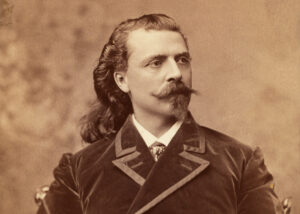
Who was this 20th-century Cassandra whose advice and warnings had been dismissed by his countrymen but recognized by his enemies? Born in 1876, Homer Lea was never considered normal by his contemporaries. A hunchback, he weighed less than 100 pounds and stood a diminutive 4 feet 11 inches. Nevertheless, even from an early age he was filled with a burning desire to become a military colossus. He managed to get an appointment to the U.S. Military Academy at West Point, N.Y., but was soon dismissed because of his frail health. Little Scrunchneck, as his classmates affectionately called him, then settled for study at Stanford University before again declaring his intention to join the U.S. Army. He was turned down. Frustrated but undaunted by these setbacks, Lea, like several military adventurers before him, turned his attentions eastward to China.
Imperial China in the final years of the 19th century was in a state of political and social flux. Faced with a variety of taxing and complex issues, the young Manchu Emperor Kwang Hsü recognized that the country had to modernize in order to survive in the modern world. But the reign of that forward-thinking emperor lasted barely 100 days. Reactionaries, led by Kwang Hsü’s virulently xenophobic aunt, the Dowager Empress Tzu-hsi, held a palace coup. Seizing the reins of power, they whipped up Chinese fears of foreigners. Instrumental in the increasing tension was the secret society I Ho Ch’uan, The Righteous and Harmonious Fists, known to Westerners as Boxers because of their martial beliefs and practices. The Boxer Rebellion of 1900, backed by imperial forces, was marked by its violence and brutality. European, Japanese and American trading centers were targeted. Foreigners were hunted down and butchered, although it was Chinese Christian converts who bore the brunt of the Boxers’ wrath — thousands were massacred for holding foreign beliefs. The missionaries and their flocks fled to Peking and to the protection of the foreign legations. The Western world waited with bated breath for the international response.
At age 23 Lea, a Sinophile, was keen to enter this boiling cauldron. He was sure that the world stood on the brink of a new global epoch, and that events in China were the beginning of an inevitable historical force. In his opinion, the imperial blocs of Russia, Britain and France and the growing militarism of Germany and Japan were set to clash. War in the Pacific was inevitable, and the United States, like it or not, would be drawn into the vortex. Lea’s friends, concerned that he would be placing himself in grave danger, urged caution. All great careers are carved out by the sword, he told a worried friend. Mine, too, I shall carve that way. It was gently pointed out to him that his deformity might make him ineligible for service with anyone. Citing the example of his hero, the club-footed poet George Gordon Noel, Lord Byron, in the Greek war for independence from Turkey in the 1820s, Lea retorted, China shall be my Greece. Another friend was far more direct: You’ll get your head cut off. Brilliant at repartee, Lea wryly commented, Fortunately they’ll have a hard time in finding my neck. What Lea did not let on, however, was that he was already corresponding with a number of influential reformists.
During his passage to China, Lea visited the American-owned islands of Hawaii, Guam and the Philippines, each of which he examined as a potential battlefield. Upon his arrival in Canton, Lea’s contacts gave him a letter of introduction to Kang Yu-wei, the former prime minister who now led the plot to re-throne the deposed emperor. Somewhere along the line Lea, in regard to his reputation and abilities, had been rather economical with the truth, for Kang’s jaw dropped when he first saw him. Why have you come? he asked. What can you do? I have come to help you save China from the old tigress, replied Lea. You are too young to do that, said Kang. Lea, not one to be swayed, retorted, I am the same age as Napoleon was at Rivoli. He was given a scroll appointing him the rank of lieutenant general and a package containing the Star of the Order of the Emperor Kwang Hsü. Lea promptly took over a small force of volunteers in Shensi province.
Setting out in a palanquin, Lea was about 100 miles into his journey when he was overtaken by a messenger bearing grave news. The dowager empress’ spy network had uncovered the plot, and Kwang, with a $20,000 price on his head, had fled for his life. Imperial troops were also hunting down the Yang kuei-tzu, or foreign devil, in league with the conspirators. The neck that the executioner would have difficulty in finding was now worth $10,000. To make matters worse, his local command had been wiped out. Lured into a trap set by the viceroy of Shensi, Lea’s officers had arrived at the provincial palace thinking that the region was about to be surrendered. They found the executioner’s sword waiting for them instead. To emphasize the futility of the rebellion, the viceroy had their heads impaled on spikes atop the city walls.
Those around Homer Lea suggested he make his escape. But the little general was unfazed, sending the messenger on ahead to tell his troops to hide in the mountains and wait for his arrival. The Boxer Rebellion was in full swing by the time Lea reached the ragtag remnants of his command. After a short period of intensive training, Lea’s men began their march toward Peking.
He arrived in the imperial capital just as the 20,000-strong multinational army was relieving the besieged foreign legation compound. Lea’s contingent was too unskilled to have much impact upon events. Yet the Westerner, wearing the lavish golden uniform of a Chinese general, was noted by the international press and by Maj. Gen. Adna Chaffee, whose American contingent was followed into the capital by Lea’s army of undisciplined coolies.
Tzu-hsi, disguised as a peasant, fled the city in a horse-drawn cart. Her armies withdrew, pursued by Homer Lea’s force, while the multinational troops remained in Peking, busily plundering its portable treasures. No match for the imperial army’s rear guard when it turned on them, Lea’s irregulars were soundly defeated. Bereft of any support, he decided to flee to Hong Kong and wait for a turn of events.
Far from overthrowing the dowager empress, the Western powers decided to leave the tigress in place, albeit severely curtailing her authority by imposing the humiliating 1901 Boxer Protocol, in which China was forced to accept unprecedented foreign interference in its affairs. Tzu-hsi, who had lost face in the eyes of her subjects, was especially keen to exact her revenge on those who had helped the foreigners in their victory. And although Hong Kong was a British possession, the dowager empress’ network could easily seek out Lea there. Sensing that his life was threatened, he fled to Japan, where he met the leading figure in China’s budding republican movement, Sun Yat-sen.
In his memoirs, Sun recalled that first encounter. A tiny, stooping stranger with a pallid countenance approached him, saying: I should like to throw in my lot with you. I believe your ideas will succeed. Baffled, Sun asked an aide, Who was that little hunchback? The little hunchback had obviously been working hard on boosting his image within the Chinese émigré community, for Sun’s aide replied: That is Homer Lea…perhaps the most brilliant military genius alive. He is the perfect master of modern warfare. The following day Sun called on Lea. He recalled saying, Should I succeed and my countrymen give me the power to do so, I will make you my chief military adviser. Quick off the mark, Lea said, Make me that now, and you will succeed. Some time was to pass before that would come about, but the American was now a member of, and held an influential position within, Sun’s camp.
Funding for the Chinese republican movement was of paramount importance. The Japanese government had no interest in aiding a force that might unify a broken country that it wished to dominate. The Chinese émigrés decided to seek help from the Western democracies, and Lea, with his natural flair and ability to impress, was the perfect fundraiser. Alongside the exiled Chinese prime minister and Prince Ch’i-ch’ao, Lea appeared in front of fascinated Western audiences wearing his lavish Oriental uniform. His reputation grew in North America and Europe.
In 1904 Lea returned to China to take command of the 2nd Army Division. Once again his military effort failed and the Manchu regime remained in power. Crestfallen and in poor health, he returned to Santa Monica, Calif., but his interest in the Chinese republican movement was far from quelled. He played a key part in creating and training the Chinese Imperial Reform Army, an organization used to infiltrate and plant fifth columnists within the imperial military forces. Lea was also busy formulating his theories on the weakness of his own country’s Pacific interests and its western seaboard. He was positive that Japan was now a very real threat, as demonstrated during the Russo-Japanese War in 1905.
For more than seven months Lea explored all the important ports, passes and possible landing sites along the West Coast. In compiling his project, he drew up tables listing the name of every Japanese ship capable of transporting troops. He also commissioned a number of detailed maps exploring possible moves that the Japanese might well consider making. To emphasize the blindness of U.S. foreign policy, he gave his manuscript a sarcastic title, The Valor of Ignorance. He sent a copy to America’s foremost expert on the Far East, General Chaffee. Chaffee was astounded. I have not been able to sleep since I read it, he told Lea, adding, I see no way…no way to defend ourselves according to what you say is their plan…unless we begin to arm now.
The Valor of Ignorance was published in 1909, and met with howls of derision from pacifists and isolationists. Critics panned the work, but Lea’s ambition had never been to become the next Karl von Clausewitz. His book failed in its goal of warning his fellow Americans of the lurking danger, however, for it had no impact on its domestic audience. There were some breakthroughs in military circles, though — when he became superintendent at West Point, Douglas MacArthur tried to make The Valor of Ignorance compulsory reading, but it ended up being put on an optional list. Although optional reading lists are usually the first pieces of paper the student discards, MacArthur at least saw to it that the book was there to be read when the time came.
Ironically, the book, subtitled The Inevitable Japanese-American War, did well in Japan, where more than 84,000 copies were sold. The jacket blurb exclaimed, Excellent reading matter for all Oriental men with red blood in their veins. Advertising aside, the Japanese government and the tacticians recognized its value, and The Valor of Ignorance became compulsory reading for all Japanese cadets.
Unknown to Lea, the legendary British and Indian Army field marshal, Lord Frederick Roberts, had also read the book. Even though Roberts was one of the United Kingdom’s most respected military minds, his warnings of a titanic clash between Britain and Germany were falling on deaf ears at home. Recognizing a mind that worked along similar lines to his own, Roberts commissioned Lea to write a consultative work on the threats facing Britain. Lea was happy to oblige, viewing the task in hand as an excellent chance to further his reputation and his cause — which it did. The Germans themselves were as keen, if not keener, to seek out Lea’s opinions. The American was an invited guest at German military maneuvers, resplendent in his Chinese general’s uniform. Having familiarized himself with the Teutonic outlook, Lea returned to London and started writing again. In his second work, The Day of the Saxon, he concerned himself with analyzing the geopolitical rather than the tactical aspects of German expansionism. The findings he presented to Roberts confirmed the old warhorse’s worst fears.
Lea was of the opinion that Germany and Britain were rushing headlong into an industrial war on an unprecedented scale. But while Lea was correct in foreseeing World War I, many of his theories on Germany’s global ambitions were more relevant to World War II. Lea predicted the creation of a greater Reich, swallowing Austria while attempting to install puppet regimes in the Low Countries and Denmark. On Britain’s defense, he rejected the maxim of naval supremacy, suggesting that the country’s land forces were grossly undermanned as a consequence of following a policy laid out in Horatio Nelson’s age a century before. Again, showing an understanding of the causes that would result in the horrors of World War II, Lea highlighted the notions of national supremacy and ethnic purity with which both Germany and Japan were increasingly obsessed. He also suggested that a modernizing Russia, regardless of political dogma, would eventually seek to dominate both Europe and Asia. At the time of his death, Lea was working on a third book, provocatively titled The Swarming of the Slav.
In the autumn of 1911, Lea was still in London when he received news that a new revolutionary effort was being prepared in China. He cabled Sun to prepare for action and then departed for Marseille, France, to catch a boat bound for Shanghai in November. Before departing, Lea, whose already frail constitution had been further tried by several bouts of illness, was given a stern warning that the voyage might prove fatal. Throwing caution to the winds, he pressed on, adamant that he would be there at the birth of the Chinese republic. During the 30-day voyage, he completed The Day of the Saxon.
Sun, Lea and the many millions of Chinese who had fought long and hard for democracy finally realized their dream at Nanking on January 1, 1912. China became a republic, with Sun Yat-sen its first president. True to his word, he made Lea a full general and his chief of staff. Within months of that moment of triumph, however, Lea suffered a massive stroke and returned to the U.S. West Coast — ironically, aboard the Japanese liner Shinyo Maru. Back home, Lea saw his book The Day of the Saxon published. Reviews were poor, and only 7,000 copies were sold; however, one of those to obtain a copy was Karl Haushofer, who consulted with Adolf Hitler when the latter was writing Mein Kampf, a work that encapsulated all of Homer Lea’s warnings on the Teutonic obsession with racial purity. By 1933 — just when the book was needed most — The Day of the Saxon was out of print.
Proud of his achievements in China but embittered by the lack of success with his books, Lea succumbed to illness at age 35. On November 1, 1912, one of the United States’ most forward-thinking geopolitical strategists, and a leading light in the Chinese republic’s first struggle to introduce democracy, was buried in his bejeweled general’s uniform.
Those who had known Lea frequently fell under his spell. He was a small man with staggering self-belief and an iron will. And yet, like many brilliant leaders, he suffered from deep personality flaws. Prone to self-aggrandizement and theatrics, he could, to the casual observer, seem pompous and self-absorbed. And his one major field command was anything but glorious. Yet when other commanders would have thrown in the towel, Lea kept up the struggle, traveling the globe to secure funds for his cause. That the Chinese republican cause eventually succeeded was, in a sense, his greatest achievement.
Lea’s books are a more controversial matter. Some commentators see very little of the clairvoyant about them — the clash of empires, the rise of supernationalism and the horrors of ethnocide were underlying tensions that would have been obvious to anyone with a good understanding of geopolitics at the beginning of the 20th century. But that misses the point. Homer Lea did not want to preach to the converted; he was trying to shake the United States out of the grip of its own isolationists and pacifists. In spite of its amazing foresight, however, The Valor of Ignorance‘s message proved to be too extreme to capture the public’s imagination. For its Japanese readers, quite the contrary — they were pleased indeed to find a work highlighting the tactics and plans that they would happily implement when fighting the United States.
This article was written by Simon Rees and originally published in the October 2004 issue of Military History magazine.
For more great articles be sure to subscribe to Military History magazine today!