
This is a story that begins—like so many tales of innovation and controversy in 18th-century culture—with a coffeehouse. The Enlightenment-era coffeehouse was the Internet of its day: a hub of conversation, news, shoptalk and public debate. Whole industries were invented in these new social environments, fueled by the buzz of caffeine and the intellectual energy of different professions gathering together to share ideas. Lloyd’s of London, the first insurance business, was created in Lloyd’s Coffeehouse. And while merchants and ship owners made insurance deals at Lloyd’s on Lombard Street, profound ideas about science, faith and politics took flight among the gentlemen who frequented a busy establishment just north of St. Paul’s Cathedral: the London Coffeehouse.
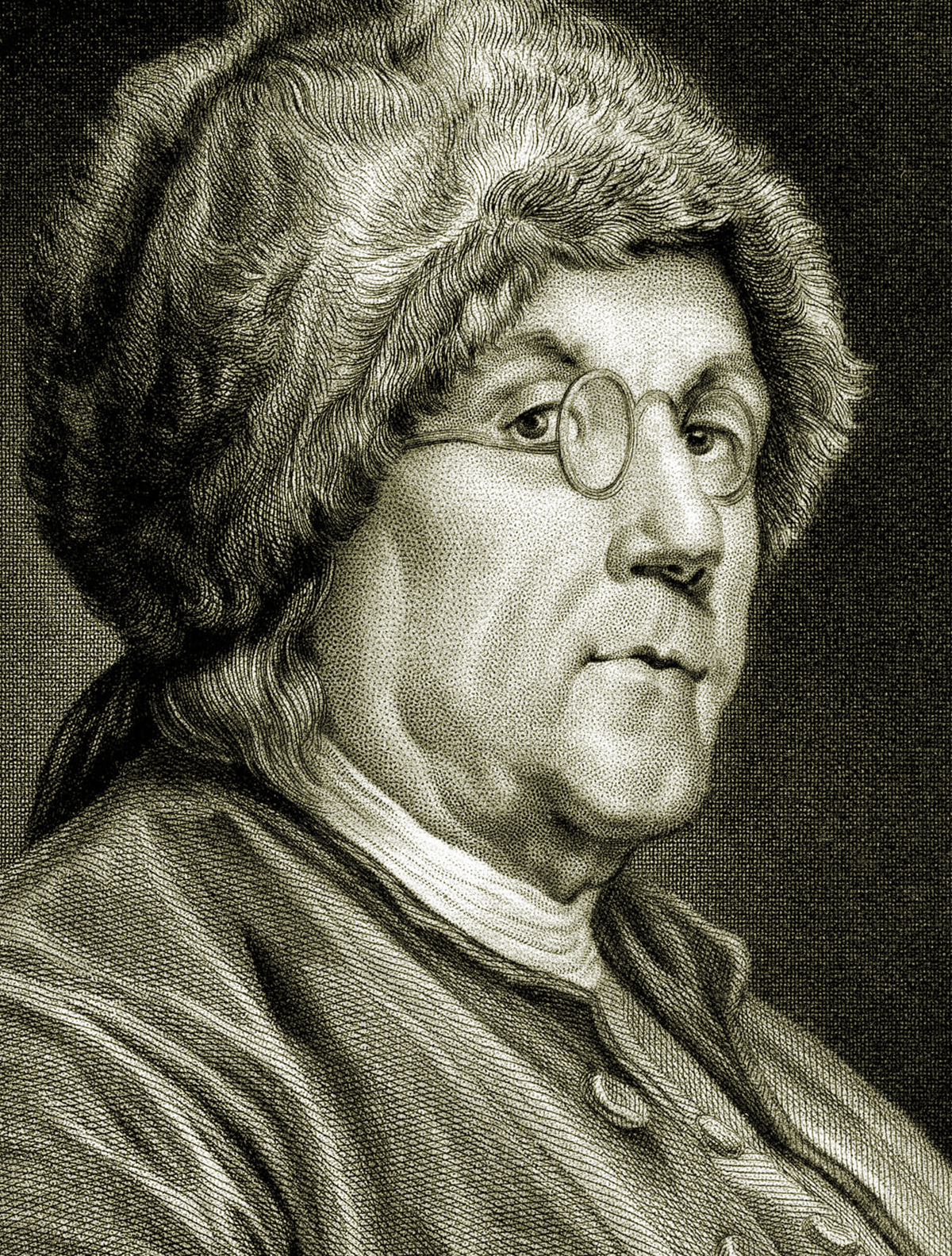
The most famous denizen of the London Coffeehouse was, ironically, an American: Benjamin Franklin. Franklin had a regular clan in the coffeehouse, a band of fellow iconoclasts that he would later dub “The Club Of Honest Whigs.” The club “consists of clergymen, physicians and some other professions,” wrote Samuel Johnson’s biographer James Boswell, who attended a few sessions. “Some of us smoke a pipe, conversation goes on pretty formally, sometimes sensibly and sometimes furiously: At nine there is a sideboard with Welsh rabbits and apple-puffs, porter and beer.”
Franklin relished his time with the Honest Whigs. He would write mournful letters from America in the last years of his life, reminiscing about the many days and nights he spent with the “honest souls” at the London Coffeehouse. But of all those over-caffeinated sessions in the shadow of St. Paul’s, one stands out as particularly significant. In late December 1765, he met a young minister and author named Joseph Priestley. It was the beginning of a friendship between intellectual soul mates who would revolutionize our understanding of the natural world. Franklin was already recognized as one of the great scientists of the century, though his reputation would grow in the coming years, thanks in large part to Priestley’s writings. At 32, Priestley was at the beginning of his career, but he was soon to embark on a series of experiments that would ultimately give him claim to the title of the man who “discovered oxygen.”
While Franklin is renowned for advancing mankind’s knowledge of the basic laws of electricity, his role in encouraging Priestley’s experiments and in helping make sense of what he discovered has been almost entirely ignored by both scientists and historians. Priestley initially set out to answer a chemistry question: What is air? But it was Franklin who helped Priestley understand that he was grappling with an even more profound mystery: why we have air to breathe in the first place.
Long overlooked correspondence between Franklin and Priestley gives us front row seats to a remarkable historical drama: two great minds grappling with the first stirrings of a genuinely new way of thinking about life on earth. Priestley’s experiments revealed that the air we breathe is not some unalienable physical phenomenon, like gravity or magnetism, but is rather something that has been specifically manufactured by plants. In turn, Franklin recognized that the manufacture of breathable air is itself part of a vast, interconnected system that links animals, plants and invisible gases. And the choices we make as humans—destroying trees that grow near houses, for instance—can have a dangerous impact on that flow, if the core participants in the system aren’t properly appreciated and protected. In discovering how Mother Nature had invented our atmosphere, Franklin and Priestley were inventing something just as profound: the ecosystems view of the world.
Priestley engineered an audience with Franklin and his fellow Honest Whigs because he had concocted an idea for a book on the history of electricity. As a small-town minister and teacher with a hobbyist’s passion for the new discoveries of “natural philosophy,” Priestley knew that no other field had generated so much scientific and practical innovation in such a short amount of time. But no one had written a popular account of these world-changing discoveries. So he set off to London, hoping to meet the “electricians”—as the scientists were popularly known—and to persuade them to let him tell the story of their genius. Franklin, naturally, was immediately supportive of the idea, and promised the young Priestley open access to his library and correspondence. But he and his friends took one additional step that proved crucial: They encouraged Priestley to conduct his own experiments while writing his history.
Hearing his idols urging him to write about his own experimental research and investigations opened up a whole new field of possibility for the young man. Priestley had arrived in London as a dabbler in natural philosophy, tinkering in the provinces with his electrical machine and his air pump. By the time he left, he was a scientist.
When The History and Present State of Electricity, With Original Experiments was published in 1767, the book instantly landed Priestley in that upper echelon of electricians that had welcomed him so warmly at the London Coffeehouse. It also played an important role in creating the legend of Franklin as maverick scientist: On page 160 of the original printing, Priestley tells the now canonical story of Franklin and the kite, the first time that story had ever been explicitly associated with Franklin in print.
Priestley would continue to pursue his research into electricity over the coming decades, but soon after the publication of the History, his primary focus became chemistry, specifically the study of air. Where his work in electricity had left him as a disciple of Ben Franklin, with chemistry he would quickly become Franklin’s superior as a scientist.
As a child, growing up in rural Yorkshire, Priestley had amused himself with the slightly sadistic pastime of trapping spiders in sealed glass jars and observing how long it would take the poor creatures to perish. The fact that organisms would invariably expire given a finite supply of air was well known to little boys and scientists alike. But the mechanism behind this process was a mystery. Did the creatures somehow exhaust the air they were breathing—in which case, what was left in the jar? Or were they poisoning their environment in some inexorable way? Strangely, the air in the jar didn’t visibly change after the animal’s final convulsions, though it did have one distinct, and puzzling, new attribute: A candle would consistently fail to light in it.
In the late spring of 1771, Priestley decided to try a new twist on his childhood experiment. If animals died swiftly in a sealed jar, how long would it take a plant to suffer the same fate? Could a plant outlast a mouse or a frog? Or would it prove more feeble in the contained environment of the jar? He went out into the garden, and pulled a small mint plant from the ground. He placed the mint in a glass jar that he had inverted over a pneumatic trough. And he waited, patiently, for the plant to expire.
To Priestley’s surprise, the plant stubbornly refused to die. In fact, the determined sprig of mint continued growing all summer long. And there were other mysteries. A candle would readily light in the jar alongside the mint. A mouse placed inside the jar with the plant could survive happily for ten minutes, while a mouse placed in a jar in which another mouse had previously expired would begin to convulse within seconds. Somehow the plant was disabling whatever it was that snuffed out the candle and suffocated the mouse.
Priestley wrote Franklin in the summer with an account of a new discovery—but the original letter has been lost, and so we don’t know with certainty that he was reporting on his mint experiments. All we know is that Franklin forwarded Priestley’s news along to John Canton, a member of the Club of Honest Whigs, with a note: “I have just received the enclos’d from Dr. Priestly. And as it contains an Account of a new Discovery of his, which is very curious, and, if it holds, will open a new Field of Knowledge.”
On Aug. 17, 1771, Priestley made a simple, but essential modification to his experiment. He suspended a lit candle in a cylinder over a fresh sprig of mint floating in a pool of water and then waited for the candle to burn through the supply of air in the container. On his return 10 days later, not only was the mint alive, but when he went to light a candle in the glass, he found that “it burned perfectly well in it.”
This was genuine news. Priestley’s first experiment had shown that plants failed to exhaust or poison the atmosphere the way living creatures did. But the flame burning next to the sprig of mint in the modified experiment suggested a far more radical proposition: that plants were restoring something fundamental to the air, or they were creating the air itself.
After performing numerous variations of the experiment Priestley was confident enough in his results to begin sharing the news with the Honest Whigs in the fall of 1771. “You may depend on the account I sent you of my experiments on the restoration of air made noxious by animals breathing it or putrefying it, which I sent to Dr. Franklin,” he wrote to the Rev. Richard Price on Oct. 3. “Air in which candles have burnt out is also restored by the same means.” By the summer of 1772, Priestley had cycled through a series of different plants to confirm that the restorative effect was not somehow specific to mint.
Franklin traveled to Leeds in June 1772 to visit Priestley, and brought along John Pringle, the Scottish physician who would soon be elected president of the Royal Society, England’s national academy of science. Priestley gave them the full tour of his experiments with restoring air, and the visit seems to have energized him all over again about the importance of what he had discovered. On July 1, he wrote to Franklin: “I have fully satisfied myself that air rendered in the highest degree noxious by breathing is restored by sprigs of mint growing in it. You will probably remember the flourishing state in which you saw one of my plants. I put a mouse to the air in which it was growing on the saturday after you went, which was seven days after it was put in, and it continued in it five minutes without shewing any sign of uneasiness, and was taken out quite strong and vigorous.”
While others might have viewed Priestley’s discovery as a clever parlor trick, Franklin had a hunch that it opened a whole new way of thinking about the planet and its capacity for sustaining life. The first indication of that hunch comes in a note he wrote to Priestley after the June 1772 visit: “That the vegetable creation should restore the air which is spoiled by the animal part of it, looks like a rational system, and seems to be of a piece with the rest. Thus fire purifies water all the world over. It purifies it by distillation, when it raises it in vapours, and lets it fall in rain; and farther still by filtration, when, keeping it fluid, it suffers that rain to percolate the earth. We knew before, that putrid animal substances were converted into sweet vegetables, when mixed with the earth, and applied as manure; and now, it seems, that the same putrid substances, mixed with the air, have a similar effect. The strong thriving state of your mint in putrid air seems to shew that the air is mended by taking something from it, and not by adding to it.”
In this last hypothesis, Franklin had it half right: The plant was taking and adding at the same time, producing oxygen and absorbing carbon dioxide. But his instincts about the fundamental concept were uncanny: The mint’s capacity for rejuvenating “putrid” air was part of a system that extended far beyond an isolated laundry sink in Leeds. Franklin saw the whole story almost immediately: Priestley’s discovery was a key to understanding the cycle of life on earth.
Franklin’s speculation about the wider consequences of Priestley’s experiment was a fitting continuation of their intellectual duet: Franklin created Priestley, the scientist; Priestley popularized the legend of Franklin, daring electrician; and now Franklin was helping Priestley grasp the full significance of his discovery.
Franklin also advanced Priestley’s experiment in one other crucial respect. He took the insight about the connected web of life, and immediately recognized that it would have implications for human actions.
Just two years before, the Scottish physician William Buchan had published a best-selling reference guide, Domestic Medicine, Or a Treatise on the Prevention and Cure of Disease by Regimen and Simple Medicines. The book became an instant fixture in British (and soon after, American) households, turning Buchan into the “Dr. Spock” of his day. Buchan had an entire chapter on the dangers of “unwholesome airs,” which included this warning: “Surrounding houses too closely with planting, or thick woods, likewise tends to render the air unwholesome. Wood not only obstructs the free current of the air, but sends forth great quantities of moist exhalations, which render it constantly damp. Wood is very agreeable at a proper distance from a house, but should never be planted too near it, especially in a flat country. Many of the gentlemen’s seats in England are rendered very unwholesome from the great quantity of wood which surrounds them.”
Franklin’s letter to Priestley takes dead aim at this pseudoscience. After noting the global implications of the mint experiment, Franklin goes on to suggest how human behavior will have to be altered in light of the discovery, an embryonic version of modern-day Green politics: “I hope this will give some check to the rage of destroying trees that grow near houses, which has accompanied our late improvements in gardening, from an opinion of their being unwholesome. I am certain, from long observation, that there is nothing unhealthy in the air of woods; for we Americans have every where our country habitations in the midst of woods, and no people on earth enjoy better health, or are more prolific.”
In the fall of 1772, with Franklin’s encouragement, the Royal Society voted to award Priestley the Copley Medal, the most prestigious scientific prize of its day, “on account of the many curious and useful Experiments contained in his observations on different kinds of Air.” In awarding the prize, John Pringle delivered an unusually long speech that centered on Franklin’s earth-systems interpretation of the mint experiment: “In this the fragrant rose and deadly nightshade co-operate; nor is the herbage, nor the woods that flourish in the most remote and unpeopled regions unprofitable to us, nor we to them; considering how constantly the winds convey to them our vitiated air, for our relief, and for their nourishment.”
One question remains. If the collaboration between Priestley and Franklin produced such a significant breakthrough, why is it so rarely celebrated? Priestley was genuinely the first to discover that breathable air was a concoction of plants, and with Franklin’s help, he was able to grasp and describe the far-reaching consequences that process would have on our understanding of earth’s environment. These were foundational insights that led to world-changing ideas that rippled through science and society. Yet Priestley himself is far better known for a later set of experiments in which he produced pure oxygen by using a magnifying glass to focus the sun’s rays on a sample of the compound mercuric oxide. And Franklin’s role in the discovery of plant respiration and its broader implications goes entirely unmentioned in any of the major biographies.
The answer to this riddle lies in one central fact: The new science unleashed by Priestley’s mint experiment took almost 200 years to evolve into a coherent discipline. What Priestley had hit upon was not a simple element, like oxygen, or a fundamental law, like Franklin’s discovery of the conservation of electrical charge. What Priestley and Franklin had grasped was something more complicated, more inchoate: a global system, a new awareness that our environment was not merely a given of life on earth, but something actively manufactured by other life forms. But it would take more than a century for that vision to resolve itself into a genuine science: The word “ecosystem” wasn’t even coined until the 1930s, when an Oxford botanist named Arthur Tansley asked a colleague to come up with a name for the complex interactions between organisms and their physical environments. The modern environmental movement prefigured in Franklin’s aside about the dangers of chopping down too many trees wouldn’t blossom for another 40 years after that. Legends form more easily around epiphanies that produce results shortly after the eureka moment. The pantheon is not always so kind to breakthroughs that take two centuries to change the world.
It is more understandable that Franklin’s biographers should ignore his contribution to the birth of ecosystems science. In natural philosophy alone, the list of Franklin’s accomplishments is formidable enough, and the original experiment with the mint plant was all Priestley’s design. Yet Franklin’s contribution was essential, and it serves as a reminder that great intellectual breakthroughs rarely come in the form of isolated epiphanies, the solo genius working alone in his lab. More often than not they emerge out of the interplay between different kinds of minds approaching the same problem from different angles. Priestley was brilliant at concocting novel experiments, but he was never a great theorizer; Franklin took the puzzling results of his friend’s experiment and elevated them to a more rarified sphere: a profound new truth about the way the world works.
Franklin described the value of intellectual exchange wonderfully in a letter written in 1753—the year he received the Copley Medal—defending his decision to publish his scientific discoveries as rapidly as possible, in some cases before he could fully confirm their validity: “Even short Hints, and imperfect Experiments in any new Branch of Science, being communicated, have oftentimes a good Effect, in exciting the attention of the Ingenious to the Subject, and so becoming the Occasion of more exact disquisitions…and more compleat Discoveries.”
The “attention of the Ingenious”—the phrase describes perfectly what Priestley secured for his experiments when he first befriended Franklin in the London Coffeehouse. Together they hit upon a “more compleat Discovery,” one that grows increasingly influential, the more we learn about the complex interdependencies of life on earth. In 1767 Priestley grasped the value of popularizing the story of the kite in the lightning storm as an inspiring tale of great scientific ingenuity and bravado. More than two centuries later, it’s time we did the same for the mint in the glass.