FROM THE FORTHCOMING BOOK THE AMERICAN FUTURE: A HISTORY. COPYRIGHT 2009 BY SIMON SCHAMA. TO BE PUBLISHED MAY 19, 2009, BY ECCO, AN IMPRINT OF HARPERCOLLINS PUBLISHERS.
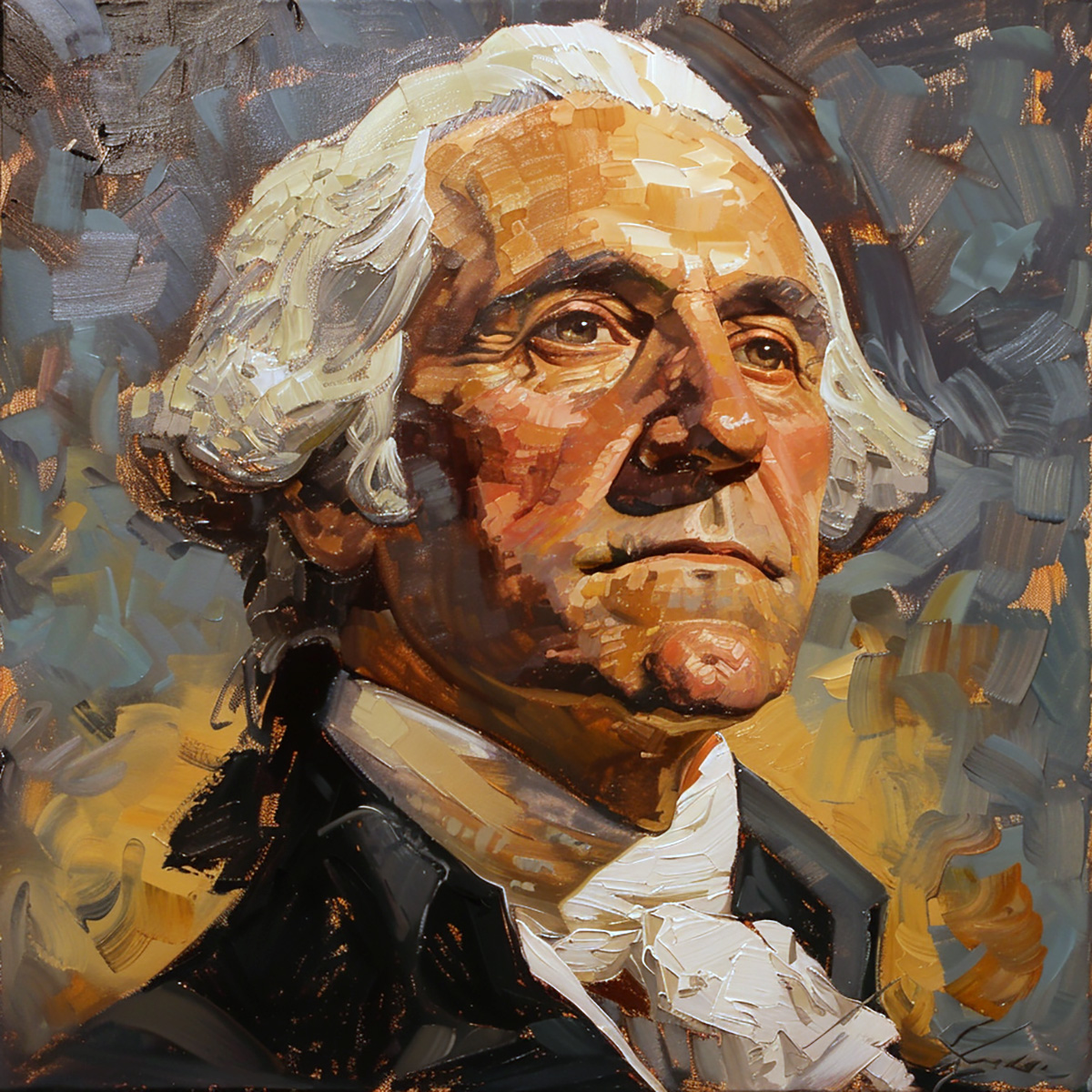
In the dog days of August 1790, President George Washington paid a courtesy visit to Newport, Rhode Island. The purpose of his journey was partly emblematic. The first Congress of the United States, following the adoption of the Constitution, had adjourned for the summer recess, and Washington was minded to show the people the face of their president. The morning walkabout (with Washington apparently setting a clip that fatigued those trying to keep up with him “fortified by wine and punch” at four different houses) was especially meaningful to Newport, which had suffered heavy losses of material, building fabric and population during the Revolutionary War. In the autumn of 1776, the British had occupied the port to preempt it becoming an American base from which an attack on New York, their strategic jewel and hostage, could be mounted. Repeated attempts by American forces to retake the city failed, and when the British finally evacuated in 1781, Newport was a shell of its wealthy mercantile former self. Half of its prewar population of 9,000 had gone, dispersed elsewhere in New England and the mid-Atlantic states, never to return. The least he could do, the new president figured, was to offer in his person some encouragement for Newport’s restoration.
But there was another reason for Washington to go to Rhode Island and that was to gin up the state’s ratification of the Bill of Rights, the first 10 amendments to the Constitution. Though minute in territory, Rhode Island, as Washington knew, had mixed feelings about the Union. Its citizens were notoriously protective of their idiosyncrasies, and were joked about as “Rogue Islanders” elsewhere on the Eastern seaboard, especially in neighboring Massachusetts. Though its merchants and seamen had been the first to take violent resistance to the British, firing on their ships as early as 1772 and again in 1774, and had also been the first to make a formal break from allegiance to the Crown, Rhode Island was the last of the 13 states to ratify the Constitution, refusing to send delegates to the convention in Philadelphia. Only the threat of being treated as a foreign nation, and made subject to customs duties, overcame their pesky reluctance at being integrated into the new Union.
So the president was paying a call on the dog-in-the-manger of the United States and he was not taking anything for granted. Rather, he was doing what all successful presidents have done ever since: making his presence felt in American cities that had gone through hardship, glad-handing the people, drinking with them (very important), promising a better future and diplomatically giving the prickly Rhode Islanders a sense that they were being personally consulted on the amendments to the Constitution.
Of particular interest to Rhode Islanders, most notably the Jews of Newport, was the declaration in the First Amendment of the Constitution that “Congress should make no law respecting an establishment of religion, or prohibiting the free exercise thereof.” With that declaration, the framers of the Constitution sought to ensure that while religious visionaries are free to shout their dreams from the mountaintops, they are not at liberty to impose them on their fellow citizens. At the outset, since the amendment referred only to Congress, individual states could choose to support religious bodies and even interfere with the practice of religion. Nonetheless, the First Amendment embodied a bet with posterity that by keeping the church from directing government, or government from compromising theology, religion might actually flourish rather than wither.
Much of American history has been the vindication of that gamble. In the post-9/11 era, the implications of the First Amendment have, inadvertently or not, backed America into the great question on which the peace of the whole world, not just the United States, will turn: Can those claiming a monopoly on religious wisdom be prevented from imposing it on others? The fact that the Founders’ daring bet paid off makes America uniquely qualified to fight the most important battle of the 21st century: the war of toleration against conformity; the war of a faith that commands obedience against a faith that promises liberty.
One section of the Newport community was especially eager to pay their respects to Washington: the Jews of the Kahal Yeshuat Yisrael. Many of them had departed with their fellow citizens at the time of the British occupation, leaving only a few like the parnas (warden) and banker Moses Seixas to protect the deerskin Torah and the fabric of the Touro Synagogue from harm, notwithstanding the latter’s appropriation for storage of arms and ammunition, making it a prime target for enemy guns. The Seixases were a little Jewish empire all to themselves. Originally from Lisbon, they had dispersed during the Revolution to Connecticut, New York and Philadelphia where Moses’ pious brother Gershon was haham (rabbi), hazzan (cantor), mohel (circumciser) and shochet (ritual slaughterer), a full service minister to the community. Benjamin, another brother, had been an officer in the New York militia. You didn’t get any more Judaeo-patriotic than the Seixases. So it was natural for Moses to seize the moment of Washington’s visit to clear up one or two matters concerning the First Amendment.
The letter he penned on August 17 for presentation to the president the following day was a nosegay of praise to the Father of the Nation (and not before time, since the Jews of the several American congregations had been tardy in offering congratulations on Washington’s inauguration earlier that year—but then getting a handful of kehillot, community leaders, to sign on the same page of anything counts as a miracle). Between the lines Seixas was also seeking clarification. Had the great day finally arrived when Jews would be treated as all other citizens? Could they now be magistrates, councilors, constables? Above all, could they now vote?
Being “the stock of Abraham,” Seixas took an ornamentally Hebraic tone with the general, reflecting on “those days of difficulty and danger when the God of Israel, who delivered David from the peril of the sword shielded Your head in the day of battle…and we rejoice to think that the same Spirit who rested in the Bosom of the greatly beloved Daniel enabling him to preside over the provinces of the Babylonish Empire, rests and will ever rest upon you.” That must have softened the old boy up—visions of David at Yorktown; President Daniel. Then the nub of the matter: “Deprived as we heretofore have been of the invaluable rights of free Citizens, we now with a deep sense of gratitude to the Almighty disposer of all events behold a Government erected by the Majesty of the People, a Government which to bigotry gives no sanction, to persecution no assistance—but generously affording to all Liberty of conscience and immunities of Citizenship—deeming every one, of whatever Nation, tongue or language equal parts of the great governmental Machine—This so ample and extensive Federal Union whose basis is Philanthropy, Mutual Confidence and Public Virtue [nice touch that, putting tzedakah, righteous charity, first in the Masonic trio], we cannot but acknowledge to be the work of the Great God who ruleth in the Armies of Heaven.” Cleverly Seixas wasn’t asking. He was in this manner merely describing what he took to be self-evident, leaving Washington to demur if he must. “For all these Blessings of civil and religious liberty which we enjoy under an equal benign administration, we desire to send up our thanks to the Ancient of Days.” (God, not the president.) May he like Joshua when gathered to his Fathers be admitted into “Paradise to partake of the water of life and the tree of immortality.”
Washington loved this kind of thing. The next day, after an all-out dinner in the Old State House, he responded to Moses Seixas in a way designed to make Yeshuat Yisrael happy. “The Citizens of the United States of America have a right to applaud themselves for having given to mankind examples of an enlarged and liberal policy: a policy worthy of imitation. All possess alike liberty of conscience and immunities of citizenship.” And then came Washington’s endorsement of the presumption that active citizenship for all Americans was indeed what was understood in the Constitution and the Bill of Rights. America was the republic in which toleration was not bestowed as an “indulgence of one class of people” to another but the “exercise of their inherent national gifts.” Then Washington simply lifted the Jew’s lovely characterization of a nation “which gives to bigotry no sanction, to persecution no assistance” and rather grandly failed to acknowledge (or perhaps notice) that he had taken it from Moses Seixas’ letter. Not until the poet Emma Lazarus came along would a Jew manage to supply so perfectly felicitous phrasing for what the United States was supposed to stand for. Rest assured, the president concluded, in this benign state of affairs, every one of the “Stock of Abraham” “shall sit in safety under his own vine and fig tree and there shall be none to make him afraid.” A neat touch this, straight from the prayer book of the psalmist. Well, Washington had just been compared to David.
Now vines and fig trees were all very nice, especially if you lived oceanside in Rhode Island, but did this mean that Jews could, after all, be eligible to be magistrates, have the vote? It can hardly have escaped the Jews of Newport that this was emphatically not the case elsewhere. And there was the rub. Until the passage of the 14th Amendment at the end of the Civil War, the Constitution gave states the right to determine qualifications for state and local elections. The Jews of Baltimore, for example, had to wait until 1826 for the Maryland “Jew Bill” to clear matters up and allow them to participate in politics.
There was someone else on hand in Newport on August 18, for whom this little exchange was of more than casual interest: Secretary of State Thomas Jefferson. Jefferson knew better than to steal the president’s thunder and diligently played second fiddle to Washington’s stentorian brass. But this particular turn in the proceedings had a special significance for him. The fight to keep matters religious and matters of state apart, to institute toleration and equal rights for those of all beliefs or none, was not, for Jefferson, nor for his friend James Madison, a revolutionary afterthought. It was the revolution just as much as the institution of democracy itself.
Jefferson realized that not everyone in America felt the same way, especially his personal bugbear: John Adams. The constitution of Massachusetts, drafted by Adams, ratified in 1780, and generally remembered as a mild and equitable treatment of religion, was, in fact, nothing of the sort. In Article III, Adams decreed that “the happiness of a people and the good order and preservation of civil government, essentially depend upon piety, religion and morality.” Since “these cannot be generally diffused through a community but by the institution of the public worship of God and of public instructions in piety, religion and morality…to promote…and secure the good order and preservation of government, the people of this commonwealth have a right to invest their legislature with the power to authorize and require the several towns, parishes, precincts and other bodies politic or religious societies, to make suitable provision at their own expense, for the institution of the public worship of God and for the support and maintenance of public Protestant teachers of piety, religion and morality, in all such cases where such provision shall not be made voluntarily.” Notice the Protestant. Catholic worshippers and schoolteachers expecting public funding, much less Jews or “Mahometans,” could not expect to be provided for. Notice also the element of compulsion Adams has smuggled in. The good people of the commonwealth could volunteer to finance churches and religious schools, but should they wish to opt out, they would be taxed for that purpose anyway.
Such compulsion is exactly what Jefferson sought to avoid when he authored the Virginia Statute of Religious Freedom, arguably the greatest and bravest thing he ever wrote. “Whereas Almighty God hath created the mind free,” he proclaimed, “all attempts to influence it by temporal punishments or burthens or by civil incapacitations tend only to beget habits of hypocrisy and meanness and are a departure from the plan of the holy author of our religion who, being Lord of both body and mind yet chose not to propagate it by coercions on either.” Thus, Jefferson continues, it is only the presumptuous impiety of weak men and rulers to usurp the Almighty’s sovereign power and presume to do what he refrained from. “To compel a man to furnish contributions of money for the propagation of opinions in which he disbelieves is sinful and tyrannical; that even the forcing him to support this or that teacher of his own religious persuasion is depriving him of the comfortable liberty of giving his contributions to the particular passions he feels most persuasive to righteousness.”
As Jefferson warms to his task, the modern reader can feel the indignation and contempt rising in him for all those who needed to support their views, religious or otherwise, with anything other than the pure force of their truth and wisdom. Jefferson was addressing something more than the cramped and timorous prejudices of the day. He was steaming ahead into dark modernity with a coda that was imperishably connected to what America stood for over the long haul of history. “Truth is great and will prevail if left to herself,” wrote Jefferson, encapsulating the proper meaning of the nation’s existence in a statement that schoolchildren ought to recite each day instead of the mindlessly reverent Pledge of Allegiance. “She is the proper and sufficient antagonist to error, and has nothing to fear from the conflict unless by human interposition disarmed of her natural weapons, free argument and debate, errors ceasing to be dangerous when it is permitted freely to contradict them.”
Truth did not prevail, left to itself, at least not immediately. When Jefferson penned his first draft of the statute in 1779, it was shelved by the Virginia Assembly for the duration of the Revolutionary War, largely due to the vocal opposition of the man who had postured rhetorically, “give me liberty or give me death”: Patrick Henry. Jefferson doubtless took some comfort from the fact that the assembly also denied Henry his motion to support religious teachers from public funds. Ironically, it took Henry’s obstinate postwar revival of his “general assessment” scheme for Jefferson’s less glamorous, but more politically astute colleague James Madison to successfully steer the Statute of Religious Freedom through the Virginia Assembly. And it was the passion of backcountry Baptists and Presbyterians, dissenters who had a strong interest in making sure that what had been the favored British-dominated ecclesiastical order disappeared with the Revolution, that made the difference. More than 100 petitions, bearing 11,000 signatures against Henry’s proposal, poured into the assembly toward the end of 1785 and bolstered Madison’s argument that religious pluralism was “the best and only security for religious belief in any society, for where there is such a variety of sects, there cannot be a majority of any one sect to persecute and oppress the rest.”
For both Madison and Jefferson, moreover, that “variety” extended beyond Christians. In his autobiography Jefferson made it clear when referring to those who had wanted to insert before the words “author of our holy religion” the qualifier “Jesus Christ,” that the protection offered by the statute “was meant to comprehend…the Jew, the Gentile, the Christian, the Mahometan, the Hindu and infidels of every denomination.” Remarkably, this pluralism was reaffirmed during the administration of John Adams, when a treaty made with the bey of Tripoli in November 1796 affirmed that “as the United States is not in any sense founded on the Christian religion it has no character of enmity against the laws, religion and tranquillity of Mussulmen.” In retrospect, it’s a pity that apparently the translation into Arabic failed to convey the forthrightness of that profession. Nonetheless, the treaty passed muster in Congress with no votes against it, and the religiously inclined President Adams signed it in 1797.
Three years later, however, Adams was happy enough to run for re-election with the help of a smear campaign designed to represent Jefferson as a Jacobinical atheist. “GOD or JEFFERSON AND NO GOD” ran the flyers. Jefferson won a three-way contest anyway after a protracted count in the Electoral College. But what is often overlooked is that the forgotten third man in the election, Charles Cotesworth Pinckney, had himself steered one of the most tolerant statutes on religious liberty through the legislature of South Carolina, making that one of the few states where Jews could indeed hold public office, not an academic point given the presence of a lively community and handsome synagogue in Charleston.
Ultimately, the separation of church and political rights across the United States involved a long drawn out process, with states like Massachusetts and Connecticut aggressively patrolling religion and public morals long after the passage of the First Amendment in 1791. Ironically, Virginia was slow to ratify the First Amendment because it offered only “inadequate” protection against the dominance of a single sect. But throughout the 19th century, those still excluded from public office—especially Jews and Catholics—could sue under the terms of the First Amendment and often won. As for President Jefferson, he was happily unrepentant, knowing that the Virginia statute gave encouragement to those elsewhere in the country who would now campaign for their states to follow its example. He was especially happy to receive, on New Year’s Day morning 1802, from the Massachusetts Baptist preacher John Leland, a gift of a 1,200-pound, bright red Cheshire cheese, made by the grateful farmers of Cheshire, Mass. That afternoon, a sated and happy Jefferson penned a letter to the Baptists of Danbury, Conn., also engaged in bringing the spirit and letter of the Virginia statute to their state. “Believing with you that religion is a matter which lies solely between Man & his God,” the president wrote that he contemplated the First Amendment with “sovereign reverence” establishing as it did “a wall of separation between church and state.” In his first draft of the letter (for Jefferson seldom dispatched anything in a single draft) he had written “eternal” before “wall.” But Jefferson knew full well that even, or especially, in the United States, nothing was eternal.
Simon Schama has written 14 books, including Rough Crossings: Britain, the Slaves and the American Revolution, which won a 2007 National Book Critics’ Circle Award. A four-part series based on The American Future: A History will soon air on PBS.