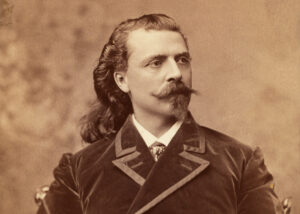
Admiral Jean Francois Darlan, leader of the armed forces
of Vichy France, was assassinated in Algiers in 1942.
By Kelly Bell
When Anglo-American armies invaded North Africa in November 1942, the objectives of Operation Torch far exceeded merely clearing the region of operational Axis forces. Besides the crucial objectives of obtaining a jumping-off point for the later invasions of southern and western Europe, and establishing a secure base for the strategic bombing offensive, there was the matter of heading off any establishment of revolutionary leftist movements or governments that might prove a prickly postwar problem. With the international tide finally beginning to turn against the Axis, the emergence of the opposite, Communist extreme in newly de-Nazified countries was a disagreeable possibility.
The situation moved American President Franklin D. Roosevelt to recognize the collaborationist (but right-wing) Vichy French government of Marshal Philippe Petain, and to assert to his allies that the United States would assume the dominant role in the reconstruction of postwar Europe.
British Prime Minister Sir Winston Churchill shared Roosevelt’s detestation of communism and had no major objections to America’s receiving the lion’s share of the say in the settlement of European matters when peace returned. However, FDR’s recognition of Vichy placed Churchill in an awkward position because of his commitment to the Free French government-in-exile of General Charles de Gaulle. Because of animosity between Roosevelt and de Gaulle, Churchill was forced to walk a tightrope to remain on good terms with both and to otherwise maintain unity in the anti-Hitler coalition.
Never was this more difficult than during Operation Torch. Roosevelt refused to allow de Gaulle to participate in the liberation of his own country’s territories, and not solely for personal reasons. FDR blamed de Gaulle for the almost total lack of organized French Resistance in North Africa to the Germans or Vichy. With the limited resources at his disposal, the French general had been unable to set up a Resistance network of any consequence in Africa, and the president’s attitude complicated the delicate political situation unfolding as the Free World coiled to strike back at its Nazi tormentor.
In June 1940, as his country reeled under the grinding, hobnailed boot of its ancestral German enemy, Admiral Jean François Darlan commanded France’s navy. After the fall of France, Darlan quickly became a key figure in the collaborationist Vichy regime, and two years later Roosevelt hoped he might be wooed into again switching sides and aligning himself with the Allies. Because of FDR’s choosing him as a French leader, Darlan did appear to be the one high-ranking Vichyite in a position to collaborate with both sides while still serving his own interests. While Roosevelt had no great affection for Vichy or its leaders, the Americans maintained the relationship on a day-to-day basis because of shared anti-Communist sentiment and for the valuable information Vichy periodically provided them. It was also hoped American influence might deter borderline French collaborators from going completely over into the German camp.
It is also probable that Roosevelt saw in Darlan the ideal pawn for his postwar plans for France–a country for which the president had low regard. He not only favored stripping the French of their sprawling overseas empire but intended to carve up the nation, significantly reducing its area, to deny France any part in the eventual peace settlement, membership in the United Nations, or role in the postwar occupation of Germany. Darlan evidently struck Roosevelt as a malleable puppet whom he could use to further his ideas for postwar France.
In April 1942, the admiral was ousted by his rival, Pierre Laval, from all positions except commander in chief of the French armed forces. By this time Darlan, who realized he needed an ally, had begun to sense the latent power of America. He had also noted Hitler’s initial military difficulties in the Soviet Union, and predictably withdrew increasingly from the Axis cause now that his prior assumption that Hitler would win the war was doubtful. Darlan adopted a borderline, mugwumpish stance to await developments that would indicate definitely which side would be the final victor, and hence his ally. This ambiguity fueled British mistrust and frank loathing as well as a desire to rid themselves of this worrisome opportunist.
Unfortunately, the British had irretrievably alienated themselves from the Vichyites on July 3, 1940, when Churchill unleashed the Royal Navy on the French fleet moored at Mers el-Kebir, to prevent its falling intact into Axis hands. Furthermore, the British blockade of Vichy ports raised hackles on both sides of the Atlantic; Roosevelt’s indignation increased when his ambassador to Vichy, Admiral William Leahy, erroneously reported that the French populace was united behind Petain and opposed to de Gaulle.
Roosevelt refused to be swayed, and when Operation Torch commenced on November 8, he immediately began dealing with Darlan through his roving emissary in North Africa, Robert Murphy, as if the admiral were the legitimate, internationally recognized head of the French administration. Indeed, on December 12 an unsurprised Churchill was informed of FDR’s stated intention “to work with Admiral Darlan for a very long time…at least until the end of the war in Europe.”
On May 14, 1941, three days after an affable meeting with Hitler, Darlan had broadcast to his countrymen that only within the confines of a victorious Third Reich could Vichy survive and secure “an honorable, one might say an important, role in the Europe of the future.” Two weeks later he told France that “Germany was a better friend than Britain could ever be.” Yet even these hostile proclamations had done nothing to shake Roosevelt’s pro-Vichy inclinations.
By mid-1942, British intelligence services had noted a rather large community of youthful, pro-Allied expatriates living in some of the larger North African cities. Fleeing the German conquest of their French homeland, these disgruntled people were fervently anti-Nazi, and the British hoped they could be used as a saboteur-partisan force when the Torch landings came in autumn.
Taking it for granted that all French collaborators were favorably disposed to Allied intervention, FDR assumed Torch would be a cakewalk; but knowing they would eventually encounter both German and hostile Vichy defenders, the generals preparing to lead the invasion never expected it to be easy. An effective, well-armed force of highly motivated freedom fighters operating from behind the front would be a great asset for the invaders. The British perceived another use for irregulars. Although they conceded the government of a liberated North Africa did not necessarily have to be pro-de Gaulle, it would need to be non-Vichy. The rabidly anti-Vichy expatriates would not object to the expulsion of collaborators from the postliberation government. Furthermore, since they were French rather than English or American, they were politically attractive potential assassins if it should ultimately become expedient to kill Darlan.
It had been hoped Darlan was among the casualties of the Royal Navy attack at Mers el-Kebir, but he had not been present. Almost 1,300 French seamen were killed in the engagement, with the result that innumerable wavering Frenchmen, convinced Britain was indeed a worse enemy than Germany, rushed into the arms of Darlan. His power continued to increase, and two years later it was decided he would have to be eliminated.
Darlan had deviously taken steps to assure he could again switch sides if he so chose. He refused to commit his remaining fleet, based at Toulon, to either side. This was significant in light of the Royal Navy Mediterranean fleet’s losses in the spring of 1941 and during the Crete campaign. At this point, active support by the French navy might well have given Hitler control of the Mediterranean, but this step was not forthcoming from Darlan. He was waiting to be bribed. Hitler was infuriated by Darlan’s crafty political maneuvering, but with the colossal invasion of the Soviet Union approaching, he was in no position to risk alienating his Vichy vassals–precisely as the admiral had foreseen. The possibility that Hitler might buy Darlan’s support in the future was noted in Washington and London.
While the Germans had little alternative to tolerating Darlan’s maneuvering, the American response was to try harder to bribe him. The British, however, came to believe that if Darlan acquired sufficient power to affect the outcome of the war, he would have to be violently removed.
While Darlan rode the fence, the British counterintelligence and sabotage organ, the Special Operations Executive (SOE), began plotting his demise. In June 1942, an internal memorandum circulated within the organization outlining its subversive action policy. “One of the really great virtues of this new instrument of war [SOE] is that you can use it without committing His Majesty’s government,” the paper said. “Even if there is a suspicion that HMG may be behind any subversive movement, there is usually no proof to that effect; even if there is proof that British authorities are responsible the necessary gestures of repudiation can be made.” The essence of SOE is easily gleaned from the standard pronouncement given new recruits: “You shouldn’t object to fraud–and you mustn’t object to murder.”
Early in 1942, Darlan’s virtual banishment from metropolitan France by Laval, who was increasingly influential over the aged, ailing Petain, forced him to become dependent on American support. Fortunately for Darlan, it was Roosevelt’s intention to divorce Vichy Africa from all Axis connections and exploit the situation for his own wartime and postwar purposes, and he needed a dependable minion to manage it for him. It was evident that the admiral had the U.S. sponsoring he required. It was not apparent to him alone, and as summer faded into the pivotal autumn of 1942, events began moving quickly in the complex North African theater.
Clutching the invaluable title of military commander in chief, Darlan arrived in the Algerian seaport Oran on October 2 and within days was scheming with Robert Murphy, FDR’s emissary, to consolidate total power. Darlan evidently believed that if he could convince FDR to immediately bestow upon him complete political control of North Africa, he could return to France as head of state after the war. In exchange, he offered to “entrain” his Toulon fleet to southern Mediterranean ports, presumably to be placed at the service of the Americans.
Murphy was caught in the awkward position of having to deal with Darlan without alienating another powerful Frenchman–de Gaulle’s rival for control of Free French forces, General Henri Giraud. Yet on October 17, Roosevelt effectively rejected Giraud, a staunchly anti-Nazi French patriot, by authorizing Murphy to conclude any agreement with Darlan he felt would aid Allied military operations. To further complicate the situation, nobody bothered to inform the SOE or U.S. Army General Dwight D. Eisenhower, supreme Allied military commander, of these instructions to Murphy.
Darlan gained further Washington support by passing on certain important information to Murphy–later confirmed by Allied intelligence–that he had gleaned from his German and fellow Vichy contacts. Darlan grabbed American attention by revealing he knew that the Wehrmacht fully intended to resist to the best of its ability any invasion of North Africa. He gave his sponsors further incentive to listen by hinting that Spanish dictator General Francisco Franco was considering entering the war on the side of the Axis. This convinced the Americans that they were dealing with a very valuable Frenchman and, along with lingering doubts about the local French military’s possible reaction to the coming invasion, moved Eisenhower to dispatch Maj. Gen. Mark Clark to meet with Darlan in mid-October. Clark hoped to learn everything else Darlan knew and was empowered to offer virtually anything in exchange for his allegiance.
During the night of October 21, the Royal Navy submarine Seraph landed eight American and British officers on the chilly beach at Cherchell, 42 miles west of Algiers. Commanded by Clark, these officers had been charged with assuring a friendly or at least indifferent overall French reaction to Operation Torch. Clark spoke no French, did not know the country or its peoples’ way of thinking, and was serving in a diplomatic capacity quite unfamiliar to him. His selection for this mission presumably was motivated by his being Eisenhower’s deputy commander in the field, and the supreme commander may have felt it would require someone of such standing to banish any lingering doubts Darlan may have had about his own bargaining position.
The admiral’s son, Alain, was critically ill with poliomyelitis, and it was hoped an offer of advanced medical aid would further sway Darlan into siding with the Allies. Although he seemed eager to accept the proposed hospitalization for his boy, he remained tight-lipped on what the Vichy reaction to the invasion would be.
By October 23, the second battle of El Alamein was underway, and within 10 days the Germans were in full retreat toward Tunisia. This would seem to have been the sort of development that would strengthen the likelihood of the admiral’s joining the Allies. Still he waited.
Resistance groups might be able to seize and secure Algiers, but there was little doubt the irregulars would be unable to withstand a counterattack from the powerful Vichy Service d’Ordre Legionnaire (SOL: Vichy’s version of the SS) garrison. The tenuousness of the partisans’ potential hold on Algiers would make quick assistance from the advancing invasion force imperative.
On October 28, Darlan arrived in Algiers to await further developments that would give him a clearer picture of what moves would be in his own best interests. By this time the American troop convoys were in the mid-Atlantic and at risk of detection by U-boats. Ship-cluttered Gibraltar was a dangerously conspicuous sign that an invasion was coming, but Darlan still declined to commit himself. The possibility of coordinated French resistance to the landings was real and dire, and with this in mind an agitated Murphy, despairing of de Gaulle’s or Giraud’s abilities to command more local French obedience than Darlan, cabled Washington to plead for the assault to be postponed for two weeks. With no room for the approaching convoys at Gibraltar and the Atlantic thick with wolfpacks, there was no realistic alternate destination for the flotilla. Roosevelt shot back the only possible reply: “The invasion must proceed; it cannot be delayed.” Giraud, meanwhile, was convinced he was the Frenchman of destiny.
Late on the night of November 2, the British sub Minna made the first attempt to land weapons for the Algiers partisans, but the insurgents failed to show for the rendezvous. Two later attempts were similarly unsuccessful, and the SOE and the American Office of Strategic Service (OSS) began to realize these delivery attempts would never succeed because of the recipients’ understandable fear of being detected by the numerous German and Vichy night patrols. By the time of the initial Allied landings on November 8, the partisans still had not received their arms.
Still in Algiers, Darlan was closely watching developments. His powers already seemed consequential, for as the British Foreign Office noted at the time: “Frenchmen everywhere are looking for a new center of authority.” Although this pronouncement was a thinly veiled plea for Gaullist unity, it correctly evaluated another situation. For the moment there was a French power vacuum that Darlan was dangerously close to filling. Because of his mighty supporters in distant Washington, he was on the verge of becoming perhaps a greater threat than Rommel to the Allies in North Africa.
At dawn, November 8, 1942, shoals of green American troops swarmed ashore on Algerian and Moroccan beaches without the slightest idea what resistance to expect. Darlan’s refusal to align himself with, or confide in, anybody rendered intelligence reports useless, since agents could only guess at his intentions, forcing the invaders to assume the worst. Roosevelt had remained unmoved by Churchill’s reports that Darlan was motivated solely by self-interest and that FDR’s antagonism toward de Gaulle was depriving Frenchmen of a realistic alternative to Vichy. Giraud would never be able to match the dynamic de Gaulle’s standing in the eyes of their countrymen.
American and British secret services had not effectively forged contracts with anti-Vichy factions or melded them into a unified, effective fighting organ. Furthermore, they had no reliable communications or chain of command with their distant leaders in Washington and London. These limitations, coupled with the weapons shortage, prevented the partisans from aiding in the invasion. Now the problem would be saving them to fight another day.
Roosevelt disliked confiding in anyone; that tendency, combined with faulty communications, kept his operatives unaware of his plans. The president also remained ignorant of the fact that Vichy had no intention of ever fully cooperating with the Allies. British unwillingness to risk a serious breach between themselves and Washington still dissuaded them from employing deadly force against Darlan, but political events would soon compel them to risk a family quarrel.
Eisenhower realized that anything short of quick success by his invasion forces might lead to wavering Vichy elements’ going completely over to the Germans, and that furthermore, Torch was not developing into the easy task his president had envisioned. If local French military units were to join with the Afrika Korps, a disastrous situation might ensue.
Vichy hostility was already evident as collaborationist French artillerymen opened fire on landing beaches, and French warships attacked the American battleship Massachusetts and her accompanying vessels outside Casablanca harbor. Although the U.S. task force, with air support, quickly overcame its assailants, there was little doubt that all was not well between a sizable portion of the local French populace and their would-be liberators.
Even if the Allies eventually were victorious over the Germans and a hostile French military, a bellicose colonial population would be a major headache for the U.S. Army to control. Clark was thus ordered from on high to do anything necessary to coax Darlan into the American camp.
Clark arrived in Algiers on the afternoon of November 9 knowing that Roosevelt’s aim was to establish Vichy independence in North Africa for the benefit of American interests regardless of consequences to France; he rightly felt empowered to pay the admiral’s price. That same day, U.S. Secretary of State Cordell Hull loudly and publicly defended FDR’s Vichy policy, strengthening Darlan’s ability to make substantial demands.
Roosevelt anticipated that, in exchange for a significant position within the American sphere of influence, Darlan would immediately place the French fleet based at Toulon under American command, and Clark harped on this point during negotiations on November 10 and 11 without specifying what the admiral’s reward would be. Darlan predictably refused to commit himself in any way until he was guaranteed a precisely defined and substantial office. By the 11th, a flustered Clark, wary of Eisenhower’s watchful, expectant presence at Gibraltar, was willing to give Darlan anything he demanded if it would anchor him within the American fold. On the same day the admiral surprisingly agreed to something of a compromise. He ordered all Vichy land, sea and air forces in North Africa to “cease the fight against forces of America and her Allies, as from receipt of this order, and to return to their barracks and bases and to observe strictest neutrality.” He also ordered an exchange of prisoners and announced, “I assume authority over North Africa in the name of the Marshal (Petain).” The fact that Petain had in no fashion given Darlan such endorsement was of little consequence; it would take a while for the ancient warrior back home to learn of the audacious proclamation, and even when he did, there was no assurance he would react adversely to it. Furthermore, if he did, what difference it would make to Vichy supporters in North Africa? Besides, tacit American approval alone carried a great deal of weight, moving many vacillating Frenchmen to rally to Darlan’s side. The admiral still did not neutralize the Toulon fleet, retaining a substantial bargaining tool should he again elect to switch sides.
Darlan’s position and value to the U.S. government was further increased the same day as the Germans launched Operation Atilla, taking over previously unoccupied southern France. North Africa was now isolated from Vichy France, and Darlan could use the phrase “in the name of the Marshal” to create his personal African domain. Even if Petain were to publicly disown him, he could simply claim the feeble octogenarian had been forced to do so by the newly arrived Gestapo.
In fact, Darlan felt secure enough on that eventful day to boast to British Lt. Gen. Kenneth Anderson: “I have repeatedly told Hitler and Göring that to win the war they must hold North Africa and so complete their mastery of the Mediterranean. They wouldn’t listen to me, and now that you have come I am quite certain that you and the Allies will win in the end. The difference between Laval and myself is that he has always been certain that Hitler would be victorious, but I have always had my doubts.” It was a crafty, clear way of telling the Allies, through a senior officer, that if they would allow him to rule North Africa he would give them no problems.
Later that same afternoon, Clark and Murphy finally agreed in so many words to install Darlan as “political head in France,” indicating a postwar position, and on November 14, they signed the written agreement. Outraged reaction to the news spread swiftly and far. British and Free French opposition was uncompromising and intense. The British Foreign Office voiced the need to “eliminate” Darlan. Eisenhower’s half-hearted attempts to justify the action by pointing to the possibility that rejection of the admiral would result in the loss of the Toulon fleet did not still the outcry. In an apparent attempt to convince the objectors that repudiation of Darlan was pointless, Ike called attention to the fact that Darlan had invoked Petain’s prestigious name in his latest pronouncement. This, too, failed to mollify Darlan’s many enemies, particularly since, now that he had unconditional American support, the marshal’s opinion of him was of little consequence anyway.
Perhaps the gravest consequences of Darlan’s merger with the Americans was the serious threat it posed to Anglo-American unity and to the very existence of French resistance, particularly Gaullist.
With their strong support for de Gaulle, the British were even further inclined to eliminate the admiral by one of his moves as nominal head of state: in an apparent attempt to buy Giraud’s loyalty, Darlan offered the general the position of “head of the armed forces.” The British attitude was crystallized by Churchill on November 16. Incensed by a communique he had received the previous day alerting him to Darlan’s intention to eradicate Gaullism, Churchill exclaimed, “Darlan should be shot!” It was noteworthy support for coming events. On November 18, 20-year-old expatriate Frenchman Fernand Bonnier, at an SOE outpost in Cap Matifou, pulled the short straw as he and a handful of comrades drew lots to assassinate Darlan.
As November faded into December, the military situation continued to look bleak for the invaders. General Anderson’s attempt to drive his troops eastward and capture Bizerte as a prelude to another strike on Tunis was stopped cold by Afrika Korps counterattacks out of rugged terrain east of Beja and south of Tamera. The hapless general’s woes were compounded by the ambivalence and occasional outright hostility of many French officials and residents. Noting how his forces were on the defensive throughout Tunisia, Eisenhower, who had come to see Darlan for what he was, ruefully voiced in a December 8 radio message to Army Chief of Staff General George C. Marshall his greatest fear at this point: “If things go on like this, Darlan will change sides again.” Yet the supreme commander was unable to convince his president of the looming danger.
By now Darlan felt secure enough to openly repudiate even Petain in what seems to have been a ploy to convince his underlings that he ruled independently, and to establish a power base that would entrench him as, in his words, “head of state.” His position seemed firm and formidable.
During late November, Darlan wrote numerous letters to international Vichyite diplomatic missions in an attempt to rally them to his banner and further increase his non-American following. As he was thus engaged, the would-be assassin Bonnier was undergoing a firearms course in preparation for his upcoming assignment.
Darlan’s uneasiness about being dependent on American backing was precipitated by the Free French scuttling of the Toulon fleet on November 27, which deprived him of his main leverage while simultaneously defying Vichy authority. The scuttling further increased tensions between Gaullist and Vichy factions and increased the likelihood of outright civil war in France–a war Darlan feared might bring him down if he continued to rely solely on U.S. aid, which could end at any time. However, if Darlan could be disposed of, the possibility of an internecine conflict would be dramatically reduced since he would be the focal point of such a struggle.
Still, the overriding motive prodding the British toward assassinating the French admiral was their conviction that they needed the support of active Resistance movements in the drive to liberate Europe and that Darlan’s determination to crush all underground elements to prevent their opposing him would disrupt British strategy. In the minds of Churchill and his commanders, the wealth of considerations outweighed the fear of alienating Roosevelt.
On December 4, while Allied ground forces were frustrated by Rommel outside Tebourba, Bonnier was in a back room at Algiers’ Le Club des Pins, practicing with a .38-caliber Webley handgun.
The invaders’ military situation had improved little by mid-December because a hefty percentage of Eisenhower’s troops were held back in Morocco to guard against a possible Axis thrust from Spain. However, if the battlefield action was sluggish, undercover activity rushed forward feverishly.
One of the main requirements of the assassination plot was that neither the British nor the Free French was to be definitely implicated. Since Bonnier was a Frenchman who had never been associated with an openly Gaullist faction, he would do nicely. Christmas Eve was set as Darlan’s execution date.
December 24 dawned cold and cloudless in Algiers, and the admiral spent the morning with Murphy discussing the possible release of political prisoners and interned Jews. Bonnier, meanwhile, attended confession after exchanging the Webley and a backup Browning .45 for a German Walther 7.65mm automatic. Besides making less smoke, the Walther was not American, British or French.
Accompanied by a bodyguard and driver named Pierre Raynaud, the young hit man set out in a stolen car for Darlan’s office in the Palais d’Ete, arriving shortly before 3 p.m. Raynaud waited outside in the car, hoping Bonnier would be able to make an escape.
Although his civilian clothes immediately drew attention, Bonnier’s forged pass granted him access to Darlan. Pushing through the office door, the nervous killer fired two shots into Darlan’s stomach. Bonnier then tried to shoot his way back outside, but he was overwhelmed by SOL guards. Two hours later, as a surgeon named Tolstoy hovered over him, Darlan died on an operating table at nearby Maillot Hospital.
Throughout North Africa and Europe, news of the killing was met with a fatalistic lack of surprise. Even the victim on his deathbed muttered, “I knew the British would get me at last.” While Roosevelt condemned the act as “murder in the first degree,” a more realistic Churchill remarked that it had “relieved the Allies of an embarrassment.”
De Gaulle realized his moment had arrived. After publicly and truthfully disavowing involvement in the assassination, he began making arrangement for a new “provisional administration” in French North Africa, graciously inviting Giraud to participate.
German propaganda broadcasts did their best to drive a barrier between the British and the Americans by announcing the killing was “engineered by the British Secret Service at Churchill’s direction to get even with Roosevelt.” The BBC responded with complete silence, which helped the furor blow over more quickly.
Bonnier was immediately court-marshaled by a Vichy military tribunal and, with unsurpassed valor, claimed to have acted alone and for reasons of his own. He was convicted and shot by firing squad in the courtyard of the police barracks in the Algiers suburb of Hussein-Day at 7:30 on the morning of December 26. He left behind a heartbroken fiancée.
Darlan’s death not only resulted in increased activity by Resistance movements in both Africa and France but also simplified the political situation and removed the threat of a French civil war. Eisenhower could finally concentrate on directing his armies, and after arranging for Madame Darlan and her sick son to be granted asylum in the United States, he turned to tactical matters, freed from the threat of attack by powerful Vichy forces. With Darlan no longer there to lead them, the forces of Vichy would wane in power, and North Africa would soon be secured by the Allies.
By late spring 1943, de Gaulle would firmly establish himself as leader of Free France, forcing FDR to belatedly concede that the valiant Frenchman could no longer be dismissed. The president would even supply Gaullist forces with American weapons.
British strategy would prevail, as the war indeed was won with a great deal of aid from de Gaulle and his faithful freedom fighters. *
Kelly Bell, a frequent contributor to Cowles Enthusiast Media publications, writes from Texas.[ TOP ] [ Cover ]