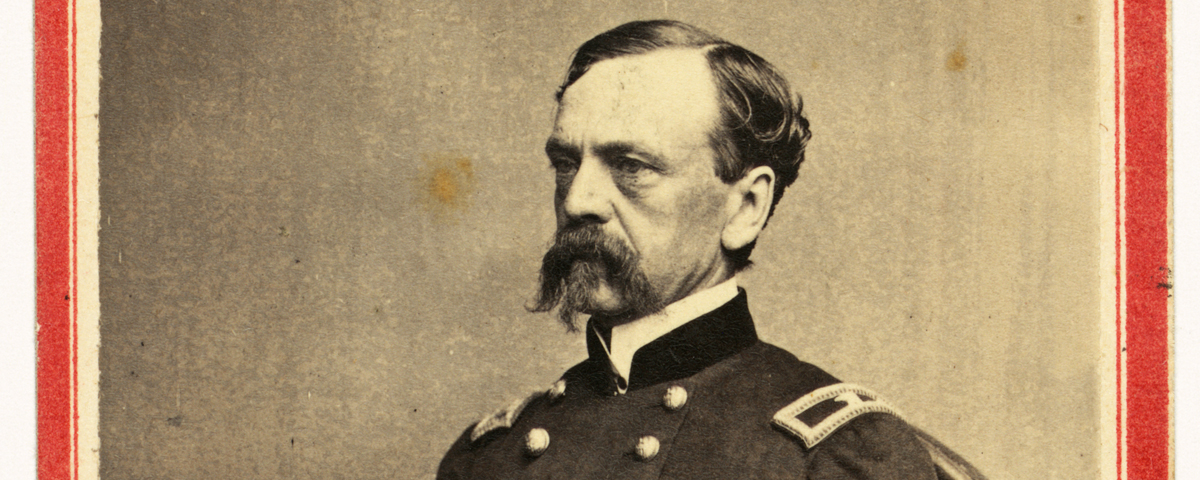
Daniel Edgar Sickles occupied a central place in the politics and gossip of antebellum New York and Washington. Born in 1819 to an old Knickerbocker family, Sickles’ career rose rapidly from his beginnings as a printer’s apprentice. He opened a law practice, joined the Democratic political machine Tammany Hall, which controlled New York City, received an appointment to the American Legation in London, won a seat in the New York State Senate in 1855, and was elected to the House of Representatives in 1856 and 1858.
As Sickles himself rose in prominence, so did the scandals he attracted. His law practice was opened before he passed the bar. Well known for his affairs and affection for prostitutes, Sickles in 1853 married the daughter of a close friend. At the time, Sickles was 33. The girl, Teresa Bagioli, was 15 and pregnant. Sickles was censured by the New York State Assembly for bringing a prostitute onto the Senate floor. He also brought the same prostitute with him on a trip to England, presenting her to Queen Victoria under the surname of a political opponent.
Notwithstanding his own unseemly past, Sickles and his wife were welcomed into Washington’s highest social circles after his election to the House. He was a consummate politician able to charm anyone he met. She was a beautiful young sophisticate, able to speak five languages. One of their closest friends was Philip Barton Key, a United States attorney and the son of the author of “The Star-Spangled Banner.” Sickles often asked Key to escort his wife to social events whenever the congressman had to work late or was occupied with other women.
Key’s affection for Teresa Sickles soon became more than amicable. In the winter of 1858-59, following Sickles’ reelection to the House, Key’s affair with Sickles’ spouse was the best-known secret in the Capital. Sickles was ignorant of the rumors, he claimed, until February, when he was given an anonymous note detailing the affair. Distraught over his wife’s infidelity, he confronted Teresa and forced her to write a detailed confession, which she signed with her maiden name. When he spied Key signaling her from outside his house the next day, Sickles erupted.
Grabbing two derringers and a revolver, he chased the frantic Key to Lafayette Park, directly across Pennsylvania Avenue from the White House. There he shot Key in the groin. As one adulterer begged for mercy, the other fired at point-blank range. Key was struck in the chest and fatally wounded. Sickles, regaining his composure and realizing he had just committed murder before dozens of witnesses, walked to the attorney general’s office and turned himself in.
The ensuing trial played out in newspapers across the country. Sickles pleaded not guilty by reason of temporary insanity, a first in American jurisprudence. His lawyer, Edwin Stanton, later Lincoln’s secretary of war, turned the trial onto the dead Key. Sickles, Stanton argued, was the true victim. He was an honorable husband deceived by a good friend. The lecherous Key had corrupted Sickles’ 23-year old wife, and his death—or Sickles’ insanity, which caused it—was completely justified. The spin worked. The verdict—not guilty, of course—was read to thunderous applause in the courtroom. Newspapers around the country proclaimed justice had been done.
But Sickles soon made a costly misstep in the court of public opinion. He forgave Teresa after the trial. The press turned on Sickles. His wife had betrayed him, deceived him and caused the death of a man through her adultery. How could an honorable man ever take her back? Sickles’ popularity, so recently never higher, plummeted, and he did not seek reelection in 1860. In March of 1861, he returned to New York. He was an unpopular politician, he was unemployed and many of his former friends ignored him. He was, in short thoroughly disgraced.
When South Carolina seceded and Lincoln called for 75,000 volunteers to save the Union, Daniel Sickles saw a chance to salvage honor and prestige. Commanding men in battle earned far more glory than orating in the U.S. Capitol, and the public loved a military hero, so Sickles immediately petitioned New York Governor Edwin Morgan for permission to raise eight companies of volunteers, the bulk of a regiment.
Morgan, a Republican governor in a state whose largest city was overwhelmingly Democratic, needed help from across the aisle and granted Sickles’ request. Immediately, the former congressman went to work. From his headquarters in City Hall Park, Sickles and second-in-command Captain William Wiley pulled many of their old Tammany Hall strings to drum up men. They contacted newspapers for press coverage and touted their unit as being composed entirely of “‘picked men,’ Democratic…in politics, but Union to the very marrow of the back bone.” Within two weeks, Sickles’ eight companies were full and Governor Morgan authorized Sickles to recruit an additional four regiments to form a brigade.
In the early days of 1861, when more men were enlisting than there were experienced military men to command them, whoever recruited a unit was likely to become its commander. As commander of a brigade, Sickles would likely become a general when his men were mustered into service. The pursuit of that rank would become Sickles’ obsession in the coming months. From disgraced politician to respected general was a phoenix’s rebirth, and Sickles worked feverishly to complete his transformation. Sickles called on men of importance for support and spoke wherever potential recruits might assemble. An old friend of his, Charles K. Graham, was persuaded to take charge of a regiment. Graham had served in the U.S. Navy during the Mexican War and was working as a construction engineer at the Brooklyn Navy Yard, a position of considerable power and patronage. Graham brought with him not just military experience and managerial expertise, but also more than 400 Navy Yard workers and sailors. They would constitute the core of the 5th Regiment of Sickles’ Brigade. Sickles persuaded an independent regiment, which had been recruiting since April, to join his brigade. These men became the 2nd Regiment. Sickles had connections with the New York Fire Department, and an entire regiment of firemen became the brigade’s 4th Regiment. They were Zouaves, imitators of colorful French Algerian troops. Sickles also found real Zouaves, French veterans of the Crimean War who were living in New York. These men joined an independent Zouave Company that would become Co. B of the Fifth Regiment.
Over the course of the spring, Sickles continued to pull strings, speak wherever possible, and hold recruitment drives. The congressman’s past disgrace forgotten in a time of crisis, men signed up to be part of the brigade the famous Sickles promised would be the best in the Union. Whole companies poured into New York to serve under the politician. Sickles’ secretary boasted “no fewer than seventeen regiments, and one hundred and twenty additional companies, making in all twenty-nine thousand men, have applied within six weeks to form part of the Excelsior Brigade.” It was an exaggeration, certainly, but indicative of considerable success nonetheless.
This boast, however, was contained in a letter to the editor of the New York Times as refutation to “unprovoked and ungenerous sentiments” published the day before. A correspondent from Washington had written, “Mr. Sickles could not raise a regiment, much less a brigade.” Even when recruiting volunteers for the Union, Sickles attracted controversy. For all his charms, it was apparent he was driven by more than mere patriotism. He was a Democrat, many of whose former political friends were now in the service of the Confederacy. He was from New York City, whose economy rested on Southern merchandise and whose streets teemed with poor immigrants. He represented Tammany Hall, the corrupt political machine that relied on the votes of those very immigrants. In short, many viewed Sickles’ city, his background and his brigade as morally bankrupt. A newspaper cartoon from a Baltimore newspaper depicts the brigade—surrounded by madams, liquor stores and cheap cigars—being recruited at Manhattan’s notorious slum Five Points, which years later provided the setting for Martin Scorsese’s film Gangs of New York. The recruits are shown to be Irish and blacks, considered the absolute dregs of 1861 Northern society.
Such attacks on Sickles were perhaps inevitable for a well-known figure. But Sickles did himself no favors when he attempted to increase the prestige of his brigade by christening it “Excelsior,” the New York state motto. The name implied that this was the state brigade of New York and would represent it in the war.
Farmers and townsmen of Republican upstate New York immediately complained to Governor Morgan that the “state” brigade was drawn too much from Democratic New York City. They resented that their counties would not be included in the brigade and that their state would be represented by a murderer and scoundrel. For Morgan’s part, he could not alienate his base of support and perhaps had grown uneasy by the great success of a Democrat. Morgan had encouraged Sickles only because he had a proven ability to recruit men from areas in which Morgan held less sway. Now that Sickles imperiled overall recruitment—presumably upstaters would be less likely to enlist if their demands were not met—Sickles’ actions could no longer be tolerated. Morgan ordered Sickles to disband 32 of the 40 companies he had raised.
Daniel Sickles, to say the least, was outraged. He was being told to send away willing volunteers when the country was in danger. What’s more, with the loss of his brigade, he would no longer be eligible for a general’s star. Morgan, Sickles believed, had no authority over what he saw as his brigade. He had recruited the men without any help from the state government, and he was responding to the president’s call to save the Union. The soldiers reported to Sickles, and Sickles reported to Lincoln. In Sickles’ mind, the governor of New York had no business interfering in the Excelsior Brigade’s affairs.
Sickles immediately set out to correct Morgan’s misguided order. He departed for Washington and an audience with President Lincoln. Sickles urged Lincoln to federalize the brigade and take them out of the hands of the petty Morgan. Thus, Sickles presented Lincoln with a dilemma. The Union desperately needed troops to put down the rebellion, and a body of troops Democratic in origin would demonstrate that the North was united in its resolve. However, Lincoln could not risk alienating the governor of the most populous state in the Union. Lincoln delayed a decision. Secretary of War Simon Cameron would address the issue and solve it in due time. Meanwhile, Sickles was to return to New York to train his soldiers.
Upon Sickles’ return to New York, his fury increased when he saw that the discipline of his brigade had vanished in his absence. Strewn across City Hall Park, the men were hungry, dirty and some drunk and unruly. Sickles marched them to Crosby Street where every man was given a haircut and a shave for 10 cents apiece. Sickles then arranged for the bri-gade to be transported to Long Island where an unused racetrack in Queens County could serve as a campground. Away from the city and civilians, Sickles set his men and officers to train in the hopes that their new military skills would indeed be used in battle.
For the next few weeks the Excelsior Brigade’s prospects grew dimmer as problems mounted. The racetrack was still too close to the civilian population for true discipline to be enforced so Sickles moved the brigade to a spot on Staten Island surrounded by marsh and woods near the Verrazano Narrows. The state of New York refused to pay for the brigade’s upkeep—the governor had ordered them disbanded, after all—and the federal government had not acted. The men still needed to eat, so the bills went to Sickles. The tab soon mounted in the hundreds of thousands of dollars, far more than Sickles could ever pay out of his own pocket.
Meanwhile, the men, without any salary and without any hopes of entering the army, grew restless. Many deserted. Independent companies who had joined the Excelsior Brigade were rebellious under New York officers whom Sickles had appointed in return for their recruiting help. In the coming weeks, one of those companies, B of the 5th Regiment, attempted to depart for Philadelphia to join a Pennsylvania regiment. Sickles drove them back to camp at the point of a bayonet and sentenced them for desertion, only to postpone their execution and be sued by the company’s captain so that the company would be allowed to leave and be paid for expenses incurred during their travel to New York.
Complicating matters, it was unclear whether Sickles had any authority over these men. He called himself a general, as the head of a brigade, but the soldiers had not been sworn into the armed forces, meaning that military discipline did not officially apply. In the eyes of the law, these men were still private citizens and legally could not be forced to stay at camp under Sickles’ command.
June of 1861 saw Sickles teetering on the precipice of absolute ruin. He was in massive debt. His brigade was not fully manned and was beginning to bleed away. He was in a questionable legal position. The governor of New York, the most powerful governor in the Union, wanted Sickles’ Brigade disbanded, and the federal government was not helping. Should the Excelsior project fail, Sickles would again be ruined, would have lost his best chance at a general’s star and would face years in court to fight his creditors.
When all was almost lost, Sickles was again saved by his country’s troubles. Lincoln’s need for troops compelled Secretary of War Cameron to accept Sickles’ proposal to federalize the troops. He sent army agents to swear the soldiers into service as the 1st through 5th U.S. Volunteer Infantry Regiments. It was a legal manipulation that allowed the federal government to pay for the soldiers’ upkeep and provide for their equipment. Daniel Sickles had emerged from his dispute with Governor Morgan victorious.
Federalizing the troops did not, however, confirm Sickles as their leader nor did it help him with his creditors, who hounded him in camp. Only another national disaster could keep Sickles out of their clutches. When word reached Staten Island that a great battle had commenced at a creek named Bull Run, the soldiers became convinced that this would be the great battle to end the rebellion and that their military service would soon be over. Had that happened, Sickles would have returned to civilian life to face his debts. It did not. The Union army was put to flight, leaving Washington exposed to a Rebel attack. All available units were called to the defense of the capital. In the week following the Battle of Bull Run, Sickles and his regiments departed for the South. The brigade’s debts were left in the hands of Captain William Wiley, Sickles’ original partner. Finding the money to settle with the creditors consumed Wiley in the following months and nearly ruined him. Sickles offered no help, and Wiley came to despise his former friend. He was the Excelsior Brigade’s first casualty.
In the District of Columbia, under the direct command of Regular Army generals, there was no chance that the Excelsior Brigade would be disbanded or be expected to pay for its own supplies. Still, Sickles’ command of the brigade was not assured. Generals needed to be confirmed by the Senate, usually no more than a formality. Sickles, however, was not usual. The Republican majority remembered that just months earlier Sickles had opposed the party. They were possibly fearful of entrusting 5,000 soldiers to an ambitious hothead. If Sickles could murder a man in Lafayette Park, might he make rash decisions on the battlefield? If Sickles’ former political friends had withdrawn to the Confederacy, might Sickles take his brigade over to the South as well? Dislike and concern held up his confirmation as a brigadier general throughout the summer and autumn of 1861. Sickles spent much of his time in Washington and away from camp, lobbying for a vote while being drawn into the capital’s politics and intrigues.
In February 1862, amateur undercover reporter Chevalier Henry Wikoff, a European adventurer and old friend of Sickles, had submitted extracts of one of President Lincoln’s speeches to the New York Herald. Wikoff almost certainly received the text of the speeches from Mrs. Lincoln, who had become great friends of both Wikoff and Sickles while both were in Washington in 1861. Congress prepared to investigate both Wikoff and Mrs. Lincoln for distributing secret government documents, a move that would be highly damaging for President Lincoln. Once again, others’ ill fortune served Sickles well. As legal counsel to Wikoff, Sickles found a way out of the mess. He forced the White House gardener to testify that he had seen the speech on the president’s desk, memorized it word for word and submitted it to the newspaper. It was an improbable story, and perhaps no one truly believed it, but it was a cover that allowed the president to escape a scandal, for which he was grateful to Sickles.
And still, Sickles was not yet confirmed a general despite spending the winter away from his troops. As spring and the campaigning season approached, Sickles decided the best way to win a star would be to demonstrate his prowess at the head of his brigade, using positive press coverage to force the Senate’s hand. He led reconnaissance across the Potomac and prepared his men for the upcoming spring campaign that would become General George McClellan’s Peninsula campaign. Sickles was ready to win glory no matter what the Senate did.
On board the ships that would take him and his men to the Virginia peninsula, Sickles received word that the Senate finally had voted on his generalcy. They had voted not to confirm him.
At that news, Sickles’ divisional general, Joseph Hooker, removed the Excelsior Brigade’s self-styled leader from command and ordered him off the ships, since he was no longer a part of the Army. Sickles, who had recruited the brigade, who had maneuvered to get them mustered into the Army, and who had faced personal ruin in his quest to redeem himself after his fall from grace, had failed.
But he was not finished yet. He had once bypassed an obstacle with the help of the president and believed he could do so again. So Sickles spent April 1862 in Washington, reminding Lincoln of the services rendered to the administration during the Wikoff and Mrs. Lincoln speech scandal. While the Excelsior Brigade learned of war firsthand outside Yorktown and lost a quarter of its number at the Battle of Williamsburg, Sickles waited to see if the president’s influence could win him a star.
On May 13, 1862, more than a year after Sickles began recruiting eight companies, the Senate voted on his confirmation to the rank of brigadier general. Nineteen senators voted for Sickles, 18 against. He was finally a general. Reassigned to command of the Excelsior Brigade, he immediately departed for his men. He would not command the brigade on the battlefield often—only at Fair Oaks and the Seven Days’ battles. He missed Second Bull Run while in New York drumming up replacement soldiers for the brigade and was promoted to corps command before its next big battle at Chancellorsville. Sickles fell near his brigade at Gettysburg when a cannonball smashed his leg. He visited the leg after the war at the Army Medical Museum.
But for his efforts to recruit the men, the hurdles he faced in mustering them into government service, and his wrangling to command them, the Excelsior Brigade would come to be known as “Sickles’ Own.” The creation of the brigade was one of the few episodes in Sickles’ life when his ambition and respectability coincided.
Christopher Oates is the author of Fighting for Home: The Story of Alfred K. Oates and the Fifth Regiment, Excelsior Brigade, Warren Publishing, October 2006. The book centers on a private, the author’s great-great-great-grandfather, who served for the duration of the Excelsior Brigade and whose letters led the author to his Civil War studies.
This article by Christopher Ryan Oates was originally published in the March 2008 issue of America’s Civil War magazine. For more great articles be sure to subscribe to America’s Civil War magazine today!