At dawn on April 15, 1961, Fidel Castro was awakened by two B-26 bombers flying rooftop-low over ‘Point One,’ the national military headquarters in suburban Havana, Cuba.
“What are those planes?” he demanded of his staff.
No one could tell him. He bolted to the window and watched in helpless rage as the American-made, WWII-type bombers began diving on Campo Libertad airport nearby. He heard the Grump of exploding bombs and the stutter of antiaircraft fire. He was sure the invasion had begun.
There is an old saying in Latin countries, spoken only half in jest – if you get two Cubans together you have a party, but three and you have a revolution. Plots to invade Cuba began almost immediately after Castro swept cut of the Sierra Maestra to take over Havana. Miami, Fla., 90 miles from the Cuban coast, became a hotbed of revolutionary and counterrevolutionary activity. Cuban exile organizations vowing to topple the island nation’s bearded jefe sprouted like mushrooms in Miami; at one point there were more than 100 of them. Castro retaliated, according to the FBI, by seeding Miami with some 200 agents of his own.
But the conspiracy to unseat Fidel Castro germinated not with the Cuban exiles but instead with Vice President Richard M. Nixon and the Central Intelligence Agency. Castro met with Nixon in April 1959, when he was invited to the United States as the headline speaker for The American Society of Newspaper Editors. Nixon’s secret memo to President Dwight D. Eisenhower about the meeting concluded that “Castro is either incredibly naive about Communism or is under Communist discipline.” From that moment, Nixon has said, he became ‘the strongest and most persistent advocate for’ a covert military operation to fell the Cuban dictator.
A select number of CIA agents met in Quarters Eye, a onetime WAVE barrack in downtown Washington, on January 18, 1960. One of them stood up and announced that Richard Bissell, Chief of Clandestine Services, had appointed him to head the new “Cuban Project,” funded, organized, controlled and commanded by Americans, although the CIA took great pains to hide U.S. involvement and give it the appearance of being a patriotic Cuban movement.
The plot hatched by the CIA evolved out of the Eisenhower administration and passed into that of President-elect John F. Kennedy, who assumed office less than three months before the scheme flowered. It called for exile forces establishing an invasion beachhead on Cuban soil, behind which a Cuban government-in-exile would broadcast to the world as a government-in-arms. Under international law, the United States would then have an excuse to supply and reinforce the invaders.
Secrecy was not easy to maintain. Rumors of an impending invasion spread even as CIA procurement teams scouted the United States and Europe for airplanes, tanks, ships and other weapons to arm an exile army. News broke in American and Mexican newspapers shortly after New Year’s Day 1961, that a Cuban attack force known as Brigade 2506 was training on a coffee finca and a refurbished airstrip near Retalhulehu in the mountains of southern Guatemala.
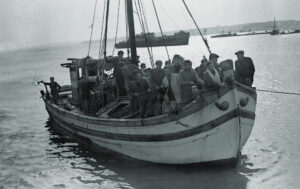
In Florida, Cuban refugees arrived daily by leaky boats, homemade rafts, even floating barrels. A CIA reception and debriefing center in the Keys directed many of them to Miami’s Dinner Key, where the Frente Revolucionario Democratico (FRD), the Cuban government-in-exile established by the CIA, had opened a recruiting office. Rumors and news of a possible invasion provided a bristling business. Weekly C-54 flights from Opa-Locka airfield north of Miami discharged a steady stream of trainees at Trax, the coffee plantation training camp in Guatemala.
One of the early recruits was a Cubana Airlines captain named Eduardo Ferrer. Passengers on Flight 480 from Havana to Santiago de Cuba on the morning of July 27, 1960, included Pepe Vergara, Alberto Perez and Perez’s “wife,” who made herself appear pregnant with a pillow inside her dress. Cushioned behind the pillow was a .45 pistol. Captain Ferrer also managed to smuggle aboard in his flight bag a 9mm Browning pistol given to him in Havana by a CIA agent known only as “John.”
Fifteen minutes after takeoff, Ferrer turned the airplane controls over to his co-pilot, saying he was going for coffee. With Pepe Vergara, he walked to the rear of the plane where an armed guard rode with each flight to keep an eye on the passengers. Ferrer thrust his pistol against the guard’s neck while Perez kept everyone else neutral with his “wife’s” gun.
“One move and I’ll kill you,” Ferrer warned the guard.
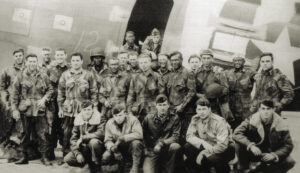
Half the passengers asked for political asylum in Miami when they arrived. Perez and Vergara joined Brigade 2506 and shipped out to Guatemala. Ferrer and 45 other Cuban pilots formed the foundation for what soon became, with 16 B-26 bombers and 12 C-46 and C-54 transports, one of the largest air forces in Latin America. The transports immediately began flying resupply missions to guerrillas in Cuba’s Escambray Mountains and Sierra Maestra while U.S. pilots trained Cuban bomber jockeys to knock out Castro’s air force in support of a pending invasion.
Another recruit was Pablo Organvides Parada, who had once supported Castro and was captured with him during the 1953 attack on the Moncada army post. Parada said he was coerced by the FBI and the CIA to either join the brigade or be deported. He became an intelligence specialist.
“I was told, first of all, I did not have to take part in the landing at all, and, secondly, the undertaking in Cuba couldn’t fail in any case,” Parada later stated. “I asked [an assistant to CIA Director Allen Dulles] ‘How do you know the undertaking can’t fail?” Upon that, he answered me with the following: “If the landing operation in Cuba should happen to fail, we will at all events intervene directly, and immediately, too, no matter what the OAS [Organization of American States] says about it.”
Cuban recruits all received the same assurance-that the project could not fail because the U.S. government was behind it and would not let it fail.
By March 1961, the brigade in Guatemala was equipped and training with four-deuce mortars, 75mm recoilless rifles, bazookas, surplus M1 Garands from World War 11, machine guns, pistols and five M-4 Sherman tanks. The CIA wanted to charter a Navy fleet to sail this vast weapons stockpile and accompanying assault troops to Cuban soil.
Two CIA agents summoned Eduardo Garcia to a New York City apartment. The Garcia Line Corporation with offices in Havana and New York was the only Cuban freighter line still running rice and sugar off Castro’s island. It had also been exfiltrating anti-Castro leaders. The line owned six small (2,400 ton) freighters, all old, slow and run-down; no one would suspect them of being a military armada. Garcia wanted to know how his ships would be protected if he chartered them to the CIA.
“I want machine guns on the bridges, bows and sterns of all the ships,” he insisted.
The CIA men laughed. “Who would dare attack a fleet protected by American sea and air power?” they asked. “They’ll be given air cover by American combat craft and by US. Navy destroyers. An American Navy ship will bring landing boats to the freighters to pick up the troops.”
Garcia leased his entire six-ship fleet to the CIA for $600 per day per ship, plus the expense of fuel, crews and food. To this run-down freighter fleet the CIA added nine landing craft that its agents managed to obtain through the Pentagon.
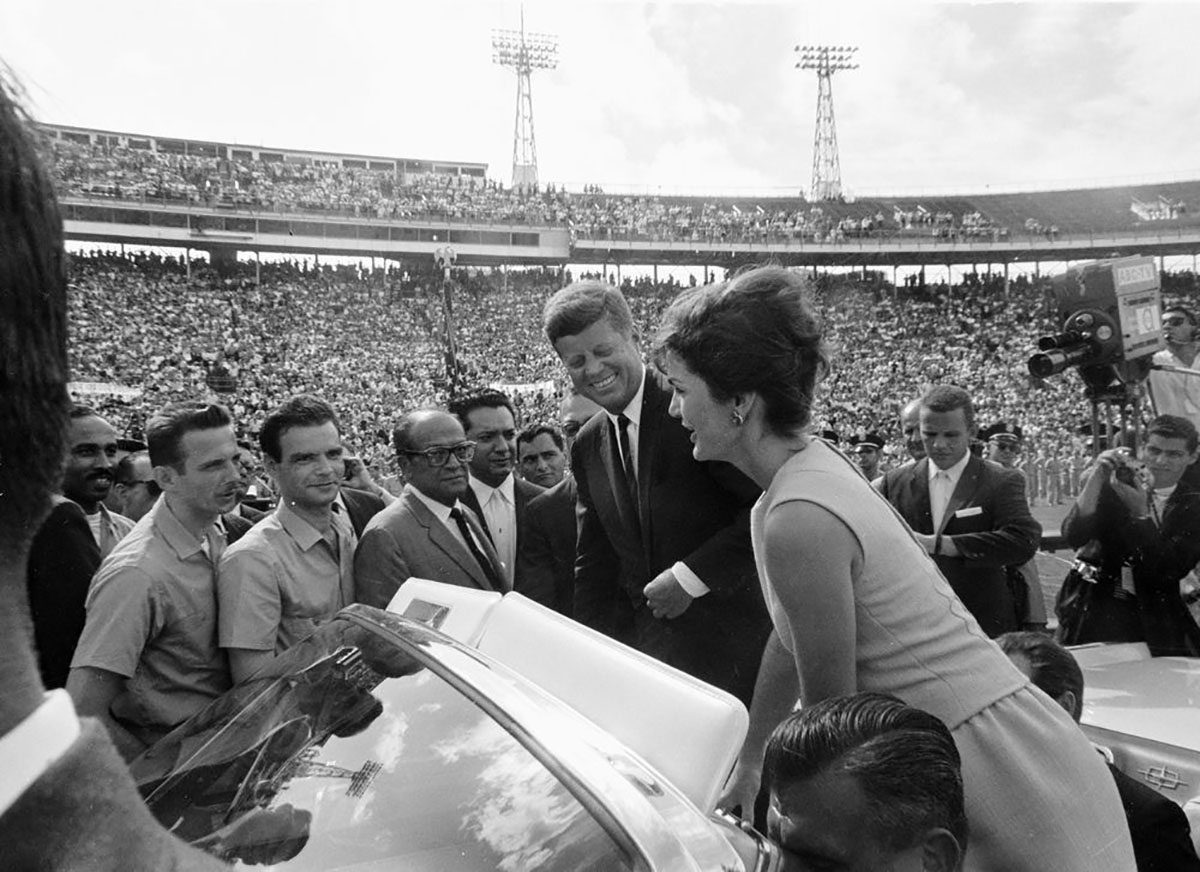
Although John Kennedy had campaigned for president as a hard-liner against Communism and against permitting Communism a toehold in the Western Hemisphere, he expressed misgivings about letting the invasion preparations continue. As president-elect, he was fully briefed on the Cuban Project in November 1960.
Vital to the success of the operation was the destruction of Castro’s air force, estimated to consist of 15 B-26 bombers, 10 Hawker Sea Furies and four T33 jet fighter trainers. After the brigade’s bombers knocked out the enemy air force, a paratrooper battalion would drop in Santa Clara, Cuba’s geographic center, to secure the airfield. Then the airborne soldiers would fan out to sever roads and communications lines.
While paratroopers were cutting the island in half, maritime feints elsewhere would distract Castro. The main seaborne thrust would be at Trinidad on the southern coast. Since the bulk of Castro’s troops was concentrated around Havana and Santiago, the brigade would be free to march east and west off the beachhead, picking up strength as it went. American fighter planes would fly cover for the invasion while a U.S. naval task force assembled offshore, ready to respond to cries for help from the government-in-exile.
Kennedy gave the project a qualified go-ahead, insisting that no Americans be involved in the actual attack since he wanted to create the impression that the invasion was entirely a Cuban one. He also reserved the right to defer a final decision on U.S. air cover until 24 hours before the invasion was launched.
Meanwhile, Fidel Castro worked feverishly to prepare his 200,000-man army to repel an expected invasion. Soviet and Czech technicians were in Cuba training Castro’s militia to use newly arrived Russian artillery pieces. Fifty Cuban Air Force pilots traveled to Czechoslovakia to train to fly MiG fighters. The CIA insisted on mounting the operation before Castro’s pilots and MiGs returned to Havana.
Relations between the United States and Cuba deteriorated. The United States suspended Cuba’s sugar quota to the mainland. Castro began nationalizing American-owned property. Soviet Premier Nikita Khrushchev declared the Monroe Doctrine dead and sent one of his highest-ranking diplomats to Cuba as ambassador, to demonstrate Russia’s commitment to Castro. On January 3, 1961, Castro banished all but 11 of the U.S. Embassy’s 300 employees from the country, the final step before Washington and Havana completely dissolved diplomatic ties.
Tension in the ranks of Brigade 2506 and its political front in the United States kept pace with that in the international community. The CIA kept the FRD all but totally removed from the project, forbidding its members even to visit the training camps in Guatemala, refusing to give them as much as a tentative date for the invasion.
“[The CIA] did not want ‘politicking’ involved in military training,” wrote E. Howard Hunt, later of Watergate notoriety and one of the planners for the Cuban Project.
Although Brigade Commander Pepe San Roman, a graduate of Cuba’s military academy, was among only 10 percent of those in the brigade with a military background, many of the Cubans resented the fact that he was handpicked by the Americans. The FRD felt that control of the invasion should not be in “the hands of foreigners, however friendly.” The Frente, not the Americans, should appoint brigade commanders.
The debate over San Roman ended with 200 Cuban fighters being held under arrest and behind wire in the jungle. They were not released until after the invasion. The CIA and its 38 American’sheep-dipped’ advisers (soldiers and several pilots recruited from the Alabama Air National Guard posing as civilians) remained in control of the training camps.
“You’ll have only a few men”; pointed out Antonio de Varona, a member of the FRD. “How can you win [with 1500 men]? Castro has 300,000.”
“Colonel Frank,” the American commander in Guatemala, confided: “We’ll protect the invasion with an umbrella,” he said. “The air will belong to us. No car can travel without being bombed. We don’t need more men.”
But if the CIA promised the Cubans that Americans would assure the invasion’s success, JFK was saying something else. On April 12, 1961, three days before the B-26 strikes on Castro’s air force, Kennedy announced to the Alliance for Progress for Latin America that “There will not be, under any conditions, an intervention in Cuba by the U.S. armed forces or American civilians.”
Bissell, Engler, Hunt and the other CIA operatives assumed JFK’s statement to be one of misdirection to lull Castro into a false sense of security. They continued with the plan to attack Cuba.
“These men are ready,” Howard Hunt was assured in Guatemala. “They’re trained and overtrained, and from now on they can only go downhill. How soon do they get to fight?”
“I haven’t been told,” Hunt replied.
President Kennedy still vacillated. He couldn’t seem to make up his mind. To give himself more time, he postponed the invasion date from its original April 11 to April 17. He still had time to call the operation off, even though the first troop ships left the staging area at Puerto Cabezas, Nicaragua, on April 11, six days before D-day. The last ships would start across the Caribbean on Thursday, April 13.
Two events were scheduled for April 15 —the B-26 airstrike against Castro’s air force, and Nino Diaz would lead a diversionary force ashore in Oriente Province.
JFK telephoned Richard Bissell and asked how many aircraft would fly against Castro’s airfields. Bissell told him 16.
“I don’t want it on that scale,” the president said. “I want it minimal.”
On the morning of Saturday, April 15, a bomber force sharply reduced to six airplanes took off from Happy Valley in Nicaragua. President Luis Somoza bade the pilots farewell, with an admonishment to bring back Castro’s beard. Two planes would strike each of three Cuban airfield’s—Campo Libertad on the outskirts of Havana; Antonio Maceo airport at Santiago de Cuba 450 miles southeast of Havana; and San Antonio de los Banos. The planes would strike simultaneously at dawn with bombs, rockets and machine guns.
Gustavo Ponzoa and his wingman, Gonzalo Herrera, were the first to take off in the first organized and sizable operation to overthrow Castro. The two B-26s skimmed the Caribbean at an altitude of 50 feet to avoid radar detection, then climbed over the cliffs and roared down the runway at Santiago de Cuba at 1,200 feet. Ponzoa released both his 500-pound demolition bombs. Heavy red-and-black smoke billowed up from underneath his right wing as he throttled and pulled out of his bombing glide. Antiaircraft fire and tracers from machine guns arched skyward.
Each team was supposed to make two runs on its target. Ponzoa and Herrera made five, thundering in at 50 feet above the runway to slam rockets and machine-gun bullets into hangars and aircraft. Ponzoa took a hit in the nose on his fifth run. Herrera was also hit.
“Gus… I can see holes in both wings!” Herrera yelled over the radio.
Ponzoa radioed back: “Let’s get out of here and go home.”
All six bombers returned safely to Nicaragua, although Herrera burst all three tires when he landed. Jubilation that Castro’s air force had been wiped out soon turned to gloom, however, when U-2 reconnaissance photos showed that only five enemy aircraft had been destroyed on the ground. Anticipating attack, Fidel had dispersed his planes and used several broken-down ones as decoys. He still possessed a formidable force to use against the invasion.
On Sunday at Quarters Eye in Washington, the Air Operations Officer was ordering ordnance for a cleanup strike against the airfields when General Charles Cabell arrived. Cabell was acting director of the CIA in Allen Dulles’ absence. Dulles was in Puerto Rico.
“What are you doing?” Cabell asked.
“Readying the follow-up strike, sir. We have to finish them off.”
“Seems to me,” replied Cabell, “that we were only authorized one strike at the airfields.”
“Oh, no, sir. There are no restrictions on the number of strikes. The authorization was to knock out the Cuban air force.”
Cabell’s jaw jutted. “I just don’t know about that. So to be on the safe side, I’m going to ask [Secretary of State] Dean Rusk about it. Cancel that strike order… until I can get someone to approve it.”
JFK still had time to cancel the invasion. Instead, he gave the go-ahead on the invasion but scrubbed the cleanup airstrikes. Rebel pilots in Happy Valley were revving up B-26 engines for a follow-up attack when they received orders to cancel. Major General George “Poppa” Doster, the American commander of brigade pilot training, slammed his hat on the ground and yelled, “There goes the whole [expletive] war.”
“Surely Cabell realizes this means the operation is doomed to failure,” commented General David Gray, a liaison between the Joint Chiefs and other agencies involved in the planning.
The Chairman of the Joint Chiefs of Staff referred to the cancellation as “pulling out the rug… absolutely reprehensible, almost criminal.”
Disaster predicted became disaster realized. Although the invasion was on, JFK was keeping his word to the Alliance for Progress that the United States would not be openly involved in it. He reneged on the CIA promise that an ‘umbrella’ of U.S. fighters would protect the landing; the Navy would perform only picket duty off the Cuban coast; and there would be no follow-up strikes against Castro’s airfields.
On top of this, Nino Diaz and his 168-man diversionary force refused to disembark their ship in Oriente Province because they did not like the way the operation was going. Fidel had successfully quarantined shore-based rebels in the Escambray Mountains, making them unavailable to aid the invasion. Further, radio messages calling for action by infiltration teams and student saboteurs inside Cuba were blocked, and the U.S Marine Corps’ logistical expert overseeing the fleet-loading of invasion supplies predicted that the 1,200 tons of materiel would never reach the beachhead if the force received resistance. In many instances, gasoline drums weighing 400 pounds each were located next to explosives on the ships’ decks.
“Even if a Piper Cub comes along with a .22,” said Eduardo Garcia, worried about his freighters, “the whole thing can go boom!”
During the final days, the CIA had decided to change the landing site from the sandy beaches of Trinidad to the Bay of Pigs, more than 100 miles east along the southern coast. CIA intelligence showed the area to be a sparsely populated stretch of territory isolated from the rest of the island by the treacherous Zapata Swamps crossed by two narrow-gauge railroads and tricky paths known only to villagers. The small, 108-man militia detachment at the village of Giron was not considered a real threat to the invasion. Bissell decided that since there were no rapid communications between the Bay of Pigs and Havana, the invaders could land, capture the airfield at Giron, and begin landing and flying in war supplies before Castro realized what was happening.
What the American did not realize was that Fidel knew the region well from having fished for trout in nearby Laguna del Tesoro. Three hard-topped roads now crossed the swamp. A resort facility and another 180 concrete houses were under construction. Changing the invasion site was simply another planning snafu in a long line of mistakes and poor judgments leading up to April 16, when a U.S. naval task force consisting of the aircraft carrier Essex and seven destroyers secretly rendezvoused off the Cuban coast with seven ragged vessels of the invasion fleet.
The task force had orders to merely escort the insurgent craft to the coast, nothing more. It was to remain strictly uncommitted when the invasion began.
Shortly before midnight on Sunday, April 16, six frogmen led by Andy Pruna and CIA agent Grayston Lynch slipped toward shore at Playa Giron to mark the beach for the landing. Their rubber boat was still 50 yards from land, grounded by a reef that planners thought was a stretch of subsurface seaweed, when a jeep swung toward the sea and bathed the landing party in its headlights.
An American fired the first shots at the Bay of Pigs. Grayston Lynch opened up with one 20-round magazine from his BAR. The other frogmen joined in, riddling the jeep and two militiamen with gunfire. The headlights went out.
Knowing the element of surprise had been blown, the frogmen scurried up and down the beach, placing the landing lights. As about 25 Castro militiamen pulled up in a truck, Lynch radioed an urgent request that the landing craft from his ship, the Blager, be quickly loaded with troops and rushed ashore.
Gunfire rattled as the two LCVPs roared toward the invasion’s first troop landing. One of the landing craft struck the reef and soon sank. Wet but unharmed, the first fighters at the Bay of Pigs waded onto sand. They took off for Giron, firing wildly into the pastel-colored bungalows of Castro’s new recreation colony. The militia retreated to the woods and swamps beyond.
Grayston Lynch returned to the Blager after Pepe San Roman and the other brigade commanders waded onto Cuban soil. An urgent message from Washington awaited him: “Castro still has operational aircraft. Expect you to be hit at dawn. Unload all troops and supplies and take ships to sea as soon as possible.”
In spite of the reef, the brigade’s 1,453 soldiers began pouring onto “Blue Beach” at Playa Giron in the pre-dawn hours of April 17. The other half of the landing under the command of Hugo Sueiro disembarked at ‘Red Beach’ at Playa Largo deep in the mouth of the bay, 20 miles away. It took light machinegun fire, but landed without casualties to find a microwave radio station still warm from use. So much for the CIA’s intelligence that the Bay of Pigs was without communications!
In New York, E. Howard Hunt dictated a press release in the name of the FRD: “Before dawn, Cuban patriots in the cities and in the hills began the battle to liberate our homeland from the despotic rule of Fidel Castro.”
And in Havana, Fidel Castro was awakened at 1:15 a.m. and was told that the invasion had begun. He took immediate personal command.
By 6 a.m., even while the invasion fleet was still offloading infantry and equipment, Castros troops and his nine surviving aircraft were in full counterattack against Brigade 2506. Garcia’s freighters in the bay were being pounded by Cuban Sea Furies and B-26s. Grayston Lynch on the Blager fired his .50-caliber machine gun so steadily at the attacking planes that the barrel turned white-hot.
The Houston started to sink, still laden with ammunition. The Rio Escondido exploded in a massive eruption of fire, struck by rockets from a Sea Fury. The ship had contained the bulk of the invasion’s ammunition, fuel and medical supplies. The planes also knocked out the Marsopa, from which the invasion was being coordinated, and several smaller vessels used to ferry troops ashore.
Lynch, in command on-site, was assaulted by messages from headquarters: ‘Go to sea!’ The ships could return after dark to offload supplies. The agent radioed to San Roman ashore, ‘Pepe, we’re going to have to go.’
“Okay. But don’t desert us,” Pepe responded.
“We’re not going to desert you,” Lynch promised.
JFK’s ill-advised decision not to provide U.S. air cover, coupled with his unwillingness to permit the knockout blow against Castro s air force, also took a toll in the air operations that day.
Shortly before sunup, Captain Eddie Ferrer, pilot of the first of six lumbering C-46s en route to drop 177 paratroopers northeast of Blue Beach to cut off and defend the invasion site, passed over the aircraft carrier Essex and two destroyers steaming toward the beaches. He was certain they were joining the battle.
“Hell, we can’t lose!” he exclaimed to his co-pilot.
The C-46s were slow and unarmed and without a fighter escort. The rebels were still under the impression that the United States was providing an “umbrella.” Ferrer was thus all the more surprised, after he had dropped his paratroopers on the San Blas road, to find Castro’s B-26s attacking the brigade flight. Machine-gun bursts puffed smoke from the attackers’ wings. Ferrer saw one of the C-46s plummet to earth streaking smoke. He managed to escape to sea by skimming the waves and slow flying with full flaps.
As the battle progressed, T33 jets picked five of the brigade’s 12 remaining aircraft out of the air, including the B-26 flown by Americans Pete Ray and Leo Francis Baker, who were killed on the ground when they tried to escape their crashed bomber amidst the fighting. Their bodies were kept frozen in a Havana morgue for the next 18 years.
American A-4D pilots from the carrier Essex watched helplessly as Castro’s bombers and fighters made sorties against the beaches, the freighters in the bay and the hapless C-46 transports. A Cuban T33 made a run at pilot Tim Lanahan, who was cruising his jet at 25,000 feet. Within seconds, both jets were diving, with the A-4D closely on the Cuban’s tail.
“Don’t fire! Don’t fire!” came the air controller’s frantic voice from the Essex. “Rules of engagement have been changed.”
Pilot Jim Forgy came upon a Cuban Sea Fury riding the tail of a brigade B-26. The bomber’s starboard engine was in flames. The Sea Fury closed in for the kill.
“I have a Sea Fury shooting this B-26 down”; Forgy radioed. “Request permission to take positive action.”
“Negative”; came back the reply.
On the ground, Erneido Oliva’s Second Battalion ordered two brigade B-26s to attack an enemy column of 900 approaching the battle zone in 60 vehicles, including buses. The bombers routed the battalion, but a Castro T-33 and a Sea Fury shot down the brigade bombers.
By midnight, Fidel and 20,000 soldiers had arrived to trap the invaders against the beaches, squeezing them into tighter and tighter perimeters. Castro’s tanks and infantry battered the brigade with artillery fire for 48 straight hours. At the traffic circle on the northern outskirts of Playa Larga, Oliva and his men endured more than 2,000 shells falling on them in less than four hours. Stalin tanks rumbled against Oliva’s dug-in defenders until midnight. The rebels reported examples of extraordinary courage.
A little former barber called “Barberito” ran around and around one of the advancing tanks, peppering it with fire from his recoilless rifle until the frightened crew surrendered. Barberito was killed later by a machine-gun burst.
A brigade tank driver named Jorge Alvarez knocked out an enemy tank with his last shell, then deliberately crashed another. The two monsters rammed each other in a remarkable nose-to-nose battle until the Stalin’s gun-barrel split.
Of Oliva’s 370 men, 20 had been killed and another 50 wounded by the time they beat back the enemy’s first attack. Weakened and bleeding, knowing another attack at dawn was inevitable, the ‘Red Beach’ invaders retreated to Giron. They arrived at 8:45 a.m on Tuesday, April 18.
Castro closed in on Blue Beach.
It was also Oliva who organized the last battle of the Bay of Pigs, which came to be known as “the last stand of Giron.”
Armed with seven bazookas and three tanks, Oliva’s battalion destroyed three Castro tanks and an armored truck during the first fighting. The brigade’s 81mm mortars fired so fast the tubes started to melt. When Castro s troops pulled back to regroup, Oliva found he could no longer raise Pepe San Roman on the radio.
San Roman had pulled back to within 20 feet of the water. Crouching on the sand with artillery fire bursting around him, the brigade commander issued his last radio message, shouting across the air to Grayston Lynch aboard the Blager: “Am destroying all equipment and communications. I have nothing left to fight with. Am taking to the woods. 1 can’t wait for you.”
Abandoned by the United States, surrounded by a force 10 times larger, pounded by artillery and fighter bombers, pushed back to the beaches and swamps, unable to escape, out of ammunition, Pepe San Roman ordered his command to break into groups and escape however they could. Grayston Lynch later remarked that it was the first time he had ever felt ashamed of his country.
Aftermath: Brigade 2506 lost 80 men killed in the combat on land and another 40 during disembarkation. Castro listed his losses officially at 87 KIA although unofficial estimates by surviving rebels and CIA personnel involved in the operation put his losses at more than 1,600 dead and another 2,000 wounded. San Roman and about 50 of his followers struggled in the Zapata Swamp for two weeks before hunger and thirst forced them to surrender. Castro eventually captured 1,180 invaders.
The Bay of Pigs defeat changed the course of history, for out of it grew the Communist perception that the United States no longer possessed the moral courage to honor its commitments and resist violations of the Monroe Doctrine. The Cuban missile crisis four months later, the raising of the Berlin Wall, the Dominican Republic intervention, guerrilla warfare in Latin America and the fall of Nicaragua to Communism, all quite arguably grew out of the Bay of Pigs.
Novelist and freelance author Charles W Sasser writes from Tulsa, Okla. For more information, read: Bay of Pigs by Peter Wyden (Simon & Schuster, 1979); Give Us This Day by E. Howard Hunt, (Arlington House, 1973); Fidel: A Biography of Fidel Castro by Peter G. Bourne (Dodd, Mead, 1986).
This article originally appeared in the November 1989 issue of Modern Warfare. For more great articles be sure to subscribe to Military History magazine today!