GHOSTS
A photograph is not reality. A photograph is an interpretation. It is not what was there; it is what the photographer saw there (combined, of course, with the limits and possibilities film imposes). The world doesn’t appear with frames around things we ought to notice. We’re the ones who add the frames, and framing pieces of the world is a big part of photography. So, depending on the spirit in which it is made, a photograph is a lot like a report or a painting.
Still, there is something special about photography, something that distinguishes it from sketching and painting, from news reporting and poetry. From the early days of the “camera obscura”–the “dark room” with a tiny hole, which received images on its back wall–to modern digital cameras, the whole idea and practice of photography has been modeled on the human eye and its workings. The camera is just an eye with slightly limited vision, but with the ability to save what it sees and show it to other eyes. The fact that the image is made merely by allowing light reflected from the subject to hit a light-sensitive surface gives the photograph a sense of immediacy, of close contact with the subject. It’s as though the subject looked at you through a window, his image stuck to the glass, and you peeled it off and kept it.
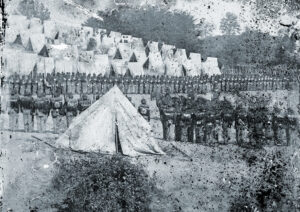
Some people would say I’m thinking this to death. Maybe you’re one of those people. But I can’t help it. I work in an office with giant filing cabinets full of photographs of places long changed, events long forgotten, and people long dead. Sometimes it bothers me–especially when I’m working with portraits of people. It feels funny to look into the eyes of a skinny teenager from Mississippi, all psyched-up for his army adventure, and know that he’s been dead for a century or more–especially if you know he died from diarrhea two months after he enlisted. We have a few portrait photos of particularly lovely young women. It feels strange to look admiringly into those attractive eyes, and then to remember that they closed in death before my grandfather was born. Perhaps that death came as a result of complications in giving birth to another human being, as was the fate of so many American women in the days before modern medical practice.
“Ghosts.” That’s what I’ve often thought of telling visitors who ask what we keep in the cabinets that line our office wall. The pictures are haunted by the fact that they represent real people. They were made by light reflected from the people they depict, people who sat in a photographer’s skylit studio and faced the black box. These ghosts, these haunted pictures, prick my conscience sometimes. I feel a sort of obligation to them–a duty to show some respect, to be compassionate in seeing their shortcomings, to be fair.
Photography can make people seem flat, frozen, and shallow, but it also puts a frame around their humanity. And pictures don’t blink or look away!
Jim Kushlan, Editor, Civil War Times

© 1998, Cowles History Group, Inc., a division of Cowles Enthusiast Media. Allrights reserved.
Reproduction in whole or in part in any form or medium without express
written permission of Cowles Enthusiast Media is prohibited.