


A Little Reverence, Please
Did you ever get blamed for something you didn’t do? How the accusation stung! “(Your name here), you broke my (name of object)!” “I did not!” you probably yelled. “(Sibling’s name) did it.” Other times, you were indeed guilty of committing the offending deed, but had never intended any offense. You felt like the explorer who survived the poison darts just long enough to learn that “Peace, friends,” sounds a lot like “greasy swine” in the local patois.
When offense is taken where none was intended, language is often the problem. By langauge I mean expression, verbal or otherwise. Each culture has its own forms of expression, known and used by the people in that setting.
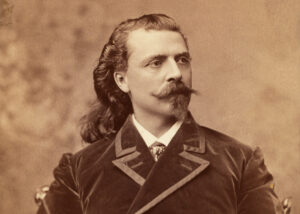
So, imagine my surprise when several letters showed up attacking our use of the picture of Longstreet as a goat with Peter Carmichael’s perceptive article (“Who’s to Blame?” August 1998). The article was clearly about which Confederates were responsible for losing the Battle of Gettysburg. Longstreet has long been blamed for the failure. So, using the visual language of symbolism, we put him there as a goat–in this context, a scapegoat. He looked ridiculous, and rightly so, for in the end the article shows that it is ridiculous to keep making Longstreet the scapegoat.
Some of our critics did understand the visual reference to the scapegoat symbol. They just didn’t like it. They seemed to feel we were doing something disrespectful to Longstreet. This was not the case. We didn’t draw horns, ears, and snout on his picture in a museum, or stick them on his new monument at Gettysburg. That would have been disrespectful. No, what we were doing (we thought) was shedding light on the article’s thesis. “To shed light on,” or “to brighten” is what the Latin root of “illustrate” means. The picture was a caricature. We all see caricatures every day in newspapers and magazines. Perhaps the difference was that this caricature was made from a photograph. Maybe it just seemed too real–almost as if we had somehow summoned Longstreet, defaced him, and taken his picture.
I think what is really at issue is the reverence supposedly deserved by historical figures. I say supposedly, because I’m not sure reverence is a good thing when it comes to the human beings who people our past. Respect, yes. But reverence? Not if it means we can’t look at their words and actions critically, or see them as people, complete with faults and failings. Not if it means we can’t have a sense of humor about their part in the human drama.
I’m just not willing to surround the generals of the Civil War with the incense and insulation of tiptoeing, hush-voiced reverence. We can’t judge their hearts or motives, and we shouldn’t defame them. But if we’re too reverent about our historical personages, the next thing you know, we’ll be reverent–and hence, uncritical–about our history. And an uncritical attitude toward human events would be even sillier than a man with the horns and ears of a goat.
Jim Kushlan, Editor, Civil War Times

© 1998, Cowles History Group, Inc., a division of Cowles Enthusiast Media. Allrights reserved.
Reproduction in whole or in part in any form or medium without express
written permission of Cowles Enthusiast Media is prohibited.