
Call it the Shangri-La factor. In the popular imagination, pre-Communist Tibet was a fabled theocracy in which a beatific Dalai Lama smiled over a kingdom where no man raised a hand in violence as he spun his prayer wheel in search of nirvana. Then along came the Communist Chinese, who made short work of these placid people. Fifty years after the Chinese takeover of Tibet, the myth still persists and has even grown, thanks to the media and the increased interest of Westerners in Buddhism.
But contrary to the pop history version, the Tibetans did not simply let the Chinese roll over their country in 1951. For almost 20 years afterward they fought a long, bloody war of resistance that struck serious blows to Chairman Mao Tse-tung’s expansionist plans. Invisible to outsiders as it raged, this largely unknown struggle that no novelist could have dreamed up got support from the U.S. Central Intelligence Agency, which sponsored secret training camps and made arms and equipment drops to aid horse-mounted herdsmen against the bombers and artillery of the largest standing army on the planet.
By way of background, the story begins in the fall of 1951, when the Chinese People’s Liberation Army (PLA) marched into the ancient Tibetan capital at Lhasa, after forcing the Dalai Lama’s religious government to sign a ‘Plan for the Peaceful Liberation of Tibet.’ This thin fiction of an agreement was somewhat maintained in Lhasa, but in the outlying regions the Chinese occupation involved forced collectivization and the killing of tribal chiefs and lamas.
At that time influential Tibetan traders began to mobilize in a resistance movement that would later become Chushi Gandrug (Four Rivers, Six Mountains). Chushi Gandrug‘s organizer was a hard-fighting, hard-drinking 51-year-old trader named Gompo Tashi Andrugtsang. Uncoordinated and poorly armed as they were, Tibetans conducted a series of surprisingly successful raids and battles.
A widespread popular revolt finally broke out in February 1956, after the Chinese bombed ancient monasteries at Chatreng and Litang, killing thousands of monks and civilians massed there for protection. Given the growing military might of Tibet’s occupiers, Gompo Tashi and the meagerly equipped Chushi Gandrug knew they were going to need outside support. Consequently, the Dalai Lama’s elder brother, Gyalo Thondup, who had already been approached by the CIA, contacted the Americans. The Americans, he found, were quite intrigued with the prospect of supporting the Tibetans as part of a global anti-Communist campaign. If nothing else, their resistance would be one more way to create a ‘running sore for the reds,’ as one CIA man put it, even though at the top levels of the U.S. administration there was no pretense of commitment to Tibetan independence. Gompo Tashi’s guerrillas were excited at the prospect of American support. They knew little about the United States, but judging from the Communist propaganda they received, this faraway country was China’s greatest enemy.
Then one pitch-black night in the spring of 1957 six men from Gompo Tashi’s group found themselves spirited away by the CIA, whereupon they encountered with amazement their first airplane — for which the Tibetans had to invent a new word, namdu, or’sky boat’ — and saw their first white man. After an unimaginable flight in the unimaginable machine, six very bewildered Tibetans landed in Saipan for training, though most had no idea where on earth Saipan might be. Over the next five months the Tibetans were trained in modern weapons and guerrilla tactics. They were also trained in espionage and codes, and in the operation of the hand-cranked radio transmitter/receiver.
‘We only lived to kill Chinese,’ recalled one Tibetan veteran. ‘Our hopes were high.’ One of the trainees, Gyato Wangdu (who would later become the last commander of the Chushi Gandrug), asked CIA operations officer Roger McCarthy for ‘a portable nuclear weapon of some kind…that the trainees might employ to destroy Chinese by the hundreds.’ The CIA declined, but McCarthy noted that Wangdu ‘did take to demolition training with renewed enthusiasm’ and became quite taken with bazookas and mortars.
By fall of 1957, Tibetans who had never seen a sky boat were jumping out of one in the cold light of a full moon over Tibet. One of the first jumpers, Athar Norbu, remembered: ‘We could see the Tsangpo River below us gleaming in the dark. There were no clouds. It was a clear night. Happiness surged through me…[as] we went rattling out of the plane.’ In Lhasa, Athar Norbu and a fellow guerrilla made contact with Gompo Tashi. This ultrasecret project was code-named ‘ST Circus.’ The CIA was now in the fight.
In the summer of 1958, Gompo Tashi established new headquarters at Triguthang in southern Tibet, where thousands of men had gathered in a pan-Tibetan resistance force. In an effort to be more inclusive, they renamed their movement Tensung Dhanglang Magar (Voluntary Force for the Defense of Buddhism). Two CIA-trained Tibetans watched it all, radioing back to the United States. In July the CIA made its first arms drop into Tibet — mostly of untraceable old Lee-Enfield rifles. Agency veterans of ST Circus recalled the excitement and romance at receiving messages from their protégés 15,000 miles away in a near-mythical place few Americans could locate on a globe. Even CIA Director Allen Dulles, searching for Tibet on a world map, poked around near Hungary before one of his officers politely enlightened him. Quoting a fellow CIA officer, John Kenneth Knaus, a former CIA operations officer who worked with Tibetan resistance from 1959 to 1965, admitted, ‘There was something so special’ about Tibet — including the ‘Shangri-La factor.’ Beyond that, the CIA officers involved — self-dubbed ‘the Old Guys Tibetan Club’ — admit today with a chuckle that they felt fortunate to be involved in a ‘good operation’ rather than the 1961 Bay of Pigs debacle in Cuba.
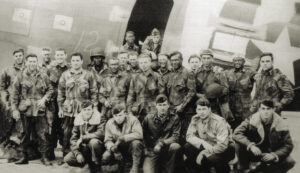
Thrilled by the success of the two radio operators in central Tibet, the CIA built a top-secret facility at Camp Hale, Colo., former home of the U.S. Army’s 10th Mountain Division. The Tibetans loved Camp Hale’s 10,000-foot Rocky Mountain peaks, alpine air and dense forests — reminiscent of home — and called the camp Dhumra, or ‘the Garden.’ Life at Camp Hale was Spartan, the training rigid and thorough. When the Tibetans got on the plane for their return flight homeward, each team carried the same things — its personal weapons, wireless sets and a cyanide capsule strapped onto each man’s left wrist.
The Camp Hale Tibetans believed they were being trained to regain Tibetan independence. Interpreter Thinley Paljor recalled: ‘In our games room we had a picture of [Dwight D.] Eisenhower, signed by him, ‘To my fellow Tibetan friends, from Eisenhower.’ So we thought the president himself was giving us support.’ Some of their trainers came to feel that way as well, with unusually strong bonds formed between many CIA men and the Tibetans.
Back in Tibet the resistance’s furious campaign was paying off. Freedom fighters were effectively in control of significant chunks of the mountain kingdom. Encouraged, the agency made a second arms drop to Gompo Tashi’s men, then two more resupply drops in 1958.
In Lhasa, however, the delicate veneer of coexistence between Tibet’s young god king, His Holiness Tenzin Gyatso, the 14th Dalai Lama, and the Communist occupiers was stripping away. Certain incidents had made obvious, even to the public, the Chinese plans for the Dalai Lama’s elimination, and a multitude of Lhasa’s populace surrounded his residence to protect him. How the Dalai Lama ever escaped through this throng is a mystery, but on March 17, 1959, resistance fighters smuggled him out of his residence, the Potala, and through guerrilla-held territory. They were joined by two CIA-trained Tibetans in escorting him to the Indian border.
Two days later, still unaware of the Dalai Lama’s escape, the Chinese lobbed shells toward his vacated palace, and at 2 a.m. on March 20 they began shelling the city. Enraged when they learned of the Dalai Lama’s escape, the Chinese executed Lhasa civilians in reprisal. Exact numbers are unknown, but the bodies were reportedly stacked like cordwood in the streets. The Chushi Gandrug forces in eastern Tibet were quickly outgunned, outnumbered and, thanks to aircraft and improved Chinese radio communications, relentlessly pursued by beefed-up PLA forces. In the face of such an onslaught, Gompo Tashi and what was left of his force joined the exodus of Tibetans streaming across the Himalayas, following their exiled leader. After the Dalai Lama’s flight to India, the number of Tibetan teams secretly flown into Camp Hale grew. Eventually, 259 Tibetans would be trained there.
Still, there were successes. Gompo Tashi later related to Roger McCarthy, CIA operations officer in charge of the Tibetan program at the time, details of a December 25 attack by 200 of his men: ‘The men attacked on the date set and fought the Chinese for 15 days, destroying more than 500 Chinese quarters and many vehicles….The Chinese Communist newspaper…reported that more than 550 Chinese soldiers had been killed ‘heroically’ in this battle. We lost 20 men and nine others wounded.’ Tashi added that 29 Tibetan volunteers leading 400 locals attacked another Chinese camp in the area. ‘That battle lasted 10 days,’ he recalled. ‘They inflicted heavy casualties on the Chinese….’ Then on January 24, 1959, ‘Another of our volunteer forces of 130 men attacked the Chinese in Tengchen and seized the fortress in Teng Dzong…. More than 4,000 people from the local area volunteered to join us….The destruction of the Chinese was systematic and about completed when unfortunately the skies cleared and the Chinese began bombing and machine-gunning us from their airplanes….We had not killed all of the Chinese but would have if we had better communications between our forces and if the weather had not cleared.’
Eighteen more guerrillas were dropped in September 1959 near Chagra Pembar, 200-plus miles northeast of Lhasa, to train a native force gathered in a tent city with their families and the livestock on which they depended. Eventually the force reached 35,000 Tibetans. This was a feudal culture whose tribes gathered in the same way they had for 1,000 years. Amid the bleating animals and the sea of blue smoke from cooking fires, at least two of the Tibetan teams radioed for more support.
The CIA made several arms drops soon afterward, this time providing M-1 Garand rifles, mortars, grenades, recoilless rifles and machine guns. Nor were they small drops. The first one consisted of 126 pallets of cargo, including 370 M-1 rifles with 192 rounds per rifle, four machine guns with 1,000 rounds each and two radio sets. A second similar drop came the next month, and a third 226-pallet drop during the next full moon provided 800 more rifles, 200 cases of ammo and 20 cases of grenades. On January 6, 1960, some 650 pallets landed with more arms, plus medicine and food. Clearly, after the Dalai Lama escaped, the agency was far less concerned about maintaining ‘plausible deniability’ regarding the arms support.
By now the massive, tumultuous Tibetan camp at Chagra Pembar was a real problem. Guerrillas cannot operate effectively with such encumbrances, and CIA coordinators tried frantically to convince the fighters to disperse into smaller units in order to operate more flexibly and present less of a target. Within a month, the inevitable happened. A veteran of Chagra Pembar, Dechen (surnames are not always used in Tibet) described the attack: ‘A Chinese plane came in the morning and dropped leaflets which told us to surrender and warned us not to listen to the ‘imperialist’ Americans. After that, every day, some fifteen jets came. They came in groups of five, in the morning, at midday and at 3 or 4 o’clock in the afternoon. Each jet carried fifteen to twenty bombs. We were in the high plains so there was nowhere to hide. The five jets made quick rounds and killed animals and men.’ Thousands of men, women and children were killed, both at Chagra Pembar and at another gathering site called Nira Tsogeng. Artillery barrages topped off the aerial bombings. Only five of the Chagra Pembar parachutists survived; the rest died in the Chinese attacks or were hunted down later.
This disaster was even worse when the Chinese bombed the large encampment at Nira Tsogeng, where the CIA had dropped 430 pallets of weapons and other supplies to 4,000 Tibetan fighters. Saddled with their dependents and some 30,000 animals, the surviving resistance fled across the desolate plain of Ladakh, where most died for lack of water.
Things got grimmer. In the spring of 1960, a seven-man team parachuted into Markam in eastern Tibet. Led by Yeshe Wangyal, son of a local chieftain, it hooked up with the force of Wangyal’s father, who had been killed some months before. The guerrillas landed on a light dusting of snow, considered a good omen by Tibetans. This time, however, the omen proved false. After arming the local resistance, they almost immediately came under attack and fought running battles against a steadily swelling PLA force until they were surrounded. The sole living survivor of that team today is a former medical student turned guerrilla named Bhusang, who remembered: ‘The whole mountainside was swarming with Chinese. We fought them nine times. During the battle, the Chinese shouted out to us, ‘Surrender! Surrender!’ We shouted back, ‘Eat sh-t!’…We really fought. It was intense, like a dream. It didn’t seem real. And then, at around 10 o’clock, I looked around and saw that two men from our team had taken their cyanide capsules. It was the end. I put the capsule in my mouth because later I might not have had time.’ Before he could bite down on the capsule, however, a blow from behind knocked him out cold. Bhusang spent the next 18 years in a Chinese prison, where he was tortured and starved until he revealed his training by the Americans and the identities of those taught with him.
The Tibetans’ resistance efforts under CIA auspices, however valiant, now seemed more and more pointless. Forty-nine men had been dropped into Tibet. Twelve survived, two of whom were in Chinese prisons. With the benefit of 40 years of hindsight, it is clear that the area of operations could not even feed its own population, much less an additional guerrilla force. Compounding the situation was the Tibetans’ independent spirit, which often valued pure guts over strategic planning. Against the advice of their CIA mentors, the Tibetans often insisted upon hurling full frontal attacks at the massive Chinese forces.
One of the biggest problems for the resistance was that the CIA could not provide tactical radio equipment, which would allow them to coordinate their forces. While the CIA feared the Tibetans would not observe proper communications security, there were other obstacles. The PRC 10 radios ate batteries by the dozen. Given the choice of being dropped batteries or weapons, Tibetans chose the latter.
The effort to sustain a large guerrilla force had been a painful failure. From a purely logistical standpoint, however, the drops into hostile Tibetan territory had been a brilliant success. ‘The earlier drops, perhaps the first 10 or 15, were very successful in that the morale of the Tibetan trainees and the Chushi Gandrug went sky high,’ McCarthy said in retrospect. ‘The next 20 or so gave the resistance much of what they needed to maintain their winning ways over the PLA; the drops to the Pembar area brought false hope, and thus I call them sadly futile.’
Given the nasty beating the resistance was now taking, the time had come to move its base out of reach of the Chinese. In the summer of 1960 the Tibetan operations base was relocated to Mustang province, a moonscapelike scrap of Nepalese real estate jutting into Tibet. From there the resistance planned, with CIA help, to send 2,100 fighters in groups of 300 into occupied Tibet. One of Gompo Tashi’s lieutenants, an ex-monk named Bapa Gen Yeshe, ran the operation, and he easily collected the first 300 guerrillas for Mustang. Rightfully nervous about such numbers while it secretly staged operations in Nepal without consent, the CIA demanded the highest level of security.
Security, however, was not the average Tibetan’s strong point; articles began to appear in the newspapers about the more than 2,000 Tibetans flocking into the camp — over three times the original number planned — to be fed, housed and kept occupied. Upset by the security breach, and heeding Eisenhower’s proscription against conducting provocative airdrops in the wake of the 1960 U-2 spy plane incident, the CIA withdrew support. That made for a horribly bitter winter situation in the Mustang camps. Some Tibetans froze to death. Others ate their shoes and animal hides to survive. Eventually, however, money was provided for food, and Tibetan hopes at Mustang remained high.
Spring of 1961 brought the Americans a new president and an apparent change of heart. John F. Kennedy’s administration, at least initially, continued to support Tibetan resistance. The CIA dropped more arms and a seven-man team to the camps in Nepal. It turned out to be one of the most auspicious decisions in CIA history. The Mustang guerrillas proceeded to make a series of smashing raids along the nearby Sinkiang-Tibet Highway running through southwestern Tibet toward Lhasa. Eventually, the Chinese gave up completely on using that important route and built another road farther from the Mustang border.
The real reward for the CIA, however, was an intelligence coup that occurred when 40 Tibetan horsemen overran a small Chinese convoy in what came to be called the ‘blue satchel raid.’ A veteran of the raid named Acho described what transpired: ‘The driver was shot in the eye, his brains splattered behind him and the truck came to a stop. The engine was still running. Then all of us fired at it. There was one woman, a very high-ranking officer, with a blue sack full of documents.’ When the CIA men in Washington opened it, they were stunned. The bloodstained, bullet-riddled cache of 1,500 documents contained the first hard evidence of the failure of Mao’s Great Leap Forward, famine, and discontent within the PLA. John Kenneth Knaus said: ‘The Tibetan Document Raid was one of the greatest intelligence hauls in the history of the agency….So that was of great help as far as getting or maintaining support for these kinds of operations was concerned.’ There were at least three important courier satchels captured, which provided insight into policy decisions, order-of-battle information, and proposals being made by China to India. The Tibetans were happy to know that the Americans were so pleased with the blue satchel’s contents, although Acho, in a 2001 interview said, ‘We still don’t know what was in that bag.’
The satchel was by no means the last of it. In 1962 a Tibetan spy team located deep inside Chinese territory photographed Chinese military sites, made maps and located potential parachute drop zones, at the same time helping to inform the United States about China’s missile programs and efforts to develop nuclear weapons. After repeated attempts, Tibetan operatives managed to plant sensors that gave Washington its earliest clues of China’s first nuclear test at Lop Nor, north of Tibet, in 1964.
Meanwhile, however, China’s collectivization of Tibet was taking a grisly toll. Newly built roads and airfields had allowed the PLA to bury the country in troops and equipment. Ancient monasteries and temples were systematically destroyed; tens of thousands of civilians, including monks and nuns, were killed, raped, scalded and imprisoned. Famine rumbled across the ‘roof of the world.’ Altogether 1.2 million Tibetans died, either at the hands of the soldiers or from the Chinese starvation strategy. ‘We should have committed ourselves earlier,’ McCarthy said, ‘before the Chinese got those roads and airstrips built, and before they established their lines of communications so thoroughly.’
By the mid-’60s things began to deteriorate for the Tibetans. Now aware of the Mustang camps, of which there were four, India and Nepal were nervous about the incursions. The CIA program also had its American detractors. Kennedy’s ambassador to India, John Kenneth Galbraith, was, in his patrician manner, calling it ‘a particularly insane enterprise’ involving ‘dissident and deeply unhygienic tribesmen.’ The guerrillas were instructed to cease making armed incursions inside Tibet and to limit their operations to intelligence gathering. The Tibetans nodded and smiled, then continued raiding until the late 1960s. The CIA made its last arms drop in May 1965.
Meanwhile, trouble was brewing within the Tibetan organization, beginning with the death of the 64-year-old Gompo Tashi in September 1964, following surgery to remove 10 pieces of shrapnel acquired from years of fighting. The Dalai Lama’s brother, Gyalo Thondup, and camp organizer Lhamo Tsering replaced Gompo Tashi with Bapa Yeshe, a reliable fighter of the old school. More akin to a feudal tribal chief than a contemporary guerrilla commander, however, Yeshe and a like-minded group generally kept things stirred up among the resistance camps. Camp Hale vets said he misappropriated funds and supplies. In Mustang province he terrorized the locals and stole from farmers. The Nepalese protested to India, and of course the Indians protested to the Dalai Lama, while the Chinese happily kept up the political pressure on both Nepal and India for letting the Tibetans stay there at all.
Though he had his own followers, Bapa Yeshe was dismissed in 1968. Camp Hale Tibetans and CIA men say he proceeded to Kathmandu (where he remains today) and gave the Nepalese army minute details as to where the resistance camps were located and the names of their leaders.
There would be one more Mustang resistance leader. Gyato Wangdu, a steel-hard fighter and one of the original Saipan-trained Tibetans, would be the principal actor in the Chushi Gandrug‘s tragic closing act.
It was President Richard Nixon’s rapprochement with China that rang the death knell for the Tibetan resistance. John Kenneth Knaus, now an associate at the Fairbank Center for East Asian Research at Harvard University, wrote, ‘After their journey to Beijing Dr. [Henry] Kissinger told his chief [Nixon], ‘We are now in the extraordinary situation that, with the exception of the United Kingdom, the People’s Republic of China might well be closest to us in its global perceptions.” These global perceptions did not include the Tibetans.
When the order to close ST Circus came down, not a few CIA field officers were as angry and saddened as the Tibetans. While they still feel it was a great program and are proud of their part in it, they are regretful that they did not or could not do more. ‘It was more a case of not being straightforward with the Tibetans,’ McCarthy lamented, ‘and letting the State Department types have the trump cards, especially at critical junctures. Again, had we been able to go to Tibet’s aid in 1952, or even up to 1955, history would have been rewritten. By 1958 and 1959 we were again on the tail end of opportunity.’ Rather more bluntly than the other CIA officers involved in ST Circus, McCarthy concluded: ‘Generally speaking, I think the Agency looks at Tibet as having been one of the best operations that it has ever run. Well that’s fine, that’s very complimentary. But if you look at the final results, it’s a very sad commentary. If we look at what we did to Tibet as about the best that we could do, then I say that we failed miserably.’
The base in Mustang struggled on until 1974, when the Nepalese government, under tremendous Chinese pressure, sent troops to shut it down. The Mustang leaders refused to surrender. In an effort to prevent a Nepalese slaughter of his people, the Dalai Lama issued a taped message to be played in all the camps, ordering the Tibetans to lay down their arms. ‘The tape contained the Dalai Lama’s real voice,’ recalled Mustang soldier Ugyen Tashi. ‘So when we heard his message, I swear, some of the men even cried. Everyone heard the message with their own ears, so we had no choice but to give up. Then we turned in our weapons…all day and all night.’ Afterward, some Tibetans threw themselves into a river and were drowned. A CIA-trained senior Tibetan officer slit his own throat on the spot.
Yet one man did not comply — Gyato Wangdu, who with a few select warriors embarked on a hard-fighting run for India. But a month later they were ambushed by Nepalese forces at a place called Tinkers Pass. Seeing the end before him, Wangdu chose to ride straight into his attackers. And with that, it was over. The last fighter of the secret war at the top of the world went down in a deadly cross-fire, as much a casualty of politics half a world away as the guns of Tinkers Pass.
This article was written by Joe Bageant and originally published in the February 2004 issue of Military History. For more great articles be sure to subscribe to Military History magazine today!