
One summer evening in 1853, six young Cheyenne Dog Soldiers lay in the grass outside a Pawnee camp along the Red Shield (or Republican) River. As the scouts were about to pull out and return to the main party, one of them stopped and made a suggestion: ‘Let us wrap ourselves in blankets and go into the village one at a time. We can bump against them and count coup. However, the other scouts refused, reminding the reckless brave that they were there to locate the village so the main party could attack them.
That impetuous warrior, Tall Bull, had by 1864 become acknowledged leader of the Dog Soldiers, the fiercest of the Cheyenne warrior societies. More than 100 lodges, or about 500 people, followed him and the other chiefs over eastern Colorado and western Kansas and Nebraska.
Late that year the Sand Creek Massacre setoff a war with the whites, the so-called Cheyenne-Arapaho War of 1864-65. Tall Bull, seeing the war’s futility, led his people north, away from the white men to the Powder River country. But within a year, homesickness had driven them back to the Republican and Smoky Hill River area.
In the spring of 1866, Tall Bull and his followers returned to a strange land. The buffalo were drifting out of the prime lands along the Smoky Hill, moving away from the advancing farms and railroads. Suffering depredations at the hands of white settlers and seeing the buffalo disappearing, the Dog Soldiers began a war once again. Through the winter and into the spring of 1867 they raided the central stage route, determined to drive the wagons and stations off the buffalo range. In response, Maj. Gen. Winfield S. Hancock took 1,400 soldiers to Fort Larned, Kan., in April to have a council with the Dog Soldiers.
Tall Bull and many other Dog Soldiers responded to the invitation from their agent, Edward Wynkoop. They moved their village of 500 lodges 35 miles southwest of the fort but stopped there and made camp. Sand Creek was still fresh in their memories. Only the chiefs rode into Larned to talk with the soldiers.
Lieutenant Colonel George Armstrong Custer, who was present at the talks, described Tall Bull as a fine, warlike-looking chieftain. While many of the chiefs who came to the council wore captured military clothing, Tall Bull came dressed in his finest, shunning the white man’s clothes. He was described as having 20 to 30 silver dollars flattened out to the size of saucers, fastened ‘flatwise’ on a thong about a yard and a half long, one end of which was attached to the crown of his head and the other end floated out behind him as he rode. His moccasins were embroidered with small beads and he was enveloped in a dark blanket.
That Tall Bull was a major chief by that time was obvious. After Hancock’s speech and display of artillery might, it was Tall Bull who rose and spoke for the group. Lieutenant Albert Barnitz of the 7th Cavalry noticed that one of their principal chiefs, ‘Tall Bull’, while making a speech… or rather while the interpreter was translating… stood tapping the ground with his foot, in a very defiant manner.
Tall Bull was not defiant. Nor was he conciliatory. Professing his desire for a just peace, he stressed the need for the soldiers and whites to quit making war on the Indians. Custer’s recollection of the speech indicates that Hancock and his soldiers had not come to listen but to dictate to the Indians. His [Tall Bull’s] speech contained nothing important, recalled Custer.
Tall Bull’s final statement indicates that what Barnitz took for defiance was probably impatience mixed with a little contempt: I shall have no more to say to you there [in his village, to which Hancock was determined to go] than here. I have said all I want to say. He had recently visited the Powder River country, where Sioux leader Red Cloud wanted to chase out the white man. Reports from the north indicated he was doing just that. The Cheyennes could do the same on the Smoky Hill. At least twice during that time, Tall Bull maintained the peace by stopping the Dog Soldiers from attacking the troops as they approached their village and also by restraining the great warrior Roman Nose from killing Hancock during a council.
Displaying even more maturity and responsibility, Tall Bull led his people away from the village, abandoning all possessions rather than risking a fight so close to the women and children. Hancock, enraged at their defiance, burned the village. The war that followed this foolish action was over quickly. Hancock was withdrawn from the Plains. A council was arranged in the fall of 1867 at a place on the Medicine Lodge River in south-central Kansas. All the tribes were invited-and most of the Indians on reservations attended.
Camping three days’ journey west of the council on the Cimarron River, the Dog Soldiers under Tall Bull waited for six days. When they finally arrived at noon on September 28, it was in a manner that left no doubt they were not a conquered people. Arriving on horseback, the Dog Soldiers formed a platoon front about 150 yards from the commissioners, as they had seen the cavalry do many times. At the sound of a bugle, they charged into camp firing weapons in the air and brandishing bows with arrows nocked. Skidding to a halt within yards of the commission, they slid to the ground, then laughed and began shaking hands.
During the talks that followed, Tall Bull, one of the major negotiators, emphasized again that the Cheyennes wanted peace but also said that if war was what the whites wanted, he would accept that. Negotiations stalled. The Cheyennes refused to give up the hunting grounds north of the Arkansas River. The peace commission had already written out a treaty that required just that. As the council began to look like a failure, Senator John B. Henderson of Missouri, the chief negotiator, provided a verbal understanding that the Cheyenne chiefs could hunt between the Arkansas and the Republican as long as there were buffalo there. With that understanding, the chiefs signed the treaty. As Barnitz said in a letter to his wife, the Indians were signing away their rights … as they have no idea what they are giving up.
In the spring of 1868, Tall Bull violated the Medicine Lodge Creek Treaty by taking his warriors north of the Arkansas to hunt and raid. It was he who chose the warriors to raid the Kaws at Council Grove in eastern Kansas that year. To escape the soldiers who responded to those raids, Tall Bull led his band of about 300 warriors and their families to the headwaters of the Republican. In August 1868 they were camped along the Arikaree fork of the Republican-hunting buffalo and preparing for winter. More Cheyennes and several groups of Sioux and Arapahos joined them there until they numbered close to 700 warriors.
Colonel Sandy Forsyth led a group of 50 scouts in pursuit of the raiders. On September 16, 1868, they camped on the Arikaree-not knowing that the whole of the tribe he was chasing and a lot more were camped 20 miles away on the same stream. Hunters rushed into the Cheyenne camp that evening and told of the white scouts. Tall Bull roused the camp, calling on his allies to prepare for war.
Tall Bull’s actual conduct in the battle that followed-the Battle of Beecher Island-is unknown. He is not mentioned by the Cheyenne survivors as one of the warriors who led the charges or directed the battle, but his presence throughout is acknowledged. He advised Roman Nose not to go into the battle with his medicine broken but urged him to hurry his purifications. He was there after the morning failures with the group seeking Roman Nose to lead the next charge. He was there at the end, after Roman Nose had fallen, to pick up the pieces of this great mass of warriors who had fought and failed.
Most of the Indian survivors went north, but Tall Bull gathered a mixed company of Dog Soldiers, Sioux and Arapaho lodges and attacked western Kansas and Nebraska again. Although he was never beaten in battle, the cold that winter drove the Dog Soldiers to the reservation-the Southern Cheyenne villages around Fort Cobb.
During a move in the spring from Fort Cobb to Fort Supply, an argument broke out between Tall Bull and Chief Little Robe. Tall Bull wanted the young men to join him, when the ponies got fat, in raiding and hunting north of the Arkansas. Chief Little Robe could see nothing good in that and ordered Tall Bull off the reservation. Tall Bull left angry, with about 165 lodges of Dog Soldiers, stating he would live free or die.
Traveling north through eastern Colorado Territory, Tall Bull led his people to the Republican again-trying to find the bands that had not gone south for the winter. While Tall Bull’s people camped near Beaver Creek, the 5th Cavalry, under Major Eugene Carr, attacked them. A long, tiring fight ensued over many miles and with many skirmishes. The village lost many provisions and lodges. In retaliation, Tall Bull led his warriors to the Smoky Hill, where they killed, looted, burned and kidnapped. When he had sated his anger and his need for provisions, he retreated once again into the rough and isolated country between the Republican and the Plattedetermined to take his people north once again, as he had in 1865, to five free with their northern relatives.
At White Butte, as the Cheyennes called Summit Springs, Tall Bull rested his village. We will stop here for two days, he told his followers, then we will push across the south Platte and go up to the Rock where we starved the Pawnees. Believing that they had outrun the pursuing soldiers, and sure that the Platte was too high to cross, they settled into camp. But on the afternoon of July 11, 1869, Carr’s Pawnee scouts found the village. Without being detected, the troops came within 1,200 yards of the sleepy village and attacked. Without a chance to organize or to defend themselves or their families, the Cheyennes ran, grabbing horses where they could, trying to get out of the way of the big American horses and the screaming Pawnees. Two Crows, a Cheyenne Dog Soldier, recognized a horse as it came toward him. It was Tall Bull’s war pony, a gentle and welltrained animal. He ran alongside it, grabbed its mane, then swung onto it. On its back, he escaped from the village.
Tall Bull, in the meantime, grabbed another pony, an orange-colored steed with a silver mane and tail. He lifted his wife and child onto its back with him, then ran it into a narrow, steep ravine. About 20 others ran there with him. When he had secured his wife and child deep in the ravine, he rode back to the opening, dismounted and stabbed his horse behind the foreleg, causing the animal to drop to the ground, dead. The Pawnee scouts under Frank and Luther North surrounded the ravine. As the North brothers rode up, an Indian raised his head over the rim and fired at them. Frank quickly dismounted and handed his brother his reins. He told his brother, Ride away and he will put his head up again.
Luther did as he was told, while Frank aimed his rifle at the spot where the head had disappeared. Within a few seconds, the Indian’s head popped up again. North killed him with one shot. A few minutes following, a woman and child left the ravine, signaling Frank North not to shoot. She approached him begging for mercy in sign language. North sent her to the rear with the child. North organized his scouts to attack and overrun the ravine. Within minutes the battle was over. Everyone between those steep banks was dead.
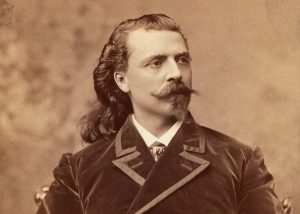
After the battle, an interpreter discovered that the woman who had come out of the ravine was one of Tall Bull’s widows. She said that North had killed Tall Bull with that one shot. Others, though, also claimed to have killed him. A Lieutenant Masons claim is unsubstantiated. William Buffalo Bill Cody’s claim is based on an episode that happened after the main battle, when skirmishers returned to harass the troops in the village.
Cody reported that there was an Indian on a very nice horse riding just out of rifle range. Cody dropped into a gully and slithered out to where he could be sure to hit the man and not the horse, for the horse was his quest. With a single shot from cover, Cody downed the man. The horse, in a panic, ran into the village and was captured. Later that day, as the captured Indians saw Cody leading the horse, a woman set up a howl. Through an interpreter she claimed to be Tall Bull’s wife and recognized the horse as his.
Although it is easy to confuse things in memory and during a battle, these two reports, North’s and Cody’s, seem to be so contradictory that only one can be the truth. In reality, both are probably true. Early in the fight, Two Crows had taken one of Tall Bull’s war ponies. It is most likely that Cody killed Two Crows or someone who had taken the horse from him and not Tall Bull.
At the end of the Battle of Summit Springs, Tall Bull was dead. Roman Nose was a year dead. So was Black Kettle. All the leaders of the Southern Cheyennes and the fiercest of all the warrior societies were gone. So, too, was the power of the Southern Cheyennes-forever.
This article was written by L. Robert Pyle and originally published in the April 2002 issue of Wild West Magazine.
For more great articles be sure to subscribe to Wild West magazine today!