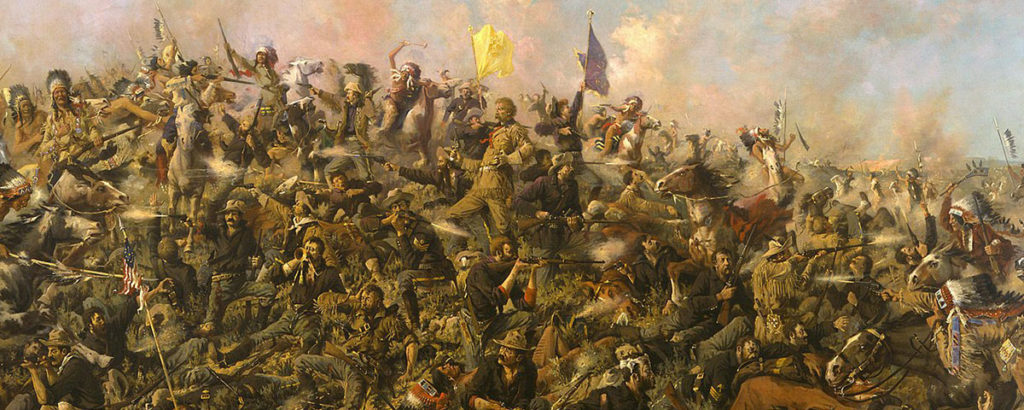
It may be that the Battle of the Little Bighorn is the most written about subject in American history. For more than 120 years, people have speculated about how Lieutenant Colonel George A. Custer and five companies of the 7th Cavalry were overwhelmed in southeastern Montana Territory by a combined force of Lakota and Cheyenne Indians on June 25, 1876. Yet, the controversy does not appear any closer to resolution today.
A number of reasons have been given for the defeat: Custer disobeyed orders, disregarded the warnings of his scouts, violated the principles of warfare by dividing his command, was ambushed or was the victim of a conspiracy; internal regimental jealousies caused the defeat; the regiment was too tired to fight; there were too many raw recruits or too many Indians; the Indians had better weapons; or the Army had defective guns. Most of the conjectures are moot, for they can be debated endlessly — with intellectual and emotional biases interfering with reasoned arguments. Given the nature of the evidence, however, one should be able to study the role the weapons played in the battle’s outcome with a modicum of objectivity.
how the 7th cavalry was armed
During the battle, the 7th Cavalry troopers were armed with the Springfield carbine Model 1873 and the Colt Single Action Army revolver Model 1873. Selection of the weapons was the result of much trial and error. The Ordnance Department staged field trials of 89 rifles and carbines, which included entries from Peabody, Spencer, Freeman, Elliot and Mauser. There were four primary contenders: the Ward-Burton bolt-action rifle; the Remington rolling-block; the ‘trapdoor’ Springfield; and the Sharps, with its vertically sliding breechblock.
Although repeating rifles such as the Spencer, Winchester and Henry had been available, particularly in the post-Civil War years, the Ordnance Department decided to use a single-shot system. It was selected instead of a repeating system because of manufacturing economy, ruggedness, reliability, efficient use of ammunition and similarity to European weapons systems. Ironically, the board of officers involved in the final selection included Major Marcus A. Reno, who would survive the 7th Cavalry’s 1876 debacle on the Little Bighorn.
Recommended for you
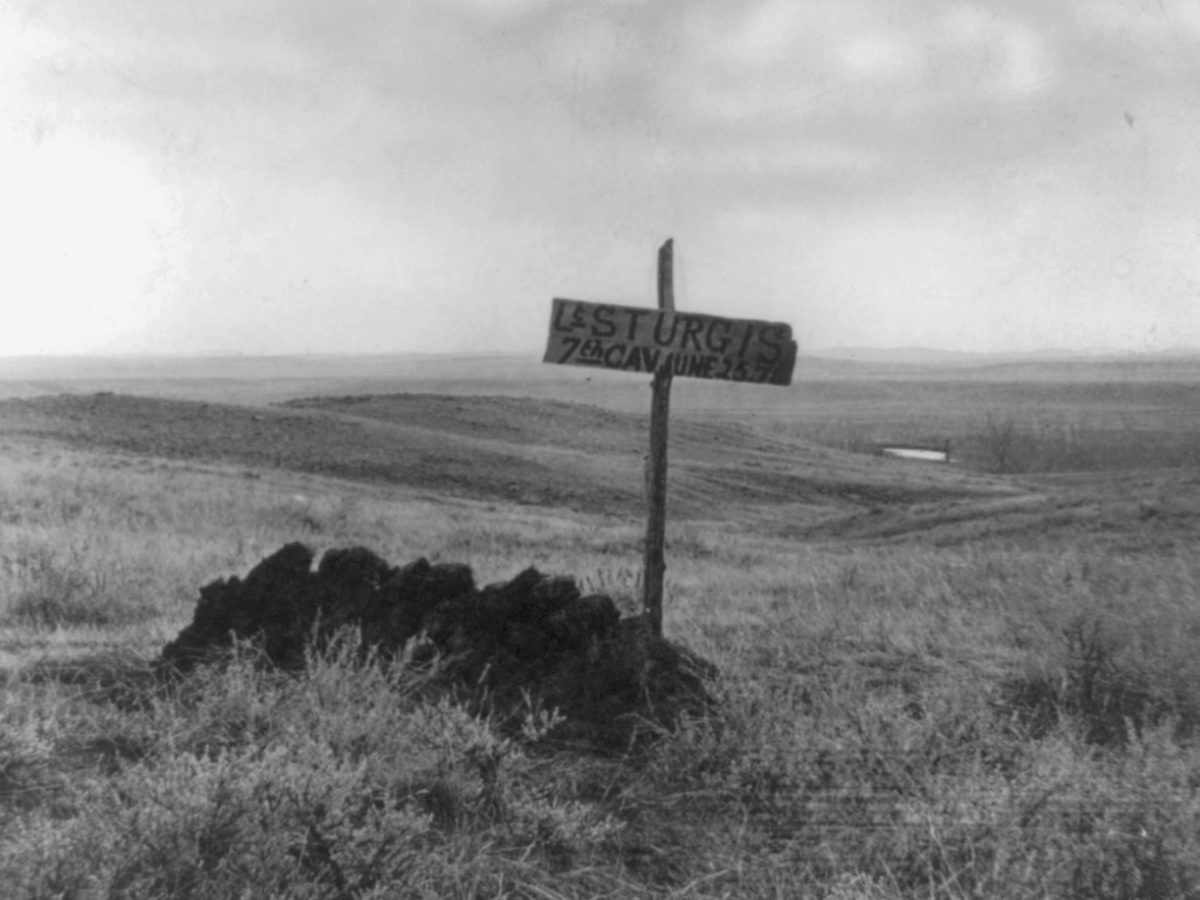
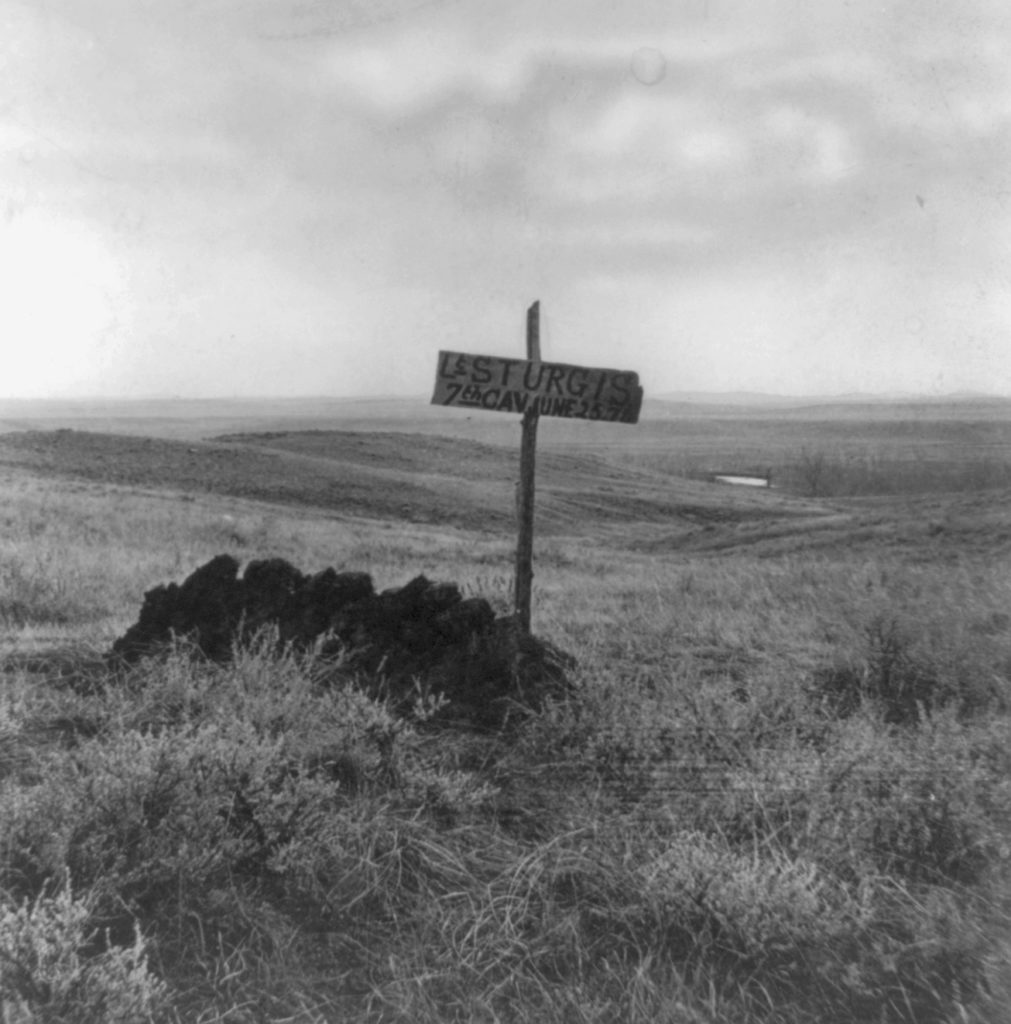
The guns were all tested for defective cartridges, endurance, accuracy, rapidity of fire, firing with excessive charges, and effects of dust and rust. The Springfield was the winner. The Model 1873 carried by the 7th Cavalry was a carbine that weighed 7 pounds and had an overall length of 41 inches. It used a .45-caliber copper-cased cartridge, a 405-grain bullet and a charge of 55 grains of black powder. The best effective range for this carbine was under 300 yards, but significant hits still could be scored out to 600 yards. A bullet was driven out of the muzzle at a velocity of about 1,200 feet per second, with 1,650 foot-pounds of energy. The trapdoor Springfield could hurl a slug more than 1,000 yards and, with proper training, could be fired with accuracy 12 to 15 times per minute.
The Colt Single Action Army revolver was chosen over other Colts, Remingtons and Starrs. By 1871, the percussion cap models were being converted for use with metallic cartridges. Ordnance testing in 1874 narrowed the field to two final contenders: the Colt Single Action Army and the Smith & Wesson Schofield. The Schofield won only in speed of ejecting empty cartridges. The Colt won in firing, sanding and rust trials and had fewer, simpler and stronger parts. The Model P had a barrel of 7.5 inches and fired six .45-caliber metallic cartridges with 28 grains of black powder. It had a muzzle velocity of 810 feet per second, with 400 foot-pounds of energy. Its effective range dropped off rapidly over 60 yards, however. The standard U.S. issue of the period had a blue finish, case-hardened hammer and frame, and walnut grips. The Colt became ubiquitous on the frontier. To the soldier it was a “thumb-buster,” to the lawman a “peacemaker” or “equalizer,” and to the civilian a “hog leg” or “plow-handle.” The revolver was so strong and dependable that, with minor modifications, it was still being produced by the Colt Company into the 1980s.
Overall, the soldiers were pleased with their weapons. Lieutenant James Calhoun of Company L wrote in his diary on July 1, 1874: “The new Springfield arms and ammunition were issued to the command today. They seem to give great satisfaction.” Although most of the men drew the standard-issue weapons, it was their prerogative to purchase their own arms. George Custer carried a Remington .50-caliber sporting rifle with octagonal barrel and two revolvers that were not standard issue — possibly Webley British Bulldog, double-action, white-handled revolvers. Captain Thomas A. French of Company M carried a .50-caliber Springfield that his men called “Long Tom.” Sergeant John Ryan, also of Company M, used a .45-caliber, 15-pound Sharps telescopic rifle, specially made for him. Private Henry A. Bailey of Company I had a preference for a Dexter Smith, breechloading, single-barreled shotgun.
what the indians used at little bighorn
It is well-known that Custer’s men each brought a trapdoor Springfield and a Colt .45 to the Little Bighorn that June day in 1876. Identification of the Indian weapons is more uncertain. Participants claimed to have gone into battle with a plethora of arms — bows and arrows, ancient muzzleloaders, breechloaders and the latest repeating arms. Bows and arrows played a part in the fight. Some warriors said they lofted high-trajectory arrows to fall among the troopers while remaining hidden behind hill and vale. The dead soldiers found pincushioned with arrows, however, were undoubtedly riddled at close range after they were already dead or badly wounded. The long range at which most of the fighting occurred did not allow the bow and arrow a prominent role.
Not until archaeological investigations were conducted on the battlefield during the 1980s did the extent to which the Indians used gunpowder weapons come to light. Modern firearm identification analysis revealed that the Indians had spoken the truth about the variety and number of weapons they carried. The Cheyenne warrior Wooden Leg went into battle with what he called a “six-shooter” and later captured a Springfield carbine and 40 rounds of ammunition. The Miniconjou One Bull, Sitting Bull’s nephew, owned an old muzzleloader. The Hunkpapa Iron Hawk and the Cheyenne Big Beaver had only bows and arrows. Eagle Elk, an Oglala, started the battle with a Winchester. White Cow Bull, an Oglala, also claimed to have a repeater.
There were 2,361 cartridges, cases and bullets recovered from the entire battlefield, which reportedly came from 45 different firearms types (including the Army Springfields and Colts, of course) and represented at least 371 individual guns. The evidence indicated that the Indians used Sharps, Smith & Wessons, Evans, Henrys, Winchesters, Remingtons, Ballards, Maynards, Starrs, Spencers, Enfields and Forehand & Wadworths, as well as Colts and Springfields of other calibers. There was evidence of 69 individual Army Springfields on Custer’s Field (the square-mile section where Custer’s five companies died), but there was also evidence of 62 Indian .44-caliber Henry repeaters and 27 Sharps .50-caliber weapons. In all, on Custer’s Field there was evidence of at least 134 Indian firearms versus 81 for the soldiers. It appears that the Army was outgunned as well as outnumbered.
Survivors of the remaining seven companies of the 7th Cavalry asserted that the Indians were equipped with repeating rifles and mentioned Winchesters as often as not. Major Marcus Reno claimed: “The Indians had Winchester rifles and the column made a large target for them and they were pumping bullets into it.” Although some white survivors claimed to be heavily outgunned, Private Charles Windolph of Company H was probably closest to the truth when he estimated that half the warriors carried bows and arrows, one-quarter of them carried a variety of old muzzleloaders and single-shot rifles, and one-quarter carried modern repeaters.
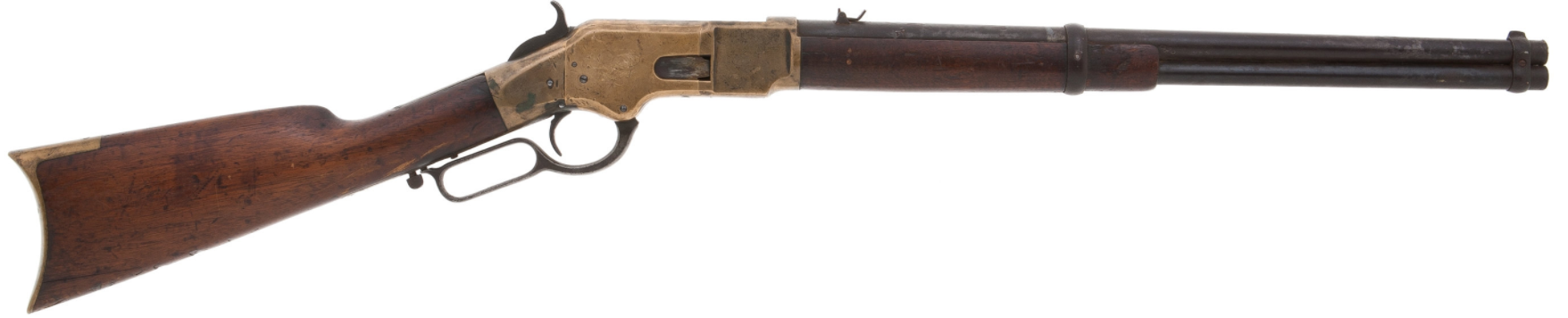
The Winchester, in fact, was almost a duplicate of the repeater developed by B. Tyler Henry, who was to become superintendent at Oliver Winchester’s New Haven Arms Company. The success of Henry’s rifles ensured Winchester’s success, and the primary weapon carried by the Indians at the Little Bighorn was either Henry’s model or the slightly altered Winchester Model 1866. Both fired a .44-caliber Henry rimfire cartridge. The Henry used a 216-grain bullet with 25 grains of powder, while the Winchester used a 200-grain bullet with 28 grains of powder. Velocity was 1,125 feet per second, with 570 foot-pounds of energy. Cartridges were inserted directly into the front of the Henry magazine, while the Winchester 1866 had a spring cover on the right side of the receiver. The carbine and the rifle had a capacity of 13 and 17 cartridges respectively.
Even though the board selected the Springfield as the top single-shot weapon, the Indians’ arms fared nearly as well in subsequent tests. The Springfields recorded 100 percent accuracy at 100 yards, but so did the Winchesters, Henrys, Sharps, Spencers and various muzzleloaders. At 300 yards, the Springfield .45-55 carbine’s accuracy dropped to 75 percent, while the repeaters fell to about 40 percent. Weapons such as the Springfield .50-70 rifle and the Sharps .45-70 rifle, however, still produced 100 percent accuracy at 300 yards. At 600 yards, both Springfields could still hit the mark 32 percent of the time, while the Winchesters and Henrys were almost useless at ranges over 300 yards.
this article first appeared in wild west magazine


In effect, all of these weapons fared equally well at short ranges. The Army’s Springfields had an accuracy advantage over the Indians’ repeaters at medium ranges (200500 yards), plus they were more rugged and durable. The long-range weapons the Indians had were too few (there is evidence of only one Sharps .45-70 at the battle) to make much of a difference. Their preponderance of repeaters increased the Indians’ firepower, but the repeaters were only good at short ranges. And the Indian narratives tell a story of a battle that, until the last desperate moments, was fought generally from long range (more than 500 yards) — a dubious advantage to the cavalrymen, since the relatively slow muzzle velocity of their Springfields meant a high trajectory that made chances of hitting anything slim.
Overall, the pluses and minuses probably canceled each other out. It has been said that the 7th Cavalry might have won had it still used the seven-shot Spencers it carried at the Washita battle in 1868, but the Spencers were no better in range or accuracy than the Henrys or Winchesters, and they carried fewer bullets. The contention that the Springfields suffered from a significant number of extractor failures was not borne out. Only about 2 percent of the recovered specimens showed evidence of extractor problems. Custer has been criticized for not taking along a battery of Gatling guns, but General Nelson A. Miles commented on their usefulness: “I am not surprised that poor Custer declined” taking them along, he said. “They are worthless for Indian fighting.” Equipping the cavalry with another type of weapon probably would not have made much of a difference at the Little Bighorn.
What, then, was the reason that the soldiers made such a poor showing during the West’s most famous Army-Indian battle? While Custer’s immediate command of 210 men was wiped out and more than 250 troopers and scouts were killed in the fighting on June 25-26, the Indians lost only about 40 or 50 men. The explanation appears to lie in the fact that weapons are no better than the men who use them. Marksmanship training in the frontier Army prior to the 1880s was almost nil. An Army officer recalled the 1870s with nostalgia, “Those were the good old days. … Target practice was practically unknown.” A penurious government allowed only about 20 rounds per year for training — a situation altered only because of the Custer disaster. And the 20 rounds of ammunition often were expended in firing at passing game rather than in sharpshooting. The 7th Cavalry was not hampered by new recruits, for only about 12 percent of the force could be considered raw. What handicapped the entire regiment, however, was inadequate training in marksmanship and fire discipline.
fight or flight, or Posture or submit?
It is a perplexing incongruity in a citizen-soldier army, but the vast majority of soldiers, when the time comes to kill, become conscientious objectors. It has been asserted that man is essentially a killer at heart, yet recent studies have found evidence quite to the contrary. Men, soldiers or not, simply have an innate resistance to killing. It is fairly well-established that when faced with danger, a man will usually respond by fight or flight. New studies, however, have argued that there are two other likely possibilities: posture or submit.
It is the posturing that has increased with the introduction of firearms to the battlefield. It is almost impossible for a man to shirk battle when at arm’s length from an enemy wielding sword or pike, but it is easier to remain aloof at rifle range. One has other options besides immediate fight or flight. The Rebel yell or the Union “hurrah,” for example, were simply means to bolster one’s courage while trying to frighten the enemy. The loud crack of the rifle also served the same purpose, filling a deep-seated need to posture — i.e., to put on a good show and scare the enemy, yet still leave the shooter far away from a hand-to-hand death struggle. In reality, those good shows were often harmless, with the rifleman firing over the heads of the enemy.
Firing high has always been a problem, and it apparently does not stem solely from inadequate training. Soldiers and military historians from Ardant du Picq to Paddy Griffith and John Keegan have commented on the phenomenon. In Civil War battles, 200 to 1,000 men might stand, blasting away at the opposing lines at 30 to 50 yards distance, and only hit one or two men per minute. Commanders constantly admonished their troops to aim low and give the enemy a blizzard at his shins. Regardless, the men continued to fire high — sometimes intentionally, sometimes without consciously knowing what they were doing.
In Vietnam, it was estimated that some firefights had 50,000 bullets fired for each soldier killed. In the Battle of the Rosebud, eight days before the Little Bighorn fight, General George Crook’s forces fired about 25,000 rounds and may have caused about 100 Indian casualties — about one hit for every 250 shots. One of the best showings ever made by soldiers was at Rorke’s Drift in an 1879 battle between the Zulus and the British infantry. There, surrounded, barricaded soldiers delivered volley after volley into dense masses of charging natives at point-blank range where it seemed that no shot could miss. The result: one hit for every 13 shots.
Indeed, it was at times even difficult to get soldiers to fire at all. After the Battle of Gettysburg, 24,000 loaded muskets were recovered; only 12,000 of them had been loaded more than once, 6,000 had from three to 10 rounds in the barrel, and one weapon had been loaded 23 times! One conclusion is that a great number of soldiers are simply posturing and not trying to kill the enemy.
At the Little Bighorn, about 42,000 rounds were either expended or lost. At that rate, the soldiers hit one Indian for about every 840 shots. Since much of the ammunition was probably lost — Indians commented on capturing ammunition in cartridge belts and saddlebags — the hit rate must have been higher. Yet the results do not speak highly of a supposedly highly trained, “crack” cavalry regiment.
High fire very plainly took place at the Little Bighorn, most notably on Reno’s skirmish line in the valley. Troopers went into battle with 100 rounds of Springfield ammunition and 24 rounds of Colt ammunition. About 100 troopers on Reno’s line may have fired half of their ammunition toward the southern edge of the Indian village. The 5,000 bullets only hit one or two Indians, but they certainly damaged the lodges. A Hunkpapa woman, Moving Robe, claimed “the bullets shattered the tepee poles,” and another Hunkpapa woman, Pretty White Buffalo, stated that “through the tepee poles their bullets rattled.” The relatively low muzzle velocity of the Springfield meant that the soldier would have had to aim quite a bit over the head of an Indian for any chance to hit him at long distance. If the officers called for the sights to be set for 500 yards to hit Indians issuing from the village — and did not call for a subsequent sight adjustment — by the time the Indians approached to 300 yards, the bullets would be flying 12 feet over their heads. As a comparison, the modern M-16 round, traveling at 3,250 feet per second, has an almost flat trajectory, and the bullet will hit where it is aimed with very little sight adjustment.
The soldiers’ difficulty in hitting their targets was also increased by the fact that the Indians stayed out of harm’s way for almost all of the battle. One archaeological field study located the Indian positions and discovered that nearly every location was 300 to 1,200 yards away from the troopers. Given the distances involved, the fact that soldiers tended to shoot high, the lack of marksmanship training and the conscious or subconscious posturing involved, it is not surprising that the troopers scored so few hits.
Arguably, posturing has been a factor at every gunpowder battle, as it most likely was at the Little Bighorn — but how about submission? It was drummed into the common soldier that he should save the last bullet for himself. He supposedly would place his Colt to his head, pull the trigger and go to Fiddler’s Green, rather than take the chance of being captured alive. Custer had even requested that his wife, Elizabeth, who often rode with the cavalry, should be shot by an officer rather than chance being taken by the Indians. As strange as it may seem, even with this dread of being captured, surrender attempts were made at the Little Bighorn fight. Indian accounts tell of white men who, at the last second, threw their hands up in surrender and offered their guns to the onrushing warriors. The Lakotas and Cheyennes were not swayed.
A deciding factor: Strength in unity
Given all these factors operating against the citizen-soldier, how could commanders ever go into battle expecting to win? The answer, again, lies not in the weapons the soldiers used, but in the soldiers themselves — and their officers.
Dividing up a command in the near presence of an enemy may be an act to be avoided during large-scale maneuvers with army-sized units, but such is not the case during small-scale tactical cavalry maneuvers. Custer adhered to the principles for a successful engagement with a small, guerrilla-type, mobile enemy. Proven tactics called for individual initiative, mobility, maintaining the offensive, acting without delay, playing not for safety but to win, and fighting whenever the opportunity arose. It was accepted that Regular soldiers would never shirk an encounter even with a superior irregular force of enemies, and that division of force for an enveloping attack combined with a frontal assault was a preferable tactic. On a small scale, and up to a certain point, Custer did almost everything he needed to do to succeed.
Problems arose, however, when tactics broke down from midlevel and small-scale, to micro-scale. According to then Brevet Major Edward S. Godfrey, fire discipline — the ability to control and direct deliberate, accurate, aimed fire — will decide every battle. No attack force, however strong, could reach a defensive line of steady soldiers putting out disciplined fire. The British army knew such was the case, as did Napoleon. Two irregular warriors could probably defeat three soldiers. However, 1,000 soldiers could probably beat 2,000 irregulars. The deciding factor was strength in unity — fire discipline. It was as Major Godfrey said: “Fire is everything, the rest is nothing.”
Theoretically, on the Little Bighorn, with a small-scale defense in suitable terrain with an open field of fire of a few hundred yards, several companies of cavalrymen in close proximity and under strict fire control could have easily held off two or three times their number of Indian warriors. In reality, on the Little Bighorn, several companies of cavalrymen who were not in close proximity and had little fire control, with a micro-scale defense in unsuitable, broken terrain, could not hold off two or three times their number of Indian warriors.
A deciding factor: mind-set
The breakdown stems from an attitude factor. Custer exhibited an arrogance, not necessarily of a personal nature, but rather as a part of his racial makeup. Racial experience may have influenced his reactions to the immediate situation of war. It was endemic in red vs. white modes of warfare and implies nothing derogatory to either side. Historically, Indians fled from large bodies of soldiers. It was Custer’s experience that it was much harder to find and catch an Indian than to actually fight him. Naturally influenced by his successful past experiences with small-unit tactics, Custer attacked. He was on the offensive. He knew he must remain on the offensive to be successful. Even after Reno had been repulsed, Custer was maneuvering, looking for another opportunity to attack.
The positions that Custer’s dead were found in did not indicate a strong defensive setup. Even after the Indians had taken away the initiative, Custer’s mind-set was still on “attack.” Although a rough, boxlike perimeter was formed, it appeared more a matter of circumstance than intent. Custer probably never realized that his men’s very survival was on the line, at least not until it was too late to remedy the situation. The men were not in good defensible terrain. They were not within mutual supporting distance. They were not under the tight fire control of their officers. Custer’s troopers were in detachments too small for a successful tactical stance. When the critical point was reached, the soldiers found themselves stretched beyond the physical and psychological limits of fight or posture — they had to flee or submit.
Seemingly out of supporting distance of his comrades, the individual trooper found himself desperately alone. The “bunkie” was not close enough. The first sergeant was far away. The lieutenant was nowhere to be seen. The trooper responded as well as he could have been expected to. He held his ground and fought, he fired into the air like an automaton, he ran, he gave up. Some stands were made, particularly on and within a radius of a few hundred yards of the knoll that became known as Custer Hill, where almost all of the Indian casualties occurred. When it came down to one-on-one, warrior versus soldier, however, the warrior was the better fighter.
George Armstrong Custer may have done almost everything as prescribed. But it was not enough to overcome the combination of particular circumstances, some of his own making, arrayed against him that day. Inadequate training in marksmanship and poor fire discipline resulting from a breakdown in command control were major factors in the battle results. Neither Custer’s weapons nor those the Indians used against him were the cause of his defeat.
historynet magazines
Our 9 best-selling history titles feature in-depth storytelling and iconic imagery to engage and inform on the people, the wars, and the events that shaped America and the world.