IN MID-SEPTEMBER 1814, a letter was surreptitiously delivered to William C.C. Claiborne, governor of Louisiana. It came from a man he detested: Jean Lafitte, ruler of the island of Grand Terre and the Bay of Barataria near the mouth of the Mississippi River. Lafitte had grown rich and powerful as a pirate who preyed on American, English, and Spanish commerce during the second decade of the Napoleonic wars. In 1813, Claiborne had posted a notice declaring his readiness to give anyone who seized the suave brigand a reward of five hundred dollars. Lafitte retaliated by posting around New Orleans an offer of $5,000 to anyone who delivered Claiborne to him at Grand Terre.
The letter from the outlaw made Claiborne’s scalp tingle, not with rage but with panic. Lafitte informed the governor that he had just received an offer from one Nicholas Lockyer, captain of His Majesty’s sloop Sophia, to join a British force in an assault on New Orleans. The expedition was intended to create a British colony along the Gulf of Mexico to match the one Great Britain already had in Canada. The conquest would neatly encircle the treacherous Americans, who had declared war on Great Britain in 1812 while it was embroiled in its death grapple with Napoleon Bonaparte.
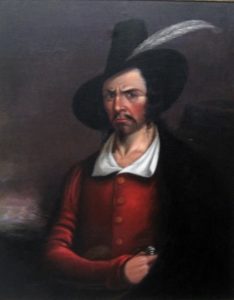
Now Napoleon was beaten and in exile on the island of Elba. The veteran troops who had helped batter the French dictator into submission were rendezvousing in Jamaica before coming to America to settle affairs. Captain Lockyer urged Lafitte to join him in rescuing the French citizens of Louisiana from American “oppression.” Control of New Orleans, near the Mississippi’s mouth, would make the British the virtual rulers of the burgeoning American heartland, whose economy depended on the tons of cotton and grain shipped down the river each year for export. Lafitte had asked the British captain to give him two weeks to think it over. The pirate chieftain then promptly sent the letter to Claiborne with an offer to side with the Americans if he and his men were granted amnesty for their previous sanguinary careers.
To counter the British, Governor Claiborne had only half a dozen gunboats and a 14-gun schooner—a fleet that a single Royal Navy frigate could annihilate in five minutes. His army consisted of little more than 700 Regulars, commanded by an imperious stranger from distant Tennessee, 47-year-old Maj. Gen. Andrew Jackson, with whom the governor was barely on speaking terms.
In the 11 years since Claiborne had assumed governorship of the territory that Thomas Jefferson had purchased from Napoleon, the pompous bureaucrat had done little to conciliate the local French and Spanish Creoles to American rule. Instead, the governor specialized in writing self-pitying letters to Washington blaming everyone but himself for his unpopularity. “I am not at the head of a United and Willing people,” he moaned. “Our country is filled with spies and traitors.”
His attempts to organize a militia in New Orleans had been met with defiance and ridicule. When the French consul urged his fellow Gauls to respond to Claiborne’s pleas, his windows were smashed. Militia from the northern part of the state, disgusted by the inertia of the locals, had deserted in droves. Dampening everyone’s spirits was an acute shortage of guns and ammunition.
While Governor Claiborne chewed his fingernails, New Englanders far to the north were gathering in Hartford, Connecticut, to discuss the possibility of seceding from the United States rather than continuing “Mr. Madison’s War.” Pint-sized President James Madison, Jefferson’s successor, had been a disaster as a national leader. He had allowed Congress to vote Alexander Hamilton’s Bank of the United States out of business in 1811, on the eve of declaring war on the British. As a result, the federal government was now broke. So worthless was the guaranty of the United States that Secretary of War James Monroe was reduced to riding from bank to bank in Washington, begging for loans to which he pledged his own credit.
New Englanders had opposed the declaration of war. They had been disenchanted with the federal government since President Jefferson’s harebrained 1807 embargo, which banned American ships from trading with anyone, lest the English or the French attack them. Madison had maintained a modified version of this policy, which one critic compared to cutting a man’s throat to cure a nosebleed. Since the start of the war, a series of disastrous attempts to conquer Canada had turned Yankee disenchantment with federal incompetence to disgust and calls for secession.
That sentiment reached a climax of sorts in late August 1814 when the British landed a small army in Maryland, routed a ragtag American force at Bladensburg, and spent several days in Washington burning the chief executive’s mansion, the Capitol, and other government buildings. A few days later, the king’s men captured huge amounts of undefended war materiel in nearby Alexandria. Only an American naval victory on Lake Champlain turned back another British army descending from Canada to support New England’s secessionists.
Even farther from New Orleans, in Ghent, Belgium, another group of Americans, led by John Quincy Adams, son of the second president, was locked in bitter argument with British commissioners, trying to negotiate a peace treaty. The British kept insisting on the principle of uti possidetis (winner keeps what he holds), an absolute right to navigate the Mississippi, and the privilege of creating a satellite Indian nation in the heart of the Northwest Territory. Faced with what amounted to an end to their sovereignty, the Americans could only keep rejecting the terms and hope for good news from the battlefronts.
Clearly, a great deal depended on Maj. Gen. Andrew Jackson’s response to the crisis unfolding in Louisiana. The lean, hawk-eyed Tennessean, known to his admirers as “Old Hickory,” had won a national reputation when he crushed the powerful Creek Indian Nation earlier in 1814 and forced them to cede 23 million acres to land-hungry Americans. But how would he fare against soldiers and commanders who had defeated Napoleon Bonaparte? New Orleans sophisticates were not favorably impressed. One Creole lady, who had seen Bonaparte’s generals strutting in their gorgeous uniforms in Europe, called Jackson “an ugly old Kaintuck flat-boatman.”
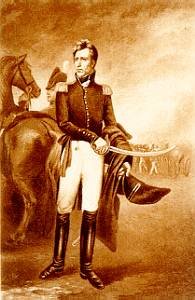
Jackson, however, had one asset many better-dressed generals lacked: audacity. In September, when Claiborne received Lafitte’s letter of warning, Old Hickory was in the port city of Mobile, which American forces had only recently taken from the Spanish. Rumors of the projected British invasion had already reached him. He was convinced that the British would try to seize Mobile, march overland to Baton Rouge, and descend on New Orleans from the north. Jackson had already sent urgent messages to the Tennessee veterans of the Creek War, ordering them to join him without delay.
Seizing Mobile and marching overland was, in fact, the British plan, but its execution was botched by egregious overconfidence. Relying on intelligence that Louisiana was virtually undefended, the commander of the expedition, Vice Adm. Sir Alexander Cochrane, sent a four-ship squadron and a company of Royal Marines commanded by Lt. Col. Edward Nicholls to nearby Pensacola in theoretically neutral Spanish West Florida. There the British began arming and training Creek warriors. Nicholls dispatched Captain Lockyer to woo Lafitte and his Baratarians and issued a windy proclamation telling the Creoles that he had come to liberate them from “a faithless imbecile government.” With the help of a dark night and some money, he had the gasconade posted all over New Orleans.
On September 12, Nicholls assaulted Fort Bowyer, guarding the mouth of Mobile Bay. Jackson had garrisoned the weak 12-gun fortification, which the British had predicted they would capture in 20 minutes, with 130 American Regulars. They amazed the British, and possibly themselves, by beating off the attack and sinking a frigate in the process. Nicholls retreated to Pensacola. Without waiting for orders from the all-but-defunct federal government, Old Hickory launched a preemptive strike on this enemy beachhead. With 2,000 mounted Tennesseans commanded by one of his ablest lieutenants—huge, combative General John Coffee—plus 700 Regulars and a detachment of Mississippi Territory dragoons, Jackson smashed into Pensacola on November 7 after an hour of hard fighting. Dismayed by the ferocity of the American attack, the British fled to their ships.
The Spanish and the Creeks were totally cowed by this defeat. The Spanish governor, who had previously written sneering letters to Jackson, was soon signing himself “Your most faithful and grateful servant, who kisses your hand.” At least as important, word of the redcoats’ flight quickly spread through the southwest, giving new confidence to militiamen from Baton Rouge to Nashville.
Garrisoning Pensacola with two regiments, Jackson double-timed his little army back to Mobile, where he found panicky letters from Claiborne and others, begging him to come immediately to New Orleans to invigorate the city’s defenders. Meanwhile, the governor, in an act of incredible stupidity, had allowed the local naval commander, Commodore Daniel Todd Patterson, to attack Jean Lafitte at Grand Terre. With more than 2,000 men under his command, Lafitte could have wiped up the Gulf of Mexico with Patterson’s little flotilla and its 70-man force of Regulars. Instead, still hoping for American amnesty, he and his elder brother Pierre retreated to nearby islands, allowing Patterson to capture 80 of their men and their eldest brother, Alexandre Frederic, who sailed under the name Dominique You. Patterson plundered the pirate headquarters of merchandise worth half a million dollars and claimed it as spoils of war.
At first, Jackson approved of the commodore’s foray. In a proclamation he issued to stiffen Creole spines, the general asked how anyone could have confidence in the British, who were ready to court an alliance with the “hellish banditti” of Barataria. But when he reached New Orleans, he learned that most of the Creoles sympathized with the Lafittes and considered the expedition another of “Claibo’s” blunders. Jackson was still inclined to denounce the pirates—until he talked to an old friend, Edward Livingston.
An adroit lawyer, Livingston had served in Congress with Jackson and earned his trust in the tumultuous political wars of the late 1790s. Livingston urged the general to make a deal with the Lafittes and do his utmost to conciliate the Creoles. As Jackson grasped the degree of disaffection in the city and its environs, he agreed to appear at a welcoming ceremony in the central square, the Place d’Armes, to encourage local loyalty. The impact of the ramrod-straight, grim-visaged general and his promise to “drive their enemies into the sea, or perish in the effort” was, one awed Creole wrote, “electric.” Males of all ages now rushed to join the militia.
While American control of Mobile and Pensacola denied the British a port from which to disembark an army, Jackson knew that he was dealing with an enemy that was expert in amphibious operations. There was nothing to prevent them from landing elsewhere along the 600 miles of Gulf coast. In fact, they could choose from no less than six possible routes to the city. Jackson did not have the manpower to defend them all–and he was astonished to discover “the total ignorance among all descriptions of persons…of the topography of the country.”
As the American general considered his options, Admiral Cochrane’s 50-ship armada carrying 1,500 marines and 5,498 veteran troops debouched from Negril Bay, Jamaica. The 56-year-old Cochrane had never forgiven the Americans for killing his brother, Major Charles Cochrane, at the Battle of Yorktown in 1781. The admiral was a veteran campaigner in the Caribbean, with the capture of several French islands, most notably Martinique, on his escutcheon. His British army counterpart was 33-year-old, black-whiskered Maj. Gen. John Keane, who had served as a brigadier under Arthur Wellesley, duke of Wellington, in Spain, where he had acquired a reputation for recklessness.
The unofficial motto of the expedition was “Beauty and Booty.” The first word referred to the exotic ladies of New Orleans, already world famous; the second to the 15 million dollars worth of cotton and other goods in the city’s bulging warehouses. In spite of the repulses at Pensacola and Mobile, optimism was high. Many officers brought their wives along on the transports, giving the expedition a holiday air. Admiral Cochrane had promised everyone that they would celebrate a glorious Christmas in New Orleans.
Ignoring a debilitating attack of dysentery and the miseries of lead poisoning from a bullet lodged in his shoulder since 1813 (a byproduct of a street brawl with political enemies in Nashville), Old Hickory spent the first weeks of December touring and strengthening New Orleans’ defenses. He paid particular attention to Fort Saint Philip, 50 miles below the city. This bastion, with its 28 24-pounders, was the key to blocking an enemy attempt to sail up the Mississippi to attack the city. Additional batteries were erected for insurance at English Turn, a huge bend in the river fourteen miles below New Orleans. Axmen were put to work blocking the numerous bayous feeding off the great river that an amphibious enemy might use.
Aboard his flagship HMS Tonnant, Admiral Cochrane was studying maps and intelligence reports received from numerous spies within the city, most of them Spanish Creoles who hoped an English victory would return Louisiana to Spain. Brushing aside General Keane’s doubts, the admiral decided the route of choice was via Lake Bourgne. This broad, shallow arm of the Gulf came within six miles of the Mississippi River just above English Turn. From there, the invaders would have several options, including a right turn into nearby Lake Pontchartrain, which would enable them to attack New Orleans from the north. Or they might find a bayou that would allow them to reach solid ground and a road along the river leading directly to the city from the south.
Aware of Lake Bourgne’s potential, Jackson and Commodore Patterson had stationed five of their six gunboats on its muddy waters. Admiral Cochrane saw these impudent six-gun creatures as so many gnats to swat away. He lowered 45 attack barges, each armed with a cannon and equipped with planked-up sides to protect the crews from musketry. With Captain Lockyer in command, they attacked the American flotilla on December 14.
The American commander, Lieutenant Thomas ap Catesby Jones, had dispatched a tender to warn Jackson of the British onslaught. In spite of an ill wind that had grounded his flagship and another gunboat, Jones decided to fight it out with the oncoming oar-powered squadron. By the time the battle ended two hours later, ten Americans were dead, 35 wounded, including Jones, and the rest captured. The British victors had 17 dead. Captain Lockyer was among their 77 wounded.
Although he had been defeated, Jones had bought Old Hickory precious time to prepare for the British thrust, now that Lake Bourgne was clearly the route of choice. The American commander rushed a very Jacksonian message to General Coffee, whom he had stationed at Baton Rouge: “You must not sleep until you reach me.” Other messengers headed up the Mississippi to urge militia from Tennessee and Kentucky, supposedly en route, to hurry forward without a moment’s delay. Even more vital was the anticipated arrival of a shipment of guns and ammunition the federal government had dispatched from Pittsburgh months earlier. Next, Jackson tried to deal with the panic that swept New Orleans at the news of the gunboats’ annihilation on Lake Bourgne. He issued a proclamation declaring martial law and appeared before the Louisiana State Legislature, which was rife with defeatism. The Tennessean urged it to adjourn for two or three weeks, leaving him in charge. The legislators refused and threw in a condemnation of martial law as a violation of their rights. Totally alienated from Governor Claiborne, they had begun to dislike the pugnacious Jackson, too. The legislature wanted to retain the option of surrendering the city rather than have it destroyed in a climactic battle.
Livingston, still urging Jackson to meet with Lafitte, persuaded the legislature to pass a resolution offering the Baratarians amnesty. That enabled Jackson to change his mind without eating his words about dealing with pirates. There is no record of his meeting with Lafitte, but Jean and his brother Pierre were soon part of the general’s staff, and their brother, Dominique You, was commanding a battery of cannons hoisted from the buccaneers’ ships. Even more valuable was their contribution of 7,500 badly needed flints and 500 muskets.
On December 20, the advance guard of General Coffee’s 2,000-man brigade reached New Orleans. The rest arrived there two days later. A few hours behind them came 3,000 Tennessee militiamen commanded by Jackson’s good friend Maj. Gen. William Carroll. During their five-week trip down the river, Carroll had drilled his men constantly. The militiamen had also scooped up 1,100 muskets, part of the slow-moving federal shipment from Pittsburgh. That same day, December 22, Major Thomas Hinds arrived with a regiment of blue-coated Mississippi Territory dragoons. All Jackson needed now was the 2,300 Kentucky militia force, which was somewhere on the river. On December 23, he scribbled a letter to his wife, Rachel, ending with a reassuring, “All’s well.”
The general had barely sealed the letter when three mud-stained men burst into his headquarters on Royal Street to tell him that the British army had materialized only eight miles below the city without a shot being fired at them. There was nothing between them and New Orleans—not a fort, not a gun, not a soldier.
From the flabbergasted Jackson’s point of view, the British had done the impossible. Two officers, disguised as locals, had found the one bayou leading from Lake Bourgne to the Mississippi River that the Creoles, ignoring Jackson’s repeated orders, had failed to block. Suitably named Bienvenue, it had welcomed (with an assist from the smaller Bayou Mazant and a connecting canal) the midnight passage of General Keane, 2,080 men, and two guns to firm ground on the Villeré plantation along the Mississippi. At dawn on December 23, they had surrounded and taken prisoner the militia detachment supposedly guarding the bayou. The commander of the detachment, Major Gabriel Villeré, had made a daring escape and was among the messengers who brought the grim news to headquarters.
The general’s reaction was vintage Jackson. “I will smash them, so help me God!” he roared. Instead of frantically throwing up entrenchments, which would have shaken the spirit of his raw soldiers, as soon as darkness fell on December 23, Jackson attacked. He ordered Carroll and his Tennessee militia into New Orleans to act as his reserve, while he threw 2,131 troops at the British. The American attack was led by the 7th and 44th U.S. Infantry, John Coffee’s division of Tennesseans, and a battalion of free black refugees from Haiti that Jackson had recruited over the objections of the Creoles. For artillery, he ordered Patterson to send the 14-gun schooner USS Carolina down the river until it was opposite the British camp.
Surprise was total. The overconfident British were cooking their dinners over blazing fires when Carolina‘s guns blasted sheets of grapeshot into their camp. The American Regulars, free blacks, and some Creole militia rushed down the road along the levee, supported by two six-pounder guns, while Coffee’s veterans swung left through a cypress swamp to outflank the enemy. But darkness, river fog, difficult terrain, and fierce British resistance soon turned the battle into a melee fought by platoons and detachments, which was described by one participant as being ‘hand to hand, bayonet to bayonet, sabre to sabre.’ In his headquarters at the Villeré mansion, a distraught General Keane could make no sense of what was happening. “What kind of fighting is this?” he cried to an aide.
By midnight, Coffee and his men had shot their way through the British camp almost to the river. But they now found themselves under flank attack by companies from the second British brigade coming down the Bayou Bienvenue. Ahead of them Colonel William Thornton of the 85th Regiment had recovered from the initial shock of the American attack and organized a formidable defense in a ditch between the old and new levees. Coffee readily obeyed Jackson’s order to fall back. Two deserters had told the commander that the British had 6,000 men and all of them were coming down the Bayou Bienvenue. Jackson was convinced that this was the main British attack, and he could not risk losing even part of the force he had thrown at the enemy.
In the light of dawn, both sides counted their losses. American casualties were 24 killed, 115 wounded, and 74 captured. British losses were 46 killed, one hundred 67 wounded, and 64 captured. Among the captured British was Major Samuel Mitchell of the 95th Regiment, the man who had put the torch to the American Capitol in August.
On December 24, a shaken General Keane abandoned his plan to attack New Orleans that day, even though he now had 4,700 men under his immediate command. He reasoned that Jackson must have gathered a formidable army; Keane could not imagine risking such a reckless night attack without a large reserve. In the British ranks Jackson’s audacity had taken a toll. Lieutenant George Robert Gleig of the 85th said that the losses included “our finest soldiers and best officers.” Among them was Gleig’s close friend, Captain Charles Grey, shot through the head by a rifle ball. Compounding the Britons’ misery was the weather. It had turned bitterly cold. The worst sufferers were two regiments of Jamaican blacks who were wearing summer uniforms. Further demoralizing the British was Carolina, still offshore, hurling grapeshot and cannonballs into their camp. To counter its heavy guns, Keane had nothing but field pieces.
General Jackson, using the Mississippi dragoons as his eyes, soon learned that the British were entrenching rather than continuing to advance. After deciding to imitate them, Jackson led his men back two miles to the Rodriguez Canal, a muddy ditch about 20 feet wide and four feet deep bordering the Chalmette plantation. He ordered them to start throwing up a rampart behind the canal. By the end of the day, a wall of mud and logs extended 600 yards from the river to a cypress swamp. Jackson, seldom off his horse, ordered the digging to continue through the night.
On Christmas Day a salvo of artillery fire from the British sailed toward the American earthworks. Was it the expected attack? No. Jackson’s dragoons informed him the British were welcoming the arrival of a new general. According to rumor, it was no less than the duke of Wellington. In fact, it was the duke’s brother-in-law, 37-year-old Maj. Gen. Sir Edward Pakenham. The conqueror of Guadeloupe, and a brilliant subordinate of Wellington in Spain, Pakenham had been appointed to supersede the unsuccessful Keane. As an index of British intentions, Pakenham reportedly carried in his dispatch case a commission as governor of Louisiana and the promise of an earldom for his anticipated victory. Popular with the troops, he was seemingly imbued with Wellington’s aura.
General Pakenham found nothing merry about this Christmas Day. He had grave doubts about Admiral Cochrane’s route of attack via Lake Bourgne and the Bayou Bienvenue. The British army was trapped on an isthmus three-quarters of a mile wide, between the Mississippi and a virtually impassable swamp, with the narrow, 12-mile-long bayou the only link to the lake and the fleet. Now that they had lost the element of surprise, they were faced with sustaining their army along a watery supply line 80 miles long, with open boats as the only means of transport.
When Pakenham hinted at his dissatisfaction, Admiral Cochrane informed him that if the general was not willing to attack this American rabble in arms, he would do it with his sailors and marines and assign the army the job of carrying the baggage into New Orleans. Pakenham decided the army’s honor was now at stake and sat down with his staff to plan offensive operations.
The general’s first decision was to get rid of Carolina. His artillery commander, Colonel Alexander Dickson, assured him he could manage it with relatively light field guns as soon as he built a furnace for hot shot. At dawn on December 27 his guns opened fire with incandescent rounds on the schooner. Jackson had told the captain to retire up the river—orders that should have been sent 24 hours earlier. But the wind was feeble and the current strong. After being hit by the first few rounds, the vessel almost instantly became an inferno. As flames curled around its magazine, the crew abandoned ship. Soon afterward Carolina exploded with a blast that drew cheers from the watching British regiments.
British gunners now turned their attention to the merchant ship Louisiana, a mile up the river. It had been equipped with 24-pounders manned by a crew impressed from the hundreds of idle seamen on the New Orleans waterfront. Ignoring the whizzing hot shot, Louisiana‘s crew used their longboat and cables on shore to haul their ship up the river and out of range.
Satisfied, Pakenham ordered the army to launch an assault across the plain of Chalmette the following day. He knew another 2,700 men under Maj. Gen. John Lambert would soon arrive to reinforce him. But he was also driven by the knowledge that the fleet could not feed his men for long, and they could not survive on the meager pickings from the nearby plantations. He was confident that his artillery could shatter Jackson’s mud earthwork, exposing the “dirty-shirts” (his troops’ name for Jackson’s Tennesseans) to British bayonets.
On the crisp, cold morning of December 28, the British advanced in two columns. General Keane led three infantry regiments and some riflemen along the river while veteran Maj. Gen. Samuel Gibbs led another column toward Jackson’s opposite flank, which was anchored in the cypress swamp. Cannons belched at the American defenses, supplemented by shrieking Congreve rockets, weapons designed to panic green troops. Jackson steadied his men by shouting that the Congreves were nothing but ‘toys to amuse children.’
Out in the river, Louisiana lay silent. The British hot shot battery opened on the ship, but the range was too great for accuracy. As Keane’s column came within 600 yards of the American parapet, Commodore Patterson growled, “Fire!” A terrific cascade of metal tore into the British ranks. Simultaneously, the batteries along the American parapet cut loose with what one British soldier called “As destructive a fire of artillery as I have ever witnessed.” Several Britons ruefully noted the battery commanded by Dominique You was among the most deadly. Adding to the chaos was hot shot that set fire to several nearby Chalmette plantation buildings, which an enterprising American had booby-trapped the night before. The buildings exploded, showering the stunned British troops with debris.
The American gunners now concentrated on the British artillery. They swiftly knocked out two six-pounders and sent the crew of two nine-pounders scrambling for cover. But on the American left, out of range of Louisiana‘s guns, Gibbs’ column made progress. He sent a regiment into the swamp, where they outfought 200 Tennesseans, killing their commander. A detachment of 60 Choctaw Indians recruited by Jackson slowed their progress, but it looked to Gibbs as if a determined assault could turn the American flank.
As messengers reached Jackson with reports of his endangered left flank, an emissary from Claiborne brought even more alarming news from New Orleans. The legislature was debating whether to surrender the city to the British. The Creoles had heard that Jackson planned to burn New Orleans if he was forced to retreat, and they feared that the city’s destruction would be the signal for a slave rebellion. Old Hickory’s response was vintage Jackson: “Tell him [the governor] to investigate. If he finds it’s true… blow up the legislature!”
Meanwhile, in the center of the battlefield, General Pakenham saw his left column in disarray and many of his cannons dismounted. Out of touch with General Gibbs on the right, the British commander had a fateful loss of nerve, and he ordered a withdrawal. Gibbs and his regimental colonels were infuriated.
Pakenham now turned to Admiral Cochrane to rescue the campaign. The army’s light artillery could not match the 24- and 32-pounders aboard Louisiana and on the American ramparts. Could the sailors bring heavier guns from the fleet? Cochrane instantly rapped out an order, and his men began the herculean task of rowing ten 18- and four 24-pounders in open boats 80 miles across shallow Lake Bourgne and up Bayou Bienvenue. Equally daunting was the task of mounting the guns in the oozy soil, which turned to water when a shovel reached eight inches below the surface.
Nevertheless, after three days and nights of constant labor the big guns were ready by the morning of January 1, 1815. Artillery chief Alexander Dickson and Pakenham’s chief engineer, Colonel John Fox Burgoyne, illegitimate son of the British general who had surrendered at Saratoga, improvised above-ground emplacements by filling sugar hogsheads from nearby plantations with mud. Burgoyne also dug entrenchments to protect the troops during the coming artillery duel.
As morning fog lifted on January 1, the British guns thundered. The overconfident Americans were celebrating New Year’s Day with a dress parade. They scrambled frantically for their weapons as cannonballs and Congreve rockets hissed and shrieked around them. At first the British guns had the better part of the duel. They disabled three American guns. Within half an hour, however, American shots began knocking the hogsheads to pieces, and the recoil of the big British naval guns hurled several of them off their platforms.
Although not a single British gun was disabled, Pakenham lost 27 men to American fire. After three hours the British guns fell silent. They had run out of ammunition.
Once more a glum Pakenham gave the order to withdraw. American artillerymen made the movement impossible until dark. A cold rain began to fall, and the shivering men had to endure it—and the humiliation of another setback—for the rest of the day. At nightfall the British veterans were so dispirited they refused to drag a 10-gun center battery to safety. An aide had to awaken Pakenham, who rushed to the scene to issue orders personally. In his journal, a morose Lieutenant Gleig reported the army was “disheartened and discontented.”
The British high command was not in a much better frame of mind—until good news came from the fleet: General Lambert and his 2,700 fresh men were at the mouth of Lake Bourgne. Pakenham ordered them brought up Bayou Bienvenue immediately. He also pounced on an offer from Admiral Cochrane to bring enough boats up the bayou to ferry part of the army across the river. On the opposite bank, only untried Creole militia protected Patterson’s guns.
General Jackson also welcomed reinforcements. On January 4, the missing Kentucky militiamen, 2,368 strong, began to arrive. But the general was dismayed to learn that they had only 700 guns. Worse, the militiamen were in terrible shape, ragged and half-starved. Jackson procured warm clothes from New Orleans and persuaded the mayor to part with enough rusty Spanish muskets from the city’s armory to equip another 400, but they were placed well in the rear of his line, along with their unarmed comrades, as a reserve.
Pakenham, meanwhile, was planning an assault that would take a leaf from Jackson’s book. He was sending one of his most aggressive colonels, William Thornton of the 85th, with 1,400 men to attack the militia on the west bank. They had orders to seize Patterson’s guns and enfilade the American breastwork. Meanwhile, Keane was to lead a demonstration along the river, drawing the fire of the American artillery concentrated on their right, while Gibbs with 2,100 men was to make the main attack on their left. One of Pakenham’s black regiments was ordered to divert Coffee’s men by luring them into the cypress swamp. The newly arrived Lambert and his troops were to remain in the center of the battlefield, ready to strike toward whatever flank seemed most promising. All these hammer blows and feints were to be executed in the predawn darkness, when the accuracy of American cannons and rifles would be negligible.
It was a good, even masterful, plan. But on January 8, the day of the attack, things started going wrong almost immediately. Thornton’s boats became mired in mud when a dam constructed by Cochrane’s naval engineers collapsed, and the water in the canal that was supposed to float them into the Mississippi ran the other way, toward Lake Bourgne. Thornton got only 450 of his 1,400 men across the river. In Gibbs’ column, the 44th Regiment was supposed to carry fascines to fill in the Rodriguez Canal and scaling ladders to mount the enemy’s breastwork. As the column moved forward, Gibbs discovered they had neither of these essentials. He sent the 44th back to get them, spurred by sulfurous curses at their colonel, Thomas Mullins.
In the center, an anxious Pakenham waited for the sound of gunfire across the river. Thornton’s attack was supposed to be the signal for the advance on the right. The darkness was ebbing into a foggy dawn. In another hour, his columns would be murderously visible to the waiting Americans. His aide urged him to postpone the attack. With desperate fatalism, the general shook his head and ordered two rockets fired to signal the advance. General Gibbs, still without fascines or scaling ladders, went forward anyway. On the opposite shore, Thornton and his men were just getting out of their boats. Misjudging the strength of the Mississippi’s current, they had been driven a thousand yards downstream, away from the American guns.
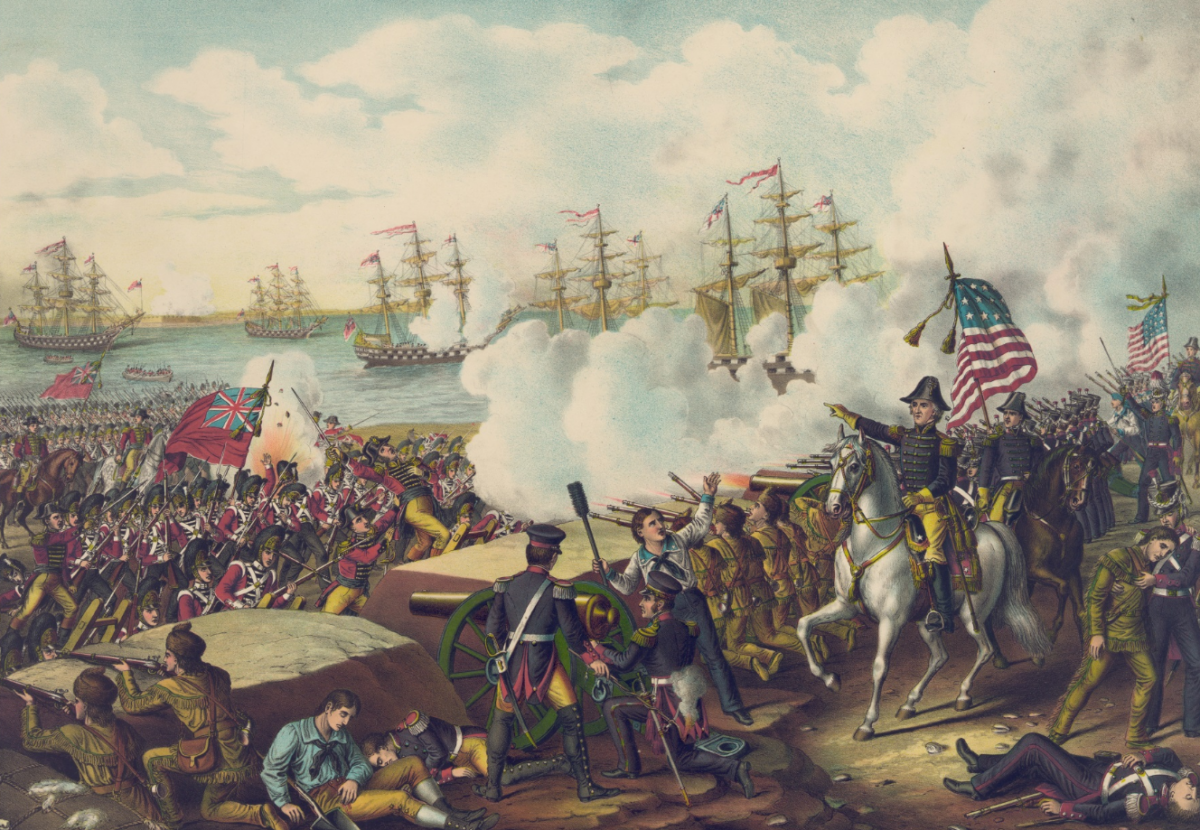
At first, Pakenham’s men seemed to be finally favored by good luck. They advanced amid swirling fog. Behind his breastwork, Jackson knew they were coming. He had his 4,400 men ready, their rifles and cannons loaded, as the beat of British drums thudded through the mist. By now, his mud rampart was between 14 and 20 feet thick. He had no worries about British artillery. Tensely, he sent orders right and left along the line to keep heads down until he gave the order to fire.
Abruptly, almost as if an invisible hand had drawn a curtain back, the fog lifted and the winter sun glittered on the redcoats’ ranks. Jackson’s cannons boomed, and the hissing shots tore terrible gaps in the British columns. As Gibbs’ formation came within three hundred yards, Brig. Gen. John Adair, the commander of the Kentuckians, summoned one of his best marksmen. He pointed to an officer on a gray horse in front of Gibbs’ men. “Snuff his candle,” he said. A second later, a bullet tore through Major John Whittaker’s left ear and exited his temple. He toppled into the mud. That feat of marksmanship was followed by a blast of fire from the rest of the American line. A British quartermaster, watching from the balcony of a nearby house, saw the 44th Regiment, laboring forward with the fascines and ladders, “literally swept from the face of the earth.” The survivors abandoned their burdens and ran for their lives.
Near the river, in spite of harassing fire from Patterson’s guns on the west bank, the British scored a surprising victory. Lieutenant Colonel Robert Rennie led a flank battalion toward an exposed American redoubt from which his troops could enfilade the Rodriguez Canal line. He captured it and waited for General Keane’s far-larger column to rush to his support. The chance to break through the supposedly impregnable American right flank now seemed more than possible.
To his dismay, Rennie saw Keane’s column, largely the kilted 93rd Highlanders, angling right, toward Gibbs. Keane was reacting to the near-annihilation of the 44th Regiment. More volleys poured from the American rampart. As soon as a soldier fired, he stepped down to reload and another man took his place. In minutes the 21st Regiment in Gibbs’ column disintegrated as totally as had the 44th. Its colonel was dead, and the survivors were running for the rear.
A choleric General Gibbs galloped to the front to rally the panicky regiments behind the 21st. At about the same time, General Keane went down with a bullet in his groin. His Highlanders took fearful losses as they struggled across the muddy plain toward Gibbs’ faltering column. Gibbs, at the head of the column, saw a few brave men from the Twenty-first Regiment and members of the rifle brigade trying to cut steps in the American rampart with their bayonets. “If I live until tomorrow, I will hang Colonel Mullins from one of these trees!” Gibbs roared. A moment later, four bullets smashed into his head and body.
Pakenham, seeing Gibbs’ men in disarray and the Highlanders wavering under the deadly American fire, rode forward to take command of the situation. As he called to the Highlanders to follow him, grapeshot shattered his knee and a bullet killed his horse. Struggling to his feet, he mounted an aide’s horse and shouted, “Come on, brave 93rd!” A bullet struck him in the spine. He toppled into his aide’s arms and was carried to the rear, croaking a final order, “Have Lambert bring up the reserve.” In the forward redoubt, meanwhile, a desperate Rennie led a doomed assault with his handful of men. He was instantly shot dead, and most of his men met the same fate.
Across the river, a very different drama was unfolding. Leading his 450 men in a bayonet charge, Colonel William Thornton routed 800 Creole militiamen and about 200 Kentuckians that Jackson had sent to reinforce them. Their commander, a fat Massachusetts loudmouth named Brig. Gen. David B. Morgan, ran as fast as his men. A cursing Commodore Patterson had to spike his nine-gun battery on the riverbank and follow the scampering amateurs. The British discovered that several of the guns were not badly damaged and could quickly be repaired and turned loose on Jackson’s line. If Thornton had been able to bring his entire 1,400-man division across the river on schedule, he would have drastically altered the outcome of the battle.
But this startling development could not alter the situation on the plain of Chalmette. By the time Thornton’s men reached Patterson’s guns, Pakenham and Gibbs were dying, Keane was incapacitated, and more than half of the attacking army were dead or wounded. The rest were a panicked rabble, bereft of officers and courage.
In the center of the field, General John Lambert and his two reserve regiments had watched the carnage with appalled disbelief. In his campaigns in Spain and France, the 42-year-old Lambert had never seen anything like the murderous accuracy of Jackson’s riflemen. Told that he was now in command, Lambert conferred briefly with Admiral Cochrane at a nearby plantation house. The admiral urged a renewed attack. Lambert walked out of the room without responding to him and ordered Thornton’s men to return to the east bank. For Lambert, the battle was over.
Jackson was enormously relieved when he received a message from Lambert asking for a cease-fire to bury the dead and succor the wounded. Jackson agreed to the proposal but only on the east bank. On the west bank, he wanted the freedom to take the offensive. But a closer look at the corpse-carpeted plain of Chalmette made him realize that was a needless worry. The British army was out of business.
Pakenham’s assault had consumed 3,326 men. Of those, 828 were killed and 2,468 were wounded—with more than half of the latter listed as “permanently disabled,” a medical term that usually meant an amputated leg or arm. The remainder were taken prisoner. The losses in individual regiments make the slaughter even more apparent. The Highlanders lost 868 men out of 1,000. In Gibbs’ column the light infantry lost 650 out of 862. Only 134 survived from the 816 men in the luckless, badly led 44th Regiment. Jackson’s men, behind their mud rampart, had lost only eight men killed and 14 wounded. Old Hickory could only express a sense of wonder at these numbers. “The unerring hand of Providence shielded my men,” he said.
On January 9, American work parties joined the British in burying the dead. They also busily collected more than 1,500 enemy rifles and muskets, which Jackson distributed to his weaponless Kentuckians. The British retreated halfway down the isthmus on which they had fought the battle but showed no sign of departing. Meanwhile, fifty miles down the Mississippi, Jackson soon had a more realistic worry. A Royal Navy flotilla was attacking Fort Saint Philip.
Admiral Cochrane had ordered this foray after the failure of the British artillery on January 1. Two bomb ships, escorted by three sloops and a schooner, began bombarding the fort on the ninth. In command of the strongpoint was Major Walter J. Overton, with a garrison of 346 men. Staying out of range of the Americans’ cannons, the British hurled more than a thousand shells into the fort during the next week. A lack of fuses for his mortars left Overton helpless to fire back. But on January 15, fuses, powder, and other supplies from Jackson’s army arrived. The American mortars soon silenced one of the bomb ships and drove the other one down the river. On the morning of January 18, the British retreated, leaving the fort a shambles. But only two defenders had been killed, and the garrison was still full of fight.
That night, on the Villeré and adjoining de la Ronde plantations, the British army began a silent withdrawal. The engineers had labored for seven days to build a road along the Bayou Bienvenue. By morning, the entire army had struggled through the mud to the shore of Lake Bourgne. They spent another miserable week in the muck and cold waiting to be ferried by Admiral Cochrane’s weary oarsmen to the ships at the mouth of the lake.
In Washington, D.C., another act in the drama was reaching a climax. President James Madison waited anxiously for news from New Orleans—and from Hartford, Connecticut, where the New England convention to discuss secession was still in session. A letter that had left New Orleans on December 24 reported that the British had made a surprise landing with 6,000 men and were marching on the city. On February 3, three delegates set out from Hartford to hand the president an ultimatum demanding that the federal government abandon all direction of the war, leaving its conduct up to individual states or combinations of states. It was not quite secession, but it was a big step toward it.
At Gadsby’s Hotel in Baltimore, only a day’s travel from Washington, the delegates heard a bustle in the streets. People were shouting and shooting off guns. News of Jackson’s January 8 victory had arrived. By the time the delegates reached Washington, a huge celebration was in progress. The New Englanders found rooms in a boardinghouse in Georgetown and waited for the excitement to subside so they could proceed with their embassy. The war was not over.
It certainly did not appear to be over for the British army and navy as they sailed along the Gulf Coast toward Fort Bowyer, at the head of Mobile Bay. Even General Keane, recovering from his wound, agreed that with another 5,600 men they could easily capture Mobile and attack New Orleans overland from the north. After all, victory went to the winner of the last battle, and the British were optimistic after they easily captured Fort Bowyer. Nearby Mobile was practically in their hands.
The next day, however, a British frigate hauled into the anchorage and dispatched a gig to Admiral Cochrane’s flagship. It brought astonishing news from England. On December 24, the British and Americans had signed a treaty of peace at Ghent! It called for a status quo ante settlement—all boundaries would be restored to both sides as they existed at the outbreak of the war. Moderates in the British cabinet had seized on the September 11, 1814, American victory on Lake Champlain to convince the hard-liners it was time to make a peace of reconciliation.
The news reached Washington on February 14 and triggered another wild celebration. The delegates from the Hartford Convention waited in vain to hear from President Madison. After ten days, they slunk out of the capital, and the Hartford Convention became a footnote in history textbooks.
Almost the last man to accept the news of peace as worthy of celebration was Andrew Jackson. He stubbornly refused to disband his army until he heard that both countries had ratified the treaty. This led to some spectacular brawls with the restless natives of New Orleans and with Governor Claiborne. But the general never deviated from his opinion that when dealing with “perfidious Albion,” an American should keep up his guard.
Jackson emerged from his victory at New Orleans a national hero. He was able to parlay his popularity into a political base of power that propelled him to the presidency in 1828. As Jackson was leaving the White House at the end of his second term in 1837, a congressman asked him if there had been any point to the Battle of New Orleans. After all, it had been fought after the peace treaty was signed. The old warrior gave him one of his patented steely glares and said: “If General Pakenham and his 10,000 matchless veterans could have annihilated my little army…he would have captured New Orleans and sentried all the contiguous territory, though technically the war was over….Great Britain would have immediately abrogated the Treaty of Ghent and would have ignored Jefferson’s transaction with Napoleon.”
Was he right? We will never know for certain. Old Hickory settled the argument in advance by winning the battle.
This article was written by Thomas Fleming and originally published in the Winter 2001 edition of MHQ.
For more great articles, subscribe to MHQ: The Quarterly Journal of Military History today!