Germs, not bullets, were a Civil War soldier’s deadliest foes. Army doctors were a close second.
Yellow fever, although justly dreaded during the Civil War, was far from the only disease threatening Union and Confederate troops during the war. Indeed, the soldiers faced such a wide array of deadly diseases, from common childhood ailments such as measles, mumps and whooping cough to the much-feared “surgical fevers”–pyemia, septicemia and erysipelas–that it is a wonder that Robert E. Lee and Ulysses S. Grant ever found enough men to fight a battle, much less a war.
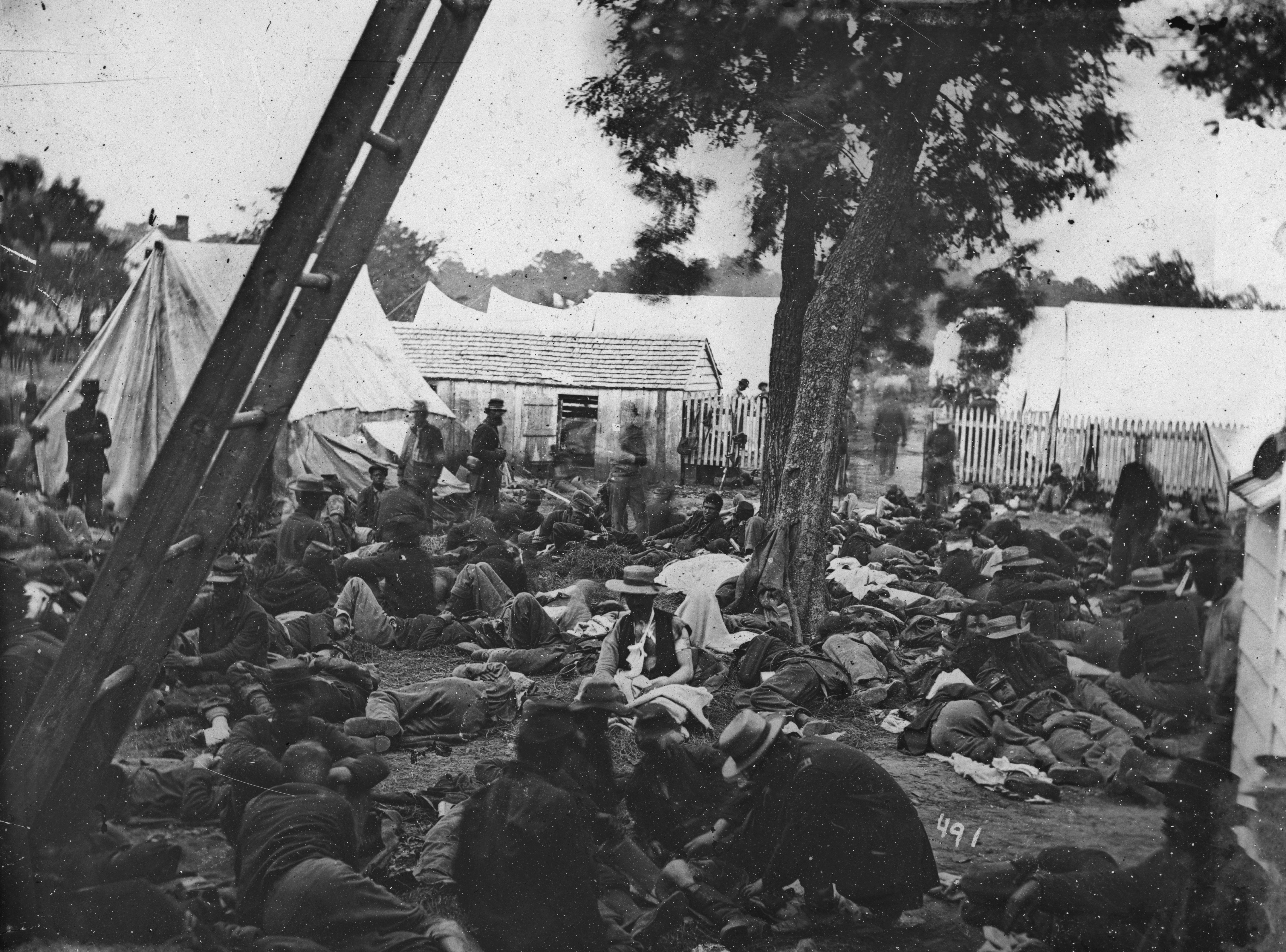
Of the 600,000 deaths suffered during the war, at least 350,000 were caused by disease, not bullets. Nearly 10 million soldiers in all fell ill at some point during the war, overwhelming harried healthcare workers and swamping hospitals from Florida to Maine. The soldiers began falling sick as soon as they reached their first camps. Many of the young men, particularly in the Confederate Army, came from small towns and isolated farms, and thus had never been exposed to diseases such as measles and mumps. In one camp near Raleigh, North Carolina, 4,000 cases of measles were reported among the 10,000 men stationed there. In the opposing Army of the Potomac, 8,000 cases were reported in the months of July, August and September 1861.
By far the most common ailment in the Civil War was diarrhea, which affected approximately 54 percent of all Union soldiers and a staggering 99 percent of all Confederates. Some estimates place the death toll from this most elemental of illnesses at nearly 100,000. Thousands more, including the fearsome Confederate cavalryman Nathan Bedford Forrest, suffered from chronic diarrhea for the rest of their prematurely shortened lives.
The other two most prevalent and deadly killers during the war were typhoid fever and malaria. With the lack of even minimally adequate hygiene in the camps, the diseases tore through the soldiers, spread by infected drinking water, fecally contaminated food and disease-bearing mosquitoes. Meanwhile, army physicians attributed the diseases to such fanciful causes as “malarial miasma,” “mephitic effluvia,” “crowd poisoning,” “depressing mental agencies,” “lack of nerve force,” “choleric temperament” and “poisonous fungi in the atmosphere.”
Once ill, the soldiers could expect little help from their doctors. Indeed, many of the physicians made matters worse by violating the most basic of all medical tenets: First, do no harm. Doctors were apt to prescribe a bewildering array of drugs at the first sign of illness. Opium, morphine, quinine, strychnine, turpentine, laudanum, blue mass, belladonna, silver nitrate, sulfuric acid and iodide of potassium were among the most commonly prescribed medicines. When all else failed, doctors harkened back to the more primitive methods of treatment: bleeding, cupping, blistering, leeching, binding and chafing.
By far the most widely prescribed and damaging drug was calomel, or mercurous chloride. Dissolved in a chalky, bitter-tasting liquid, calomel was administered in massive doses for virtually every disease that Civil War physicians encountered. Even in small doses, calomel produced horrific side effects, causing patients’ hair and teeth to fall out and inducing the development of mercurial gangrene, a particularly loathsome disease that rotted the soft tissue on the inside of the mouth.
Wounded soldiers, particularly those who underwent amputations in the unsterile conditions of Civil War surgery, frequently developed postoperative infections. The most dreaded was pyemia, or “pus in the blood,” which had a mortality rate of 97.4 percent. Less deadly than pyemia, but perhaps more distressing, were tetanus and gangrene. Few soldiers who witnessed a tetanus victim thrashing his life away in a hospital cot, held down by half a dozen straining attendants, ever forgot the sight. Nor could they forget the effects of gangrene, which typically began with a small, dime-sized black spot and within a few days would grow into a rotten mass of decayed tissue, gray, blue, black or green in color. So repulsive was gangrene to both doctors and fellow patients that its sufferers were often kept isolated.
Faced with the many diseases that lurked in the camps ready to pounce at the first sign of weakness, it is likely that soldiers on both sides of the fighting would have agreed wholeheartedly with one Reb who wrote home, “The big Battles is not as Bad as the fever.” You could sometimes take cover when the bullets were flying, but you could never hide from the invisible killers swarming in the air you breathed or the water you drank. Germs, not bullets, were the soldiers’ deadliest foes. And Civil War doctors, well-meaning but ignorant, were a close and tragic second.
Roy Morris, Jr., Editor, America’s Civil War