

Historynet/feed historynet feedback facebook link Weider History Group RSS feed Weider Subscriptions Historynet Home page

Abner Doubleday

Facts, information and articles about Abner Doubleday, a Civil War General during the American Civil War

Abner Doubleday Facts
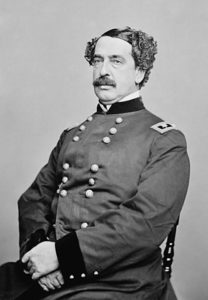
Born

June 26, 1819 Ballston Spa, New York

Died

January 26, 1893 Mendham, New Jersey

Years Of Service

1842-1873

Rank

Major General

Commands

I Corps
35th U. S. Infantry
24th U. S. Infantry

Battles

Mexican-American War
Seminole Wars
American Civil War
American Indian Wars

Abner Doubleday Articles

Explore articles from the History Net archives about Abner Doubleday

» See all Abner Doubleday Articles

Abner Doubleday summary: Abner Doubleday was an officer of the US Army and a general for the Union during the Civil War. He was born in the state of New York in Ballston Spa. His family had a military tradition as his paternal grandfather also fought in the Revolutionary War while his maternal grandfather started his army career at the age of 14 and served as a mountain messenger for General George Washington. Doubleday spent most of his childhood between Auburn and Cooperstown. Before entering the US Military Academy, he was a civil engineer and surveyor for close to two years. Doubleday started his career during the Mexican-American war and eventually the Seminole War and the Civil War.

Abner Doubleday In The Civil War

Doubleday is known for firing the first shot for the Union during the Confederate Bombardment which took place on April of 1861. In 1861 he was promoted to major and eventually went to Shenandoah Valley where he commanded the artillery department. In 1862, he became the brigadier general of volunteers and was eventually assigned to serve in Northern Virginia when the army of the Potomac was involved in the Peninsula Campaign. The first actual combat assignment for Doubleday was as the leader of the second brigade during the Northern Virginia Campaign. He served in Gettysburg where he found that he was in command after John F. Reynolds died during the early part of the fight. Doubleday eventually took on administrative duties in Washington D.C. He took some legal experience from his new position because he was in charge of court’s marshal. Doubleday eventually became one of the biggest supporters of President Lincoln. In fact, he was with the president in the train ride that led to the Gettysburg Address.

Abner Doubleday After The Civil War

After the Civil War, Doubleday became colonel of the 35th infantry for the US. Doubleday is now buried at the Arlington National Cemetery in Virginia.


Articles Featuring Abner Doubleday From History Net Magazines

Wild West - October 2011 - Letters from ReadersIn the October issue of Wild West, readers bend our ears about Baseball in the West.
Baseball in the WestNew Yorker Alexander Cartwright brought the game to the frontier during the California Gold Rush, making it truly the national pastime.
Last Chance for Peace: Fort Sumter at 150For months the Confederates trained dozens of guns on Fort Sumter. But no one seemed eager for war.
'The Roar and Rattle': McClellan's Missed Opportunities at AntietamThe Battle of Antietam resulted in more pivotal changes, across a broader spectrum of events—military, political, diplomatic, societal—than any other battle of the war. Yet if evaluated in purely military terms, it was not decisive at all.
Grant and Lee: MIA in New York: April/May 2009Visitors to the New-York His­tori­cal Society’s ongoing ex­hibit on Ulysses S. Grant and Rob­ert E. Lee will likely be intrigued by the first artifacts they see: artwork created by the legendary com­manders themselves long before they were famous.
America's Civil War: Defense of Little Round TopUnion Colonel Joshua Chamberlain has long been lauded as the hero of Gettysburg's Little Round Top. But do Chamberlain and the 20th Maine deserve all the credit, or did he have some unheralded help?
Battle of Gettysburg -- Day TwoIf Robert E. Lee's bold plan of attack had been followed on Day 2 at Gettysburg, there might never have been a third day of fighting. As it was, confusion and personal differences between commanders would severely affect the Confederate assault on Cemetery Ridge.
Brigadier General John Gibbon's Brief Breach During the Battle of FredericksburgAlthough overshadowed by the doomed Federal attack on the Confederate center, General John Gibbon's 2nd Division managed -- however briefly -- to make a breakthrough on the Union left.
Battle of Antietam: Carnage in a CornfieldMr. Miller's humble cornfield near Antietam Creek became the unlikely setting for perhaps the worst fighting of the entire Civil War.
America's Civil War: Union's Mission to Relieve Fort SumterFor three long months, Civil War Major Robert Anderson and his besieged troops waited for reinforcements at Fort Sumter. Back in Washington, Union naval officer Gustavus Fox raced against time to organize just such a mission.
Did Lt. Gen. Richard Ewell Lose the Battle of GettysburgAfter disobeying Robert E. Lee's orders to avoid a general engagement at Gettysburg, Lt. Gen. Richard Ewell received an order to 'press those people.' His failure to do so created a controversy that survives to this day.
America's Civil War: Savage Skirmish Near SharpsburgWith Robert E. Lee's wily Confederates waiting somewhere in the vicinity of Antietam Creek, Union General George McClellan ordered I Corps commander Joseph Hooker to advance and turn the Rebel flank. But McClellan, for once, was too quick to move, and Hooker soon found himself in an unexpectedly vicious fight.
Battle of Brawner's Farm: Black Hat Brigade's Baptism of FireJohn Gibbon's mostly green Midwestern troops found themselves in quite a scrape as the sun set on August 28, 1862.
Savage Skirmish Near Sharpsburg - September '98 America's Civil War Feature


Savage Skirmish Near Sharpsburg

By Scott Hosier

With Robert E. Lee's wily Confederates waiting somewhere in the vicinity of Antietam Creek, Union General George McClellan ordered I Corps commander Joseph Hooker to advance and turn the Rebel flank. But McClellan, …

Carnage in a Cornfield - September '98 America's Civil War Feature


Carnage in a Cornfield

By Robert C. Cheeks

Mr. Miller's humble cornfield near Antietam Creek became the unlikely setting for perhaps the worst fighting of the entire Civil War.

On Sunday night, September 14, 1862, Confederate General Robert E. Lee …

America's Civil War: January 1998 From the Editor

Whether hidden in coffins or hollowed-out watermelons, contraband whiskey regularly found its way into camp.

During the Civil War, as with all wars, excessive drinking was not limited to high-ranking officers. Humble men in the ranks also turned to alcohol …

VOICES FROM THE STANDS . . . - May 1998 Civil War Times Feature

VOICES FROM THE STANDS


In our February issue, we asked readers to send us their thoughts on baseball and its connection to the Civil War. Here is a sampling of what we received.

All men have a hidden desire to …

A MAN OF TWO TRADES - December 1998 Civil War Times Feature

A MAN OF TWO TRADES

SUBMITTED BY DAVID A. WELKER AND F. WILLIAM SPANGENBERG, CENTREVILLE, VIRGINIA


NAME: William Findlay Rogers
DATES: March 1, 1820 to December 16, 1899
ALLEGIANCE: Union
HIGHEST RANK: Brevet brigadier general
UNIT: 21st New York Infantry…

Union General George Stannard at Gettysburg - July '96 America's Civil War Feature

The first Vermonter to enlist in the war,
Union General George Stannard
helped turn the tide at Gettysburg.
By Anthony Buono

The third day of the Battle of Gettysburg was hot and humid. The battlefield, littered with thousands of dead …

Mission to Relieve Fort Sumter - September '97 America's Civil War Feature


Mission to Relieve Fort Sumter

By John D. Pelzer

For three long months, Major Robert Anderson and his besieged troops waited forreinforcements at Fort Sumter. Back in Washington, Union navalofficer Gustavus Foxraced against time to organize just such a mission.…

Did 'Baldy' Ewell Lose Gettysburg?After disobeying Robert E. Lee's orders to avoid a general engagement at Gettysburg, Lt. Gen. Richard Ewell received an order to 'press those people.' His failure to do so created a controversy that survives to this day.
History net Spacer
History net Spacer
History Net Daily Activities
History net Spacer
History net Spacer
Historynet Spacer
HISTORYNET READERS' POLL

Which of these defensive lines best served its purpose?

View Results | See previous polls

Loading ... Loading ...
History net Spacer
STAY CONNECTED WITH US
RSS Feed Daily Email Update
History net Spacer History net Spacer

What is HistoryNet?

The HistoryNet.com is brought to you by the Weider History Group, the world's largest publisher of history magazines. HistoryNet.com contains daily features, photo galleries and over 5,000 articles originally published in our various magazines.

If you are interested in a specific history subject, try searching our archives, you are bound to find something to pique your interest.

From Our Magazines
Weider History Group

Weider History Network:  HistoryNet | Armchair General | Achtung Panzer!
Today in History | Ask Mr. History | Picture of the Day | Daily History Quiz | Contact Us

Copyright © 2012 Weider History Group. All rights reserved. Reproduction in whole or in part without permission is prohibited.
Advertise With Us | Subscription Help | Privacy Policy