
Horse-drawn carts plied the streets with a call to bring out the dead in the city where bodies lay unburied for days. The afflicted died by the thousands, and survivors lived in fear. But this wasn’t medieval Europe being stalked by the Black Death. This was Philadelphia, October 1918, and the city was under siege from a new variant of one of mankind’s oldest specters: influenza.
The flu lurking in the midst of this patriotic fervor, however, would prove far more lethal than trench warfare and poison gas. Most alarming was the fact that the disease ravaged previously healthy young adults in their 20s and 30s: the men and women who worked the factories, cleaned the streets, tended the sick — and fought the wars.
Many assumed, wrongly, that the flu had originated in Spain, where 8 million fell ill during a wave of relatively mild flu that had swept the globe in the spring of 1918. Because Spain was neutral and its press uncensored during the war, it was one of the few places in Europe where news about the epidemic was being reported. Whatever its origins, the flu was taking a toll on frontline troops. Commander Erich von Ludendorff blamed the disease for the failure of Germany’s major spring offensive.It was a grievous business, he said, having to listen every morning to the chiefs of staff’s recital of the number of influenza cases, and their complaints about the weakness of their troops.
Influenza wasn’t Ludendorff’s only obstacle. General JohnBlack Jack Pershing, commander in chief of the American Expeditionary Forces in Europe, pushed relentlessly to build up troop strength. The U.S. Army had fewer than 100,000 soldiers when it entered the war — the general’s plans called for approximately 4 million. The Americans would not simply plug holes in the British and French lines. The AEF would stand alone, and march to victory under the American flag. To do that, Pershing needed more men, more materiel. Always, endlessly, more.
Back home, the ramp-up hit a snag. On March 4, 1918, the Army installation at Camp Funston, Kan., reported a single case of flu. Before the end of the month, 1,100 men had been hospitalized, and 20 percent of those men developed pneumonia. Flu spread rapidly among Army camps as troops were rushed through on their way to the front. But the outbreak had subsided by summer, and it looked like the worst was over.
It wasn’t.
Only a Matter of Hours
Camp Devens, 35 miles northwest of Boston, was seriously overcrowded. Built to house 36,000 troops, it contained more than 45,000 in early September 1918. The flu struck there with a suddenness and virulence that had never been seen before.These men start with what appears to be an ordinary attack of LaGrippe or Influenza, and when brought to the Hosp. they very rapidly develop the most vicious type of Pneumonia that has ever been seen, wrote Roy Grist, a doctor at the Camp Devens hospital.Two hours after admission they have the Mahogany spots over the cheek bones, and a few hours later you can begin to see the Cyanosis extending from their ears and spreading all over the face, until it is hard to distinguish the coloured man from the white….It is only a matter of hours then until death comes….We have been averaging about 100 deaths per day….We have lost an outrageous number of Nurses and Drs.
Flu victims were wracked by fevers often spiking higher than 104 degrees and body aches so severe that the slightest touch was torture. Cyanosis was perhaps the most terrifying hallmark of the pneumonia that often accompanied this flu. A lack of oxygen in the blood turned one’s skin a bluish-black — leading to speculation that the Black Death had again come calling.
While Devens tried unsuccessfully to contain the outbreak, a similar situation was developing at Commonwealth Pier, a naval facility in Boston. Flu was reported there in late August, but the war would not wait. Sailors were shipped out to New Orleans, Puget Sound and the Great Lakes Naval Training Station near Chicago. Josie Mabel Brown was a young Navy nurse living in St. Louis, Mo., when she was called to duty at Great Lakes.There was a man lying on the bed dying and one was lying on the floor, she said of her first visit to a sick ward.Another man was on a stretcher waiting for the fellow on the bed to die….We wrapped him in a winding sheet and left nothing but the big toe on the left foot out with a shipping tag on it to tell the man’s rank, his nearest of kin, and hometown….Our Navy bought the whole city of Chicago out of sheets. There wasn’t a sheet left in Chicago. All a boy got when he died was a winding sheet and a wooden box; we just couldn’t get enough caskets.
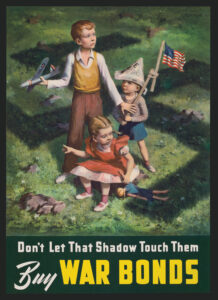
Three hundred sailors from Boston landed at the Philadelphia Navy Yard on September 7; on the 19th the Philadelphia Inquirer reported that 600 sailors and marines had been hospitalized with the flu. It should have been apparent to city officials that a potential crisis loomed. In Massachusetts the flu had spread rapidly from military encampments to the public at large. Medical practitioners in Philadelphia called for a quarantine, but Wilmer Krusen, director of the city’s Department of Public Health and Charities, declined. There was recent precedent for such action: Quarantines were regularly enacted during a terrifying polio epidemic in 1916. But that was in peacetime. No civilian deaths from flu had been reported locally, and a Liberty Loan parade — perhaps the largest parade Philadelphia had ever seen — was scheduled for the end of the month. A quarantine would only cause panic, and the city would most certainly not meet its quota of war-bond sales.
Every American seemingly had a personal stake in winning the war. Even children were eager to do their bit. Anna Milani, who was a child in Philadelphia during the epidemic, remembered the rhyme she and her friends would sing in the street:
Tramp, tramp, tramp the boys are marching
I spied Kaiser at the door
We’ll get a lemon pie
And we’ll squash it in his eye
And there won’t be any Kaiser anymore
The parade stepped off as planned on September 28 with marching bands, military units, women’s auxiliaries and Boy Scout troops. Some 200,000 spectators thronged the two-mile-long parade route in a show of civic pride. Three days later, 635 new civilian cases of flu, and 117 civilian deaths from the disease and its complications, were reported in Philadelphia.
Worry is Useless
October 1918 was brutal in the City of Brotherly Love. Schools, churches, theaters and saloons were closed. So many Bell Telephone operators were home sick that the company placed notices in city newspapers pleading with the public tocut out every call that is not absolutely necessary that the essential needs of the government, doctors and nurses may be met. Krusen authorized Bell to discontinue service to those making unnecessary calls, and 1,000 customers were eventually cut off.
Even if emergency calls did get through, there weren’t enough people to answer them. A quarter of Philadelphia’s doctors and nurses were away serving in the military. Volunteers were called, but many were too sick themselves — or too frightened of contracting the disease — to be of much help. Entire families were stricken, and the prognosis was often grim.My mother called the doctor because the whole family was sick with this flu, said Harriet Hasty Ferrell.And I, being an infant baby, was very sick, to the point that the doctor thought that I would not make it. He told my mother it wasn’t necessary to feed me anymore.
Still, there were those who tried to quell panic. An October 6 editorial in the Inquirer advised:Live a clean life. Do not even discuss influenza….Worry is useless. Talk of cheerful things instead of the disease.
No amount of happy talk could make the nightmare go away. Between October 12 and October 19, 4,597 Philadelphians died of the flu and related respiratory diseases, and survivors struggled to carry out familiar mourning rituals.We couldn’t go inside the church, one city native remembered.The priest would say Mass on the step, and we would all be congregated outside….They figured maybe outside you wouldn’t catch the germ. Another recalled that her 13-year-old cousin, who was sick with the flu, had to be carried to the cemetery wrapped in a blanket in order to say the traditional Jewish prayers at his mother’s funeral service. Hundreds of unburied corpses posed another serious health risk. Caskets were in such short supply that the J.G. Brill Co., which manufactured trolley cars, donated packing crates to fill the need. The Bureau of Highways used a steam shovel to dig mass graves in a potter’s field. By the end of the month, the Spanish flu had claimed 11,000 victims in Philadelphia and 195,000 nationwide.
The tragedy played out with varying degrees of severity across the country. The city of San Francisco, where the flu hit hardest in late October, mandated that gauze masks be worn in public at all times. The mandate was widely followed, though in reality, masks did little to prevent the spread of flu. They were also uncomfortable and inconvenient, and the public would not tolerate them for long. Even officials showed a less than vigilant attitude when the mayor, a city supervisor, a Superior Court judge, a congressman and a rear admiral were photographed at a prizefight sans their protective masks. And there were those who claimed the act was an unconstitutional attack on personal freedom: If the Board of Health can force people to wear masks, said the San Francisco Chronicle, then it can force them to submit to inoculations, or any experiment or indignity.
Doctors searched desperately for a cure, or at least a stop-gap measure. But they were on the wrong track. Conventional wisdom held that the flu was caused by bacteria; vaccines to fight bacterial infections, however, had no effect on the disease. (Flu was not identified as a virus until 1933.) The epidemic was a crushing blow to medical science, which had only recently come to be seen as a professional discipline.
Government agencies fared no better. Surgeon General Rupert Blue, head of the U.S. Public Health Service, was aware that an outbreak of flu was possible. But in July 1918, he denied a request for $10,000 to be dedicated to pneumonia research, and he made no other preparations. Blue’s first public warning came in mid-September and included such tips as avoid tight clothes, tight shoes, tight gloves — seek to make nature your ally not your prisoner and help by choosing and chewing your food well. Congress appropriated $1 million in emergency funding for USPHS; Blue eventually returned $115,000 to the government.
Worse still, the government contributed to the national paranoia surrounding all things German. The USPHS officer for northeastern Mississippi planted stories in the local papers that the Hun resorts to unwanted murder of innocent noncombatants….He has [at]tempted to spread sickness and death thru germs, and has done so in authenticated cases. Lieutenant Colonel Philip Doane, head of the Health and Sanitation Section of the Emergency Fleet Corporation, which oversaw U.S. shipyards, theorized that U-boats had delivered German spies to America to turn loose Spanish influenza germs in a theatre or some other place where large numbers of persons are assembled. So persistent was the belief that Germany had somehow launched a biological attack that USPHS laboratories devoted precious time to investigating claims that Bayer aspirin, which was manufactured in the States under a German-held patent, had been laced with deadly flu germs.
“Let the curse be called the German plague, declared The New York Times in October.Let every child learn to associate what is accursed with the word German not in the spirit of hate but in the spirit of contempt born of the hateful truth which Germany has proved herself to be.
Over There
The death toll mounted at home through September and October even as President Woodrow Wilson was faced with General Pershing’s demands for more soldiers. Through the summer, Americans were being sent to Europe at the rate of 250,000 a month. But flu was running rampant on troopships, and those who survived the interminable voyage simply spread the disease to frontline staging areas. Wilson was urged by several advisers not to dispatch additional troops until the epidemic had been contained. The president consulted with his chief of staff General Peyton March, who conceded that conditions on the overseas transports were hardly ideal. He would not, however, concede anything that might stand in the way of winning the war.Every such soldier who has died [on a troopship], said March, just as surely played his part as his comrade who died in France. Wilson relented. The transports continued.
Wilson had won a second term in 1916 because he had kept the United States out of the war. Once war was declared in 1917, however, he could not afford to waver in his commitment to seeing the conflict through to Allied victory. To shore up public support, Wilson created the Committee on Public Information a week after declaring war on Germany. (One of its lasting contributions was the Uncle Sam “I Want You” recruiting poster.) The CPI’s news division issued thousands of press releases and syndicated features about the war that made their way, often unedited, into newspapers across the country. The CPI also had a pictorial publicity division, an advertising division and a film division. In short, it used every possible media source to influence public opinion.
Wilson’s zeal for advancing democratic ideals abroad was secured by his willingness to suppress them at home. Dissent was not tolerated. Under the 1917 Espionage Act, roundly criticized as being unconstitutional, Socialist leaders Eugene Debs and Victor Berger were sentenced to a combined 30 years in prison for their antiwar protests. The act also gave the postmaster general the right to determine what constituted unpatriotic or subversive reading material and ban it from the U.S. mail. The Justice Department authorized the 200,000 members of a volunteer group called the American Protective League to report on suspected spies, slackers who didn’t buy war bonds and anyone who voiced opposition to the government.
In this hyper-patriotic atmosphere, fighting the flu came second to winning the war. Public officials, and the public itself, downplayed the seriousness of the silent enemy within and focused on the more tangible enemies of a nation at war. The Germans could be defeated on the battlefield overseas and by surveillance at home. Nothing could stop a disease that immobilized great cities for weeks and carried off hundreds of thousands in the prime of life.
And then, it was over. By the end of 1918, deaths from flu and pneumonia nationwide had subsided greatly, and a third wave in the spring of 1919 left far fewer casualties in its wake.In light of our knowledge of influenza and the way it works, explained Dr. Shirley Fannin, an epidemiologist and current director of disease control for Los Angeles County, Calif.,we do understand that it probably ran out of fuel. It ran out of people who were susceptible.
Those who survived their exposure to the flu developed immunity to the disease, but not to its lasting consequences. William Maxwell, writer and longtime editor at The New Yorker, was a 10-year-old in Lincoln, Ill., when the flu struck his family, killing his mother.I realized for the first time, and forever, that we were not safe. We were not beyond harm, he remembered eight decades later.From that time on there was a sadness, which had not existed before, a deep down sadness that never quite went away….Terrible things could happen — to anybody.
For all the advances in medical science, it is still not clear where the 1918 virus originated, or why it took such a toll on healthy young adults. Flu viruses are extremely adaptable. According to the National Institutes of Health, one new strain of flu appeared in humans between the Hong Kong flu outbreak in 1969 (the last flu pandemic) and 1977. Between 1997 and 2004, five new strains appeared.
Modern researchers agree that it is probably impossible to prevent an outbreak of flu, but it is possible to prepare for one — if the public, health officials and government agencies can agree on a plan of action. Today, as in 1918, a global conflict demands an ever-increasing amount of resources. The government has enacted extraordinary measures in the name of national security. And a public health crisis of the magnitude of the 1918 epidemic is almost incomprehensible. After all, it’s only the flu.
This article was written by Christine M. Kreiser and originally published in the December 2006 issue of American History Magazine. For more great articles, subscribe to American History magazine today!