• Subscribe Now
  • Today In History
  • Wars & Events
    • The Russia–Ukraine War
    • American Revolution
    • The Civil War
    • World War I
    • World War II
    • Cold War
    • Korean War
    • Vietnam War
    • Global War on Terror
    • Movements
      • Women’s Rights
      • Civil Rights
      • Abolition of Slavery
  • Famous People
    • U.S. Presidents
    • World Leaders
    • Military Leaders
    • Outlaws & Lawmen
    • Activists
    • Artists & Writers
    • Celebrities
    • Scientists
    • Philosophers
  • Eras
    • Modern Era
      • 2000s
      • 1900s
      • 1800s
    • Early Modern
      • 1700s
      • 1600s
      • 1500s
    • The Middle Ages
    • Classical Era
    • Prehistory
  • Topics
    • Black History
    • Slavery
    • Women’s History
    • Prisoners of War
    • Firsthand Accounts
    • Technology & Weaponry
    • Aviation & Spaceflight
    • Naval & Maritime
    • Politics
    • Military History
    • Art & Literature
    • News
    • Entertainment & Culture
    • Historical Figures
    • Photography
    • Wild West
    • Social History
    • Native American History
  • Magazines
    • American History
    • America’s Civil War
    • Aviation History
    • Civil War Times
    • Military History
    • Military History Quarterly
    • Vietnam
    • Wild West
    • World War II
  • Newsletters
  • Podcasts
  • Privacy Policy
  • Terms of Service
  • Facebook
  • Twitter
  • Instagram
  • YouTube
Skip to content
  • Privacy Policy
  • Terms of Service
  • Facebook
  • Twitter
  • Instagram
  • YouTube
HistoryNet

HistoryNet

The most comprehensive and authoritative history site on the Internet.

  • Subscribe Now
  • Today In History
  • Wars & Events
    • The Russia–Ukraine War
    • American Revolution
    • The Civil War
    • World War I
    • World War II
    • Cold War
    • Korean War
    • Vietnam War
    • Global War on Terror
    • Movements
      • Women’s Rights
      • Civil Rights
      • Abolition of Slavery
  • Famous People
    • U.S. Presidents
    • World Leaders
    • Military Leaders
    • Outlaws & Lawmen
    • Activists
    • Artists & Writers
    • Celebrities
    • Scientists
    • Philosophers
  • Eras
    • Modern Era
      • 2000s
      • 1900s
      • 1800s
    • Early Modern
      • 1700s
      • 1600s
      • 1500s
    • The Middle Ages
    • Classical Era
    • Prehistory
  • Topics
    • Black History
    • Slavery
    • Women’s History
    • Prisoners of War
    • Firsthand Accounts
    • Technology & Weaponry
    • Aviation & Spaceflight
    • Naval & Maritime
    • Politics
    • Military History
    • Art & Literature
    • News
    • Entertainment & Culture
    • Historical Figures
    • Photography
    • Wild West
    • Social History
    • Native American History
  • Magazines
    • American History
    • America’s Civil War
    • Aviation History
    • Civil War Times
    • Military History
    • Military History Quarterly
    • Vietnam
    • Wild West
    • World War II
  • Newsletters
  • Podcasts
Posted inUncategorized

Ghost Town: Tuscarora, Nevada

by Amy Chan3/28/2018
Share This Article

In 1867 a prospecting party including brothers Steve and John Beard discovered gold 6,200 feet above sea level in the Goose Creek range of northeastern Nevada. Placer mining for gold on Beard Hill—to the tune of $12 per miner per day—ended in 1871, when W.O. Weed found a ledge of silver ore two miles northeast on Mount Blitzen. It assayed at $600 in silver and $60 in gold per ton of ore, and the boom was on.

Miner Charles M. Benson suggested naming the town Tuscarora after USS Tuscarora, a sloop of war on which he had patrolled British waters for the famed Confederate raider CSS Alabama during the Civil War.

The Central Pacific Railroad reached Elko in 1868, bringing 2,000 Chinese workers to the Goose Creek range. They took over the abandoned placer deposits on Beard Hill, extracting a further $1 million from the basaltic rock by 1884. Tuscarora’s Chinatown was, at one point, second only to San Francisco’s in population. Besides mining, the immigrants sold tea and silks, raised vegetables and grubbed sagebrush to feed the 13 large mills. They also operated opium dens, brothels and gambling houses.

The San Francisco Stock Exchange ultimately listed seven of Tuscarora’s mines—Grand Prize, Navajo, Belle Isle, Independence, Dexter, Argenta and Commonwealth. The Grand Prize yielded $1,390,561.58 in its first year. The Beard brothers started the Navajo but lacked operating capital and sold their claim for $10,000; it went on to produce $3 million, while the Beards died penniless. All told, Tuscarora’s mines produced $10 million in silver and gold from 1871 to 1885.

Stage and freight lines plied the 52 miles between Elko and Tuscarora. Regular freight went by 16-ox wagons, cost 2 cents per pound and took one week. Fast freight went by horse or mule wagons, cost 3 cents per pound and took two days. Seventy-five outfits (300–400 wagons) operated at Tuscarora’s height. In September 1877, 15 railcars of freight—six of general merchandise, five of lumber, three of salt and one of machinery— waited in Elko bound for Tuscarora.

Tuscarora’s 3,000 miners celebrated the Fourth of July with shooting matches, baseball games, sledgehammer tosses and a parade led by the Tuscarora Guard. The town’s social center was Plunkett’s Hall, a former lodging house that sported a tilting floor—kept flat for dances or dipped at one end to create an amphitheater for plays and operas. The Tuscarora Times-Review reported a typical scene: “Last night Plunkett’s Hall was filled from one early hour to another…[with] both sexes, all ages, and every creed and party.”

Many of the miners were tough Cornishmen known as “Cousin Jacks,” with a reputation for settling arguments with knife fights. Claim-jumping was a major problem: In one incident, “Long Tom” Smith bashed two businessmen on the head when they tried to stop him from claiming a public alley. A deputy sheriff spied Smith’s .44-40 Winchester and decided he was an entrepreneur, not a criminal.

Despite the violence, Tuscarora had progressive elements. The Elko Independent reported that Tuscarorans, unlike citizens of Elko and Virginia City, appreciated stylish plays such as East Lynne and A Case for Divorce. At its peak, the town had a polytechnic institute, two skating rinks, a ballet school, an elocution teacher and a schoolhouse with classes to 10th grade.

The bust came as fast as the boom. In 1877 stock in the Grand Prize was worth $940 per share; by 1881 it had fallen to 5 cents. By 1886 the bonanza veins were flooded, and companies could not afford to pump out the millions of gallons of water. Rumors of a new discovery in Idaho’s Wood River region prompted a mass exodus. Sporadic mine production continued at the Dexter until 1916.

In 1966 Julie and Dennis Parks started the Tuscarora Retreat and Summer Pottery School [www.tuscarorapottery.com], which remains in operation. The town’s isolation makes it an ideal haven for artists, rock collectors and nature lovers.


Thanks to Donna Ernst for providing historical information about Tuscarora.

Originally published in the February 2009 issue of Wild West. To subscribe, click here. 
Share This Article
by Amy Chan

Amy Chan is a former HistoryNet intern.

more by Amy Chan

Dive deeper

  • Ghost towns
  • Mining
  • Westward Expansion

Citation information

Amy Chan (1/4/2026) Ghost Town: Tuscarora, Nevada. HistoryNet Retrieved from https://www.historynet.com/ghost-town-tuscarora-nevada/.
"Ghost Town: Tuscarora, Nevada."Amy Chan - 1/4/2026, https://www.historynet.com/ghost-town-tuscarora-nevada/
Amy Chan 3/28/2018 Ghost Town: Tuscarora, Nevada., viewed 1/4/2026,<https://www.historynet.com/ghost-town-tuscarora-nevada/>
Amy Chan - Ghost Town: Tuscarora, Nevada. [Internet]. [Accessed 1/4/2026]. Available from: https://www.historynet.com/ghost-town-tuscarora-nevada/
Amy Chan. "Ghost Town: Tuscarora, Nevada." Amy Chan - Accessed 1/4/2026. https://www.historynet.com/ghost-town-tuscarora-nevada/
"Ghost Town: Tuscarora, Nevada." Amy Chan [Online]. Available: https://www.historynet.com/ghost-town-tuscarora-nevada/. [Accessed: 1/4/2026]

Related stories

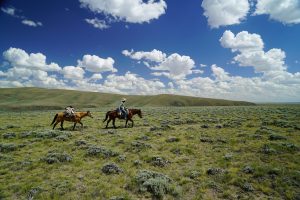
Pony Express National Historic Trail in Wyoming
Portfolio

This Patient Rider Spent Months Retracing the Pony Express on Horseback

In 2019 Will Grant embarked on a 142-day, 2,000-mile horseback journey from the Pony Express stables in St. Joseph, Mo., to trail’s end in Sacramento, Calif.

Buffalo Bill Cody
Stories

10 Pivotal Events in the Life of Buffalo Bill

William Frederick Cody (1846-1917) led a signal life, from his youthful exploits with the Pony Express and in service as a U.S. Army scout to his globetrotting days as a showman and international icon Buffalo Bill.

ww2-homefront-poster-war-bond
Portfolio

During the War Years, Posters From the American Homefront Told You What to Do — And What Not to Do

If you needed some motivation during the war years, there was probably a poster for that.

Booger Red Privett on horseback
Feature

The One and Only ‘Booger’ Was Among History’s Best Rodeo Performers

Texan Sam Privett, the colorfully nicknamed proprietor of Booger Red’s Wild West, backed up his boast he could ride anything on four legs.

HistoryNet
  • Facebook
  • Twitter
  • Instagram
  • YouTube

“History is a guide to navigation in perilous times. History is who we are and why we are the way we are.”

David McCullough, author of “1776”

HistoryNet.com is brought to you by HistoryNet LLC, the world’s largest publisher of history magazines. HistoryNet.com contains daily features, photo galleries and over 25,000 articles originally published in our nine magazines.

Our Magazines

  • American History
  • America’s Civil War
  • Aviation History
  • Civil War Times
  • Military History
  • Military History Quarterly
  • Vietnam
  • Wild West
  • World War II

About Us

  • What Is HistoryNet.com?
  • Advertise With Us
  • Careers
  • Meet Our Staff!

Stay Curious

Subscribe to receive our weekly newsletter with top stories from master historians.

sign me up!

© 2026 HistoryNet.
  • Privacy Policy
  • Terms of Service