

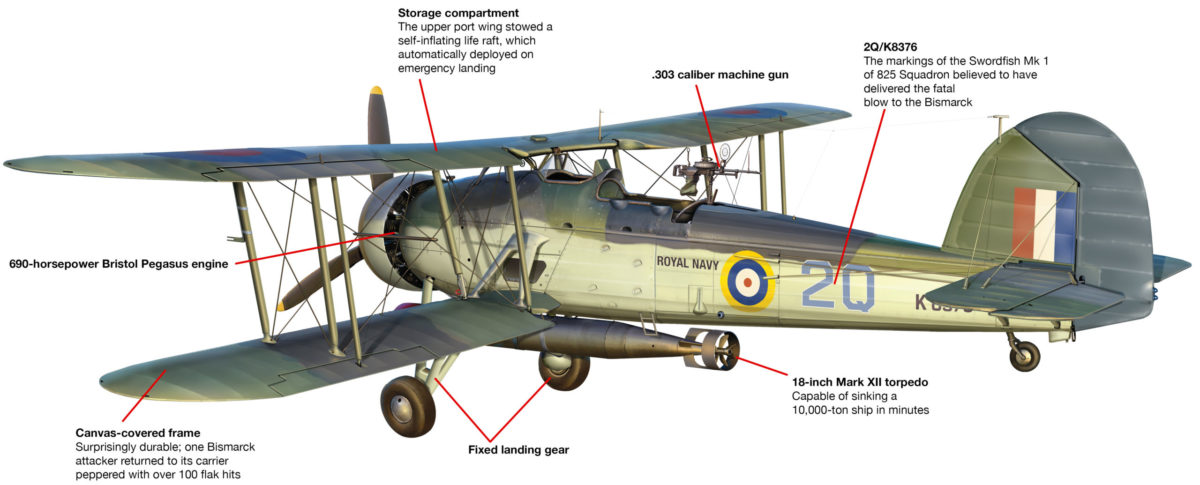
A contemporary of the Spitfire, Britain’s Fleet Air Arm torpedo bomber was outdated when it entered service in 1939. Yet this sturdycraftsankahighertonnage of shipping than any other torpedo bomber in the war, outliving several intended replacements. Twenty Swordfish shuttered Italy’s Taranto naval base in a November 1940 raid, sinking three battleships, two auxiliary vessels, and damaging two destroyers; only two were shot down by the defensive storm of 13,000 antiaircraft shells. Against enemies anticipating cutting-edge aircraft, the Swordfish could be a deadly surprise—most notably during the May 1941 sinking of the Bismarck, when German gunners were ill-prepared to hit slow, low-flying airplanes, allowing a Swordfish to disable the ship’s rudder.
Related stories

Celebrating the Legacy of the Office of Strategic Services 82 Years On
From the OSS to the CIA, how Wild Bill Donovan shaped the American intelligence community.

During the War Years, Posters From the American Homefront Told You What to Do — And What Not to Do
If you needed some motivation during the war years, there was probably a poster for that.
An SAS Rescue Mission Mission Gone Wrong
When covert operatives went into Italy to retrieve prisoners of war, little went according to plan.
Could These American Paratroopers Stop the Germans from Reaching Utah Beach on D-Day?
The peaceful French countryside around La Fiere Bridge erupted into a desperate firefight on June 6, 1944.