• Subscribe Now
  • Today In History
  • Wars & Events
    • The Russia–Ukraine War
    • American Revolution
    • The Civil War
    • World War I
    • World War II
    • Cold War
    • Korean War
    • Vietnam War
    • Global War on Terror
    • Movements
      • Women’s Rights
      • Civil Rights
      • Abolition of Slavery
  • Famous People
    • U.S. Presidents
    • World Leaders
    • Military Leaders
    • Outlaws & Lawmen
    • Activists
    • Artists & Writers
    • Celebrities
    • Scientists
    • Philosophers
  • Eras
    • Modern Era
      • 2000s
      • 1900s
      • 1800s
    • Early Modern
      • 1700s
      • 1600s
      • 1500s
    • The Middle Ages
    • Classical Era
    • Prehistory
  • Topics
    • Black History
    • Slavery
    • Women’s History
    • Prisoners of War
    • Firsthand Accounts
    • Technology & Weaponry
    • Aviation & Spaceflight
    • Naval & Maritime
    • Politics
    • Military History
    • Art & Literature
    • News
    • Entertainment & Culture
    • Historical Figures
    • Photography
    • Wild West
    • Social History
    • Native American History
  • Magazines
    • American History
    • America’s Civil War
    • Aviation History
    • Civil War Times
    • Military History
    • Military History Quarterly
    • Vietnam
    • Wild West
    • World War II
  • Newsletters
  • Podcasts
  • Privacy Policy
  • Terms of Service
  • Facebook
  • Twitter
  • Instagram
  • YouTube
Skip to content
  • Privacy Policy
  • Terms of Service
  • Facebook
  • Twitter
  • Instagram
  • YouTube
HistoryNet

HistoryNet

The most comprehensive and authoritative history site on the Internet.

  • Subscribe Now
  • Today In History
  • Wars & Events
    • The Russia–Ukraine War
    • American Revolution
    • The Civil War
    • World War I
    • World War II
    • Cold War
    • Korean War
    • Vietnam War
    • Global War on Terror
    • Movements
      • Women’s Rights
      • Civil Rights
      • Abolition of Slavery
  • Famous People
    • U.S. Presidents
    • World Leaders
    • Military Leaders
    • Outlaws & Lawmen
    • Activists
    • Artists & Writers
    • Celebrities
    • Scientists
    • Philosophers
  • Eras
    • Modern Era
      • 2000s
      • 1900s
      • 1800s
    • Early Modern
      • 1700s
      • 1600s
      • 1500s
    • The Middle Ages
    • Classical Era
    • Prehistory
  • Topics
    • Black History
    • Slavery
    • Women’s History
    • Prisoners of War
    • Firsthand Accounts
    • Technology & Weaponry
    • Aviation & Spaceflight
    • Naval & Maritime
    • Politics
    • Military History
    • Art & Literature
    • News
    • Entertainment & Culture
    • Historical Figures
    • Photography
    • Wild West
    • Social History
    • Native American History
  • Magazines
    • American History
    • America’s Civil War
    • Aviation History
    • Civil War Times
    • Military History
    • Military History Quarterly
    • Vietnam
    • Wild West
    • World War II
  • Newsletters
  • Podcasts
Posted inLetters

A Deserter Begs Eisenhower to Spare His Life

Letters written by Eddie Slovik, the first and only American soldier to be officially executed for desertion since the Civil War.
by HistoryNet Staff11/28/20115/3/2024
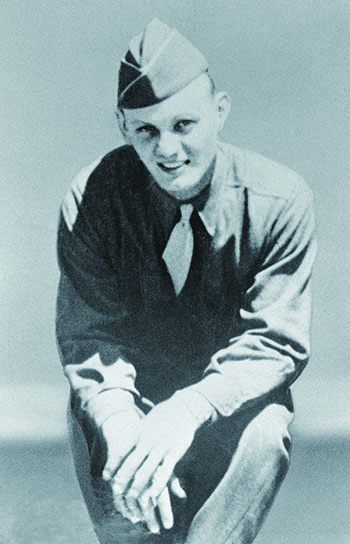
Pvt. Eddie D. Slovik was the last American soldier shot for desertion in 1944. (NBC/Photofest)
Share This Article

After enduring one night of heavy shelling on his way to the Battle of Hürtgen Forest, Private Eddie Slovik decided he preferred prison to the front lines, and turned himself in as a deserter on October 9, 1944. Confident of the punishment he would receive, Slovik repeatedly refused opportunities to destroy his confession and return to combat with the 28th Infantry Division. But the military tribunal, acutely aware of the increasingly dire combat situation, ruled unanimously for the death penalty—“To maintain that discipline upon which alone an army can succeed against the enemy.” Hoping for clemency, Slovik wrote a letter on December 9, 1944, pleading his case directly to the supreme Allied commander, General Dwight D. Eisenhower.

Dear Sir,
I Private Eddie D. Slovik A.S.N. #36896415 was convicted the 11th day of November year 1944 Armistice Day by General Court Martial to be shot to death for desertion of the United States Army.

Dear Sir,
The time of my conviction or before my conviction I had no intentions of deserting the Army whatsoever. For if I intended too I wouldn’t have given or surrendered myself as I did. I have nothing against the United States Army whatsoever. I merely wanted a transfer from the line. I asked my C.O. when I came back if their was a possible chance of my being transfered cause I feared hazardous duty to to myself, and because of my nerves. I’ll admit I have some awful bad nerves, which no doubt in my mind we all have. I was refused this transfer.

Dear Sir,
I must tell you more about my past. I assume you have my records of my past criminall life in my younger stage of life. After being released from jail I was put on a two year parole after spending five years in jail. In them two years that I was on parole I got myself a good job. Cause I was in class 4F the Army didn’t want anything to do with me at the time. So after five months out of jail I decided to get married which I did. I have a swell wife now and a good home.

After being married almost a year and a half I learned to stay away from bad company which was the cause of my being in jail. Then the draft came. I didn’t have to come to the Army when they called me. I could of went back to jail. But I was sick of being locked up all my life so I came to the Army. When I went down to the draft board, I was told that the only reason they were taking a chance on me in the Army was cause I got married, and had a good record after being out of jail almost two years. To my knowledge sir I have a good record in the past two years, I also have a good record as a soldier up to the time I got in this trouble. I tried my best to do what the army wanted me to do till I first ran away or should I say left the company.

Dear Sir,
I don’t believe I ran away the first time as I stated in my first confession. I came over to France as a replacement, and when the enemy started to shelling us I got scared and nervous that I couldn’t move out of my fox hole. I guess I never did give myself the chance to get over my first fear of shelling. The next day their wasn’t any American troops around so I turned myself over to the Canadian M.P.’s. They in turn were trying to get in touch with my outfit about me. I guess it must have taken them six weeks to catch up the American troops. Well sir, when I was turned over to my outfit I tried to explain to my C.O. just what took place, and what had happened to me. Then I asked for a transfer. Which was refused. Then I wrote my confession. I was then told that if I would go back on the line they would distroy my confession, however if I refused to go back on the line they would half to hold it against me which they did.

Dear Sir,
How can I tell you how humbley sorry I am for the sins I’ve comitted. I didn’t realize at the time what I was doing, or what the word desertion meant. What it is like to be condemned to die. I beg of you deeply and sincerely for the sake of my dear wife and mother back home to have mercy on me. to my knowledge I have a good record since my marriage and as a soldier. I’d like to continue to be a good soldier.

Anxiously awaiting your reply, which I earnestly pray is favorable. God bless you and in your work to victory.
I remain yours for victory,
Pvt. Eddie D. Slovik

Eisenhower confirmed the sentence on December 29, during the Battle of the Bulge, meaning Slovik would become the first and only American soldier to be officially executed for desertion since the Civil War.

As Slovik prepared for the firing squad on the morning of January 31, 1945, he said: “They’re not shooting me for deserting the United States Army, thousands of guys have done that. They just need to make an example out of somebody and I’m it because I’m an ex-con…. They’re shooting me for the bread and chewing gum I stole when I was 12 years old.” Though Slovik’s criminal record was a factor in the decision, Major General Norman D. Cota, commander of the 28th, made clear the reason for his verdict: “If I had let Slovik accomplish his purpose, I don’t know how I could have gone up to the line and looked a good soldier in the face.”
Share This Article
by HistoryNet Staff

Brought to you by the editors of HistoryNet's nine magazine titles. From ancient warfare to the 21st century, these experts enliven and enrich your favorite historical subjects with fascinating stories you haven’t heard before.

more by HistoryNet Staff

    Dive deeper

    • Letters
    • Letters to the Editor
    • Soldiers

    Citation information

    HistoryNet Staff (12/17/2025) A Deserter Begs Eisenhower to Spare His Life. HistoryNet Retrieved from https://www.historynet.com/a-deserter-begs-eisenhower-to-spare-his-life/.
    "A Deserter Begs Eisenhower to Spare His Life."HistoryNet Staff - 12/17/2025, https://www.historynet.com/a-deserter-begs-eisenhower-to-spare-his-life/
    HistoryNet Staff 11/28/2011 A Deserter Begs Eisenhower to Spare His Life., viewed 12/17/2025,<https://www.historynet.com/a-deserter-begs-eisenhower-to-spare-his-life/>
    HistoryNet Staff - A Deserter Begs Eisenhower to Spare His Life. [Internet]. [Accessed 12/17/2025]. Available from: https://www.historynet.com/a-deserter-begs-eisenhower-to-spare-his-life/
    HistoryNet Staff. "A Deserter Begs Eisenhower to Spare His Life." HistoryNet Staff - Accessed 12/17/2025. https://www.historynet.com/a-deserter-begs-eisenhower-to-spare-his-life/
    "A Deserter Begs Eisenhower to Spare His Life." HistoryNet Staff [Online]. Available: https://www.historynet.com/a-deserter-begs-eisenhower-to-spare-his-life/. [Accessed: 12/17/2025]

    Related stories

    Stories

    Celebrating the Legacy of the Office of Strategic Services 82 Years On

    From the OSS to the CIA, how Wild Bill Donovan shaped the American intelligence community.

    Review

    Seminoles Taught American Soldiers a Thing or Two About Guerrilla Warfare

    During the 1835–42 Second Seminole War and as Army scouts out West, these warriors from the South proved formidable.

    Buffalo Bill Cody
    Stories

    10 Pivotal Events in the Life of Buffalo Bill

    William Frederick Cody (1846-1917) led a signal life, from his youthful exploits with the Pony Express and in service as a U.S. Army scout to his globetrotting days as a showman and international icon Buffalo Bill.

    ww2-homefront-poster-war-bond
    Portfolio

    During the War Years, Posters From the American Homefront Told You What to Do — And What Not to Do

    If you needed some motivation during the war years, there was probably a poster for that.

    HistoryNet
    • Facebook
    • Twitter
    • Instagram
    • YouTube

    “History is a guide to navigation in perilous times. History is who we are and why we are the way we are.”

    David McCullough, author of “1776”

    HistoryNet.com is brought to you by HistoryNet LLC, the world’s largest publisher of history magazines. HistoryNet.com contains daily features, photo galleries and over 25,000 articles originally published in our nine magazines.

    Our Magazines

    • American History
    • America’s Civil War
    • Aviation History
    • Civil War Times
    • Military History
    • Military History Quarterly
    • Vietnam
    • Wild West
    • World War II

    About Us

    • What Is HistoryNet.com?
    • Advertise With Us
    • Careers
    • Meet Our Staff!

    Stay Curious

    Subscribe to receive our weekly newsletter with top stories from master historians.

    sign me up!

    © 2025 HistoryNet.
    • Privacy Policy
    • Terms of Service