
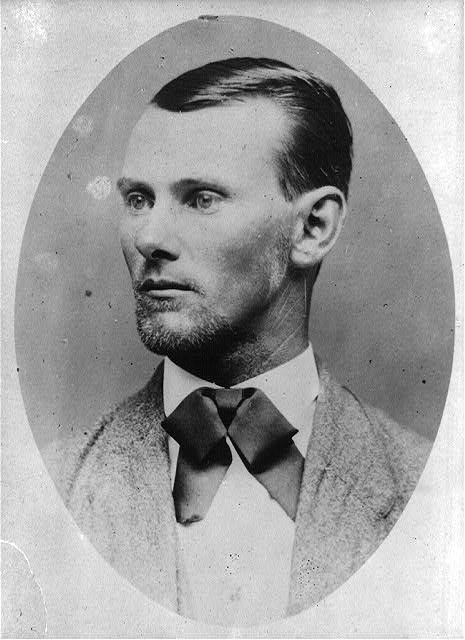
Liberty, Missouri, has a nice ring to it and will no doubt be remembered for as long as folks recall the Wild West’s most famous anti-establishment rebels: the James (or James-Younger) Gang. It was on Feb. 13, 1866, that at least a dozen former Southern guerrilla soldiers, including Frank James and Cole Younger, held up the Clay County Savings Association in Liberty. Jesse James was recovering from wounds suffered as a Confederate guerrilla and probably wasn’t able to help brother Frank and Cole, but the Liberty bank job is considered the James-Younger Gang’s first robbery.
Adair, Iowa, might not have the same ring to it, but it was there on July 21,1873, more than seven years after the Liberty holdup, that another James-Younger first occurred — the gang’s first train robbery. Using their wartime guerrilla skills–riding and shooting and eluding the enemy–the boys may have robbed as many as nine banks before they got around in 1873 to tapping into this new, lucrative source of treasure, the railroad industry.
GET HISTORY’S GREATEST TALES—RIGHT IN YOUR INBOX
Subscribe to our HistoryNet Now! newsletter for the best of the past, delivered every Monday and Thursday.
Late to the train-robbing game
Actually, the James brothers and the Younger brothers were not the first post-Civil War train robbers in the country. Another set of brothers, the Renos, had held up an Ohio & Mississippi passenger train near Seymour, Ind., in October 1866. The Reno Gang struck again in May 1868 at Marshfield, Indiana, but its third attempt at a train robbery bombed that July outside Brownstown, Indiana. Within two years of the Renos’ first train robbery, the Pinkerton Detective Agency, with help from local vigilantes, had destroyed the gang.
Apparently no outlaw gang was strong enough or bold enough during the next five years to take on the railroad industry. But the railroads were routinely transporting millions of dollars in gold, silver and greenbacks, and even though the Jameses and the Youngers had made out quite well robbing small-town banks, they must have envisioned greater profits by stopping trains. In any case, by the summer of 1873, they were ready to attempt the first train holdup west of the Mississippi. Such a robbery did have a few advantages over bank jobs. They could stop a train at a point of their own choosing, and by destroying the nearest telegraph office to delay news of the robbery, they would not have to immediately contend with a posse. Also, they would have the element of surprise working for them–at least the first time.
The trouble with train robberies, especially after the James-Younger Gang reinitiated them wholesale, was that the railroads put armed guards on their trains and kept the schedules for their big shipments of bullion and currency a secret. For that reason, the gang found it necessary to spy on the railroads for information about valuable cargoes and accompanying guards. When the famous Missouri outlaws struck at Adair, they started a veritable war with the powerful railroads and their detectives.
Trains and banks
The James-Younger Gang’s first train robbery did not come close to matching the monetary haul of its first bank robbery. In fact, the $60,000 taken at Liberty was most likely more money than was collected in any of the gang’s later robberies. The previous year, Confederate soldiers had robbed a bank in St. Albans, Vermont, but the heist in Liberty is considered the first successful peacetime daylight bank robbery in U.S history.
Liberty only seemed to whet the gang’s appetite for loot. Within 15 months, three more banks in Missouri were held up, though Jesse and Frank James may not have participated in any of those robberies. The James boys, as well as Cole Younger, most likely did rob a bank in Russellville, Kentucky, in March 1868. After a bank holdup in Gallatin, Missouri, in December 1869, the Jameses became the chief suspects in that and other crimes. As the gang fled Gallatin, Jesse James was unseated from his horse and forced to double up on Frank’s horse. Later, the fine-blooded horse left behind was recognized as belonging to Jesse James of Kearney, Missouri. The James-Younger Gang went on to rob banks in Corydon, Iowa; Columbia, Kentucky; and Ste. Genevieve, Missouri, before it got around to working on the railroads.
GOLD!
Recommended for you
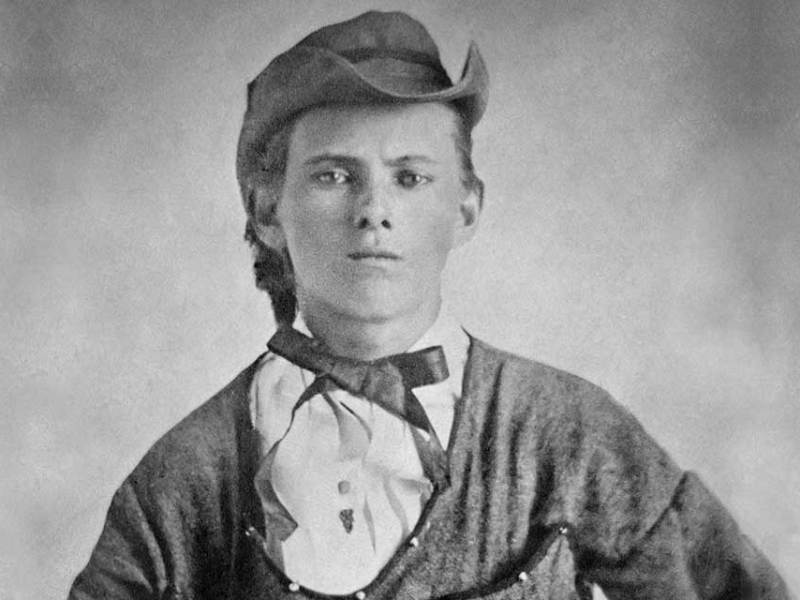
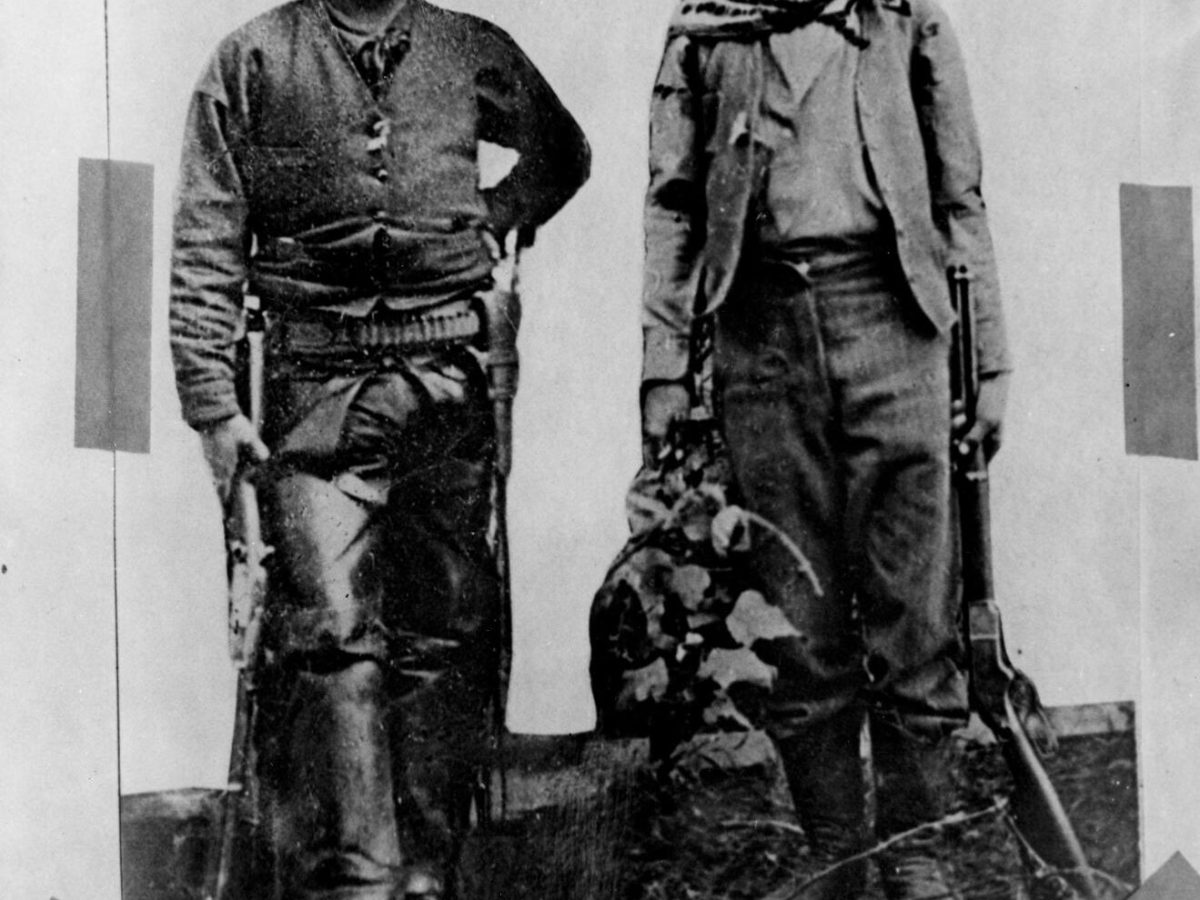
In July 1873 the gang learned of a big gold shipment being sent by rail from Cheyenne, Wyoming Territory. The outlaws — now probably including Cole Younger’s brothers Jim, John and Bob —planned to strike the eastbound Chicago, Rock Island & Pacific train outside Adair, Iowa, and rode into that town about July 18. Posing as businessmen, they picked up information about the train schedule and also explored the rails. On July 21, they were camped near a blind curve along the line. Before dark, according to the Leavenworth Daily Times, they pulled up several railroad spikes holding down a rail on one side of the curve. They then hitched a large rope around the end of the loosened track and waited. At dusk, they heard the loud puffing of a steam locomotive approaching their position. As the ground trembled under their feet, the bandits tugged at the rope, pulling the rail inward and out of alignment.
Aboard the train, engineer John Rafferty peered down the track through the twilight, alert as he entered a sharp curve in the line. Then there were shots, and a bullet tore through the engineer’s right thigh. Rafferty threw the engine into reverse, but it was too late. His engine lurched off the track, crashed into a ditch and toppled on its side, breaking his neck. The fireman, Dennis Foley, was badly burned but survived. A towering cloud of steam and smoke spewed from the wrecked locomotive. Wearing masks, the outlaws quickly approached the stalled cars. They broke into the U.S. Express Company’s safe but found only about $2,000. According to the Daily Times, 3 1/2 tons of gold and silver bullion was also on the train but was apparently too heavy for the outlaws to carry away. (Later accounts of the robbery maintain that a following train carried the bullion.) Disgusted, the bandits moved among the passengers, lifting wallets, jewelry and valuables before they took off, heading south.
The outlaws’ trail led straight into Missouri. Several people in the area of the robbery said that two of the outlaws looked like Frank and Jesse James. In response, on Dec. 20, 1873, Jesse James wrote the St. Louis Dispatch from Deer Lodge, Montana Territory, denying the brothers’ complicity in that and other crimes. If Missouri Gov. Silas Woodson would promise them protection, Jesse wrote, “we can prove before any fair jury in the state that we have been accused falsely and unjustly.” The protection would be from “a mob, or from a requisition from the Governor of Iowa, which is the same thing.”
‘I’ll Blow the Top of Your Head Off!’
Just over a month after that letter was written, the James-Younger Gang targeted a train at Gad’s Hill, Missouri, a flag stop 120 miles south of St. Louis on the Iron Mountain Railroad line. About 4:45 p.m. on Jan. 31, 1874, five bandits armed with Navy Colt revolvers and double-barreled shotguns captured the stationmaster and flagged down the Little Rock Express. Conductor C.A. Alford later described the outlaws to a St. Louis Republican reporter as tall men dressed in Federal Army overcoats and wearing white cloth masks with holes for eyes and nose. One of the bandits had grabbed Alford by the collar and told him, “Stand still or I’ll blow the top of your head off!” The passengers, who were gaping out the windows, were warned that if anyone fired a gun, the conductor would be killed.
Boarding the train, the bandits relieved the 25 passengers of their money and jewelry, preying especially on what they scornfully called the plug-hat gentlemen. Each male passenger was asked tauntingly if he was Mr. Pinkerton, whom the outlaws said they wanted. After rifling the mailbags and robbing the Adams Express safe, one of the bandits, thought to be Jesse James, handed engineer William Wetton (or somebody else, accounts differ) a whimsical press release titled A true account of this present affair. It stated: “The most daring robbery on record. The southbound train on the Iron Mountain Railroad was stopped here this evening by five heavily armed men and robbed of___dollars….The robbers were all large men, none of them under six feet tall. They were masked, and started in a southerly direction after they had robbed the train, all mounted on fine-blooded horses. There is a hell of an excitement in this part of the country!” (Jesse had conveniently allowed for the railroad to fill in the amount lost, but apparently that was never done.) A 25-man posse formed the next day but was unable to follow the outlaws’ trail.
Enter the Pinkertons
The first train robbery in Missouri had gone off seemingly without a hitch — nobody had been killed at Gad’s Hill, and the outlaws had enjoyed themselves. However, because registered mail had been taken, the Pinkertons were immediately called in to track down the robbers. Pinkerton agent John W. Whicher arrived at Liberty on March 10, 1874, and consulted with D.J. Adkins, president of the local Commercial Bank, and O.P. Moss, a former sheriff, about his plans. He told them that he intended to obtain a farmhand’s job at the Samuels’ farm (the farm of the Jameses’ stepfather and the boys’ hangout). When the opportunity was ripe, he said, he would capture the outlaws. Both of the local men cautioned Whicher against such a bold plan. Moss told him, The old woman [the James boys’ fiery mother, Zerelda] would kill you if the boys don’t. The cocky 26-year-old detective would hear no more. After getting directions to the Samuels’ farm, Whicher dressed up as a farm laborer (though he was described as having a tender complexion and hands like a city fellow) and, at 5:15 p.m., boarded a slow freight taking him to within four miles of the farm. Unfortunately for Whicher, the James boys had already been alerted, most likely by banker Adkins. Whicher’s body was found the next morning, south of the Missouri River near Independence, Missouri. He had been shot through the head and heart, and a rope dangled from his neck.
Meanwhile, two other Pinkertons were hot on the trail of the Youngers in St. Clair County. On March 15, 1874, agents Louis Lull (using the name W.J. Allen) and James Wright (also known as John Boyle) — accompanied by a part-time deputy sheriff from Osceola, Missouri, Edwin B. Daniels — set out from Osceola for Roscoe. After staying at the Roscoe House hotel that evening, the three left the next afternoon for the farm of Theodrick Snuffer, a family friend of the Youngers, some three miles out of town. Wright fell back out of sight as Lull and Daniels approached the farmhouse. Snuffer came out to talk to the two men, who posed as cattle buyers. John and James Younger watched the exchange from Snuffer’s attic. The two strangers in the yard were well armed and suspicious looking. When they departed to rejoin Wright, the two Younger brothers followed them.
When the Youngers were within shouting distance of Lull, Wright and Daniels, John Younger ordered the trio to halt. Wright panicked and put spurs to his horse. Jim Younger fired at him, shooting his hat off, but Wright kept on going. Lull and Daniels turned around slowly in the road. The Youngers told the two cattle buyers to throw down their guns and then questioned them about what they were doing in this part of the country. Rambling around, Lull replied. An argument ensued, and John Younger leveled his shotgun at Daniels. Lull saw his chance. He pulled a No. 2 Smith & Wesson from inside his coat and shot John Younger in the neck. Recoiling, the wounded Younger fired both barrels of his shotgun at Lull, striking him in the left arm. Lull’s horse now bolted eastward, with John Younger in pursuit. As Lull attempted to regain his reins, John rode beside him and fired twice, one of the bullets tearing into Lull’s left side. The detective’s horse then charged into a thicket, where a low limb stripped Lull from the saddle. Meanwhile, John turned back toward his brother, rode a few yards, and tumbled into the road dead. By that time, Jim Younger had killed Daniels and had received a flesh wound in his hip. The seriously wounded Lull was taken to Roscoe later that evening, but he died within six weeks.
The deaths of Whicher and Lull enraged William Pinkerton, head of the detective agency, and the Pinkertons began accusing the gang’s Missouri friends of harboring and supporting the outlaws. Newspapers debated the issue. Missouri Governor Woodson hired secret agents J.W. Ragsdale and George W. Warren to aid in the outlaws’ capture. None of these developments kept Jesse James from marrying his cousin Zee Mimms in Kearney in late April 1874 after a nine-year courtship, or Frank James from eloping with Anna Reynolds Ralston that June.
ESCALATION
By December 1874, the James boys and two of the surviving Youngers, Cole and Bob, were ready to rob their third train. After learning of a huge gold shipment from the west, five gang members forced section hands to pile ties on the tracks of the Kansas Pacific Railroad near Muncie, Kansas, on Dec. 8. Then, using a red scarf, the outlaws flagged down an express train and stole at least $30,000, perhaps as much as $55,000. During the holdup, shots were fired at the conductor as he ran from the train, apparently to flag a freight train that was following the express. He was not hit. In response to this latest outrage, the Kansas Pacific Railroad Co., the governor of Kansas and the express company together promised at least $10,000 for the capture of the robbers, dead or alive. The suspects included Jesse and Frank James, of course, but only one man, Bud McDaniel, was ever captured and charged with the crime. McDaniel never confessed or squealed on anyone; he escaped jail before he could be tried and was soon after shot and killed while being pursued.
On Jan. 26, 1875, the Pinkertons pursued their most desperate solution to capturing the James brothers. That night, a special train eased out of Kansas City, Missouri, carrying a team of heavily armed detectives and their horses and gear. Conductor William Westfall let them off near Kearney and then returned with the train to Kansas City. The detectives rode to the Samuels’ farm, where they sent a cast-iron ball filled with flammable fluid crashing through the window of the Samuels’ parlor in a shower of fire and glass. Reuben Samuel, Frank and Jesse’s stepfather, rushed into the room and, fearing the house would go up in flames, kicked the flaming ball into the fireplace. A tremendous explosion rocked the house, mortally wounding 9-year-old Archie Peyton Samuel (Jesse and Frank’s half brother), mangling Zelda Samuel’s right arm (which later had to be amputated at the elbow), and wounding her Black servant. The detectives left as abruptly as they had come, without even summoning a doctor. A neighbor of the Samuels family, James A. Hill, rushed to Kearney and brought back Dr. James V. Scruggs, but there was nothing the doctor could do for young Archie.
Exactly what happened during the raid is unclear, and it has been debated whether the object thrown was intended as a bomb or a flare. Likely, at least one of the outlaw James boys had been in the house, for later someone borrowed Dr. Scruggs’ horse to escape from the area. There was also talk that some of the detectives had been killed, but that was never verified. What is clear is that a revolver left behind by the detectives bore the inscription P.G.G. (Pinkerton Government Guard). That organization, however, refused to accept responsibility for the attack.
In March, a Clay County grand jury found murder indictments against Robert J. King; Allan K. Pinkerton, William Pinkerton’s son; Jack Ladd, a Pinkerton spy who worked at Daniel Askew’s farm, next to the Samuels’ place; and five other men. But no one was ever arrested. Many at the time believed that high-placed officials in the Missouri government prevented the arrests to protect themselves, the Pinkertons and the railroads. Ultimately, so much public sympathy was aroused for the Jameses because of the debacle that a move was made in the Missouri Legislature to provide amnesty to the James Gang. While the vote was 58 to 38 in favor of amnesty, the measure still failed because a two-thirds majority was needed. In the meantime, the James brothers dispensed their own justice. John Askew, the Samuels’ neighbor who had hired the Pinkerton spy, was gunned down in front of his house on the night of April 12, 1875. That September, a bank was robbed in Huntington, W.Va., that may have involved the James-Younger Gang (see story in December 1998 Wild West).
St. Louis boogaloo
The James-Younger Gang renewed its attacks against the railroads on July 7, 1876, when it struck a Missouri Pacific train at a site known as the Rocky Cut, near Otterville, Missouri. Riding out of heavy woods, the gang seized Henry Chateau, a watchman guarding a railroad bridge under construction, and his red lantern was used to signal the incoming train to halt. As the train squealed to a stop, discharging pistols and terrific yells rang out, accord-ing to the Kansas City Evening Star. John B. Bushnell, the chief messenger, fled to the other end of the train with the U.S. Express safe key. Once inside the baggage car, the outlaws held a gun to the head of baggage master Louis Pete Conklin (sometimes referred to as Conkling) and forced him to lead them in search of Bushnell. As the masked bandits proceeded through the train, women shrieked and men scrambled beneath their seats. After finding Bushnell and threatening him with death, the outlaws retrieved the key and opened the safe. They then obtained the engineer’s coal pick and broke into the Adams Express safe. From the two safes the bandits gathered more than $15,000, which they stuffed into the gang’s signature two-bushel flour sack. A small posse soon formed but had no luck–the hard-riding gang was long gone.
The railroad and express companies responded by persuading Chief of Police James McDonough of St. Louis to send his agents into southwest Missouri to chase down the criminals. In turn, McDonough enlisted the help of Larry Hazen, a well-known detective from Cincinnati. This effort led to the arrest of inexperienced gang member Hobbs Kerry, who had been flashing money in Granby, Mo. Told there were witnesses who recognized him from the Otterville robbery, Kerry broke down and confessed, naming as his accomplices Jesse and Frank James, Cole and Bob Younger, Charlie Pitts, Bill Chadwell and Clell Miller. A case was now building against the gang — if it could be captured. Jesse James continued to write disclaimers to newspapers, calling Kerry’s confession a well-built pack of lies from beginning to end in one letter published in the Kansas City Times in August. The Kansas City Journal described the letters as suspiciously — almost nauseatingly — monotonous. Cole Younger later wrote that Kerry’s implication of the Jameses and Youngers convinced the gang members to make one haul, and with our share of the proceeds start life anew in Cuba, South America or Australia.
BRANCHING OUT
The next month, the gang was changed for all time when the Jameses and Youngers not only went back to robbing a bank but also chose a bank far from their usual stamping grounds. The aborted robbery of the First National Bank of Northfield, Minn., on Sept. 7, 1876, took the Youngers out of the James-Younger Gang. Cole, Jim and Bob Younger were all captured and sent to prison in the aftermath of that fiasco, which had also cost the lives of Pitts, Chadwell and Miller. Jesse and Frank James escaped, but now they had to recruit new men. After Northfield, the notion that the James boys were being accused of robberies that they had not committed played poorly in Missouri. The gang of ex-Civil War guerrillas having problems with postwar adjustment had become a gang of common thugs in the eyes of many disenchanted Missourians. Outsiders now called Missouri the Robber State and an Outlaw’s Paradise, and lawmen increasingly targeted the gang.
The James brothers were not heard from for months after escaping from Minnesota, but they had not gone to South America or Australia. More likely they had spent time with family in either Texas or Kentucky. By the summer of 1877, they had moved to Tennessee, where Frank adapted to the quiet life better than his younger brother. In need of money and perhaps excitement, too, Jesse recruited new gang members and took on the railroads again, this time without Frank.
A NEW GANG
The new James Gang struck on October 8, 1879, at Glendale, Missouri, a little station on the Chicago & Alton line 15 miles east of Kansas City. The outlaws abducted at gunpoint a handful of Glendale citizens, the stationmaster and the telegraph operator. After smashing all of the station’s telegraph equipment to prevent outside knowledge of the robbery, they ordered the telegraph operator to lower the green light (a signal to the conductor to stop the train for further instructions). When the operator refused, the muzzle of a gun was shoved into his mouth and he weakened, according to a Kansas City Times reporter.
To ensure that the train stopped, the robbers also covered the tracks with stones.
At 8 p.m., Jesse and company halted the eastbound train and fired enough shots to keep the passengers inside. The express messenger, William Grimes, filled a satchel with money from the U.S. Express Company’s safe and tried to escape out the back of the express car. Anticipating this move, a gang member intercepted Grimes and struck him on the back of the head with the butt of a revolver, knocking him unconscious. Some 30 minutes later, the outlaws rode off uttering wild whoops of exultation, according to one account. Estimates of the take ranged from $6,000 to as much as $50,000.
Jesse James returned to Nashville after the Glendale robbery, but he was heard from twice in September 1880 in Kentucky — holding up a Mammoth Cave tourist stage and then a Dovey Cove Mine payroll in Mercer. Jesse had a nice haul at Muscle Shoals, Alabama, on March 11, 1881, when he robbed paymaster Alex Smith of $5,000. But things took a downturn two weeks later when one of his gang members, Bill Ryan, was arrested in Tennessee. Ryan was eventually convicted for his role in the Glendale train robbery after another of Jesse’s recruits, Tucker Basham, testified against Ryan in Missouri. Basham also mentioned Jesse James as an accomplice, which caused James confederates to burn Basham’s Jackson County home. Basham fled the area.
Back to Train Robbery
The James Gang wasn’t through with trains yet. In fact, Frank James returned to contribute his expertise. On the evening of July 15, 1881, a Chicago, Rock Island & Pacific train stopped at Cameron, Missouri, and was boarded by two gang members wearing dark suits of clothes [and] high caps, according to the Kansas City Evening Star. A few miles to the northeast, at Winston, Jesse and Frank James and their cousin Wood Hite boarded the train and put on masks. As the train proceeded, William Westfall, the same conductor who had brought the Pinkertons to the Samuels’ farm back in January 1875, collected fares in the smoking car. Suddenly, a tall man with black whiskers and wearing a linen duster (probably Jesse James) yelled, Stop! and ordered the conductor to raise his hands. Instead, Westfall crouched and raced for the back of the car. One of the bandits then shot him in the back. Westfall reeled onto the back platform and tumbled dead off the moving train. The bandits then cut the bell rope, signaling the engineer to stop the train.
Meanwhile, gang members Dick Liddil and Clarence Hite, another James cousin, fired into the locomotive, shattering its windows and ensuring that the engineer pulled onto a siding at Little Dog Creek Bridge. As the outlaws robbed the express car, a curious passenger, Frank McMillan, gaped at them from the platform. A bandit shot him in the head, and McMillan rolled from the train. In the express car, bandits had pistol-whipped the two messengers and robbed the express safe. Exactly how much money was taken is uncertain. The Kansas City Evening Star on July 16 called the crime the most daring, reckless, and cold-blooded murder and robbery ever enacted in the country. Liddil later confessed to participating in the Winston train robbery and said that Jesse shot Westfall and Frank shot McMillan.
Missouri Gov. Thomas Crittenden was determined to stop the James Gang once and for all. The governor was under considerable pressure, since Missouri was trying to cast off its reputation as the Robber State. With the aid of Colonel Wells H. Blodgett, attorney for the Wabash Railroad, he called a meeting of railroad and express company executives in St. Louis on July 26, 1881. The officials promised to pay $5,000 each for the delivery of Frank and Jesse James. Another $5,000 each would be offered for their convictions.
THE FINAL HAUL
The James Gang was not quite done. On Sept. 7, 1881, exactly five years after the failed bank robbery in Northfield, the outlaws stopped a Chicago & Alton train where the tracks ran through Blue Cut, some two miles west of Glendale. Along with Jesse and Frank, participants likely included Clarence Hite, Dick Liddil and a new recruit, Charlie Ford. They used a red lantern to get the train to stop, broke open the express car and struck messenger H.A. Fox with a pistol butt. The gang leader not only didn’t wear a mask but also announced that he was Jesse James. Engineer Choppey Foote later said that the bandits took all the money they could but that the leader gave him $2 to use to drink the health of Jesse James tomorrow morning. The outlaws collected $1,000 at most, as well as jewelry. They made a clean getaway, but there would be no more robberies for the James Gang.
In February 1882, Clarence Hite was arrested in Kentucky and extradited to Missouri, where he pleaded guilty to involvement in the Winston robbery and was sentenced to 25 years in prison. Another cousin of the Jameses, Wood Hite, died early that same year at the hands of Dick Liddil and Bob Ford, Charlie Ford’s younger brother. Apparently, both Liddil and Wood Hite had been vying for the attentions of the attractive widow Martha Bolton, the sister of the Ford brothers. Liddil turned himself in and told all he knew about the James Gang’s robberies.
On Monday, April 3, 1882, Bob and Charles Ford were visiting with Jesse James in his St. Joseph, Missouri, home when Bob shot the famous outlaw in the back of the head. Two weeks later, the Fords were indicted on murder charges, found guilty and sentenced to hang. Governor Crittenden granted them full pardons that very afternoon. Many people assumed there had been a conspiracy involving the governor to eliminate Jesse James. In a letter to the Missouri Republican that he supposedly wrote in February 1884, Bob Ford said that he had not been hired by Crittenden or anyone else.
On Oct. 5, 1882, Frank James, with no desire to return to outlawry and fearing the same treatment as Jesse, personally surrendered to Crittenden in Jefferson City. Frank’s wife later said that her husband could not even cut a stick of wood without looking around to see if someone was slipping up behind him to kill him.
MURDER CHARGES
In August 1883, Frank James stood trial for the murder of train passenger Frank McMillan during the 1881 Winston robbery. Frank’s star-studded troop of lawyers got him off, overcoming the testimony of a gang member turned informer, Dick Liddil. They got a boost from the governor himself, who testified that Liddil initially told him that Jesse James was the one who had shot McMillan. Furthermore, in February 1884, Crittenden dismissed all other charges against Frank James in Missouri.
That April, Frank did have to stand trial in Alabama for the 1881 Muscle Shoals robbery, but he was found not guilty. By the middle of 1884, 41-year-old Frank James could begin to pursue honest work under his real name. The first bank robbery at Liberty in 1866 and that first train robbery at Adair in 1873 no doubt were impossible to forget, but at least they could now be dusty, distant memories for Jesse’s big brother.
historynet magazines
Our 9 best-selling history titles feature in-depth storytelling and iconic imagery to engage and inform on the people, the wars, and the events that shaped America and the world.