
President John F. Kennedy confronted a deteriorating situation in South Vietnam from the moment he took office in 1961. In Laos, U.S. friend Phoumi Nosavan was losing ground to a pro-Communist group supported by the Soviet Union. Rioting Buddhists and students were tearing apart South Vietnamese cities while terror squads murdered South Vietnamese officials, and U.S. military advisers died in battles half-heartedly fought by the Army of the Republic of Vietnam (ARVN) against the Viet Cong.
South Vietnamese President Ngo Dinh Diem believed, like the former emperors of China, that he possessed a ‘mandate from heaven,’ and he expected the people to follow him as a leader by divine right. Diem’s leadership was limited by his use of his family to maintain power. His brother Ngo Dinh Nhu ran the secret police force, and other family members exercised dictatorial control over various provinces. In addition, Diem’s practice of forcing military commanders to work in concert with provincial leaders who were primarily politicians was a disaster.
Early in February 1962, the Kennedy administration replaced the Military Assistance Advisory Group in Saigon with a new umbrella agency, the Military Assistance Command Vietnam, which coordinated U.S. military policy and assistance in South Vietnam. American advisers had indeed improved the situation of the ARVN, but Diem tended to punish military success rather than reward it–fearing the rise of a general who might take his place.
In May 1963, conditions began to deteriorate rapidly. Early in the month, government officials in Hue allowed Roman Catholics to fly religious flags in celebration of the birthday of the city’s archbishop (Diem’s brother), but on June 3 the traditional flags to mark the birth of Buddha were banned. Local Buddhists, some 80 percent of Hue’s population, complained that the act was discriminatory and, when city officials refused to lose face by admitting their error, took to the streets in protest. The result was nine Buddhists killed by government troops. Rioting soon spread from Hue to Saigon. Although the U.S. government urged Diem to take responsibility, he allowed his Catholic sister-in-law Madam Ngo Dinh Nhu to denounce the protestors as traitors and Communist sympathizers. The rioting spread and became a full political crisis.
In August and October 1963, according to the so-called Pentagon Papers, the United States gave its support to a cabal of army generals bent on removing the controversial Diem, whose rise to power Kennedy had backed and who had been the anchor of American policy in Vietnam for nine years. For weeks, with the president informed every step of the way, the American mission in Saigon maintained secret contacts with the plotting generals through one of the Central Intelligence Agency’s most experienced and versatile operatives, Lt. Col. Lucien ‘Lulu’ Conein. An eccentric yet thoroughly professional agent, Conein inspired confidence in his Vietnam contacts, who, in accord with Asian tradition, placed more faith in personal ties than in formal relationships.
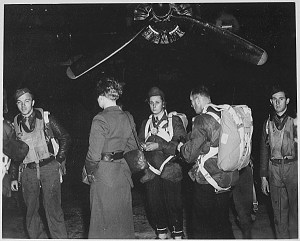
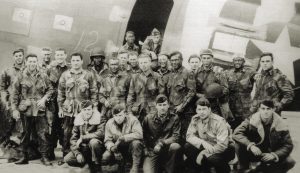
Born in Paris, Conein had been raised in Kansas by his aunt but retained his French citizenship. He enlisted in the French army at the outbreak of World War II in 1939, and deserted when France surrendered a year later. The Office of Strategic Services (OSS) recruited him to parachute into France with a French Resistance unit. When the war ended in Europe, Conein joined a company of French and Vietnamese commandos harassing Japanese posts in northern Vietnam. He entered Hanoi in 1945 with the OSS team that worked with Ho Chi Minh, and returned in 1954 on a mission to sabotage the Communist transportation system.
In violation of the Geneva Accords, Conein and his team formed secret’stay-behind’ squads of Vietnamese, which were composed of about 200 anti-Communist political activists and code-named the ‘Hoa’ and the ‘Binh.’ This mission was his one failure. The team accomplished little. Most team members were eventually compromised and captured. A star performer in the CIA’s department of ‘dirty tricks,’ Conein also infiltrated covert agents into Eastern Europe and trained paramilitary forces in Iran.
Reassigned to Vietnam in 1962, Conein assumed the cover role of an adviser to the Saigon Ministry of the Interior, a deception that allowed him to gather intelligence on conspiracies against the government. His job was delicate, since he had to be sure that his reports of the coming coup were not leaked to Diem by American sympathizers with the regime.
According to the Pentagon Papers, Washington did not originate the anti-Diem coup; nor did Americans intervene in any way to try to prevent the assassination of Diem and his brother Ngo Dinh Nhu, who, as Diem’s chief political adviser, had accumulated immense power. Popular discontent with the Diem regime focused on Nhu and his wife. For weeks the American mission maintained secret contacts with the plotting generals through Conein. Ambassador Henry Cabot Lodge, Jr., had occasion to describe Conein as the ‘indispensable man.’ Lodge stressed that Conein had been a friend with General Tan Van Don, figurehead commander of the South Vietnamese army for 18 years, and the general had expressed extreme reluctance to deal with anyone else.
The Pentagon Papers reproduced a sensitive cablegram dated October 5, 1963, from Lodge to the State Department that described a meeting with Conein and General Doung Van Minh. General Minh, who had been held back by Diem because of his popularity with the troops (who nicknamed him ‘Big Minh’), was chosen to be the leader of the plot against Diem. For some reason, Conein did not respect Minh, who he called a ‘glorified French army corporal.’ Oddly enough, Minh had noted that ‘Lulu Conein is the only American I could really trust.’ He told Conein that action had to be taken to change the government or the war would be lost to the Viet Cong, because the government no longer had the support of the people. Big Minh did not expect any American support, but he did need assurances that the U.S. government would not attempt to thwart the plan, and that it would continue to provide military and economic aid. Minh also revealed that one reason they had to act quickly was that many regimental, battalion and company commanders were working on coup plans of their own.
The subsequent messages from the White House indicated the National Security Council would support a coup that had ‘a good chance of succeeding.’ They also stressed that they would offer no ‘active promotion of a coup,’ and the desire for ‘plausible denial.’ After one coup attempt failed, the White House told Lodge to discourage the plot if quick success seemed unlikely. Lodge replied that the United States was unable to ‘delay or discourage a coup.’
On August 29, impatient with Washington’s disarray, Lodge sent a cable demanding decisive measures. ‘We are launched on a course from which there is no respectable turning back: the overthrow of the Diem government. There is no turning back because U.S. prestige is already publicly committed to this end in large measure, and will become more so as the facts leak out. In a more fundamental sense, there is no turning back because there is no possibility, in my view, that the war can be won under the Diem administration.’
Kennedy approved Lodge’s recommendations, giving him complete discretion to suspend U.S. aid to Diem. That gave Lodge a mandate to manage American policy in Vietnam–to topple the Diem regime. In November 1963, the coup proceeded on schedule. On the phone with Lodge, Diem asked about the attitude of the United States. Lodge replied that he was not well enough informed to say, and told him, ‘If I can do anything for your personal safety, please call me.’
Conein, wearing his uniform and an ivory-handled .375 magnum frontier-model revolver strapped to his waist, was summoned to a rendezvous. He carried a satchel containing 3 million piasters, the equivalent of $40,000, in case the insurgents needed funds. He was equipped with two telephones, one linked to the main CIA office and the other to his villa, where a team of American Special Forces personnel was guarding his wife and children. Conein also had a radio in his jeep. As he drove to the headquarters, he transmitted to his superiors a prearranged cipher that signaled the imminent start of the coup.
A short time later, the South Vietnamese generals telephoned Diem and promised to allow him and his brother Nhu to leave the country unharmed if they capitulated. At first, Diem refused to yield. Then, realizing they could not hold out long, he and Nhu slipped into a Land Rover and drove to Cholon, the Chinese suburb of Saigon. After an unsuccessful attempt to negotiate, Diem phoned Minh to say that he would surrender unconditionally and that he and Nhu were in Saint Francis Xavier, a French Catholic church in Cholon. An M-113 armored personnel carrier and four jeeps under Minh’s bodyguard commander, Captain Nhung, were sent to the church. As they left, Big Minh signaled Nhung by raising two fingers. By every account, Nhung then sprayed both brothers with bullets.
Ambassador Lodge was quoted in The New York Times on June 30, 1964, as stating: ‘We never participated in the planning. We never gave any advice. We had nothing whatever to do with it.’ On November 6, 1963, however, Lodge cabled Kennedy, ‘The ground in which the coup seed grew into a robust plant was prepared by us, and the coup would not have happened as it did without our preparation.’
General William C. Westmoreland, who seven months after Diem’s assassination replaced General Paul Harkins as commander of MACV, summed up the consequences of President Kennedy’s involvement. ‘In his zeal, the young president made a grievous mistake in assenting to the overthrow of South Vietnamese President Ngo Dinh Diem in 1963,’ Westmoreland said. ‘In my view that action morally locked us in Vietnam. If it had not been for our involvement in the overthrow of President Diem, we could perhaps have gracefully withdrawn our support when South Vietnam’s lack of unity and leadership became apparent.’
This article was written by Colonel William Wilson, U.S. Army (ret.) and originally published in the April 1997 issue of Vietnam Magazine. For more great articles be sure to subscribe to Vietnam Magazine today!