
They rode in from the west through a crisp, brilliant October morning in 1892, a little group of dusty young men. They laughed and joked and ‘baa’ed at the sheep and goats along the way. In a few minutes they would kill some citizens who had never harmed them. And in just a few minutes more, four of these carefree riders were going to die.
For they planned to rob two banks at once, something nobody else had ever done, not even the James boys. They had chosen the First National and the Condon in pleasant, busy Coffeyville, Kan. Three of the young men were brothers named Dalton, and they knew the town, or thought they did, for they had lived nearby for several years. Coffeyville was a prosperous town, with enough loot to take them far away from pursuing lawmen.
Now, 110 years after the raid, much of what happened is lost in the swirling mists of time. Today it’s hard to sort out fact from invention, and one of the remaining questions is this: How many bandits actually rode up out of the Indian Territory (now Oklahoma) to steal the savings of hard — working Kansas citizens? Most historians say there were five raiders … but some say there was a sixth rider, one who fled, leaving the others to die under the citizens’ flaming Winchesters.
Coffeyville was unprepared, a peaceful little town, where nobody, not even the marshal, carried a gun. The gang might have gotten away with stealing the citizens’ savings that October 5 morning except for Coffeyville’s penchant for civic improvement. For the town was paving some of its downtown streets, and in the course of the job the city fathers had moved the very hitching racks to which the gang had planned to tether their allimportant horses. So the outlaws tied their mounts to a fence in a narrow passage, called Death Alley today. They walked together down the alley, crossed an open plaza, and walked into the two unsuspecting banks. Tall, handsome Bob Dalton was the leader, an intelligent man with a fearsome reputation as a marksman. Grat, the eldest, was a slow — witted thug whose avocations were thumping other people, gambling, and sopping up prodigious amounts of liquor. He was described as having the heft of a bull calf and the disposition of a baby rattlesnake. Emmett, or Em, was the baby of the lot, only 21 on the day of the raid, but already an experienced robber. The boys came from a family of 15 children, the offspring of Adeline Youngeraunt to the outlaw Younger boys — and shiftless Lewis Dalton, sometime farmer, saloonkeeper and horse fancier.
Backing the Dalton boys were two experienced charter members of the gang, Dick Broadwell and Bill Power (often spelled Powers). Power was a Texas boy who had punched cows down on the Cimarron before he decided robbing people was easier than working. Broadwell, scion of a good Kansas family, went wrong after a young lady stole his heart and his bankroll and left him flat in Fort Worth.
Grat Dalton led Power and Broadwell into the Condon. Em and Bob went on to the First National. Once inside, they threw down on customers and employees and began to collect the banks’ money. However, somebody recognized one of the Daltons, and citizens were already preparing to take them on.
Next door to the First National was Isham’s Hardware, which looked out on the Condon and the plaza and down Death Alley to where the gang had left their horses, at least 300 feet away. Isham’s and another hardware store handed out weapons to anybody who wanted them, and more than a dozen citizens were set to ventilate the gang members as they left the banks. The first shots were fired at Emmett and Bob, who dove back into the First National and then out the back door, killing a young store clerk in the process.
Grat was bamboozled by a courageous Condon employee who blandly announced that the time lock (which had opened long before) would not unlock for several minutes. Grat, instead of trying the door, stood and waited, while outside the townsmen loaded Winchesters and found cover. When bullets began to punch through the bank windows, Grat, Broadwell and Power charged out into the leadswept plaza, running hard for the alley and snapping shots at the nest of rifles in Isham’s Hardware. All three were hit before they reached their horses — dust puffed from their clothing as rifle bullets tore into them.
Bob and Emmett ran around a block, out of the townspeople’s sight, paused to kill two citizens and ran on, turned down a little passage and emerged in the alley about the time that Grat and the others got there. Somebody nailed Bob Dalton, who sat down, fired several aimless shots, slumped over and died. Liveryman John Kloehr put the wounded Grat down for good with a bullet in the neck. Power died in the dust about 10 feet away. Broadwell, mortally wounded, got to his horse and rode a half — mile toward safety before he pitched out of the saddle and died in the road.
Emmett, already hit, jerked his horse back into the teeth of the citizens’ fire, reaching down from the saddle for his dead or dying brother Bob. As he did so, the town barber blew Emmett out of the saddle with a load of buckshot, and the fight was over. Four citizens were dead. So were four bandits, and Emmett was punched full of holes — more than 20 of them. Which accounted for all the bandits… or did it?
Emmett always said there were only five bandits. However, four sober, respectable townsfolk, the Hollingsworths and the Seldomridges, said they had passed six riders heading into town, although nobody else who saw the raiders come in thought there were more than five. And, two days after the fight, David Stewart Elliott, editor of the Coffeyville Journal, had this to say: It is supposed the sixth man was too well — known to risk coming into the heart of the city, and that he kept off some distance and watched the horses.
Later, in his excellent Last Raid of the Daltons, Elliott did not mention a sixth rider, although he used much of the text of his newspaper story about the raid. Maybe he had talked to the Seldomridges and Hollingsworths, and maybe they had told him they could not be certain there were six riders. Maybe — but still another citizen also said more than five bandits attacked Coffeyville. Tom Babb, an employee of the Condon Bank, many years later told a reporter that he had seen a sixth man gallop out of Death Alley away from the plaza, turn south and disappear.
If Tom Babb saw anything, it might have been Bitter Creek Newcomb, also a nominee for the sixth man. He was a veteran gang member, said to have been left out of the raid because he was given to loose talk. One story has Bitter Creek riding in from the south to support the gang from a different angle. If he did, Babb might have seen him out of the Condon’s windows, which faced south.
The trouble with Babb’s story is not the part about seeing a sixth bandit — , it’s the rest of it. After Grat and his men left the Condon, Babb said he ran madly through the cross — fire between Isham’s Hardware and the fleeing bandits, dashed around a block and arrived in the alley as the sixth man galloped past: He was lying down flat on his saddle, and that horse of his was going as fast as he could go. Finally, he stood right next to Kloehr, the valiant liveryman, as he cut down two of the gang. Maybe so. Babb was young and eager, and as he said, I could run pretty fast in those days.
Still, it’s a little hard to imagine anybody sprinting through a storm of gunfire unarmed, dashing clear around a city block, and fetching up in an alley ravaged by rifle slugs. To stand next to Kloehr he would probably have had to run directly past the outlaws, who were still shooting at anything that moved. And nobody else mentioned Babb’s extraordinary dash, even though at least a dozen townsmen were in position to see if it had happened.
Still, there is no hard evidence to contradict Babb. Nor is there any reason to think that his memory had faded when he told his story. Maybe he exaggerated, wanting just a little more part in the defense of the town than he actually took… and maybe he told the literal truth. So, if Babb and the others were right, who was the fabled sixth man?
Well, the most popular candidate was always Bill Doolin, who in 1896 told several lawmen he rode along on the raid. No further questioning was ever possible, because in 1896 Doolin shot it out with the implacable lawman Heck Thomas and came in second. A whole host of writers supported Doolin’s tale. His horse went lame, the story goes, and Doolin turned aside to catch another mount, arriving in town too late to help his comrades. The obvious trouble with this theory is that no bandit leader would have attacked his objective short — handed instead of waiting a few minutes for one of his best guns to steal a new horse.
Nevertheless, the Doolin enthusiasts theorized that Doolin had gotten his new horse and was on his way to catch up with the gang when he met a citizen riding furiously to warn the countryside. The man stopped to ask Doolin if he had met any bandits. Doolin naturally said he hadn’t, and, ever resourceful, added: Holy smoke! I’ll just wheel around right here and go on ahead of you down this road and carry the news. Mine is a faster horse than yours. Doolin, according to oneaccount, started on a ride that has ever since been the admiration of horsemen in the Southwest… Doolin… crossed the Territory like a flying wraith,… a ghostly rider saddled upon the wind.
The flying wraith fable is much repeated. One writer says Doolin never stopped until he reached sanctuary west of Tulsa, a distance of at least 101 miles.
But before anybody dismisses Doolin as the sixth bandit, there’s another piece of evidence, and it comes from a solid source. Fred Dodge, an experienced Wells, Fargo Co. agent, stuck to the Daltons like a burr on a dogie. He and tough Deputy Marshal Heck Thomas were only a day behind the gang on the day of the raid.
Dodge wrote later that during the chase an informant told him Doolin rode with the other five bandits on the way north to Coffeyville, but that he was ill with dengue fever. Although Heck Thomas remembered they received information that there were five men in the gang, Dodge had no reason to invent the informant. And, if Dodge’s information was accurate, Doolin’s dengue fever would explain his dropping out just before the raid a great deal better than the fable about the lame horse.
Not everybody agreed on Doolin or Bitter Creek as the mystery rider. After the raid some newspapers reported the culprit was one Allee Ogee, variously reported as hunted, wounded and killed. Ogee, it turned out, was very much alive and industriously pursuing his job in a Wichita packing house. Understandably irritated, Ogee wrote the Coffeyville Journal, announcing both his innocence and his continued existence.
A better candidate is yet another Dalton, brother Bill, lately moved from California with wrath in his heart for banks and railroads. Bill had few scruples about robbing or shooting people; after Coffeyville he rode with Doolin’s dangerous gang. Before Bill was shot down trying to escape a batch of tough deputy marshals in 1894 , he said nothing about being at Coffeyville, and he couldn’t comment after the marshals ventilated him. So nothing connects Bill Dalton with the sixth rider except his surly disposition and his association with his outlaw brothers.
In later years, Chris Madsen commented on the Coffeyville raid for Frank Latta’s excellent Dalton Gang Days. If whatMadsen said was true, neither Doolin nor Bill Dalton could have been the sixth bandit. Madsen was in Guthrie when the Coffeyville raid came unraveled, was advised of its outcome by telegram, and forthwith told the press. Almost immediately, he said,Bill Dalton appeared to ask whether the report was true. Madsen believed that Bill and Doolin both had been near Guthrie,waiting for the rest of the gang with fresh horses. You have to respect anything Madsen said, although some writers have suggested that the tough Dane was not above making a fine story even better. We’ll never know.
Other men have also been nominated as the One Who Got Away, among them a mysterious outlaw called Buckskin Ike, rumored to have ridden with the Dalton Gang in happier times. And there was one Padgett, a yarn spinner of the I bin everwhar persuasion. Padgett later bragged that he left whiskey — running in the Cherokee Nation to ride with the Daltons. At Coffeyville he was the appointed horse holder, he said, and rode for his life when things went sour in that deadly alley.
Some have suggested that the sixth rider might even have been a woman, an unlikely but intriguing theory. Stories abound about the Dalton women, in particular Eugenia Moore, Julia Johnson and the Rose of Cimarron. The Rose was said to be an Ingalls, Okla., girl, who loved Bitter Creek Newcomb and defied death to take a rifle to her beleaguered bandit boyfriend. And there was Julia Johnson, whom Em married in 1907. Emmett wrote that he was smitten by Julia long before the raid, when he stopped to investigate celestial organ music coming from a country church. Entering, he discovered Julia in the bloom of young womanhood, and it was love at first sight. Well, maybe so, although Julia’s granddaughter later said Julia couldn’t play a lick, let alone generate angelic chords from the church organ.
Julia, Em said, was the soul of constancy, and waited patiently for her outlaw lover through all his years in prison. Never mind that Julia married two other people, who both departed this life due to terminal lead poisoning. Never mindthat she married her second husband while Emmett was in the pen. The myth of maidenly devotion is too well — entrenched to die, and she has been proposed as the sixth rider more than once, on the flimsiest theorizing. However, aside from the fact that Julia probably never laid eyes on Emmett until he left prison–that’s what her granddaughter said, anyway — there’s no evidence Julia rode on any Dalton raid, let alone Coffeyville.
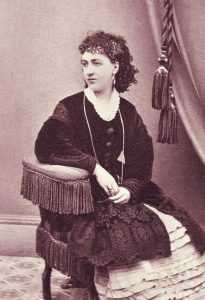
Bob’s inamorata and spy was Eugenia Moore. Eugenia, we are told, rode boldly up and down the railroad between Texas and Kansas, seducing freight agents and eavesdropping on the telegraph for news of money shipments. Eugenia might have been Flo Quick, a real-life horse thief and sexual athlete, who dressed as a man to ride out to steal and called herself Tom King. The Wichita Daily Eagle rhapsodized: She is an elegant rider, very daring. She has a fine suit of hair as black as a raven’s wing and eyes like sloes that would tempt a Knight of St. John her figure is faultless Even if the reporter overdid the description, Flo was no doubt someone who would have caught Bob Dalton’s eye. There is no evidence, though, to suggest she rode with him on the raid.
And so, if there was a sixth bandit, who was he? He could have been some relative unknown, of course, Padgett or somebody like him, but that is unlikely. This was to be a big raid, the pot of gold at the end of Bob Dalton’s rainbow. He would not take along anybody but a proven hardcase, even to hold horses. Doolin is the popular candidate, with substantial support in the evidence. Still, I’m inclined to bet on Bill Dalton, in spite of Chris Madsen’s story. Although there is no direct evidence to link him with the raid, he gathered intelligence for the gang before they rode north to Kansas, and he certainly turned to the owlhoot or outlaw trail in a hurry after Coffeyville. He repeatedly proved himself to be violent and without scruple, and he loathed what he considered the Establishment: banks and railroads.
For those who scoff at the idea of a sixth bandit, there’s one more bit of information, a haunting reference that was apparently never followed up. In 1973, an elderly Coffeyville woman reminisced about the bloody end of the raid: Finally they got on their horses… those that were left. Several of ’em, of course, were killed there, as well as several of the town’s people. And they got on their horses and left…
They?
This article was written by Robert Barr Smith and originally published in October 1995 Wild West Magazine.
For more great articles be sure to subscribe to Wild West magazine today!