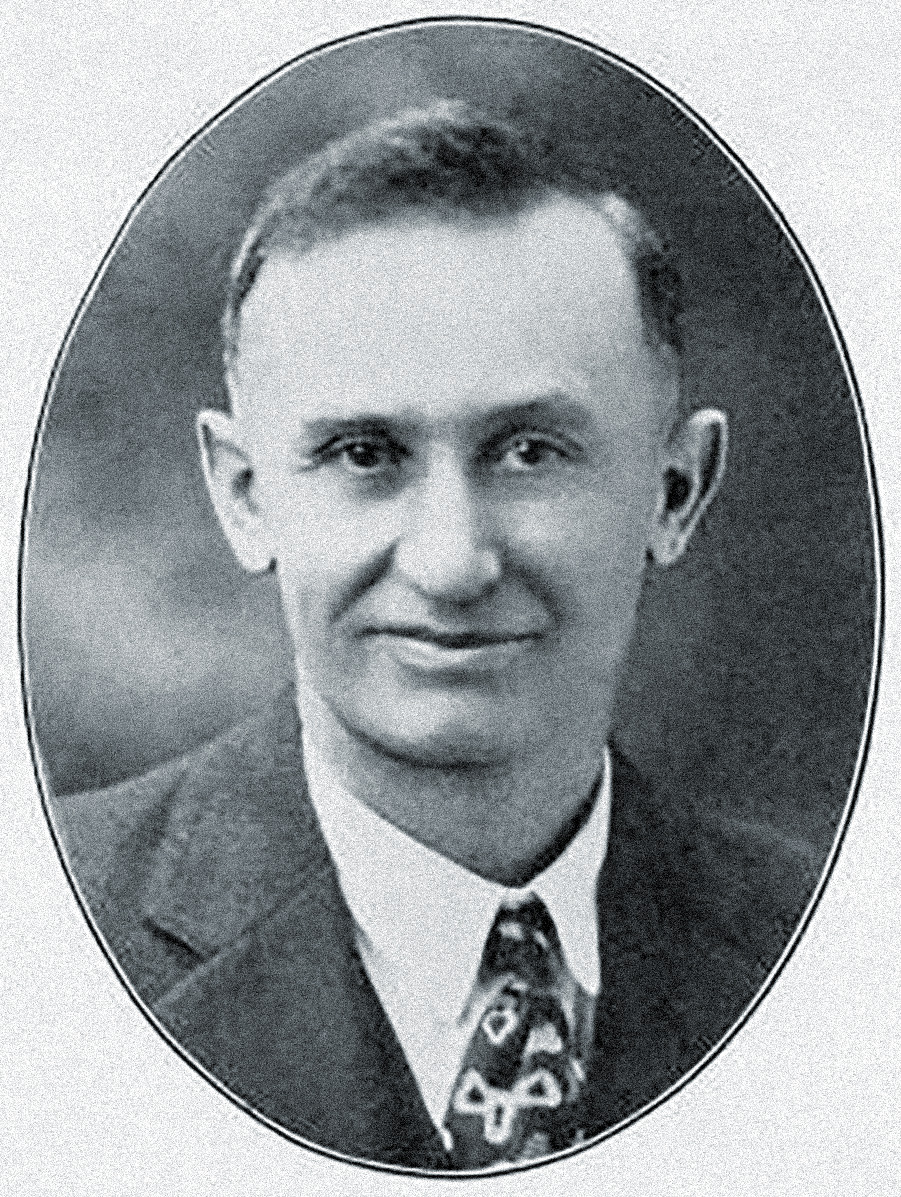
Roy Cessna closed his eyes tightly and turned his head to the side as salt dust struck him in the face. He dug in his heels and gripped the Queen monoplane in a vain attempt to restrain the machine. The engine roared, belching acrid exhaust fumes that cloaked the airplane in clouds of black smoke.
Small chunks of salt crust smacked Cessna in the legs and ankles. The monoplane vibrated, straining to be free. Then the pilot signaled—Cessna released his grip and quickly stepped clear of the machine. Shielding his face from the flying salt, he anxiously watched as the fragile aircraft gathered speed for takeoff on the Great Salt Plains near Jet, Okla.
The ship lifted from the hard ground after rolling only a few hundred feet and sailed aloft to a mere 50 feet. The pilot struggled to keep the tiny craft level as the unrelenting winds buffeted both man and machine. Suddenly, a gust! One wing dipped alarmingly low. Gritting his teeth, the aviator made quick, stabbing inputs to the wing-warping controls in an effort to remedy the ship’s balance. Lethargically, the craft responded.
Without warning, another gust struck the machine, then another. As the pilot fought to control the reluctant monoplane, its engine overheated and began to run rough, losing precious power. Although he had been in the air less than one minute, the aviator knew it was time to land. Wisely, he shut off the engine’s ignition and began the treacherous descent to the ground. The winds seemed determined to destroy the ship. Gripping the stick with both hands, the pilot managed to keep the craft headed toward terra firma. Then, almost as suddenly as they had come, the winds mercifully subsided—but only for a fleeting moment.
The time had come to land. The salt flats rushed up at the monoplane. “Back stick!” the pilot thought out loud. “Work the rudder bar. Keep her steady,” he murmured to himself. Without warning, the Queen stalled. It struck the ground hard, bouncing back into the air briefly before descending a second time. The little ship hit the salt crust again, teetered on one wheel as it rolled out of control for a moment, then suddenly swung its tail around where its nose had been and came to a halt, rocking gently in the wind.
Clyde Cessna sat motionless in the cockpit. He sighed with relief at having survived another flight without damaging his expensive airplane or doing bodily harm to himself. He was pleased with his performance and that of the Queen monoplane, which he had dubbed Silverwing because of its color. After all, like the Wright brothers eight years before, Cessna was teaching himself to fly. He obviously had much to learn.
As the Elbridge engine hissed steam, its four cylinders crackling as they cooled, Roy Cessna ran up to the cockpit and shook hands with his younger brother. It had been a good flight. Despite the dangerous winds, Clyde had gained a few more moments of valuable experience in the air and had landed without incident. The engine had continued to run for the duration of the flight, and all of the controls functioned properly. Indeed, the Cessna brothers were fast becoming true aviators.
It was June 1911. For months the two brothers had failed to fly without “a crackup,” as they called their unsuccessful attempts. Now the persistent brothers were finally making successful flights of a few hundred feet–albeit straight ahead.
They would need to learn much more—including the dangerous turn maneuver—and to fly farther and higher before they could begin flight demonstrations for the public. In 1911, airplanes were a novelty everywhere. In rural farm states such as Oklahoma and Kansas they were virtually unknown. As a result, people would pay good money to see one fly. It was the prospect of such profit that induced Clyde Cessna to sell his successful Overland and Clark automobile dealership in Enid, Okla., to pursue aviation.
The Queen monoplane Clyde was flying had been built for the famed pilot John B. Moisant, but was purchased by Cessna in February 1911 after Moisant’s death in New Orleans on December 31, 1910. Cessna’s penchant for monoplanes is legendary. He once told journalists that a monoplane was “showier, worth more to see than any of the biplanes” that dominated aviation design at that time.
Clyde Cessna became enamored with flying after Louis Blériot’s famous flight across the English Channel in July 1909, and set his sights on obtaining a monoplane. He traveled to Oklahoma City in January 1911 to witness exhibition flights by Moisant’s International Aviators, an esteemed group of pilots that included Roland Garros, René Simon, Charles Hamilton and René Barrier. Except for Hamilton, who had a biplane, the pilots all flew Blériot-type monoplanes.
During his visit to the air meet, Cessna learned of the Queen Aeroplane Company in New York City. By 1911, Queen (and other companies in the United States and abroad) was doing a brisk business building and selling virtual copies of the Blériot XI to eager buyers.
Charged with enthusiasm, Cessna traveled east to New York City and spent nearly a month at the Queen company facilities, building monoplanes and learning the rudiments of flight. Cessna bought Moisant’s special Blériot copy for $7,500—almost his entire life savings—and in late February shipped the aircraft to Enid by rail.
The airplane was purchased without an engine, chiefly to reduce the acquisition cost. Instead of the Indian or Gnome rotary engines that normally powered the Queen ships, Cessna had obtained a V-8 power plant and installed it for initial flights in Silverwing. The engine, however, proved too cantankerous and was abandoned in favor of the two-stroke, four-cylinder Elbridge Aero Special.
Developing 40 hp at 1,050 rpm, the Aero Special weighed 150 pounds without its single magneto. The engine was based on Elbridge’s successful marine power plant of a similar design. Only minor modifications were necessary to adapt it to aeronautical applications.
For the July 4, 1911, celebration at Enid, Clyde Cessna had agreed to fly Silverwing for the first time in public view. Journalists flocked around Clyde, who normally did all the public relations work, while Roy handled most technical matters associated with the airplane.
When asked how he liked flying, Clyde optimistically proclaimed he would “enjoy it when I get it learned.” With a serious look on his weathered face, Cessna emphasized: “The machine is very sensitive to any movement of the steering apparatus. In going up, if one tips the machine a little too much, he will be caught by the wind and he can’t stop going up.” In one of the best understatements of his infant flying career, Cessna grimly told his patrons, “If the engine stops for any reason, you are due to tumble, and that’s all there is to it!”Cessna Aircraft Company
Clyde V. Cessna’s decision to abandon automobiles for airplanes was a bold, courageous step. Little did the Oklahoma aviator realize that in the next 50 years his name would become an aviation icon.
In the years that followed Cessna’s first forays into the air and his successful aero exhibition business, he became increasingly enamored with the idea of building and selling airplanes to the public. Although his initial attempt in 191617 was less than successful, Cessna never gave up on his dream of becoming an aircraft manufacturer.
Late in 1924 he was lured back into aviation by Lloyd Stearman and Walter Beech to form Travel Air Manufacturing Co. With his penchant for monoplanes, Cessna designed and built a five-place, semicantilever wing aircraft in 1926 that became the precursor of Travel Air’s famed Type 5000 monoplane.
In 1927, Cessna left the company to build his version of the ultimate airplane—the full-cantilever wing monoplane called the Phantom. Confident that he had a truly marketable design, Clyde formed the Cessna Aircraft Co. in 1927. The Phantom led to a series of attractive, speedy airplanes such as the Model AW and the DC-6 series that sold well until the Wall Street stock market crash of 1929.
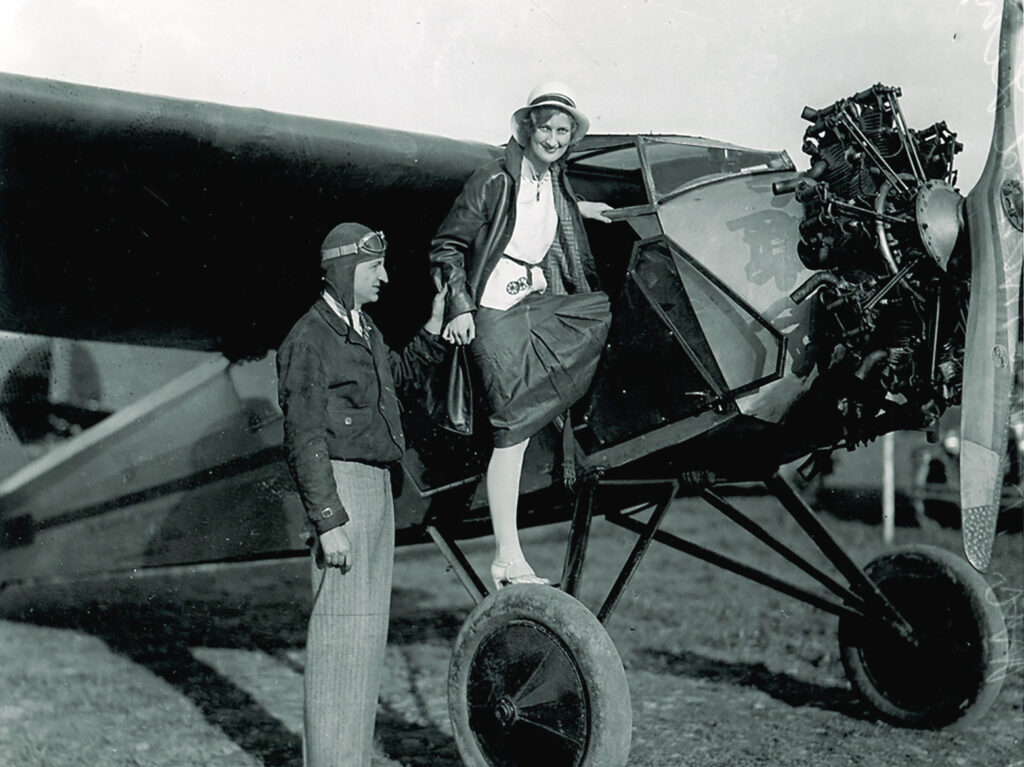
Along with his son Eldon, Clyde designed and built two racing airplanes in the early 1930s, one of which famed pilot Johnny Livingston flew to victory in every race he entered. Unfortunately, the other racer crashed and killed Cessna’s good friend Roy Liggett. Stricken with grief, Cessna withdrew from aviation, never to actively return.
His nephew Dwane Wallace had other ideas, however. With help from fellow aeronautical engineer Jerry Gerteis, Wallace designed the sleek Model C-34 monoplane in 1934. He and his brother Dwight Wallace resurrected the defunct Cessna Aircraft Co. to produce it. Fast and economical, the C-34 was a success, and it put Dwane Wallace and his infant company on the path to fame and fortune.
The company introduced its first twin-engine design, the Model T-50, in 1939. Dwane Wallace once remarked that he had accomplished much of the initial flight testing of the prototype aircraft before he obtained a multiengine rating to legally fly it. The onset of World War II brought orders for thousands of T-50 trainers, first from the Canadians and then from the U.S. armed forces.
After the war, Wallace carefully orchestrated Cessna’s rise to prominence as the world’s most prolific builder of small airplanes. Flight schools flocked to the company’s Wichita, Kan., factory to buy two-place Model 120 and Model 140 monoplanes, and the four-place Model 170 became popular for family flying as well as for business flights. The bullish Models 190 and 195, with their rumbling Jacobs radial engines and roomy cabins, represented the pinnacle of Cessna’s product line and sold well. Dwane Wallace was especially fond of the Models 190 and 195, and logged more than 3,000 hours in those aircraft alone.
Under Wallace’s guidance, the Cessna Aircraft Co. grew by leaps and bounds during the 1950s. The Model 310 was introduced in 1954 and quickly set new standards for the lightweight twin-engine market. Although Piper’s popular Apache was less expensive, it could not match the new Cessna’s performance and utility. The 310 accommodated up to five passengers, and gained much of its fame through television as the favorite mount of Sky King.
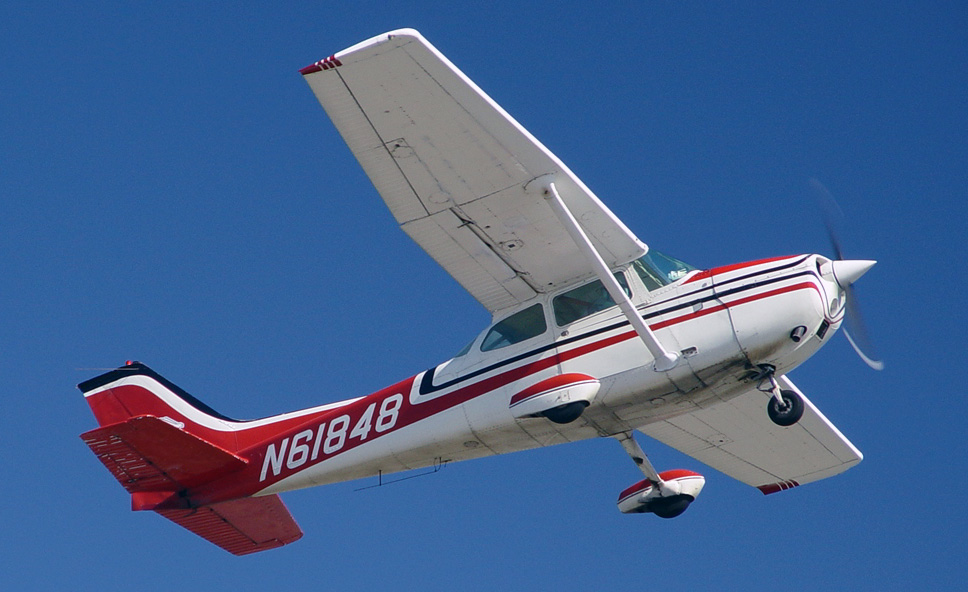
When Piper unveiled its tricycle-gear Tri-Pacer in November 1950, Cessna was still building tailwheel—albeit all-metal—airplanes. As sales of the steel-tube and fabric Tri-Pacer soared and Model 170 sales stalled, Wallace quickly deduced that the days of the tailwheel were numbered. In 1956, Cessna introduced its answer to the Tri-Pacer—the Model 172. From its introduction until production ceased in 1986, the 172 was the best-selling four-place light aircraft in the history of general aviation.
Hot on the heels of the 172 came the Model 182, with more room and power. Cessna then introduced the Model 210, with retractable gear, and the world’s most ubiquitous trainer–the Model 150. By 1960, Wallace was building a product line that featured an airplane for every purpose.
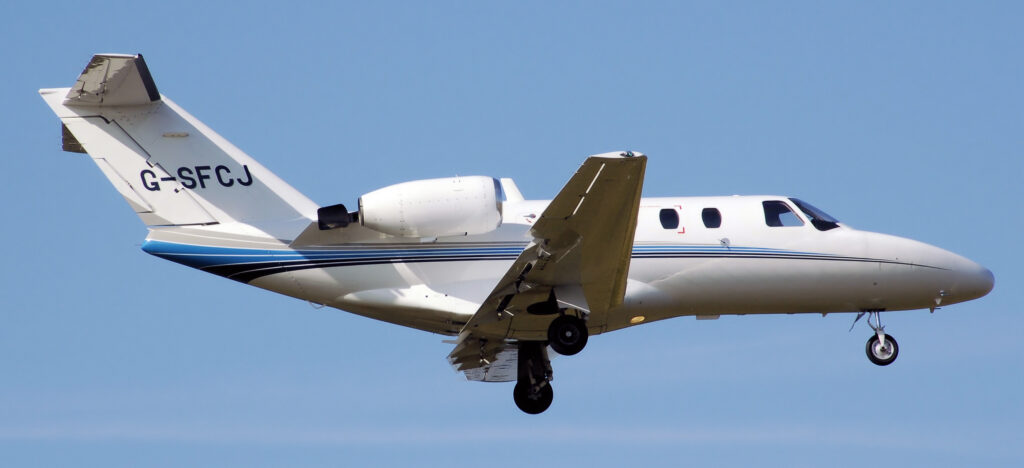
In its ever-expanding family of aircraft, Cessna introduced pressurized twin-engine airplanes such as the Model 411 and the Model 421 in the 1960s. In 1968, Wallace took a bold step by introducing the Fanjet 500—a turbofan-powered business jet that established Cessna as a leader in the business jet market.
More than 100,000 piston-powered airplanes and more than 2,000 Citation jets have been built since Clyde Cessna’s two nephews got into the capricious aviation industry. In 1985, Cessna Aircraft Co. became a subsidiary of General Dynamics, and production of piston-powered airplanes ended with the 1986 model year. In 1992, Textron, Inc., acquired the company. E.H.P.
Although his skill as an aviator was minimal at best, Cessna was determined to begin recouping some of his investment. The public, however, showed little interest in their local birdman and his flying machine. Only $40 in gate receipts was collected on Independence Day, and Cessna flatly refused to fly for such a pittance.
“There is nothing that justifies a flight unless we get the money back that we have spent,” he quipped to reporters in Enid. Despite setbacks and public indifference, the Cessna brothers continued to fly on the Salt Plains during the summer of 1911. Clyde’s airmanship improved, and by August he was making regular flights of two or three miles at altitudes of about 50 feet.
On September 13, 1911, Clyde Cessna suffered his worst crackup. Flying Silverwing early in the morning, he was attempting a three-mile odyssey that was to include a course reversal at the 1122-mile point and a return for landing.
Takeoff was uneventful. The Elbridge engine roared along, leaving a wispy trail of smoke behind. Cessna was concentrating on the hardest part of the flight–the turn. He had little knowledge of the forces of flight acting on the aircraft during a turn, and that fact, coupled with the plane’s antiquated wing-warping mechanism, the anemic Elbridge and the unpredictable winds, made turns a risky proposition.
As he banked Silverwing to the right, a gust of wind struck the ship and lifted the left wing. Cessna immediately made quick control inputs to warp the left wing’s trailing edge upward in an effort to level the craft, but the gust was too strong for the ineffective wing-warping system. The left wing rose sharply. As the airplane rolled through 90 degrees of bank, Cessna knew he had completely lost control. He thought only of trying to save himself.
With the ship nearly inverted and descending rapidly, Cessna waited until the last moment and jumped from the cockpit. Silverwing smashed into the ground upside down. Wood cracked, fabric ripped, wires snapped and the Elbridge was silenced. As for the pilot, he hit the ground hard, too. Although injured, Cessna managed to get up and walk away from the crash site. And in a month’s time, he had recovered from his injuries.
Clyde Cessna and his brother Roy then rebuilt and modified the Queen monoplane into an improved aircraft. In addition to minor airframe improvements, the landing gear was revised and the Elbridge power plant was overhauled. Unfortunately, Clyde crashed the ship on its first test flight, breaking the right wing.
The airplane was again repaired, and on December 17, 1911, Clyde Cessna took off from the Val Johnson farm near Enid and flew five miles in seven minutes, made numerous turns and landed at the same place where he had taken off. The flight marked Cessna’s first truly successful aerial excursion. After spending thousands of dollars and nearly a year of his life learning to be an aviator, Clyde boasted to Enid newspaper reporters, “You see, boys, Cessna can fly!”
Confident that he was ready to perform exhibition flying and recoup his investment, Cessna further modified his airplane during the winter months of 1912. In April, he flew eight miles at Enid and was pleased with his piloting ability and the monoplane’s performance.
He formed the Cessna Exhibition Company to handle all contracts for flying. The business had its headquarters at Enid, but a branch office also was established in Rago, Kan. The Pond Creek Boosters Club was among the first to sign Clyde to a flying contract. He was obligated to fly for a minimum of five minutes during the Fourth of July celebration–without crashing. If successful, upon landing he would receive 75 percent of the gate receipts in cash.
The wind blew strong on July 4, however, and it was 8 p.m. before the gale subsided enough for Clyde to attempt a flight. Anxious to prove his mettle and earn some much-needed cash, he took off without incident but crashed after losing control of the machine. Unhurt, frustrated but determined to succeed, Cessna packed up the damaged aircraft and went home empty-handed.
Major repairs were quickly completed, and Cessna was back in the flying business a month later. He signed a contract to fly at Kremlin, Okla., on August 14, and the aviator from Enid stayed aloft for six minutes and landed safely, earning $200 for his efforts and delighting the crowd.
In September he flew at the Old Settler’s Reunion Celebration at Jet, and for the first time in Cessna’s brief career, the weather cooperated. There was almost no wind. He was performing a figure eight in the sky when a leaking fuel tank forced him to land. The plane was undamaged, but Clyde’s profits suffered.
Between engagements, Cessna tinkered incessantly with both the airframe and the engine. At Cherokee, Okla., in October 1912, Silverwing performed flawlessly and reached an altitude of nearly 2,000 feet, thrilling the spectators below. At long last, the Cessna Exhibition Company was literally flying high and making a profit.
Cessna flew over Enid on November 25 and stayed aloft for 15 minutes—one of his longest flights up to that time. He flew at Enid again on Christmas Eve, flying a wide circle over the city and remaining airborne for 20 minutes. Flushed with success, Cessna shipped his monoplane to Rago, Kan., and shifted his base of operation there for the winter months.
Despite the bitter cold, on January 1, 1913, Cessna flew at Belmont and made six more flights that month in various Kansas towns. He was making from $100 to as much as $400 for each flight, and he flew additional exhibitions in February and March before returning to Enid.
Cessna’s chief reason for returning to Oklahoma was to build a new monoplane. Silverwing had served him well, but “the old tub” had earned its retirement after two years of hard flying, crashes and countless repairs.
Clyde and Roy Cessna and their helpers worked to complete the new aircraft by spring. Although resembling the Queen/Blériot ship in overall design, the new Cessna plane featured increased wingspan and chord, a longer fuselage that was completely covered with fabric, and a larger rudder. Although conventional rudder operation was by a single cable connected from the pedals or rudder bar to each side of the rudder, Cessna’s system was different. He crossed the rudder cables. For left rudder movement, the right rudder control was pushed; for right rudder movement, the left control was used. Silverwing also had that rudder arrangement.
Clyde Cessna always preferred the crossed-cable configuration. The airplanes he flew (including a Laird Swallow and numerous Travel Air biplanes) were modified with that feature. (Walter Beech reportedly took off one day in a Travel Air normally flown by Cessna, and quickly discovered the rudder cables were crossed. He landed safely, but had a few choice words for Clyde’s rudder system.)
Cessna retained the temperamental but faithful old Elbridge engine for his new ship, although he planned to replace it as soon as he could afford a more suitable power plant. On June 6, 1913, the new ship took to the air for the first time. It flew well, but it was damaged slightly during landing, chiefly because of Cessna’s unfamiliarity with the machine.
Only days later, Clyde and his repaired monoplane were busy flying exhibitions in Kansas towns. He earned $100 to $200 for each flight lasting five minutes, and in August was paid $400 in Nashville, Kan., for two flights. In September, he flew in Liberal and took home $600 for three flights, followed in October by aerial exhibitions at Stafford that earned him another $400 in cash. On October 17, Cessna flew for 16 minutes and became one of the first aviators to fly over downtown Wichita.
Like many other pilots in the exhibition business, Cessna had a varied bag of tricks he used to draw people to the flying field. One of his most successful ploys was to drop a football from an altitude of 1,000 feet. Anyone who caught the ball received $5; if no one caught it, the first person to retrieve the ball earned $2.50. Since admission to see Cessna fly was only 25 cents, scrambling for a pigskin was well worth the effort.
Before leaving Wichita, Cessna told journalists that the city would be an ideal location for building airplanes and training pilots to fly them. City officials were keen on the prospect. It would prove to be a most auspicious idea.
Clyde Cessna was a visionary. He knew that the days of exhibition flying were numbered. He wanted not only to fly but also to build and sell airplanes–to make aviation a profitable and respectable enterprise. He would soon get an opportunity to make his dream come true.
Following his successful tour of Kansas, Cessna returned to Oklahoma in November 1913 and made a number of flights there, including one at Enid on Thanksgiving Day. It was among his last flights at Enid, for in late December he moved his family, equipment and two airplanes back north to his 40-acre farm near Adams, Kan.
Cessna designed and constructed a third monoplane during the winter and installed an Anzani six-cylinder, 60-hp, air-cooled, static radial engine that turned a wood propeller nearly 84 inches in diameter. Cessna was able to buy the power plant because of the profitable 1913 exhibition season.
He flew the airplane in June 1914, and quickly realized how much improvement in performance and reliability the Anzani provided compared to its Elbridge predecessor. As a result, Cessna began flying the airplane cross-country to each town instead of shipping it by rail as he had done with Silverwing. Maximum speed for the Anzani-powered monoplane was about 90 mph.
Clyde booked at least 25 flights that summer in nearly a dozen towns. The 1915 flying season was equally profitable.
In one eight-day span, Cessna flew the ship more than 800 miles, traveling from town to town and making exhibition flights. In July 1916, he crashed near Adams, Kan., damaging the aircraft and injuring himself, but three weeks later he was back in the air.
Although flying the show circuit was lucrative, Cessna was becoming increasingly optimistic that a market existed—albeit a tiny one—for personal aircraft and pleasure flying. In August 1916, he was invited to move to Wichita and establish an aircraft factory and flying school. The driving force behind the offer was J.J. Jones, Clyde’s friend of many years and the builder of the Light Six automobile. Jones and other local businessmen, including Jack Turner (who would play a pivotal role in Wichita’s aviation future), agreed to provide Cessna with a vacant building at the Jones factory. A large, flat expanse of virgin prairie adjacent to the facility would serve as a flying field.
In September 1916, the city’s Aero Club announced that Wichita had its own aviator and would soon have its first airplane factory and flying school. Nearly 40 people expressed an interest in becoming aviators, including Jack Turner, who was quick to approach Clyde and Roy Cessna about building a special monoplane expressly for his own use.
Although there was no incorporation, no stockholders and no capital investment, the Cessna brothers were supported by a handful of businessmen. With their business now known as the Cessna Aeroplane Exhibition Company, Clyde and Roy would continue to book flying exhibitions in addition to manufacturing monoplanes.
Clyde Cessna flew at the Cowley County Fair that September, thrilling spectators with “fancy tricks in the sky” such as figure eights and circles, and climbs and descents. Unlike many other exhibition pilots, Cessna was exceedingly conservative in the air. He refused to perform aerobatic maneuvers such as the loop and roll, and he abhorred bloodthirsty feats like the “dive of death” that brought crowds to their feet and was said to cause women to faint outright. He viewed pilots who did such antics as unproductive and detrimental to the development of an aviation industry in America.
To help promote Cessna’s relocation to Wichita, officials of the 1916 Wheat Exposition gave Clyde top billing during the week-long event. The aircraft factory was open to the public, and as his brothers Roy and Noel gave tours through the building, Clyde stood outside beside the monoplane and answered torrents of questions from would-be aviators.
World War I had increased public interest in airplanes and flying, and the upcoming 1917 exhibition season promised to be the most profitable to date. Clyde estimated the company would need at least two monoplanes to handle the demand. In addition, he was planning a spring or summer flight from Wichita to New York City. Bold as the endeavor was, Clyde Cessna was confident he could design and build an airplane capable of making the flight.
In December 1916, therefore, Clyde and his brothers began design and construction of the first two airplanes built in Wichita—one for exhibition flying and the other for the New York flight. The first was a single seater, the second would feature two seats—one for the pilot and one for a paying passenger. With construction of the first aircraft well underway by January 1917, Clyde obtained additional materials and began building the second ship in February.
Despite his pleas to investors, money for the WichitaNew York City flight was not forthcoming, and the attempt was canceled. The bad news did not discourage the Cessna brothers. They continued work on both airplanes, and the first monoplane was completed and test-flown in March.
In April, The United States declared war on the Central Powers and entered World War I. Patriotism ran high, and Clyde Cessna petitioned his congressmen for funds to operate a flying school and build reconnaissance aircraft for the military. He was refused. Undaunted, the brothers continued building the second airplane.
The two-place ship was slightly larger than the other monoplanes built by Cessna, chiefly in order to carry the additional occupant. A streamlined fairing, featuring one window on each side, swept aft from the engine to the open cockpit and enclosed most of the passenger compartment. Wing-warping controls were retained, and a single kingpost assembly was used to anchor landing and support wires.
Small shock absorbers were installed on the main landing gear struts, and larger wheels and tires were fitted. An Anzani radial engine rated at 60 hp was purchased, and a new propeller design—8 feet in diameter—was made and installed.
As work on the two-place ship continued, Clyde Cessna officially opened the Cessna Aeroplane Exhibition Company’s flying school in June 1917. Five eager young men were enrolled as students. Cost for the course was $400 per person, and the course of instruction would take up to eight weeks to complete.
The schedule was arduous. Students arrived at 4:30 a.m. to begin class, primarily because the air was smooth in the early hours of the morning and the winds were gentle, good conditions for the flight portions of the course. They studied engine mechanics and operation and flight control systems, as well as the theory of flight.
To teach the mechanics of flying, the 1913 monoplane with its Elbridge engine was suspended by block and tackle from the rafters of the factory building. One at a time, the would-be aviators ascended a ladder, clambered into the cramped cockpit and moved the controls in accordance with their mentor’s instructions.
After the rudiments of control were learned, the airplane was moved outside to teach the students how to start the engine, taxi and begin the takeoff roll. Cessna observed his charges with a trained eye and evaluated each one for his potential as a pilot. He was planning to select the two best students as pilots for his exhibition company, which already had bookings for more than 30 flights during the upcoming autumn season.
Three of the young birdmen had soloed in the fragile monoplane by July, making takeoffs and flying straight ahead for a few hundred feet before landing.
As September approached, however, Cessna became increasingly busy with exhibition flying, and his flight-instruction time was limited. Training was frequently curtailed or canceled altogether for days. Their patience spent, the five students eventually filed a suit against Cessna, charging he had breached his contract by not providing eight weeks of instruction. The suit never came to trial, and records do not show whether a settlement was reached between the parties.
The flying school experiment had been less than successful for Cessna, but the first flight of the two-place monoplane earlier that summer was nearly perfect. On June 24, 1917, he made a short flight to check handling and performance. The ship flew well and had a small surplus of power. After a few adjustments to the rigging and flight controls, Clyde Cessna pronounced the ship airworthy.
Cessna flew the monoplane south to Blackwell, Okla., in July for the Independence Day celebration, covering a distance of 65 miles in 41 minutes at a speed of 96 mph. More than 11,000 people attended the event. Cessna flew once in the morning and again in the evening, chiefly because of the ubiquitous and still dangerous prairie winds.
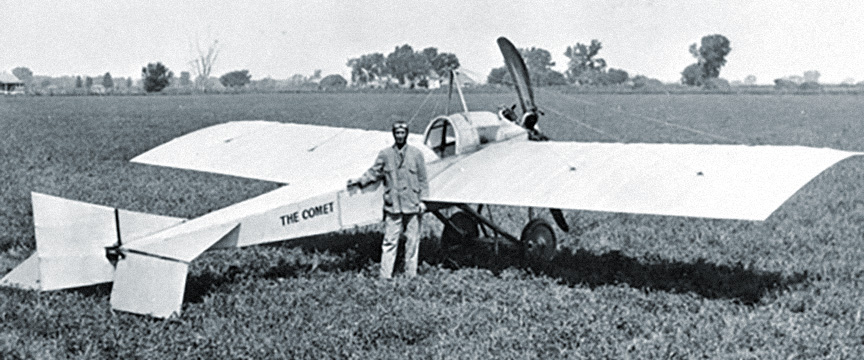
The next day he flew back to Wichita in 36 minutes, 35 seconds at a speed of more than 107 mph. The new ship was said to fly through the sky like a comet. The name stuck, and was emblazoned on the fuselage in black letters. Cessna further streamlined the airframe to reduce drag and installed a 70-hp Anzani engine in October. According to Cessna, the new power plant improved the Comet’s ability to carry two people, and on October 9 he made three flights at Wichita with passengers aboard.
As 1918 approached, civilian flying activity decreased because fuel rationing measures had been enacted and the nation had achieved a full wartime footing. Interest in Cessna’s airplane factory and flying school waned, and the brothers were forced to abandon their Wichita facilities and their dreams of selling airplanes. Remembering his farming roots, Clyde Cessna returned to Adams and tilled the soil to help feed American doughboys and support the war effort. He continued to operate a custom threshing business after the war. In 1924, however, he joined forces with Lloyd C. Stearman and Walter H. Beech to found the Travel Air Manufacturing Co., Inc., in Wichita. Cessna was named president of the biplane manufacturing company, and provided both money and equipment to help establish and support the infant business.
Always the monoplane man, Cessna sold his Travel Air stock in 1927 and founded the Cessna Aircraft Company in partnership with Victor Roos. In rented facilities down the street from Travel Air in west Wichita, Cessna built his ultimate airplane—a high-wing, full-cantilever aircraft he dubbed the Phantom. Fast, sleek and capable of carrying three people, the Phantom was powered by a 90-hp Anzani radial engine. Cessna had bought dozens of the obsolete Anzani power plants and installed them on early production Cessna Model AA cabin monoplanes.
The vagaries of the Great Depression era, however, forced Cessna out of his own company. In the early 1930s, he and his son Eldon built custom racing airplanes. After the death of his friend Roy Liggett in one of the tiny speedsters, Cessna lost his enthusiasm for aviation and retired to his Kansas farm.
When his nephews Dwane L. and Dwight Wallace resurrected the Cessna Aircraft Company in 1934, Clyde Cessna refused to participate directly in its re-emergence. As further testimony to his aversion to aviation, in the late 1930s he destroyed the 1917 Comet monoplane, according to his son Eldon. With it went the last vestige of Clyde Vernon Cessna’s early legacy of flight. He died in November 1954, at the age of 74.
Cessna never received a pilot’s license and achieved only a fifth-grade education. He was truly an aero pioneer, not only as an airman but as a manufacturer whose airplanes have become an American aviation icon. Like the Cessna company motto he penned, the aircraft Clyde Cessna built were truly “A Master’s Expression.”